


Dior’s creative director Jonathan Anderson unveiled his spring/summer 2027 collection with a deliberately undone approach to dressing. Much like the relaxed sensibility seen at Prada, bras peeked out from beneath open jackets, shirts were buttoned askew and pyjama-style piping softened the formality of tailoring.
The effect was one of clothes caught mid-transition – as if getting dressed had been interrupted halfway through – and, Anderson suggested, that imperfection may be the defining attitude of next summer.
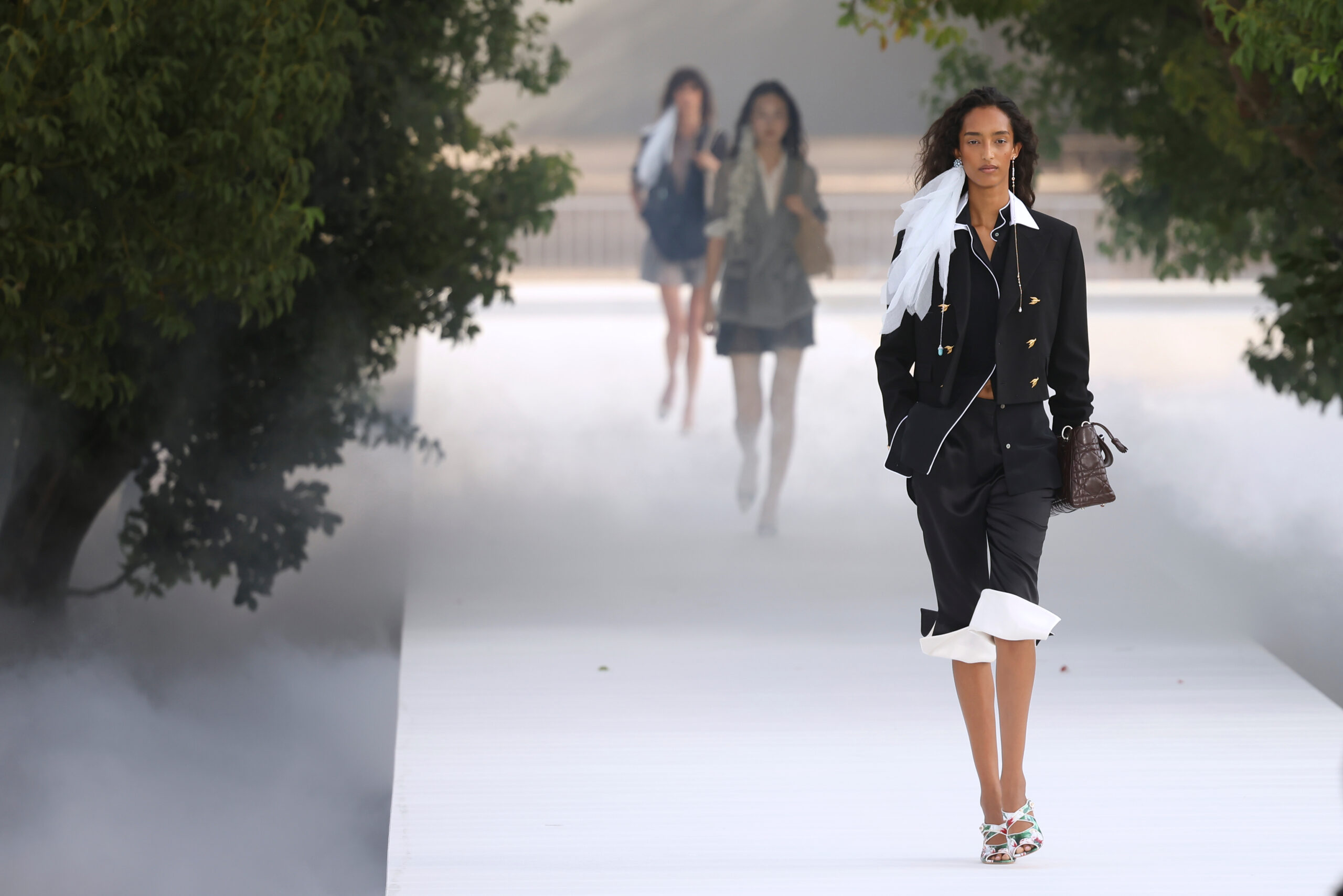
Pyjama-style piping and unevenly buttoned shirts were sent down the runway (Thomas Padilla/AP)
The show took place in Paris’s Jardin des Tuileries, where models walked across a runway surrounded by trees and water, as clouds of mist rolled across a lake.
Anderson returned to the same setting as his autumn/winter 2026 ready-to-wear collection, once again treating the Parisian garden as somewhere to see and be seen.
“It’s a promenade, the idea of people dressing up to walk in the park,” he said.
But this time, dressing up did not necessarily mean looking done up.
Kicking off with a white pinstripe double-breasted jacket was layered loosely over a striped shirt and cream miniskirt, even the tailoring had a looseness to it. Jackets were sheer or lightweight, hems appeared windswept and shirts spilled out from underneath layers rather than being neatly tucked away.
It’s a notable departure from the highly structured femininity historically associated with Dior.
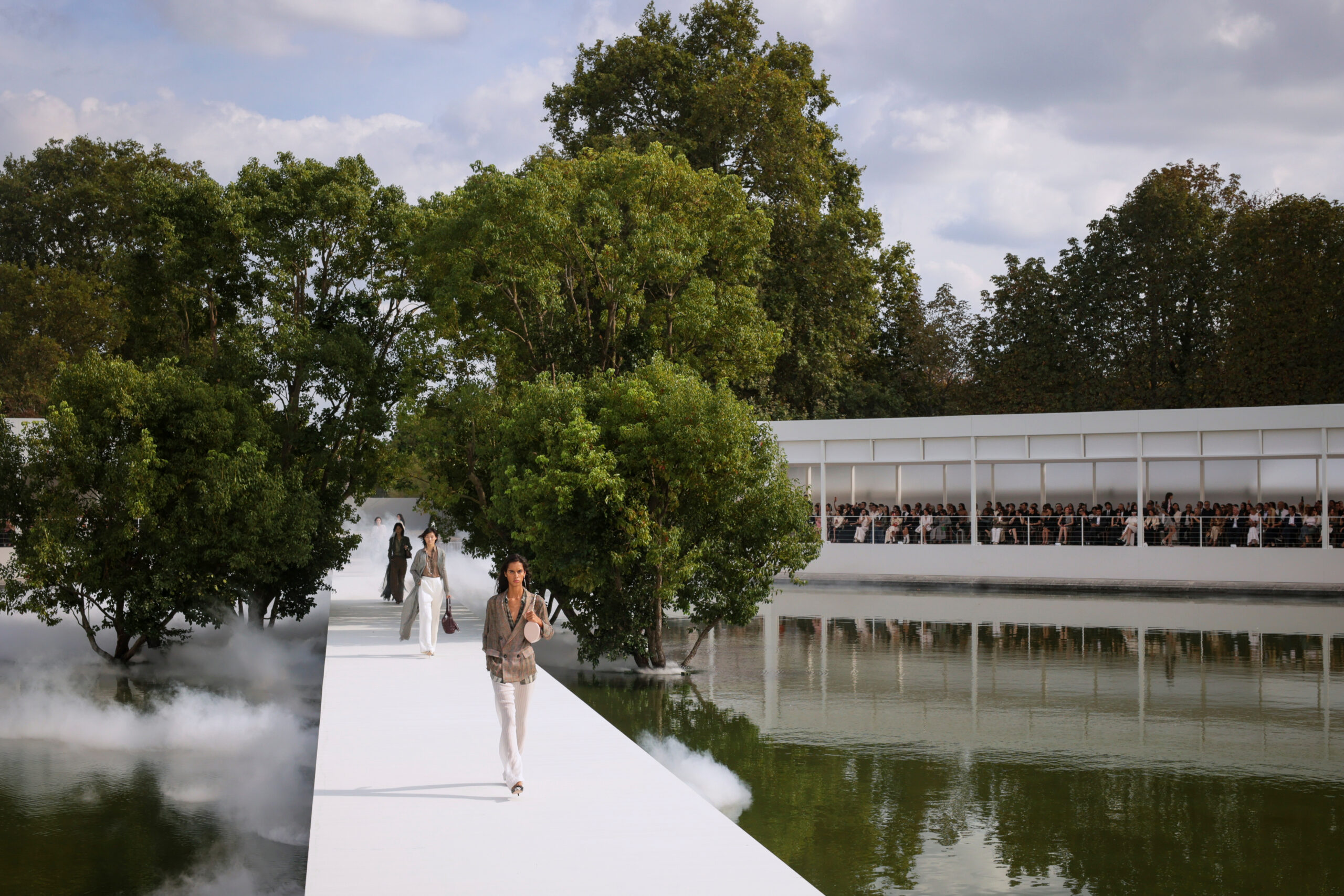
Sheer and relaxed blazers were sent down the runway at Dior (Thomas Padilla/AP)
Christian Dior founded his house in 1946 and caused a sensation the following year with the silhouette that became known as the New Look: the Dior ‘Bar’ jacket that featured rounded shoulders, a tightly cinched waist and enormous skirts requiring metres of fabric.
Nearly 80 years later, Anderson seems increasingly interested in what happens when some of that structure is allowed to fall away.
One black pyjama-style jacket, complete with contrasting white piping, was worn open over a visible bra and short cream skirt.
Exposed underwear, windswept hair, uneven layers and clothes that appear slightly dishevelled have repeatedly appeared on the runways this fashion month.
But Dior made dishevelment feel deliberate – a way of making very expensive clothes look surprisingly nonchalant.
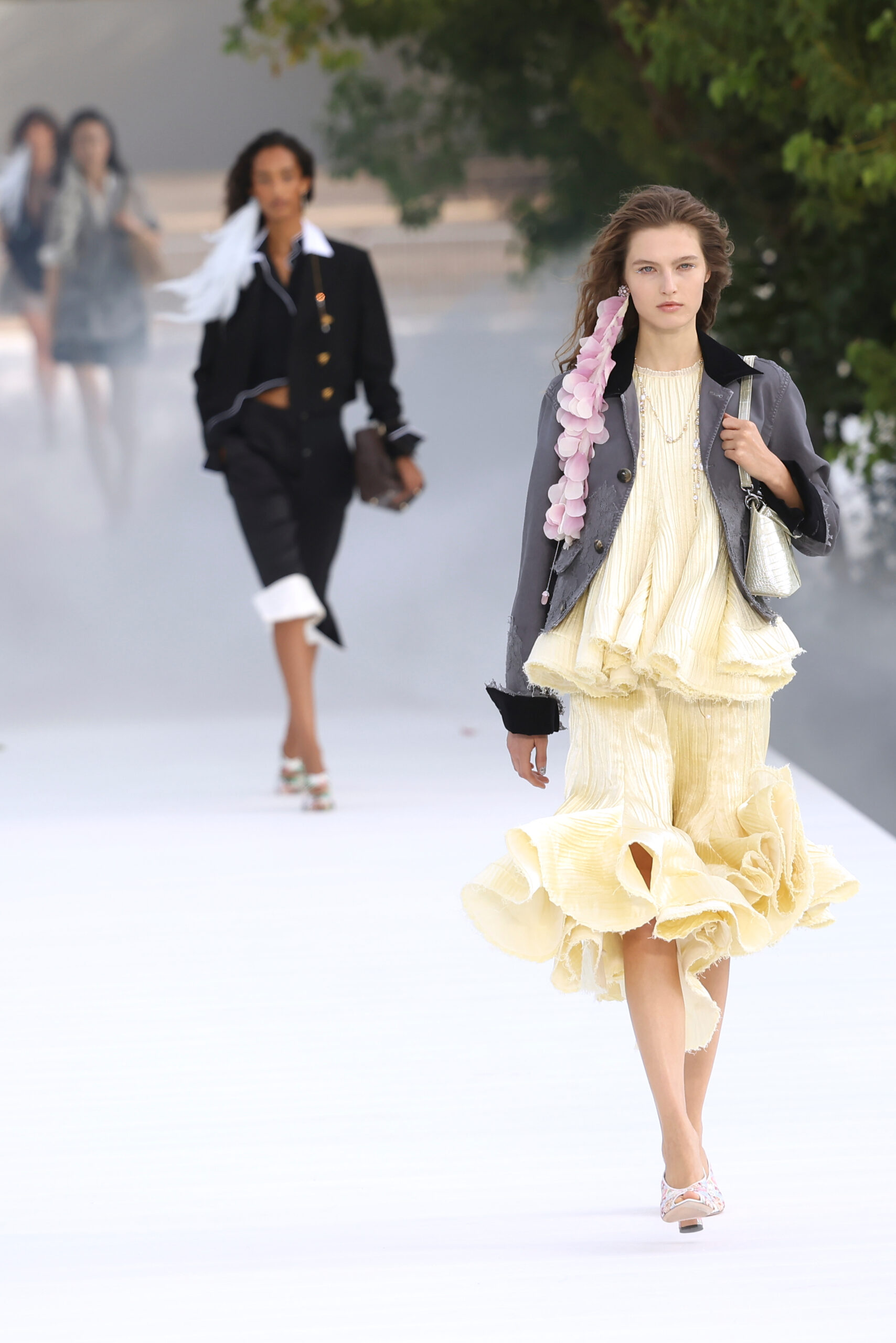
Raw hems and crimped fabric were motifs of the show (Thomas Padilla/AP)
That relaxed approach extended to fabrics that rippled, crumpled and moved as models walked in the wind of the jardin.
Pleating and crimping appeared repeatedly across trousers, blouses and dresses, creating a concertina effect that expanded around the body.
Trousers flared gently at the ankle, sleeves widened towards the wrist and skirts were cut with asymmetric hems that fluttered in the September air.
Even a traditional floral dress was disrupted by ruffles and an uneven hem, giving it the appearance of having been caught permanently in a gust of wind.
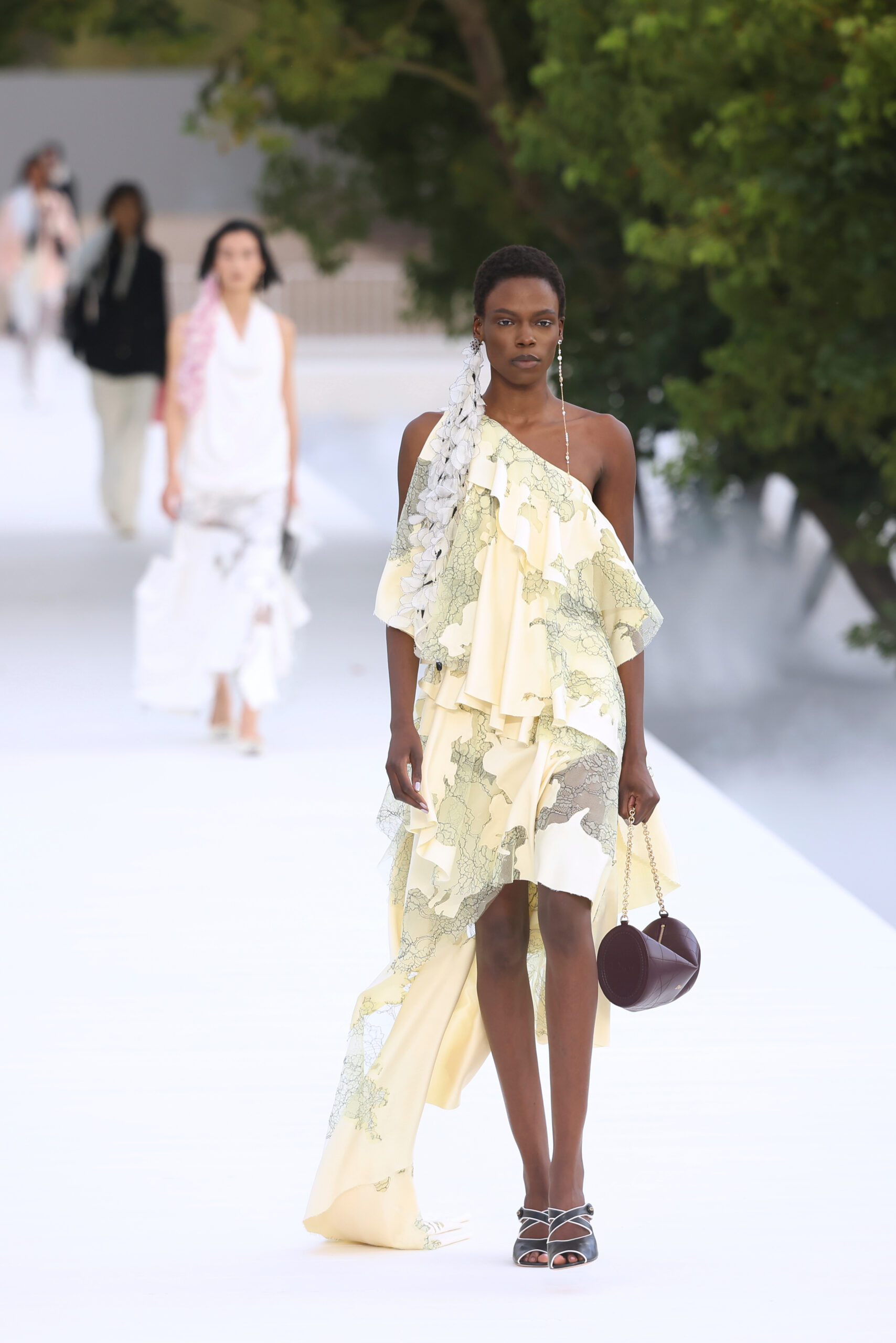
Asymmetric hems, ruffles and sprawling florals interrupted by seams dominated the collection (Thomas Padilla/AP)
Anderson also played with one of fashion’s other increasingly unavoidable revivals: the peplum.
Of course, a nod to the legendary Bar jacket, this waist-accentuating silhouette is nowadays synonymous with office wear from the early 2010s, a nostalgic trend that has been steadily making it’s way back onto the runway.
This season, however, Anderson paired diaphanous blazers over voluminous miniskirts and cinched shirts with A-line ruffled midis.
But rather than rigidly sculpting the body, these peplums appeared soft and almost deflated, moving with the wearer.
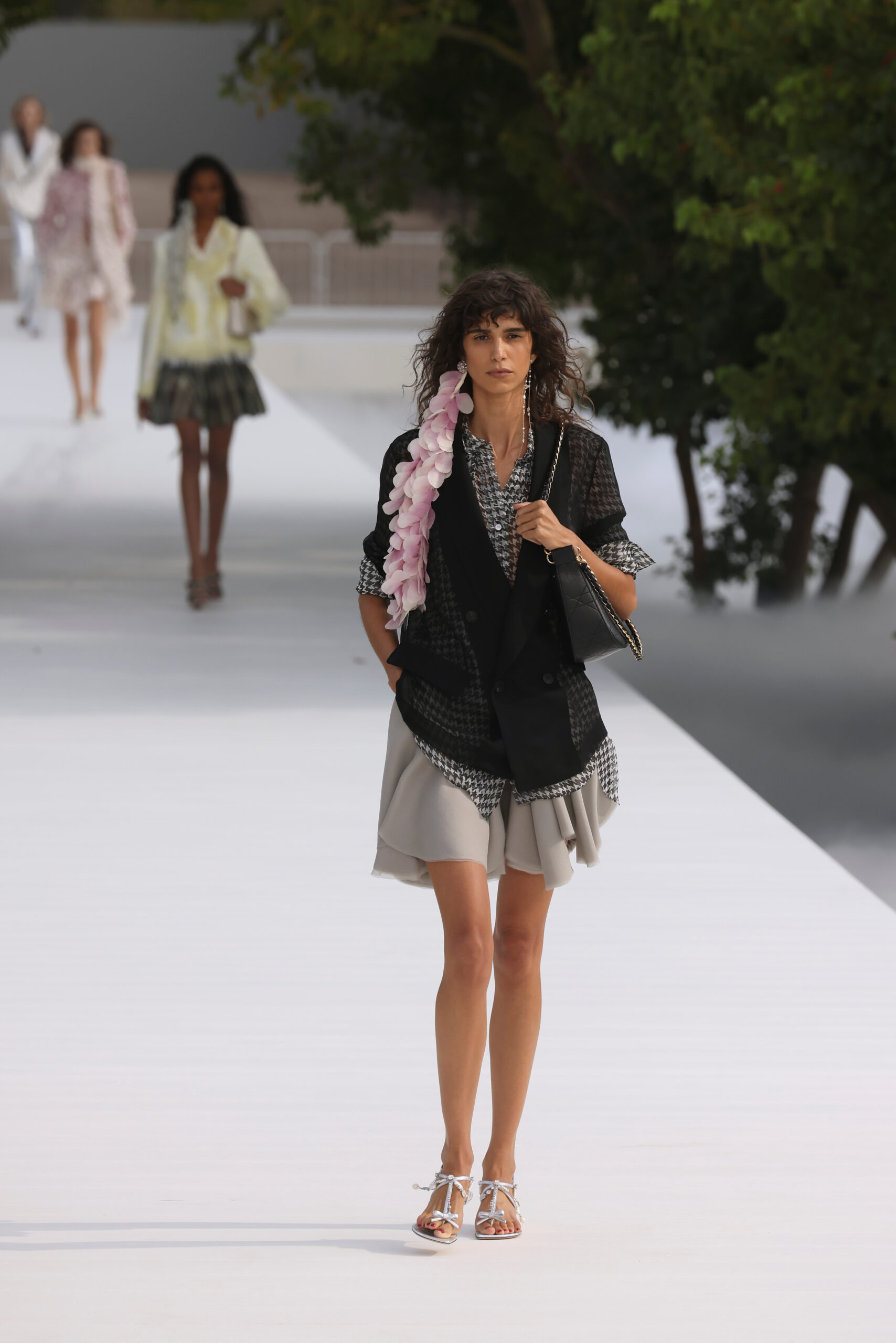
Would-be peplum silhouettes appeared deflated and relaxed (Thomas Padilla/AP)
There were echoes of other Dior archive pieces in the jacket-and-skirt combinations.
In the mid-Fifties, Christian Dior was already beginning to move away from the extreme hourglass proportions of his New Look towards cleaner, more architectural shapes.
His spring/summer 1955 collections helped establish the A-line, loosening the waist and allowing clothes to fall more freely from the body.
Anderson appeared to pick up a similar tension between masculine tailoring and feminine movement, pairing boxier jackets with featherweight skirts and transparent layers.
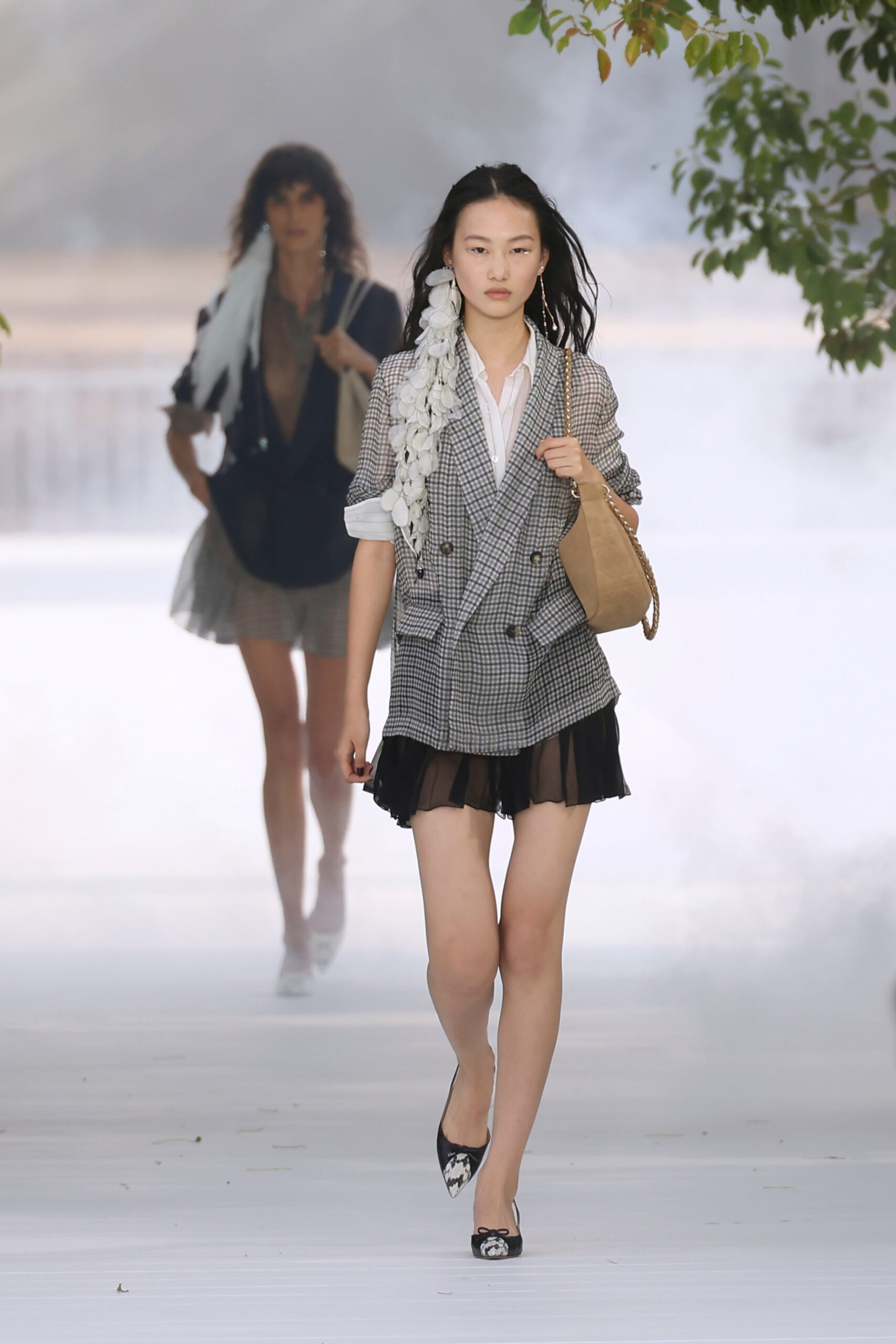
Sheer blazers over skirts were reminiscient of Dior’s 1950s silhouettes (Thomas Padilla/AP)
But this was far from an austere collection.
Some of its most striking pieces were smothered in what looked like hundreds of individual petals.
Pale pink, white and yellow discs covered jackets and skirts, fluttering around the body as models walked, while long trails of the same petal-like embellishment were slung over shoulders.
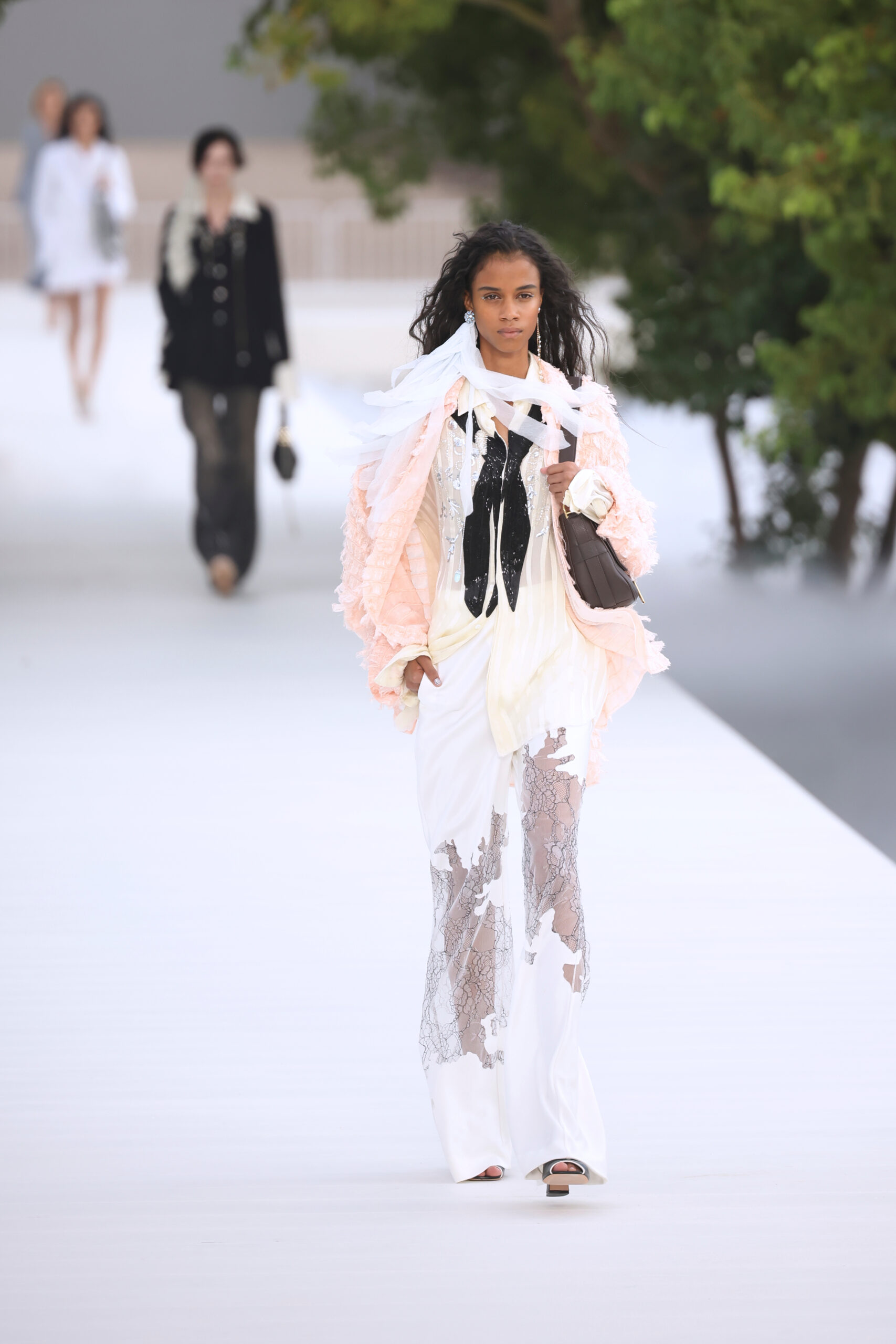
Lightweight ruffles and petal accents fluttered on the outside runway (Thomas Padilla/AP)
Nature was, in fact, central to the collection before the first model had even appeared.
Guests received wenwan walnuts with their invitations, inspired by objects Anderson discovered during his travels in China.
The walnuts are traditionally rotated in the hand, gradually developing a smooth patina through repeated handling over time.
“According to the Chinese cultural tradition of rolling wenwan walnuts in one’s hand, it is only with time and dedication that their smooth patina appears,” Dior said ahead of the show.
“When I came across wenwan walnuts, I was reminded of how we can find knowledge and preciousness in nature.”
The idea of beauty emerging through handling rather than remaining pristine felt particularly apt for a collection in which so much appeared crumpled, twisted or worn with deliberate imperfection.
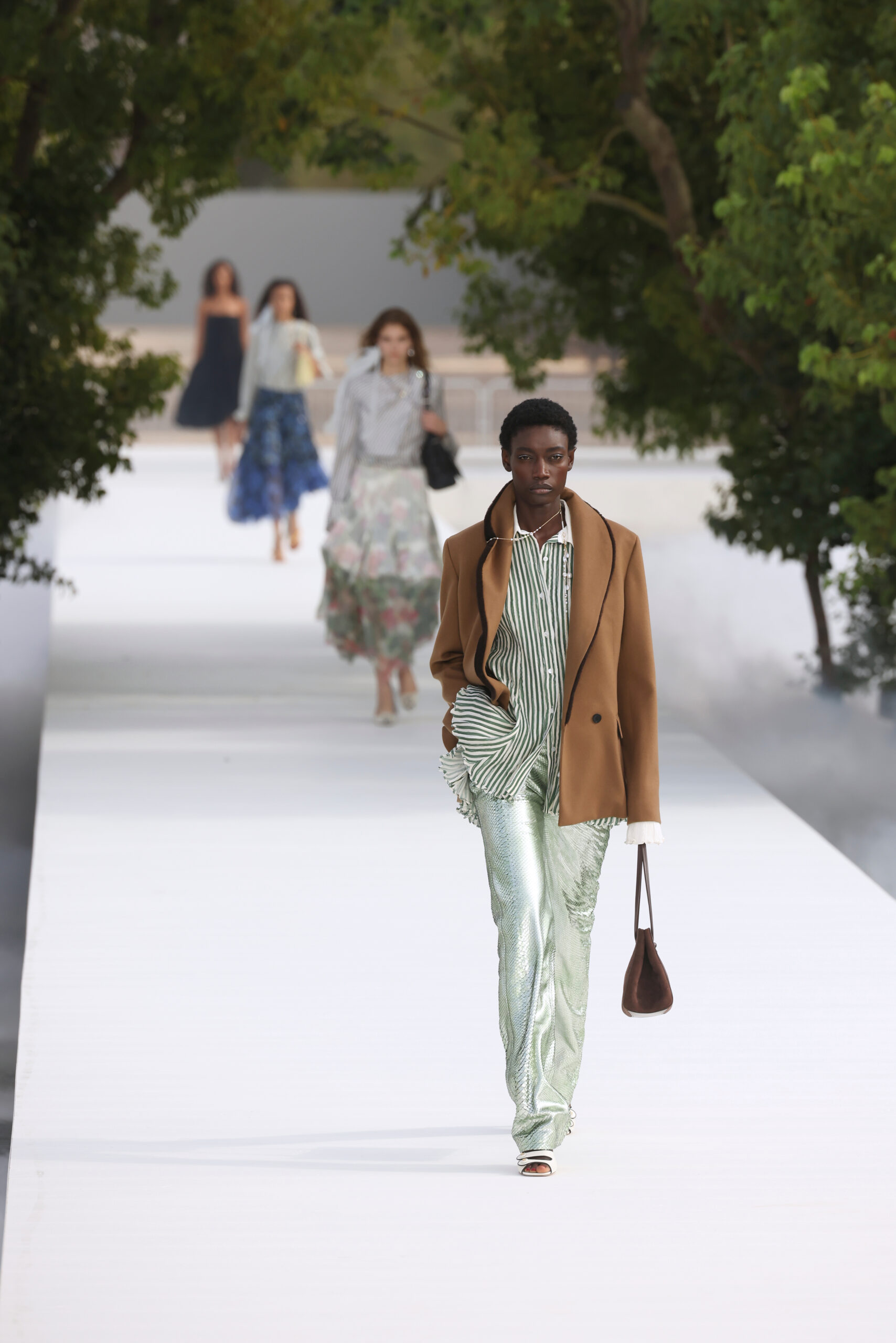
Deliberately unfinished looks were sent down the runway (Thomas Padilla/AP)
There was an intriguing tension between glamour and comfort throughout the collection, too.
Metallic silver and mint-green trousers provided some of the collection’s most head-turning moments, but were worn with familiar tailoring and striped shirts.
Rubber-soled flats appeared alongside delicate heels, while some models carried two bags at once – small structured handbags accompanied by larger totes, as though they had simply accumulated everything they needed for the day.
The palette largely remained within Dior’s familiar black, white and grey, softened by pale pink and sky blue before being interrupted by flashes of metallics and saturated florals.
But it seemed to be more about texture than colour, as fringe, feathers and sheer layers moved constantly, giving clothes that might ordinarily feel formal a surprising lightness.
Anderson took the reins of Dior in 2025, becoming the first designer since Christian Dior himself to oversee the house’s womenswear, menswear and haute couture collections.
It gave the Northern Irish designer one of the biggest jobs in fashion: finding a way to respect almost eight decades of history without allowing Dior to become trapped by it.