

As London Fashion Week draws towards the end of its final day, the capital’s fashion scene has delivered a whirlwind of creativity, with designers unveiling their latest collections across the city.
From Alexander McQueen’s return to London and Roksanda’s take on grunge to Labrum’s celebration of craft across borders, the latest shows have captured the breadth and energy of London’s creative landscape.
Elsewhere, Sinead Gorey turned getting ready into a house-party spectacle, while Alessandra Rich, Emilia Wickstead, Di Petsa and Tolu Coker explored ideas of femininity, identity, artistry and reinvention in distinctly personal ways.
With Burberry still to come this evening, here are some more of the collections and presentations shaping London Fashion Week.
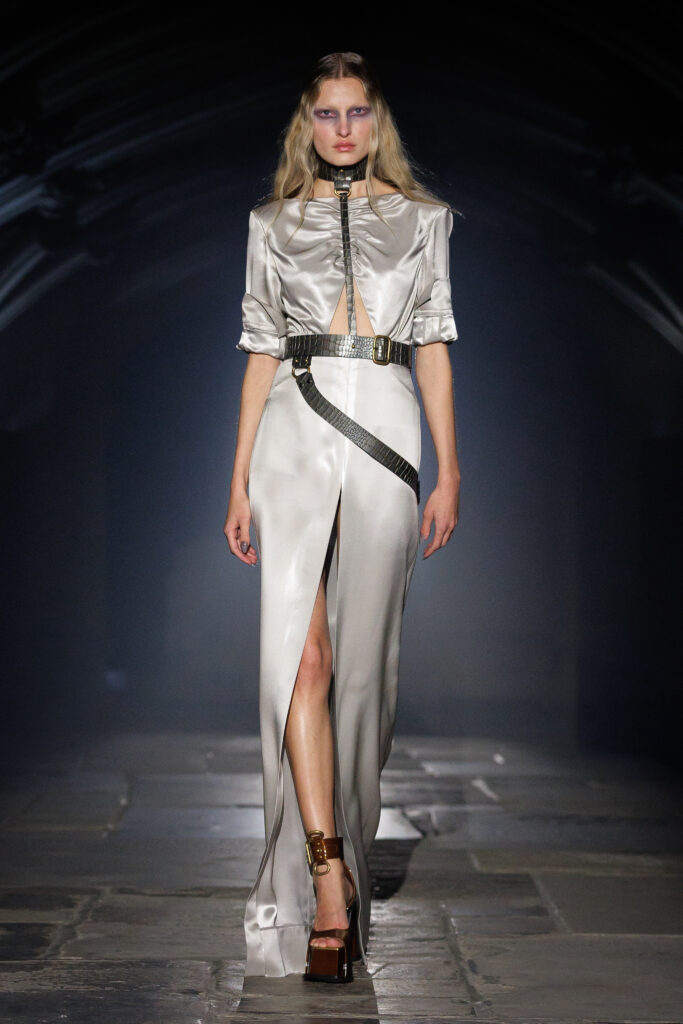
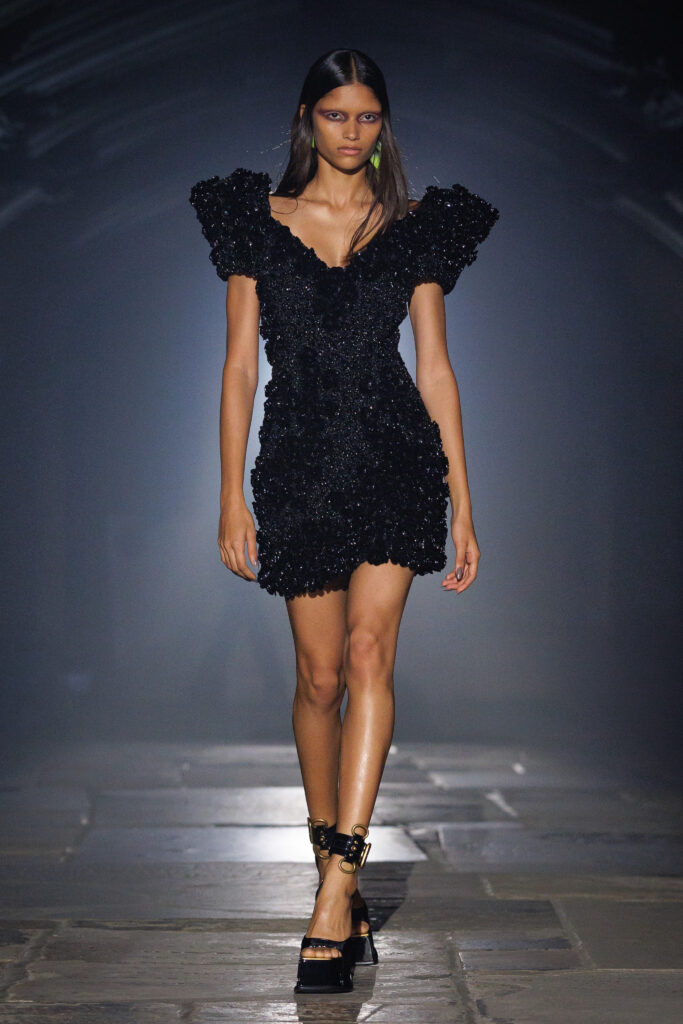
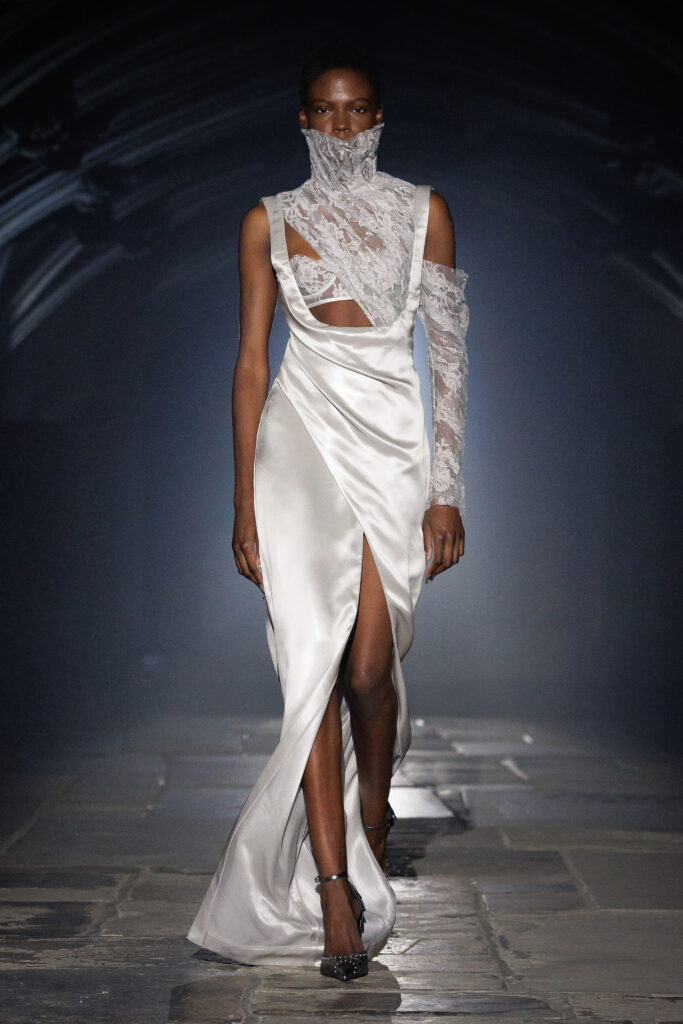
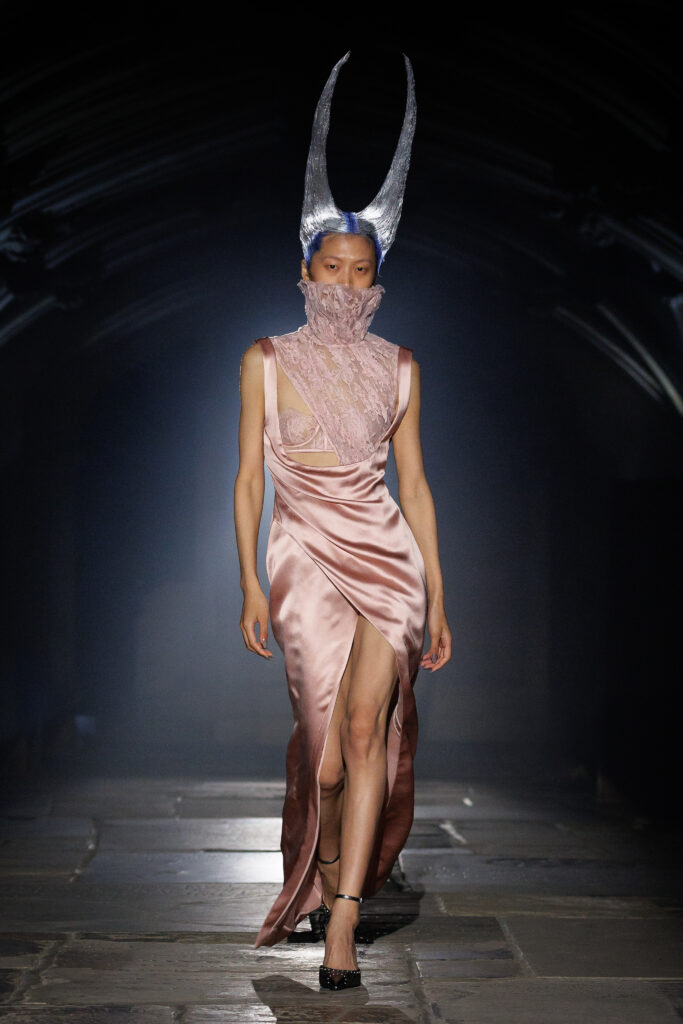
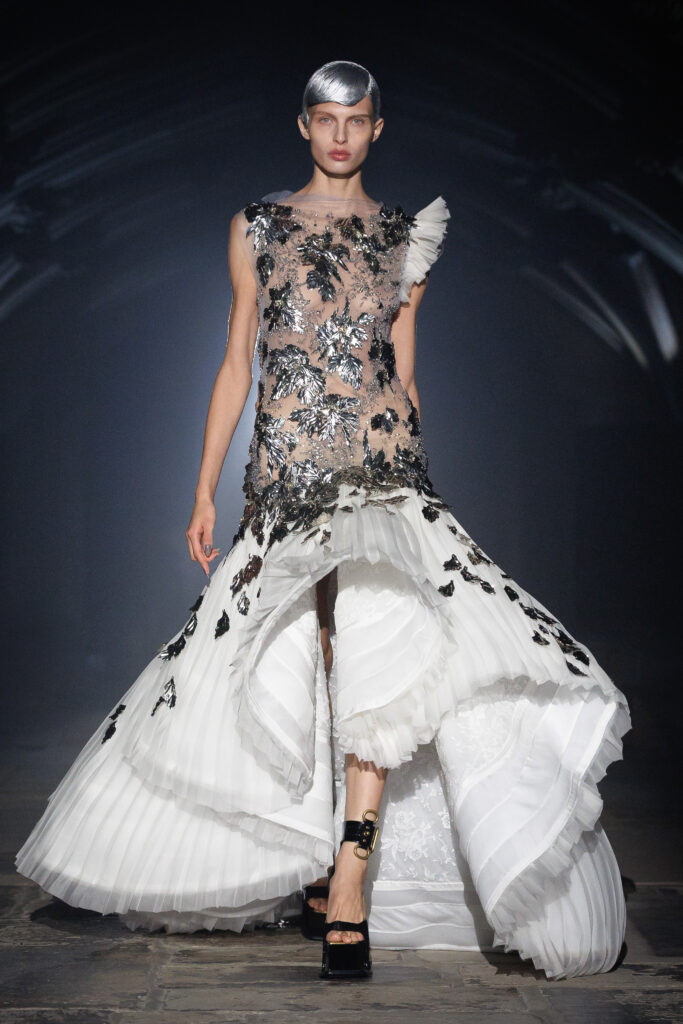
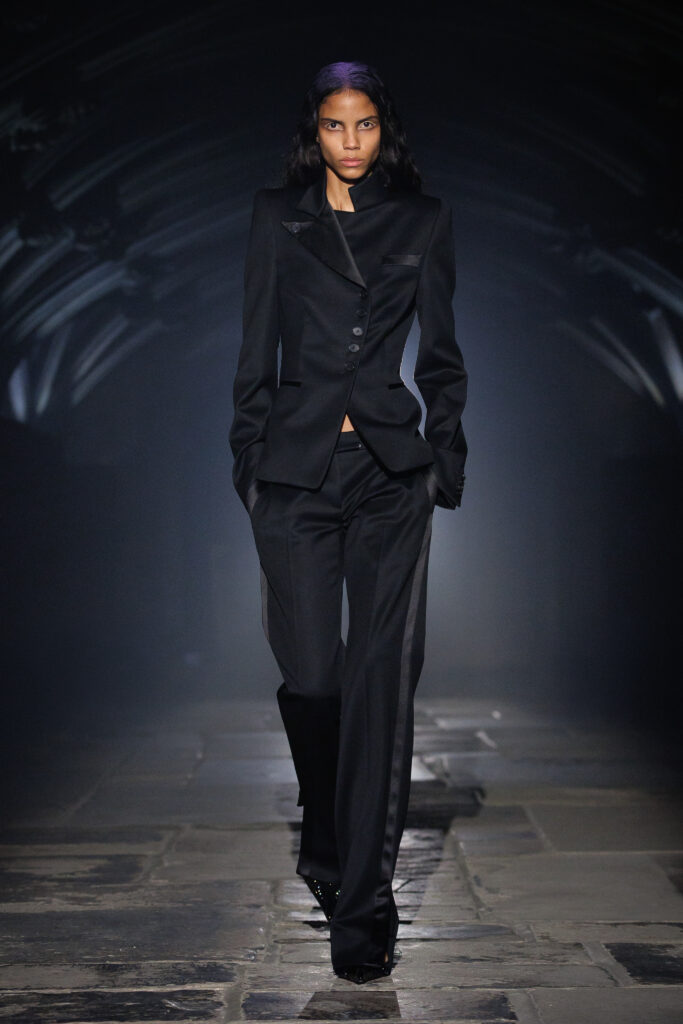
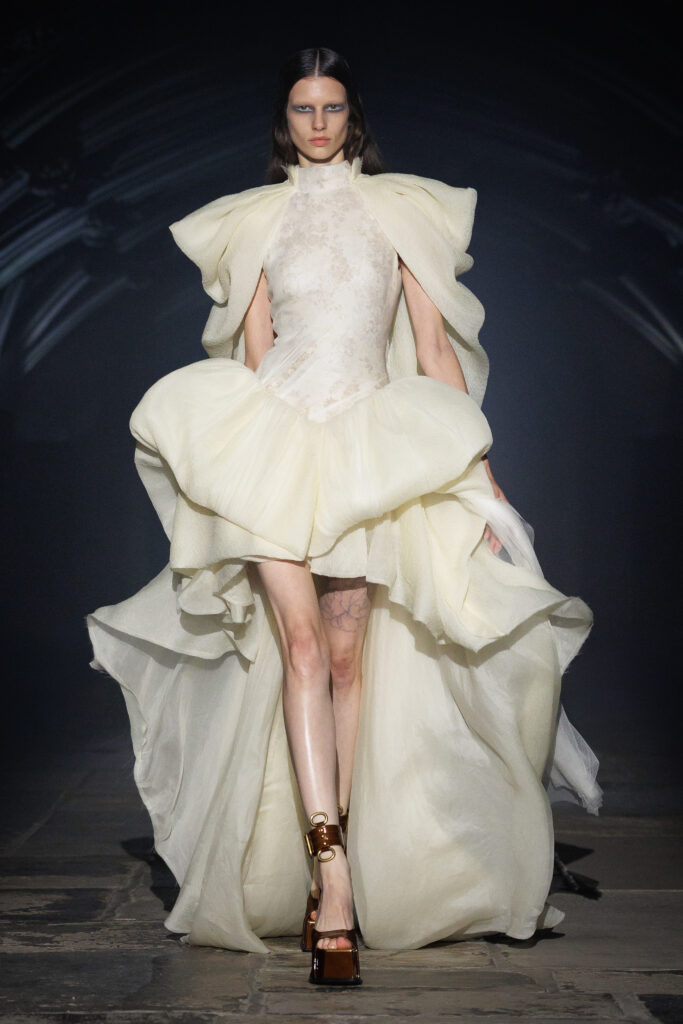
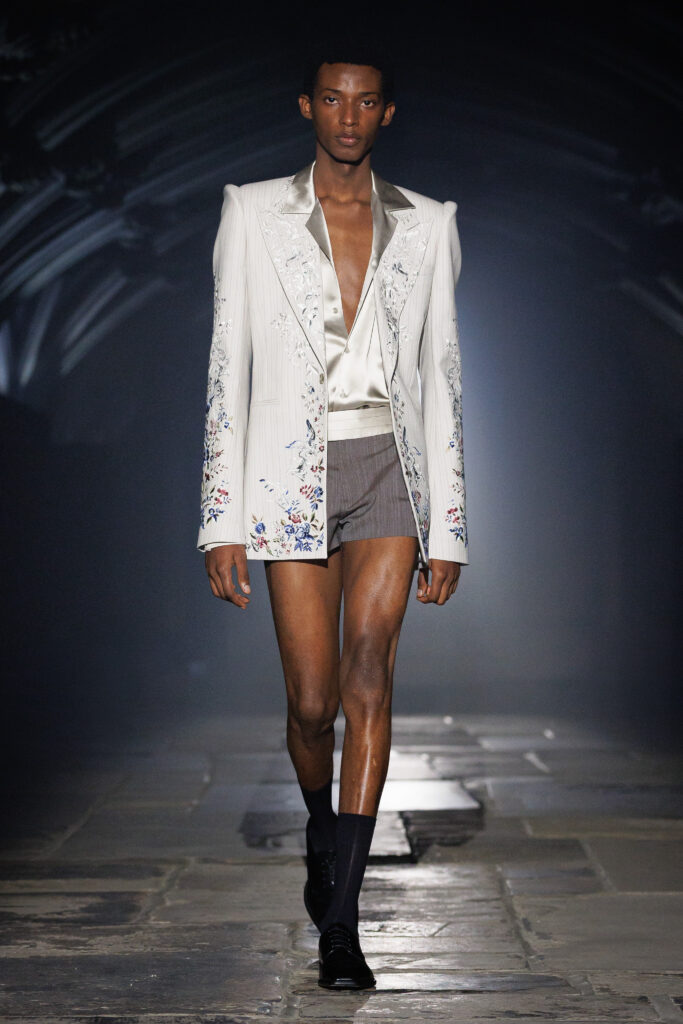
Alexander McQueen brings the sacred and subversive together
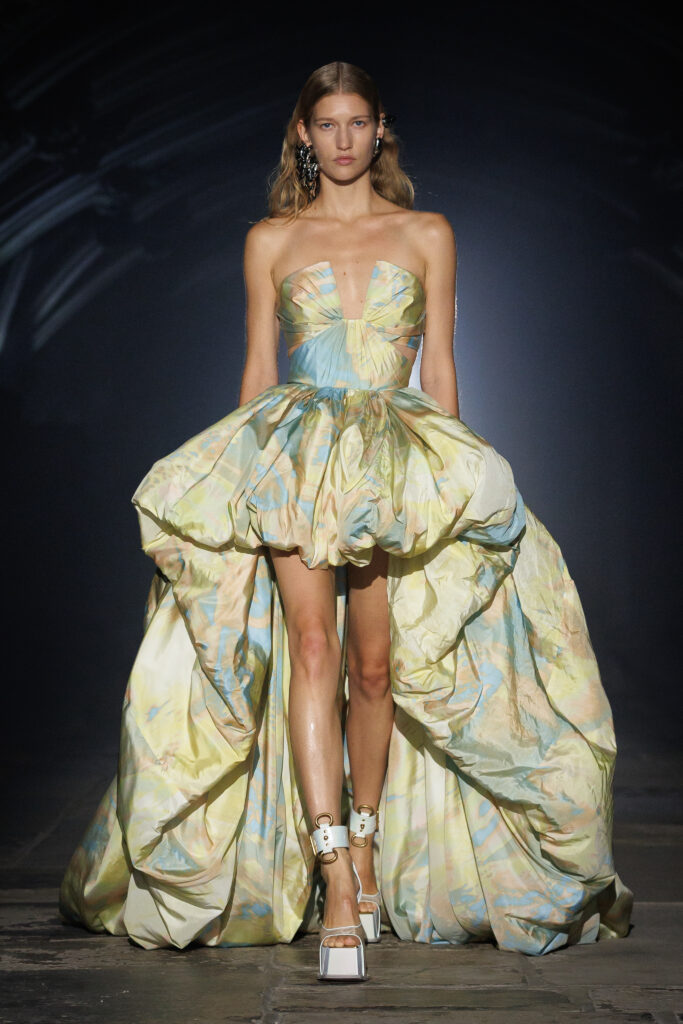
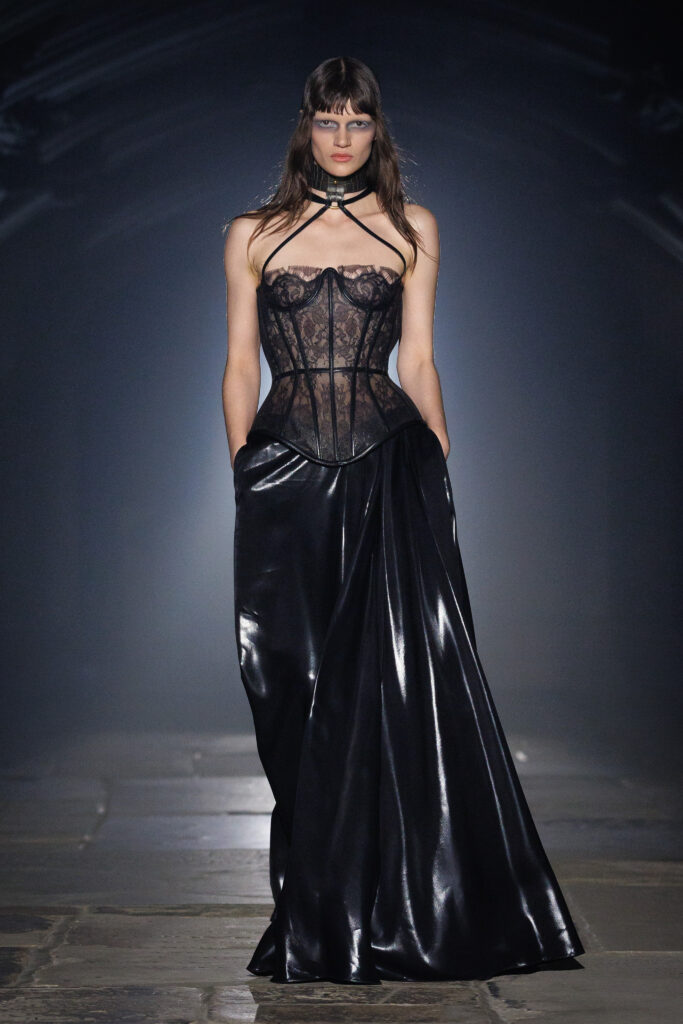
Alexander McQueen returned to London Fashion Week with a SS27 collection that brought together the sacred and the subversive. Presented inside The Undercroft of Lincoln’s Inn Chapel, Seán McGirr’s show moved between religious-inspired imagery and the energy of London’s underground nightlife, with smoked tulle, washed neon shades and delicate florals set against leather harnesses and sharply structured tailoring.
Tailoring remained central to the collection, with sculptural angel-wing forms pushing out from precise silhouettes and elongated suiting creating tall, narrow proportions. Three bespoke menswear looks created with Savile Row tailor Huntsman brought exaggerated shoulders and high, narrow waists to heritage British wool, while lighter fabrics, including reflective glass organza and sheer tulle, softened the sharper shapes.
Eveningwear continued the contrast, with acid floral prints appearing across reflective organza and intricate embroidery, and nocturnal jacquards fading into sheer fabrics. Lacquered satin added a harder finish, while Shaun Leane’s recycled silver body harnesses brought a sense of armour to the collection. Leane also reintroduced sculptural headpieces from McQueen’s AW98 Joan and AW04 Pantheon ad Lucem collections, connecting the show to the house’s archive.
The London setting gave the collection an added sense of context, with A. G. Cook’s electronic soundtrack and Shard Voices’ choir creating a meeting point between the historic chapel and the city’s contemporary nightlife. After several seasons showing in Paris, McQueen’s return to the city where the house was founded felt fitting for a collection built around London’s contrasts, bringing together romance and aggression, historic references and modern subculture.
KNWLS explores the art of coming undone
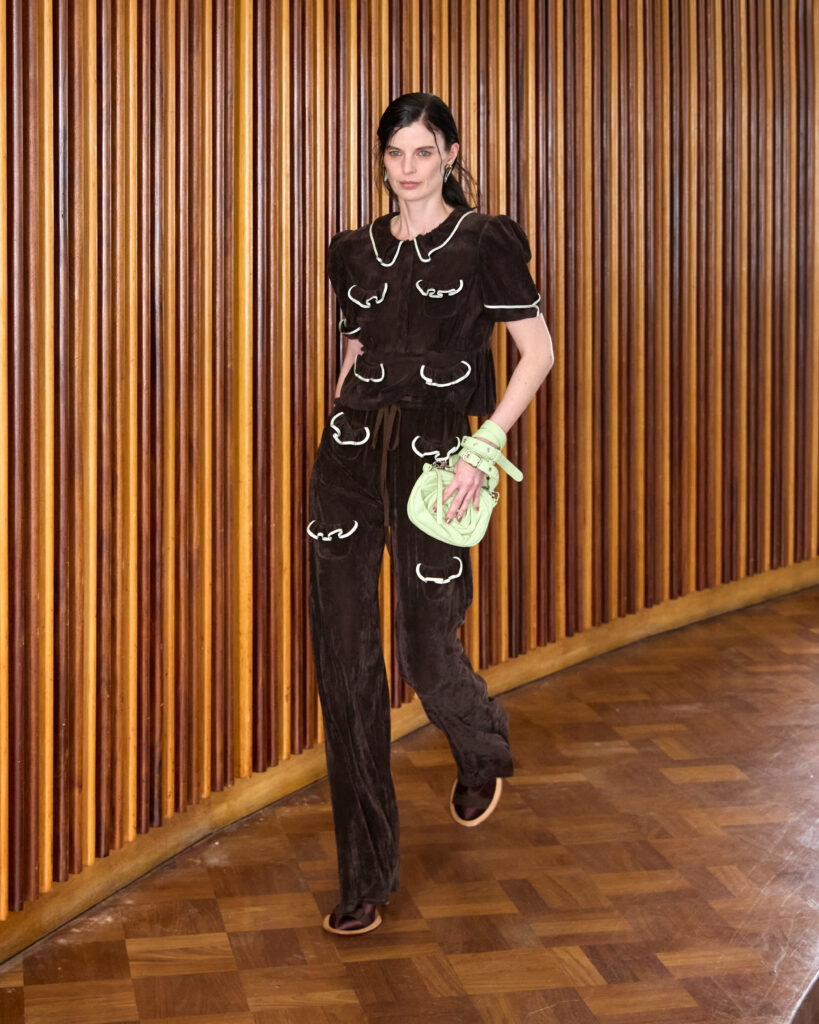
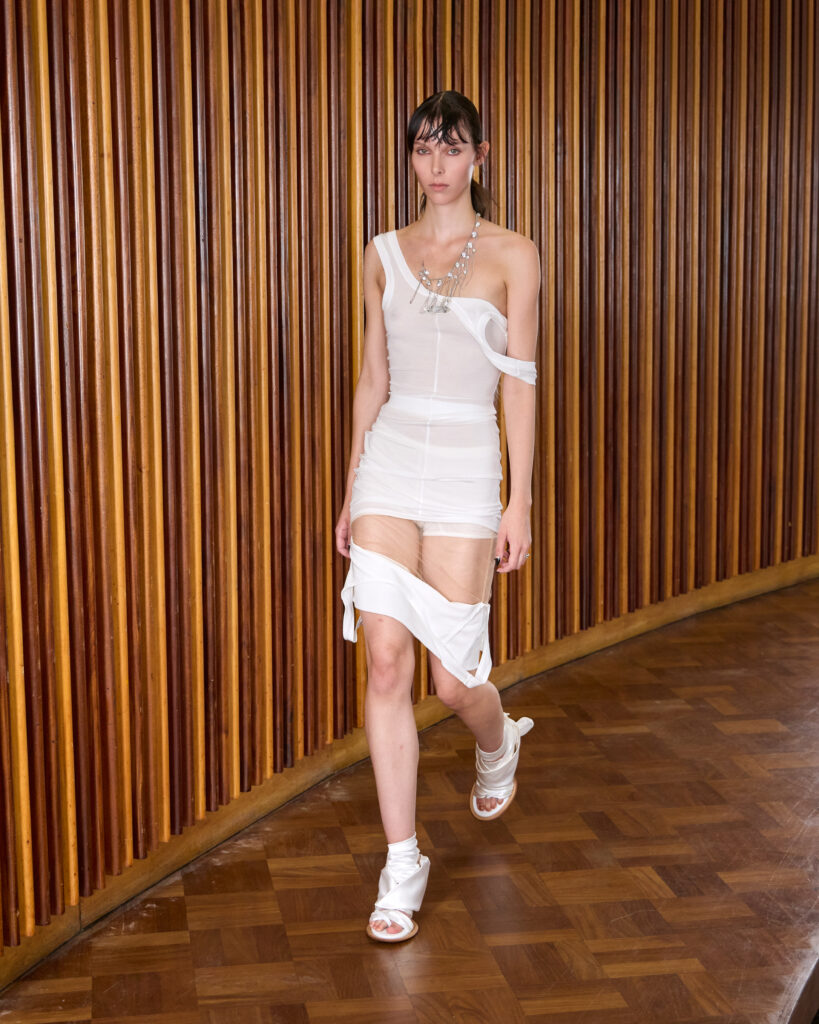
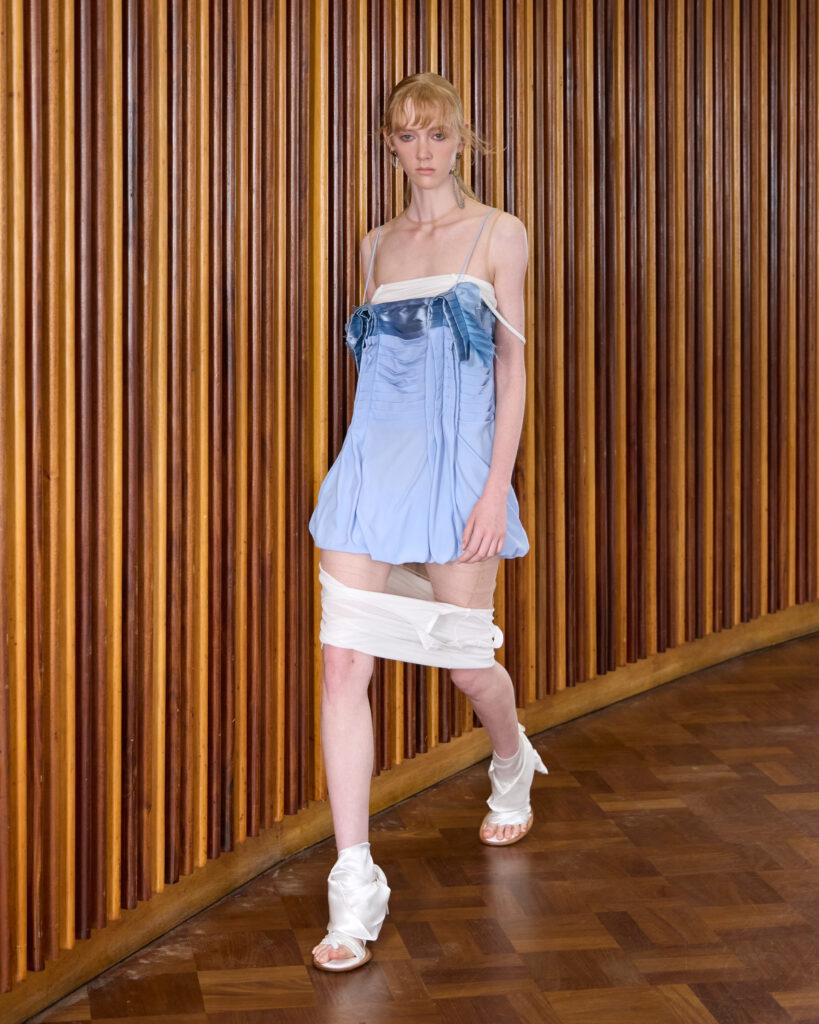
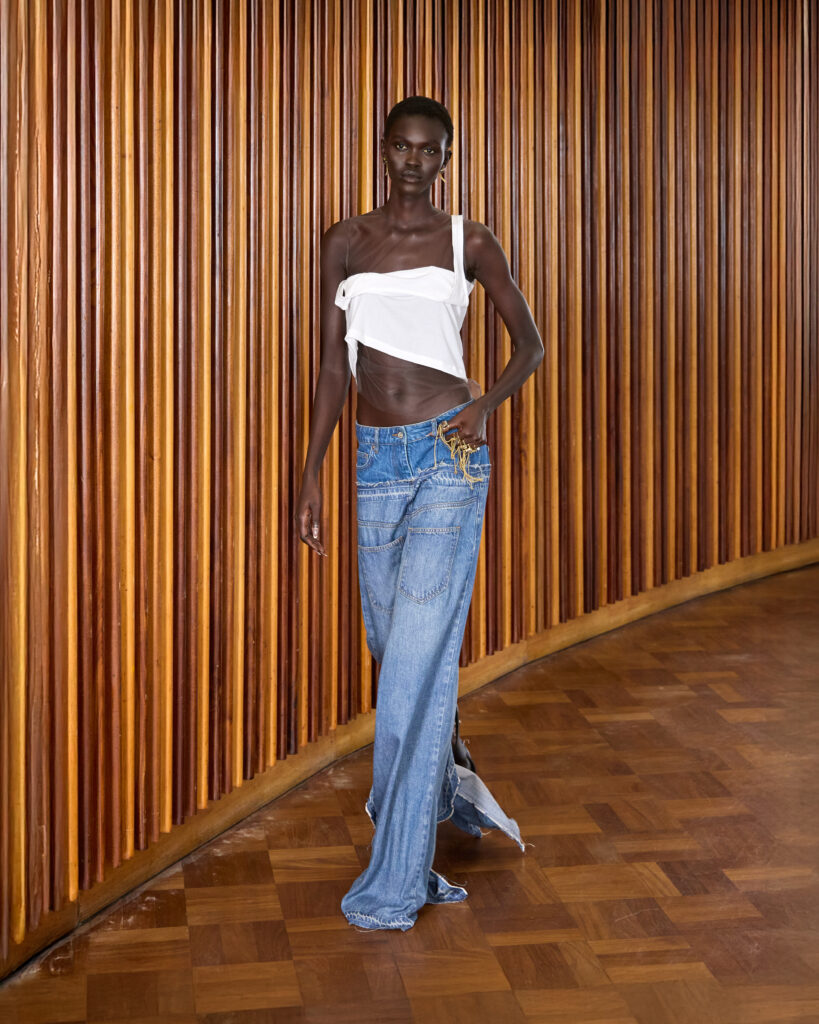
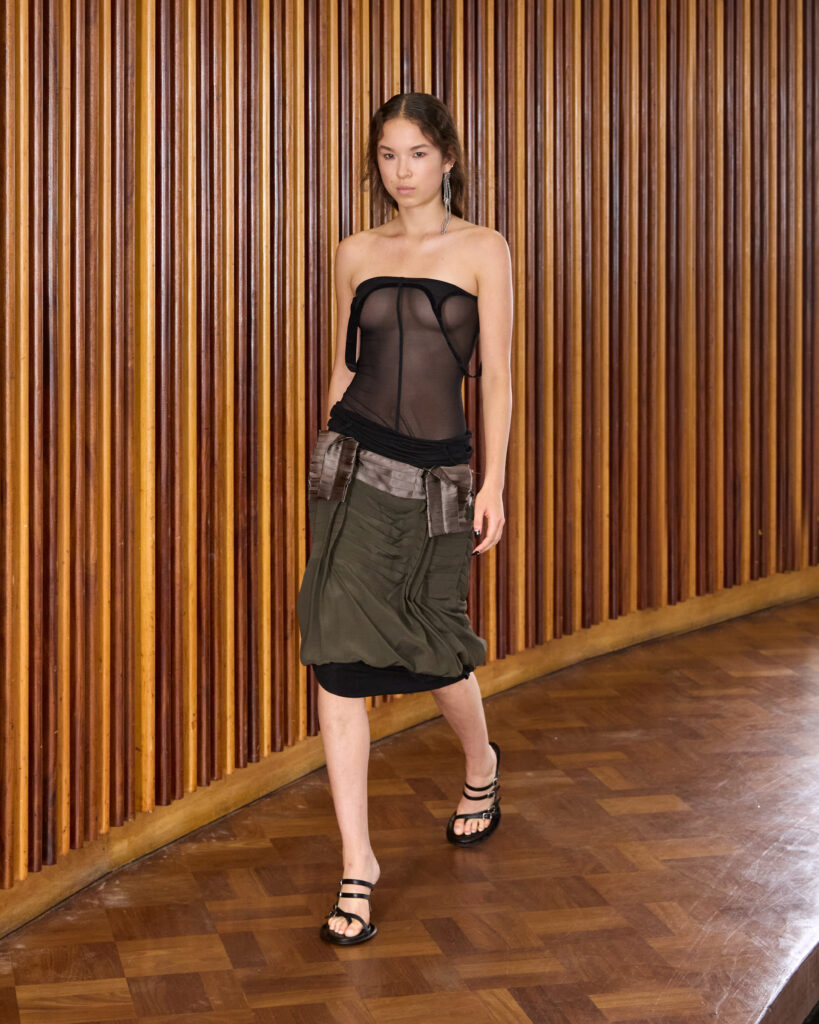
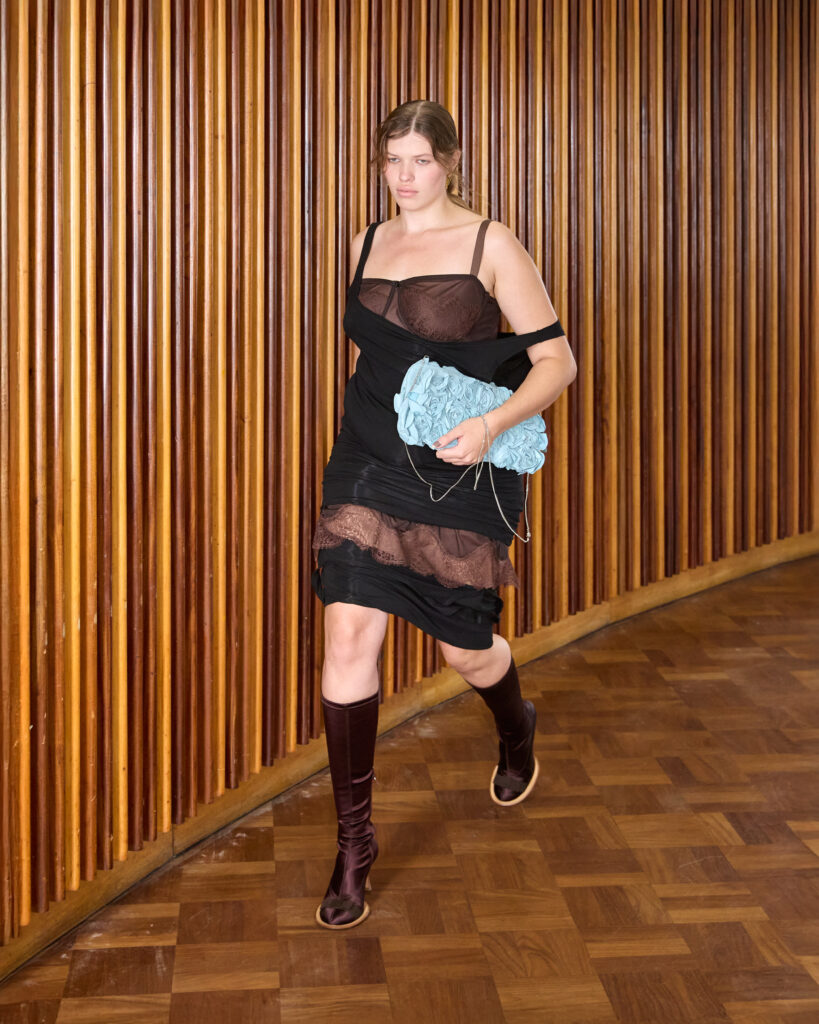
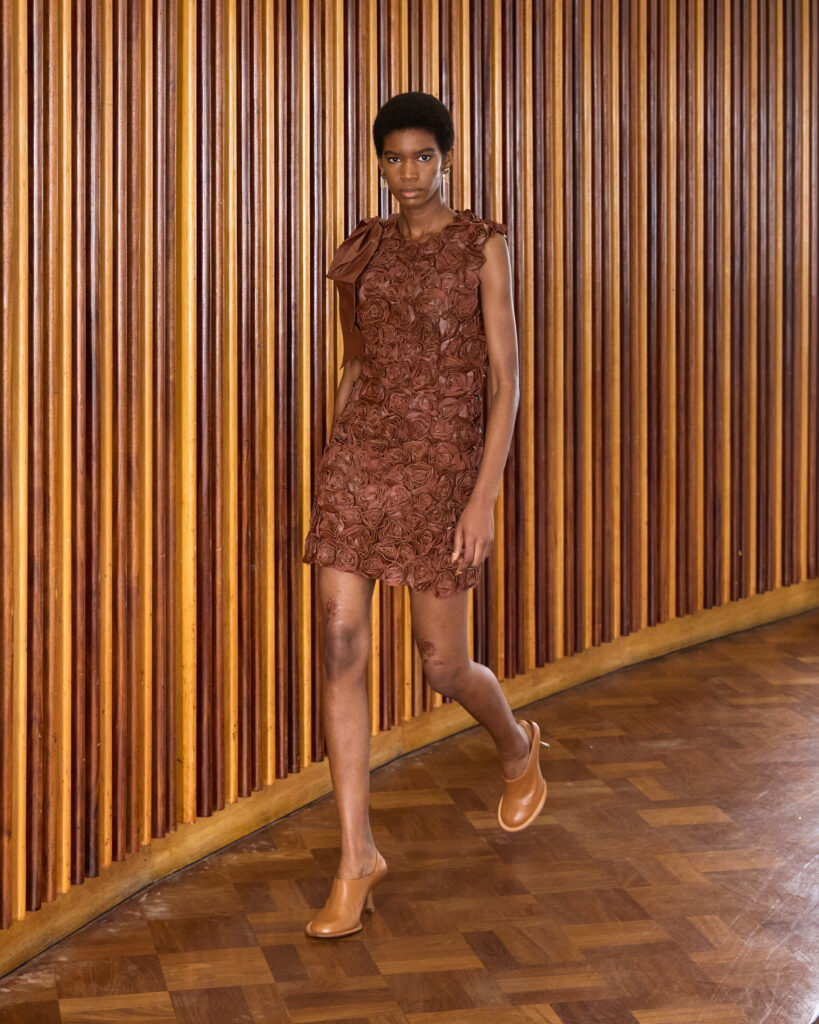
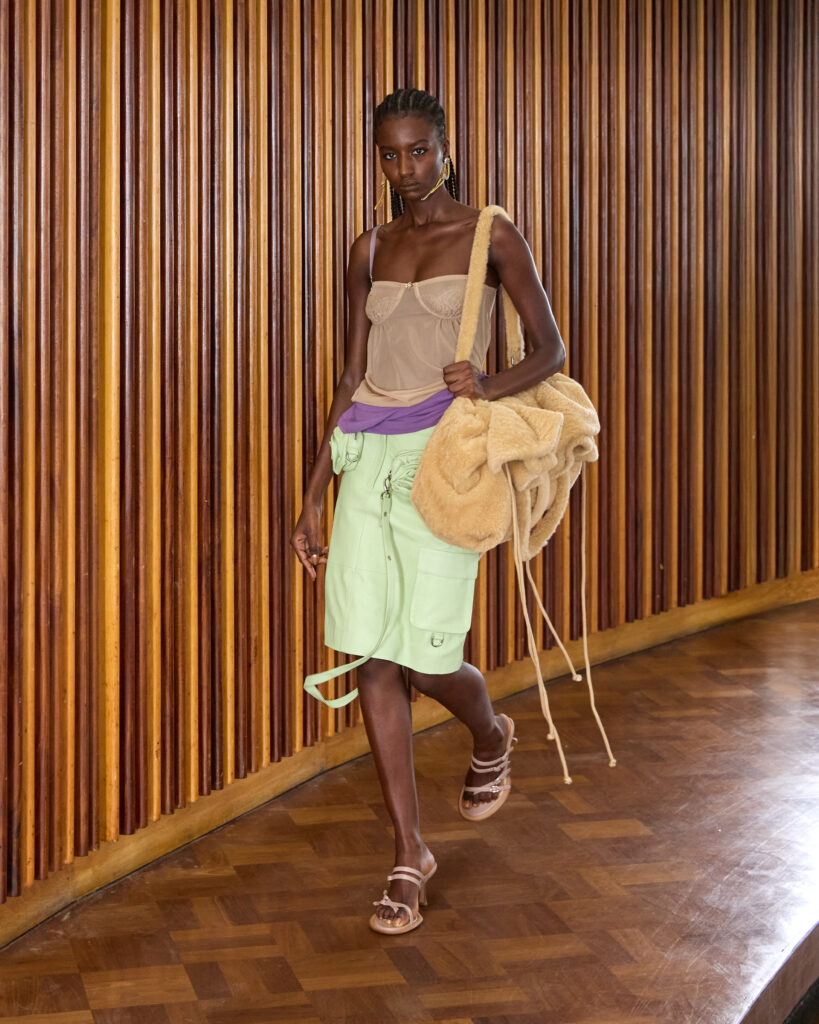
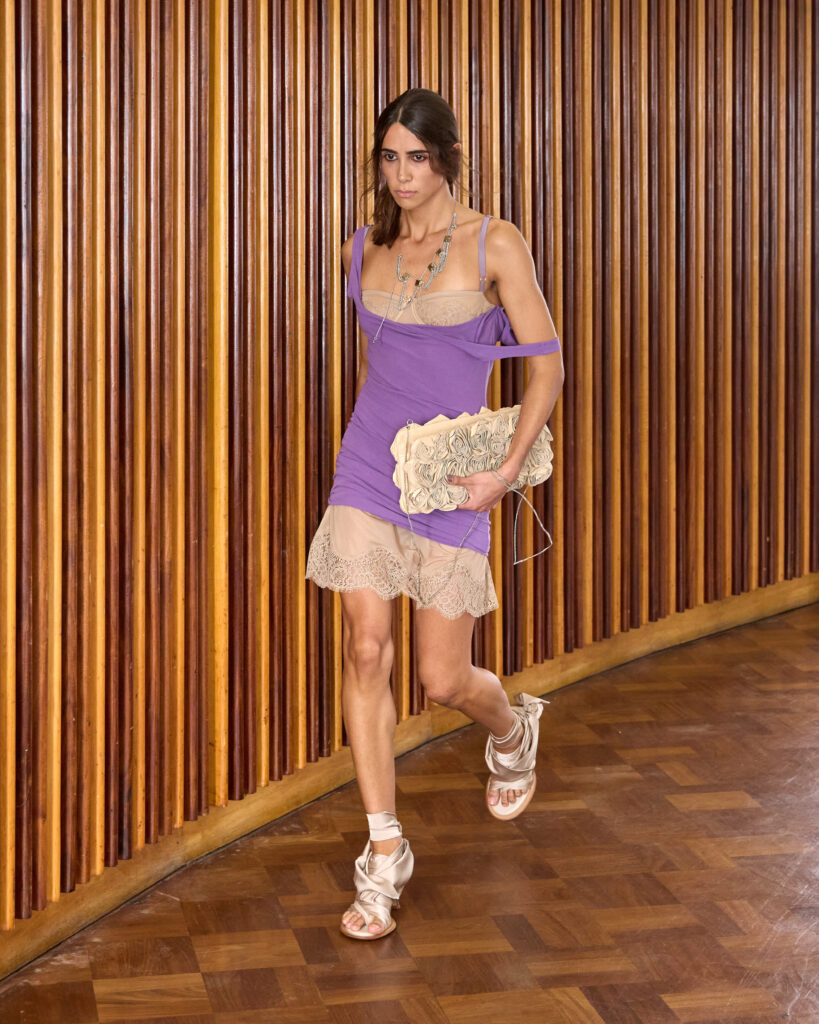
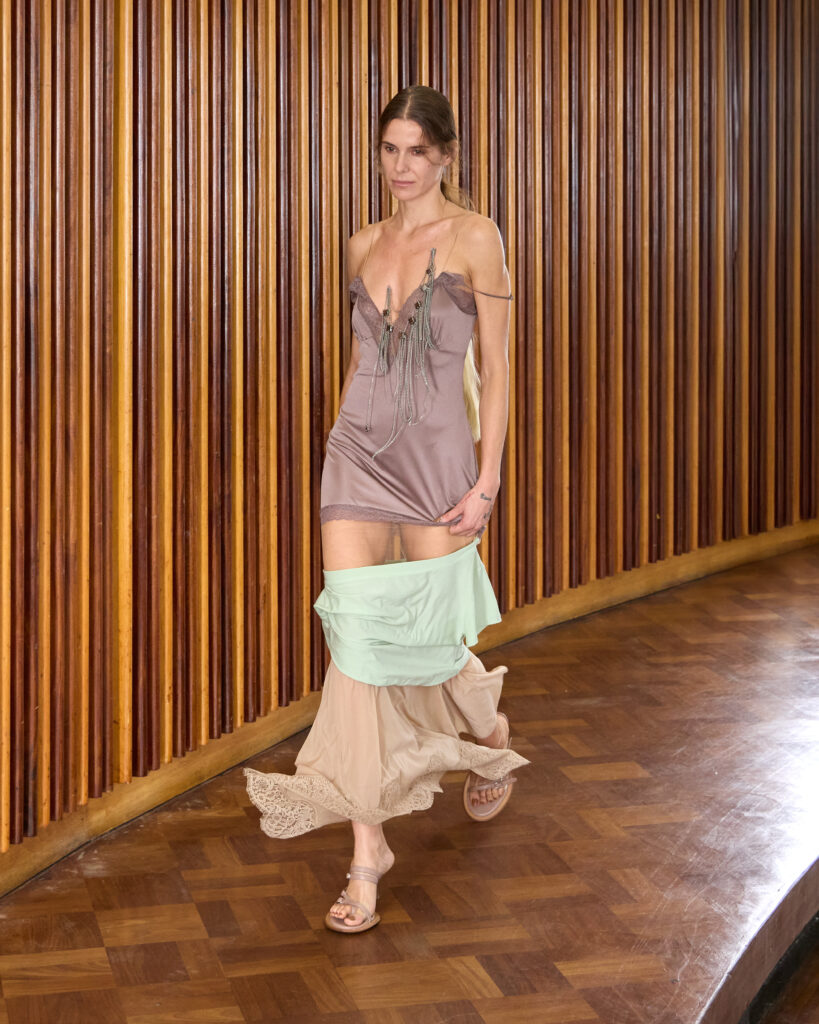
KNWLS explored the idea of coming undone for SS27, with clothes appearing to slip, unravel and fall apart while remaining carefully constructed. Gabardine wrap skirts sat low on the hip, while jersey vests, torn lace and slips hung from waistbands and hems, creating the impression that pieces had been caught mid-dress or were moments away from falling away.
The collection played with the contrast between structure and disarray. Prim jackets with gathered shoulders referenced 1930s couture, while sliced denim and skirts reconstructed from trousers disrupted their more polished silhouettes. The palette moved from pearlescent taupes, ochres and dusty khakis to brighter greens, blues and mauves, creating unexpected combinations across the looks.
Exposure also became part of the collection, with cropped gabardine trench coats and lambskin bombers featuring wide, drawstring collars, while corsets and lace camisoles incorporated exposed bra detailing. Printed gauze slips had boned hems that curved upwards, while tangled chain jewellery appeared to hang in motion. Crushed rose motifs were also pressed onto bullhide dresses, skirts and clutches, adding a softer detail to the more fragmented looks.
The collection took inspiration from Bettina Rheims’ photographs of women in states of undress, using exposure as a way of exploring self-expression and control. KNWLS also brought this idea into the show space through Escentric Molecules’ Escentric 01, a scent designed to shift with the individual wearer. Rather than treating imperfection as a loss of control, SS27 presented dishevelled silhouettes and exposed construction as deliberate acts of self-possession.
Roksanda puts a sophisticated spin on grunge
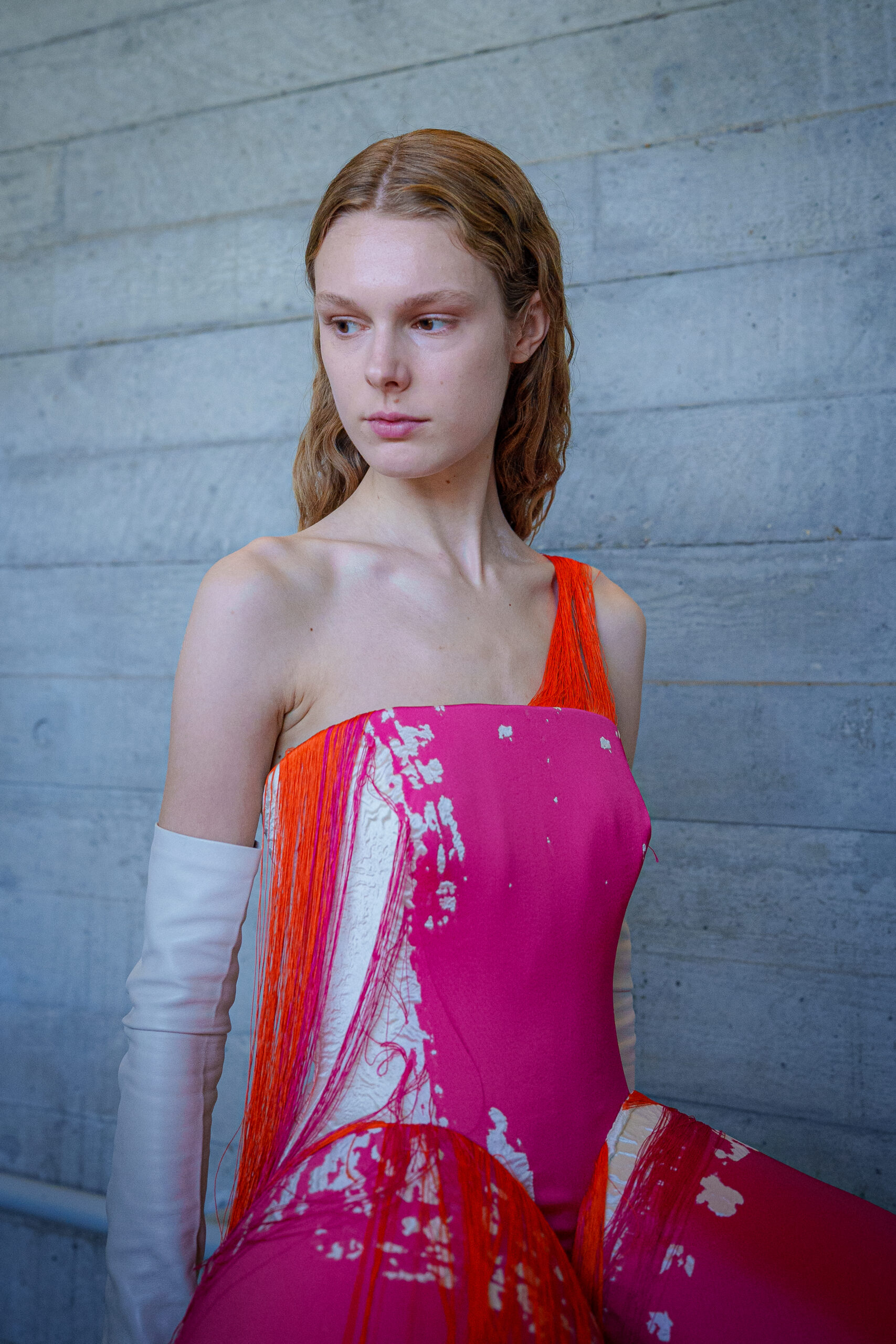
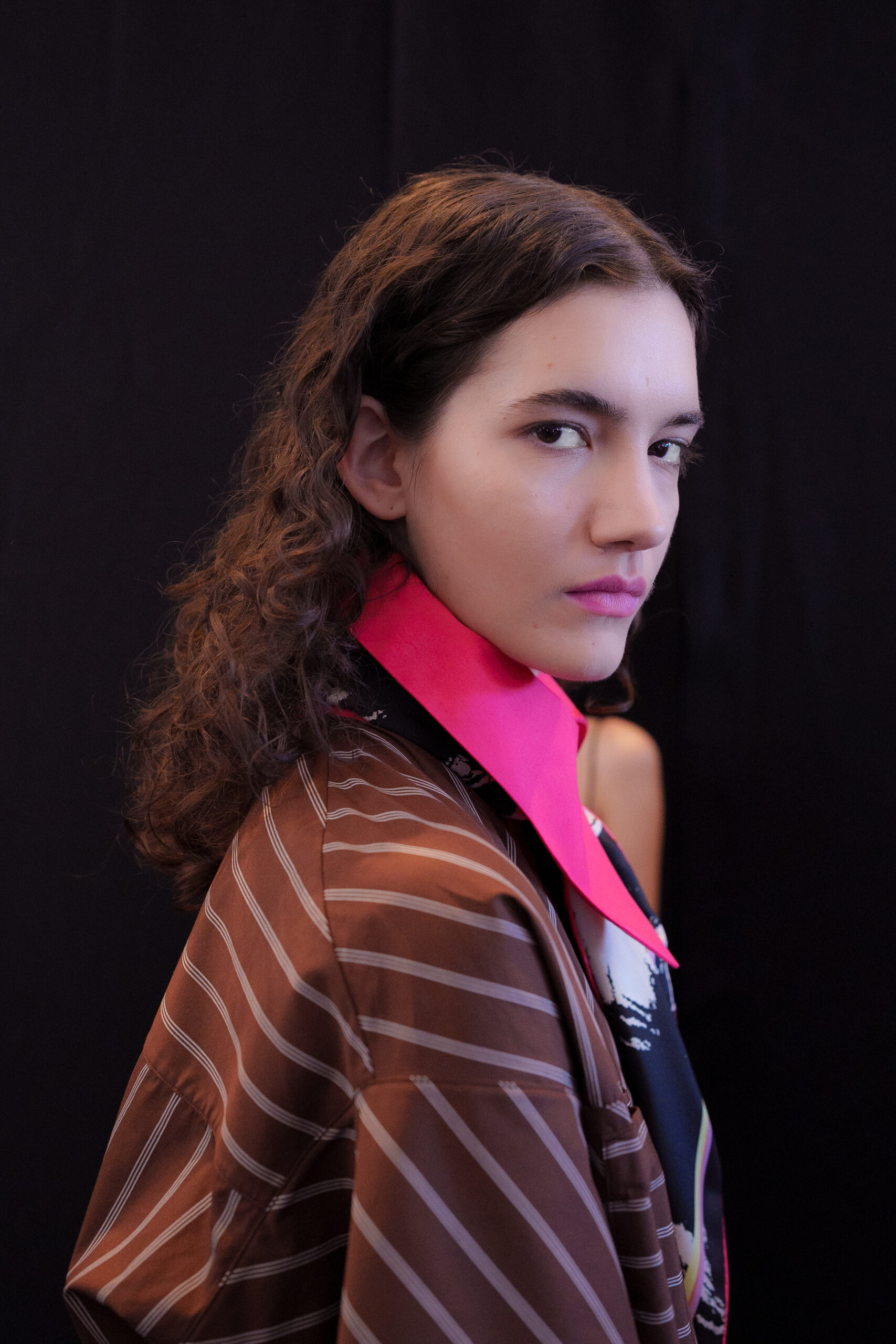
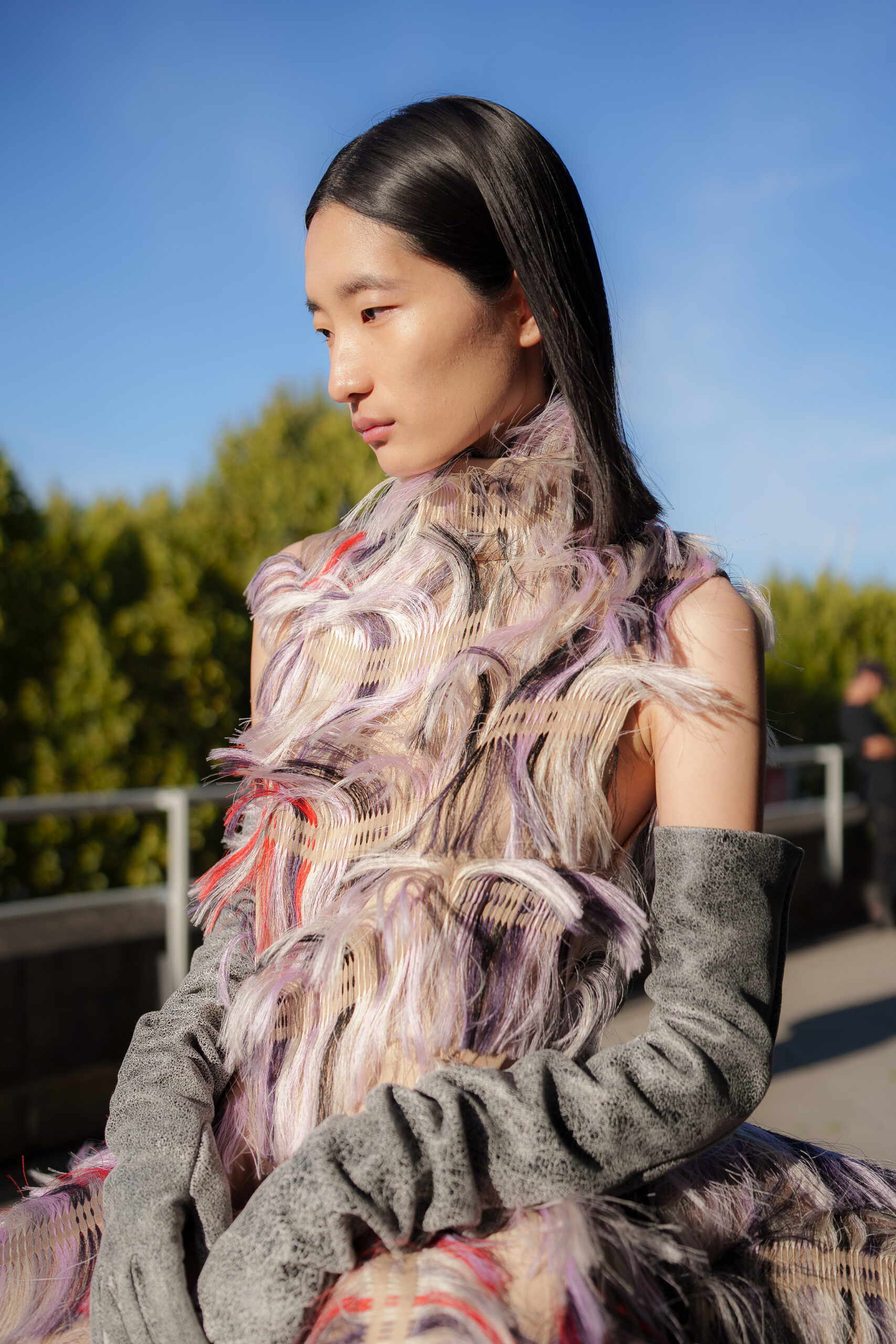
Roksanda put a polished spin on grunge for SS27, sending loose threads, oversized tailoring and trailing fabrics down the runway at London Fashion Week. The show took place on the outdoor terrace of the National Theatre on London’s South Bank, where colourful strands stood out against the building’s concrete walls.
The collection was inspired by Swiss-born artist Françoise Grossen and her large-scale sculptures made from braided and knotted rope. That influence appeared throughout the clothes, from shaggy fringed accessories and scarves thrown over tailoring to garments covered in loose threads. Traditional suiting was given a more relaxed edge, with oversized coats, wide-leg trousers and pinstripes mixed with bright gloves and colourful accents.
The palette moved from black, ivory and chocolate brown into hot pink, turquoise, yellow and lime green, with several looks combining multiple shades. Abstract prints featuring faces appeared across silk scarves, dresses and oversized tops, while eveningwear pushed the collection’s threadwork further. Dresses covered in dense layers of multicoloured strands gave way to more sculptural gowns, including an oxblood strapless dress with curved panels extending from the hips and a final black gown with an asymmetric neckline.
The beauty look kept the focus on individuality, with hairstylist Anna Cofone working with each model’s natural texture rather than creating a uniform finish. Waves, curls and straighter textures were kept close to the head and tucked behind the ears, providing a simpler contrast to the clothes. Together, the natural hair and loose threads captured the collection’s balance between structure and freedom, bringing an undone quality to Roksanda’s otherwise highly polished aesthetic.
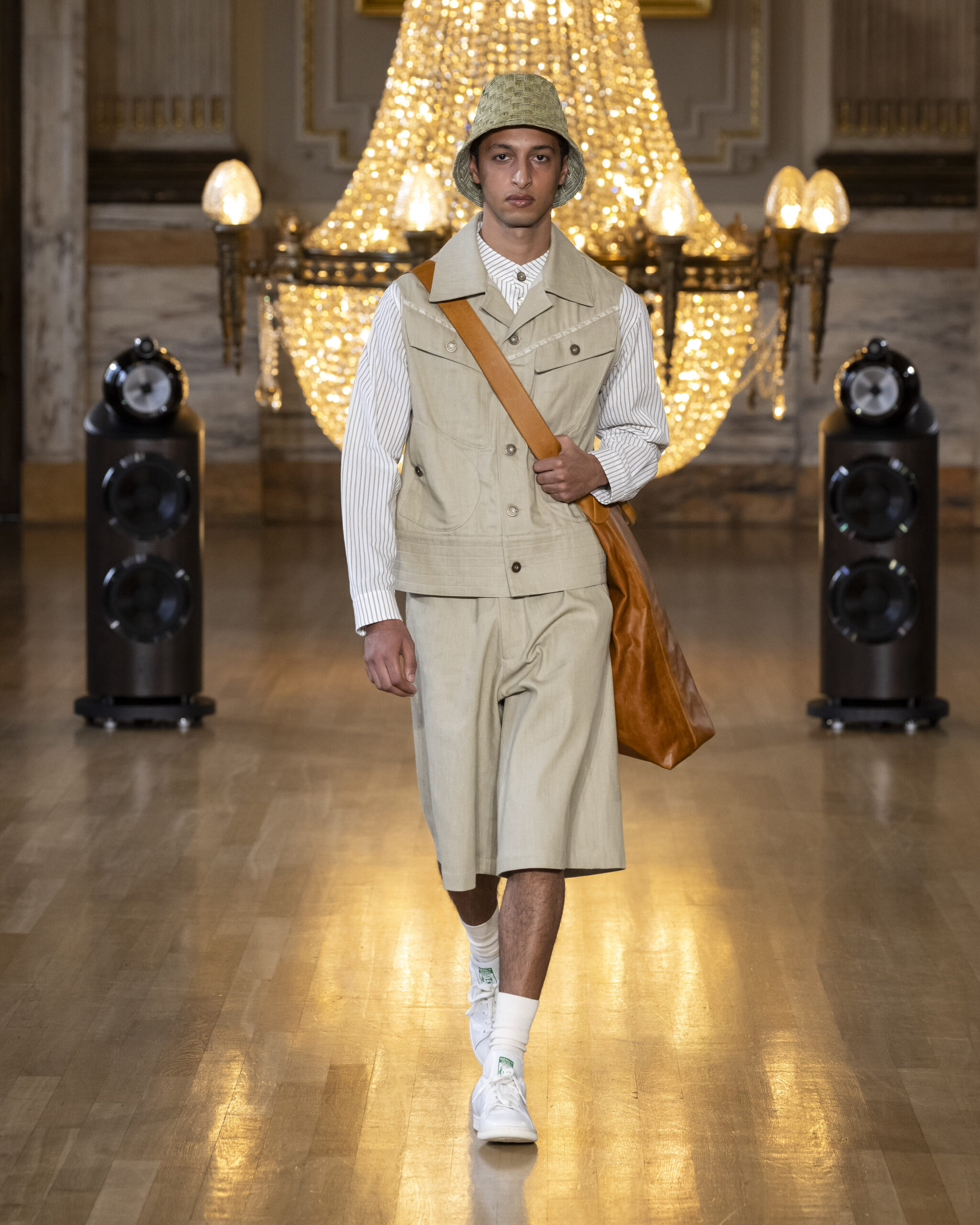
Labrum presents final chapter of its Osmosis Trilogy, exploring craft across borders
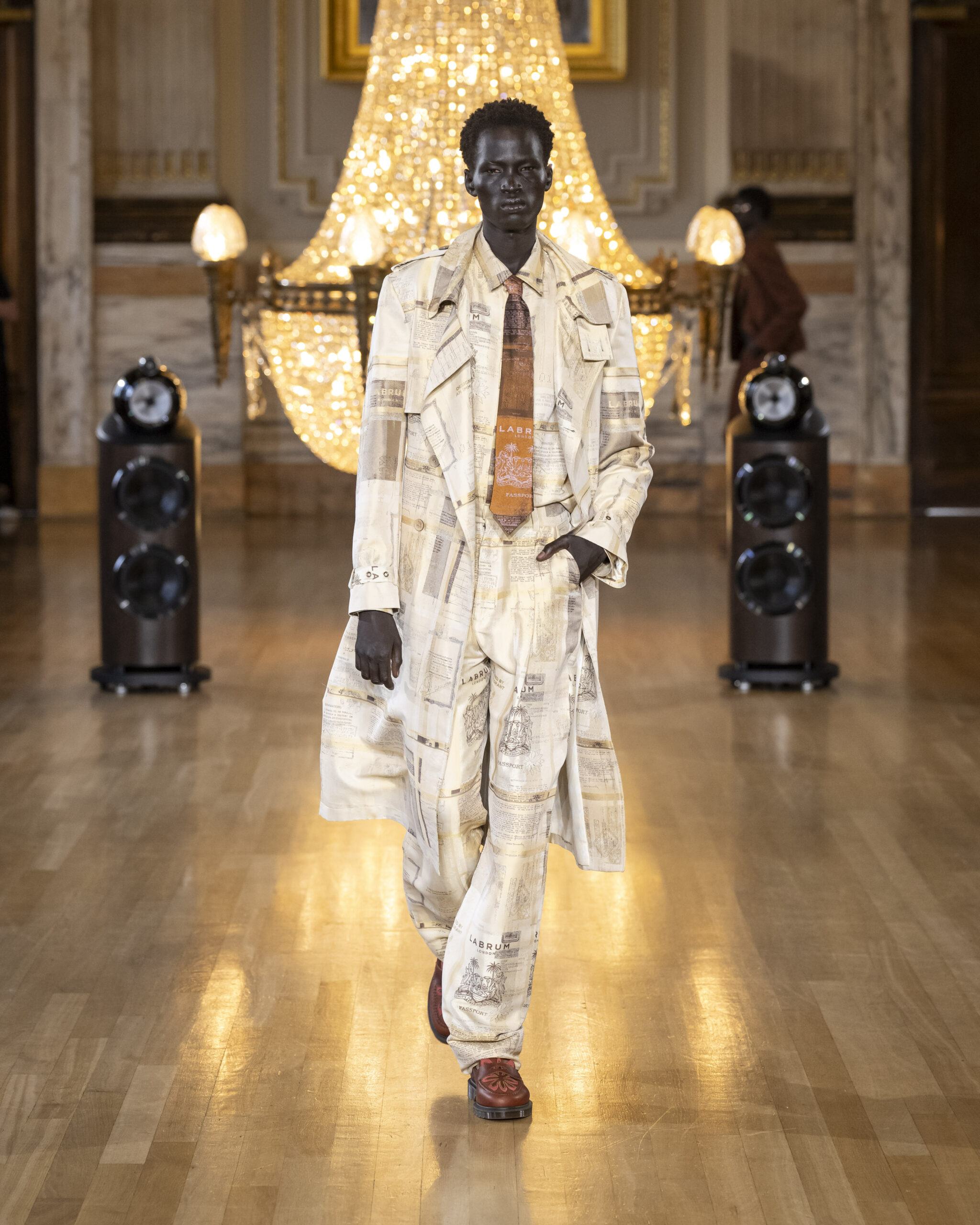
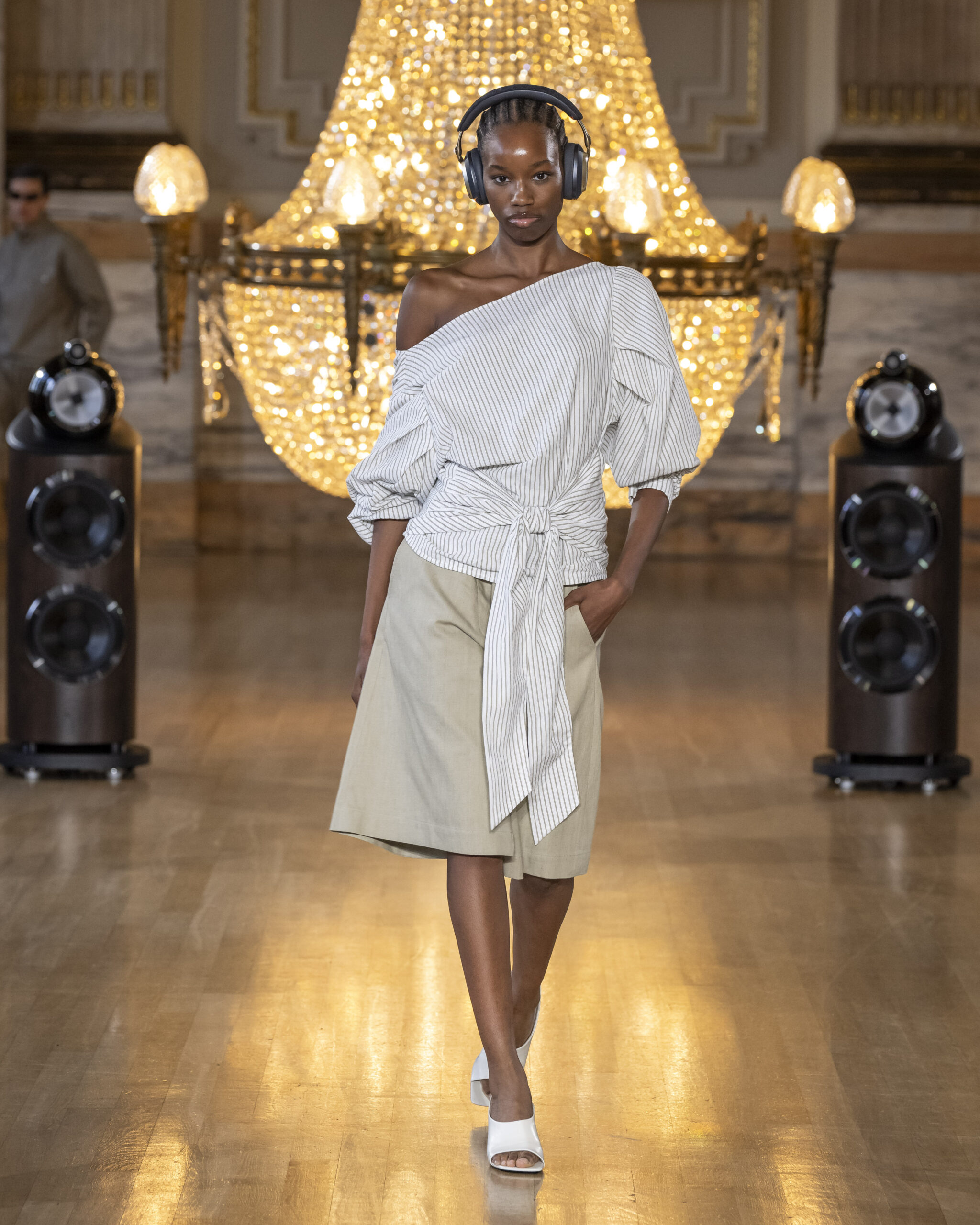
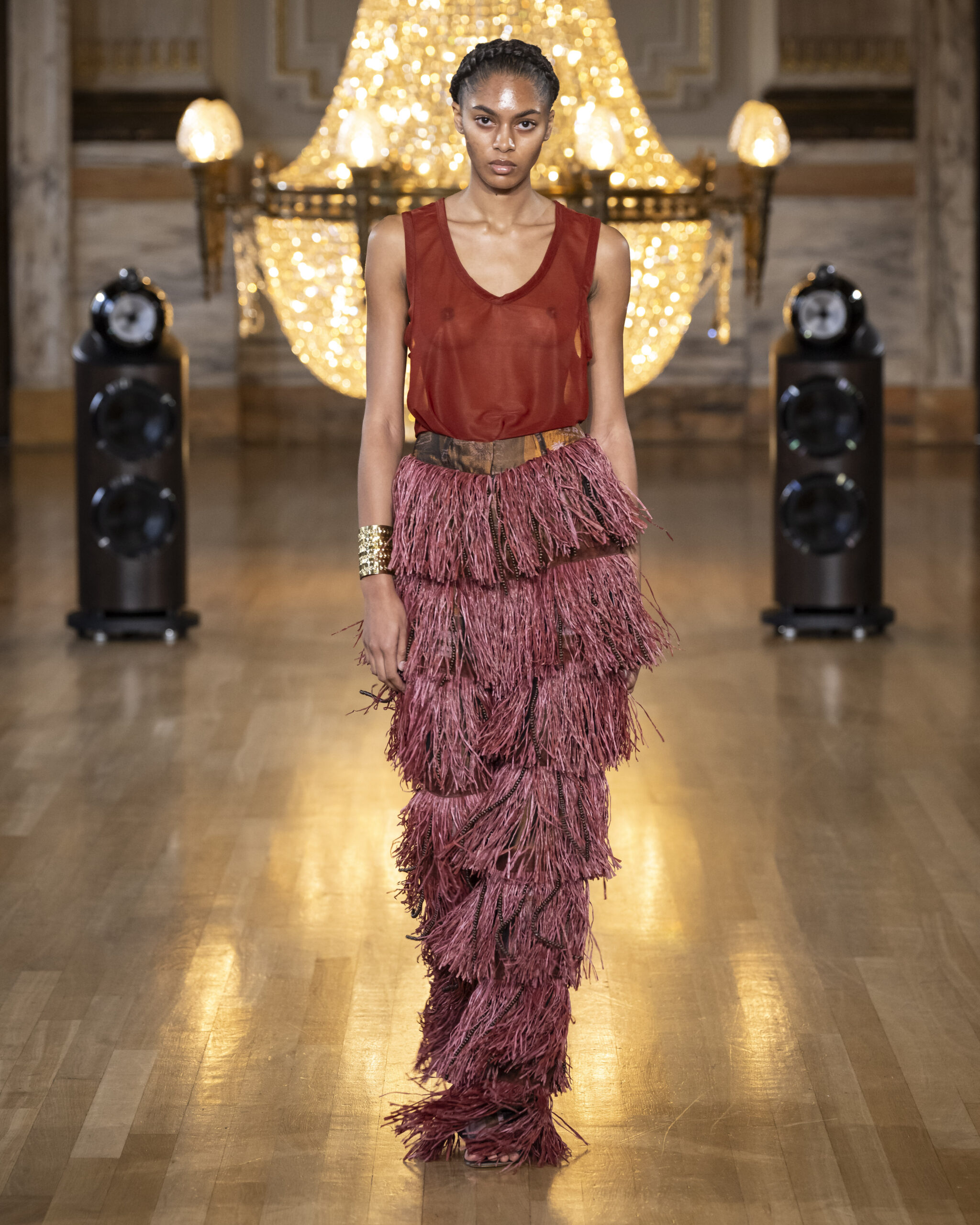
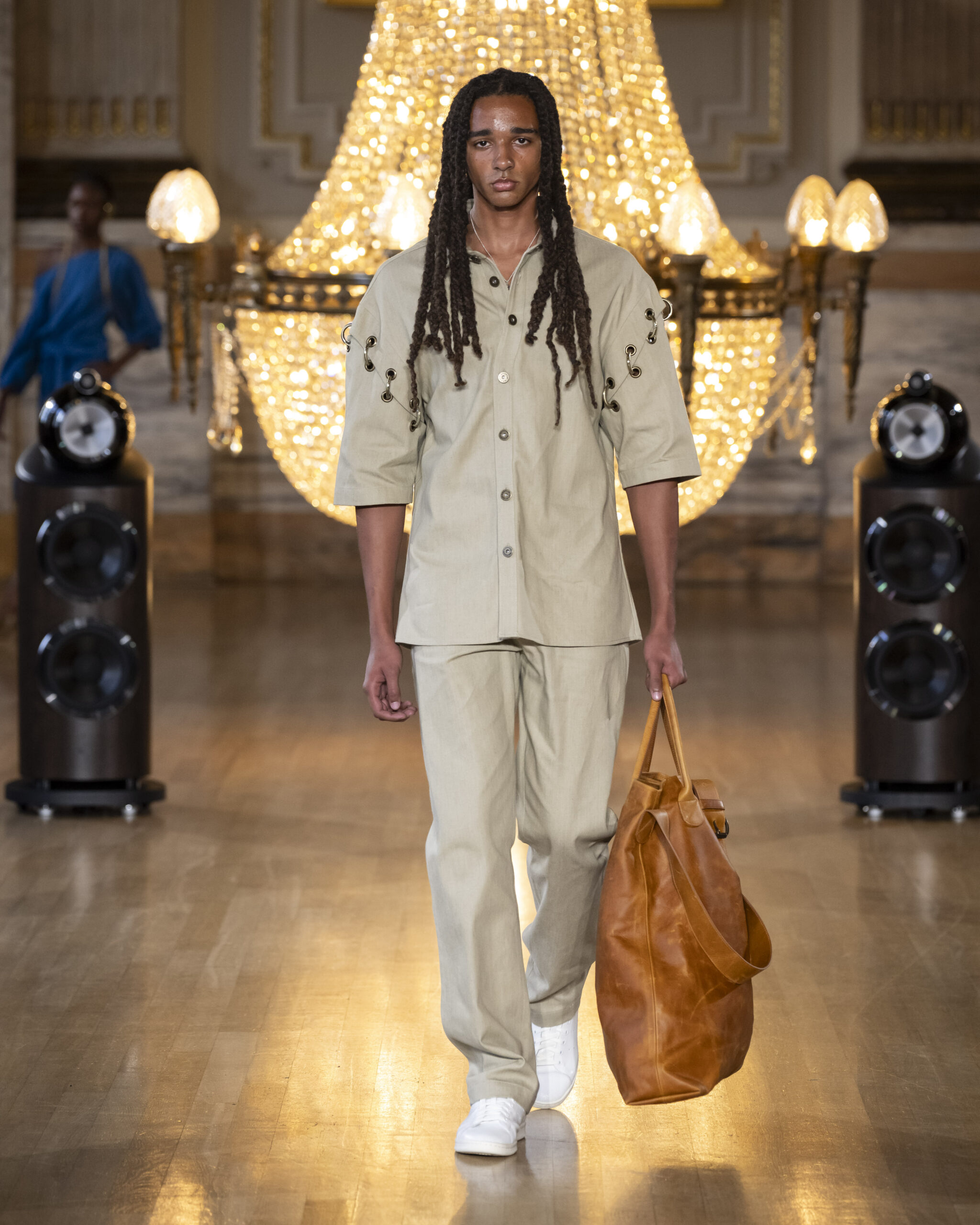
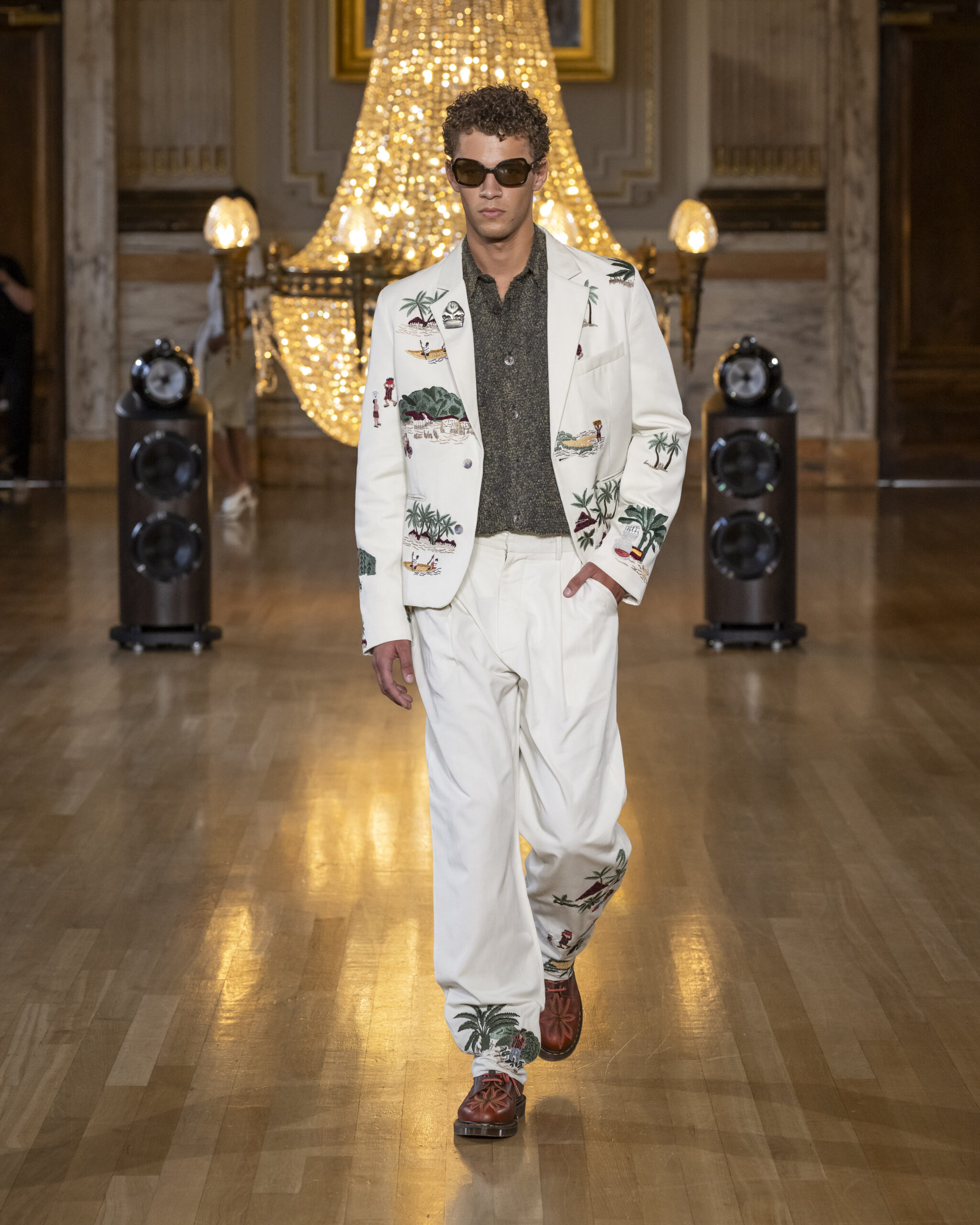
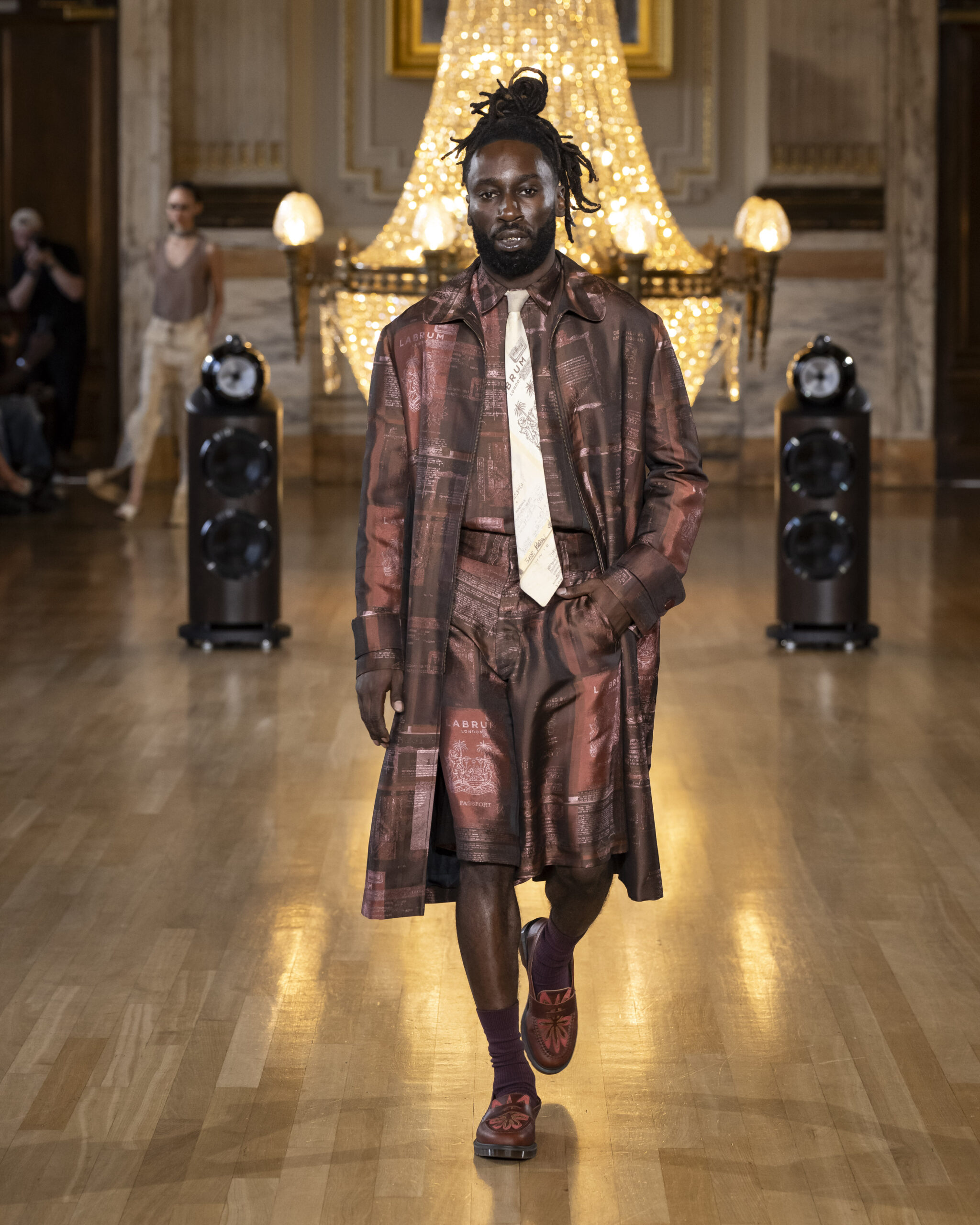
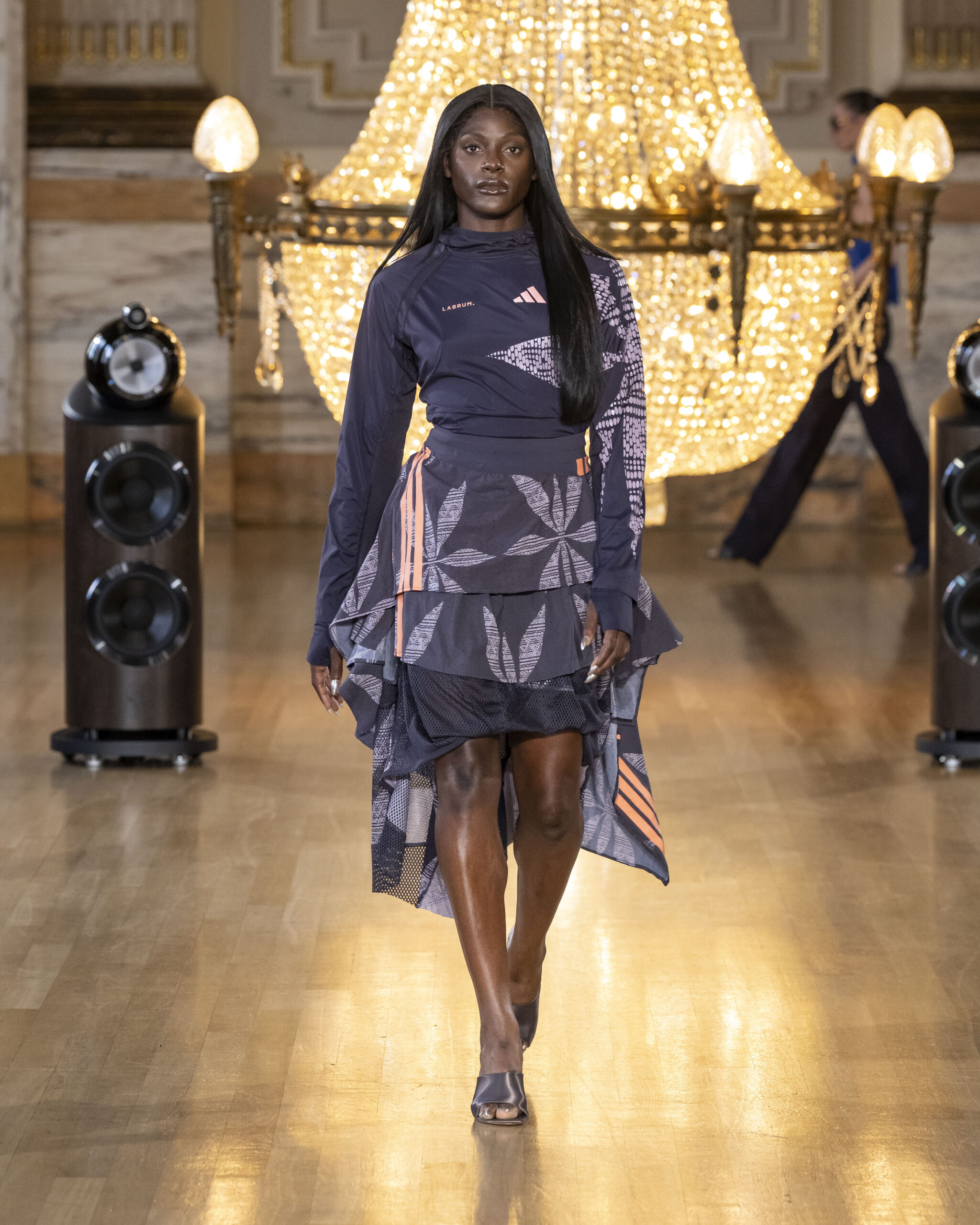
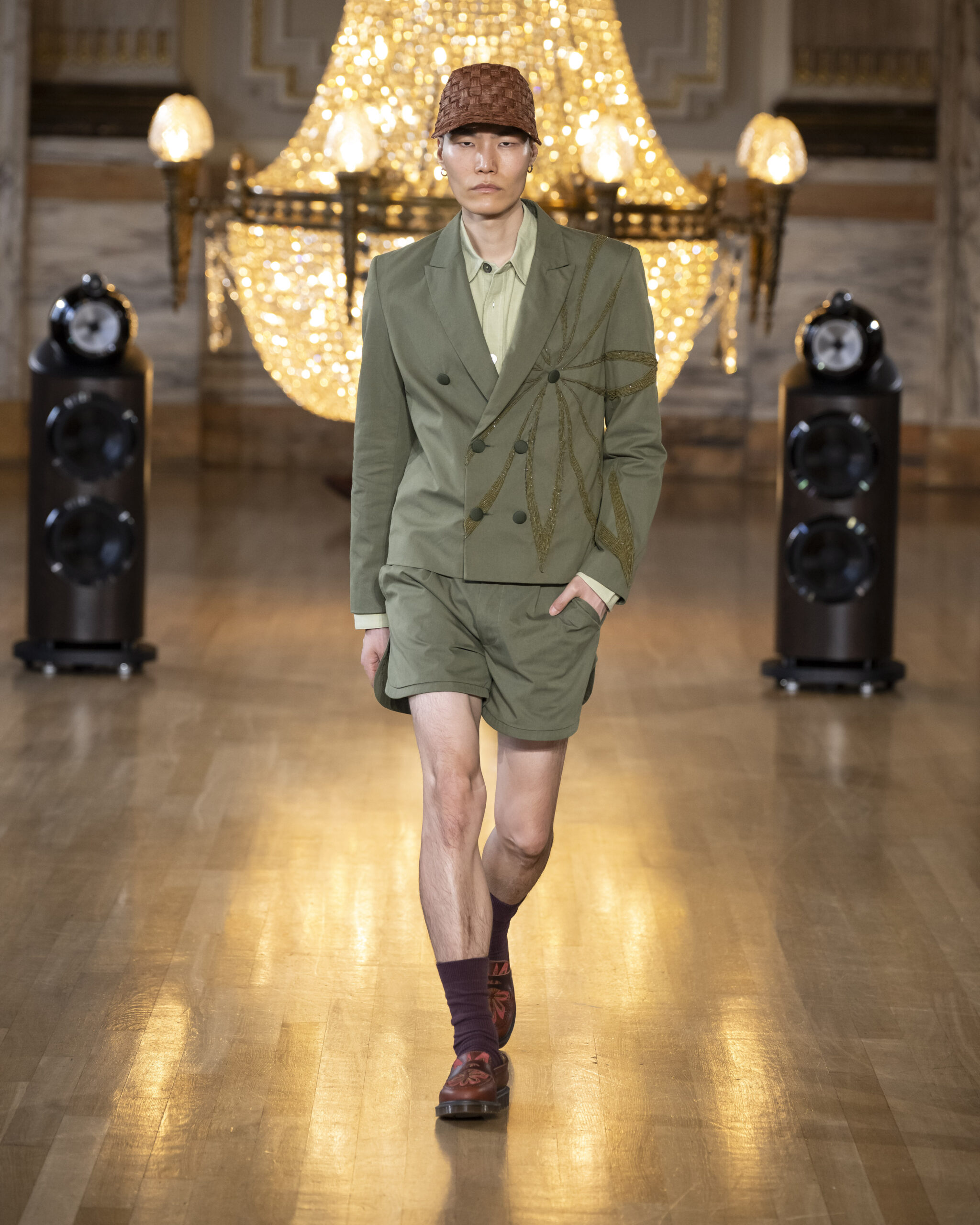
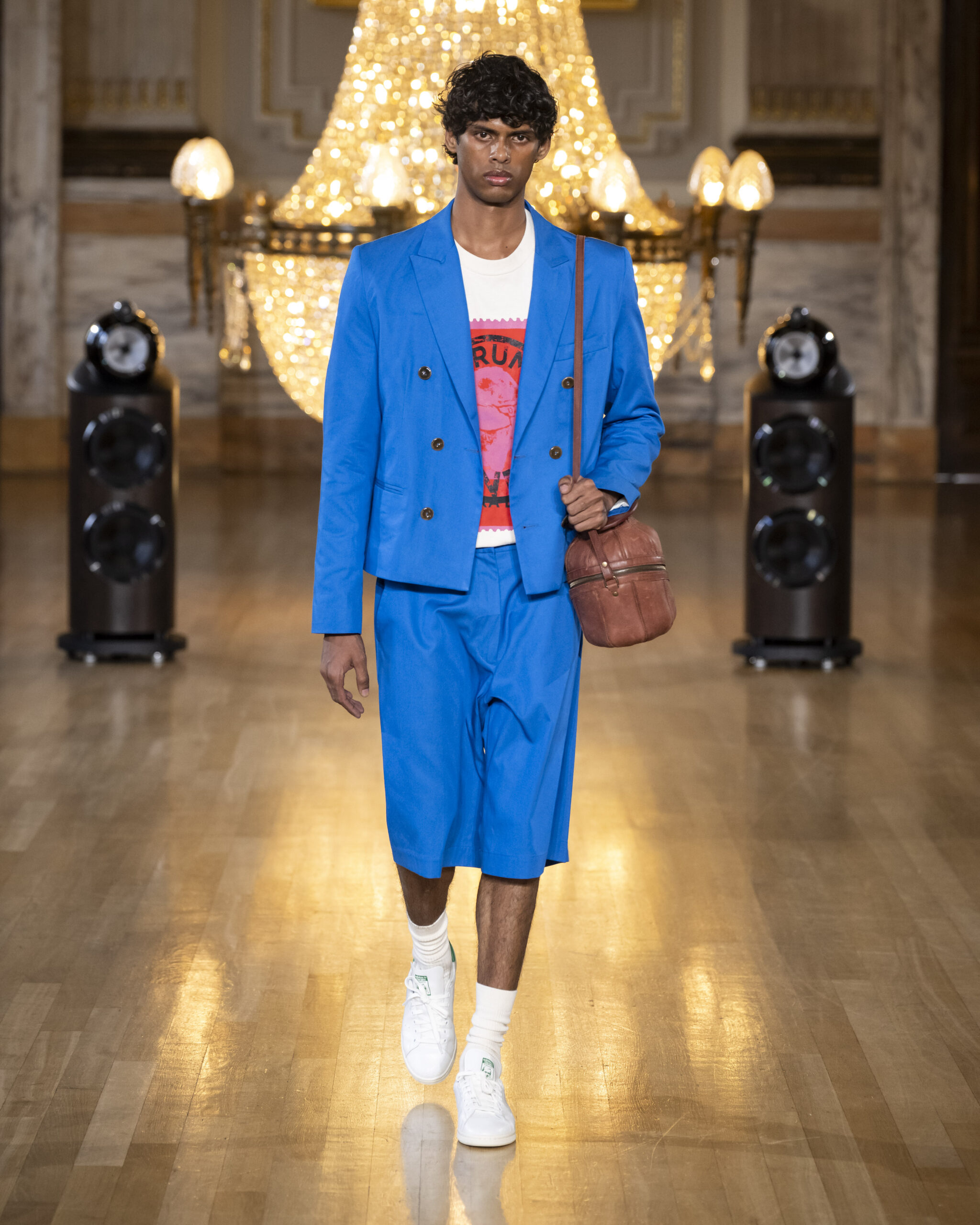
Labrum’s spring/summer 2027 show, Hands of Osmosis, marked the final chapter of its Osmosis trilogy, exploring how culture moves across borders. Following previous chapters focused on music and textiles, this collection celebrated craft as a vehicle for carrying culture, knowledge and identity across generations. Rooted in the relationship between West Africa and Britain, it explored how traditional practices evolve through migration and cultural exchange.
The collection draws on weaving, embroidery, leatherwork, beading and tailoring, connecting craft traditions from West Africa, India and Britain. Key pieces included handcrafted raffia trousers inspired by Mende masquerade traditions, woven headwear created with British milliner Lucy Barlow, sculptural leather bags influenced by West African ceramics and woodcarving, and the ‘Mamie Bakie’ embroidered garments inspired by memories of Labrum founder Foday Dumbuya’s grandmother in Sierra Leone. Nigerian Adire textiles also informed the Olokun flower motif, reinterpreted across contemporary sportswear.
The collection showcased Labrum’s AW26 adidas footwear and apparel collaboration alongside the adidas Stan Smith London Pack on the runway. The full adidas collaboration will be available from 1 October. It also featured partnerships with Dr. Martens and Bowers & Wilkins.
Ultimately, Hands of Osmosis presented craft as a living form of cultural history rather than something fixed in the past. Inspired by the hands that weave, stitch, carve, mould and create, the collection reflects how traditions travel with people, adapt to new environments and gain new meanings. Through its designs, collaborations and presentation, Labrum celebrates the makers whose knowledge continues to shape identity across generations and borders.
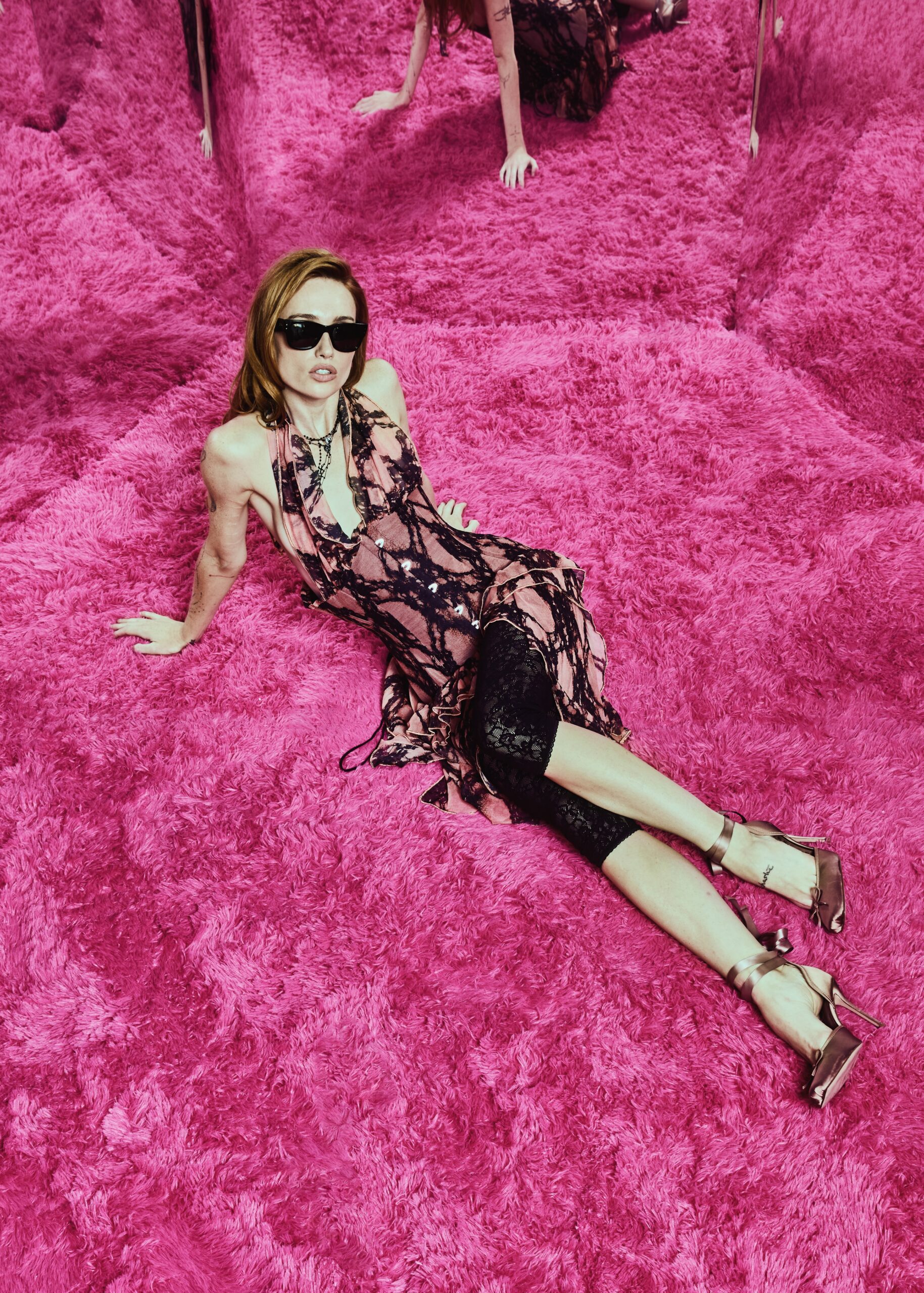
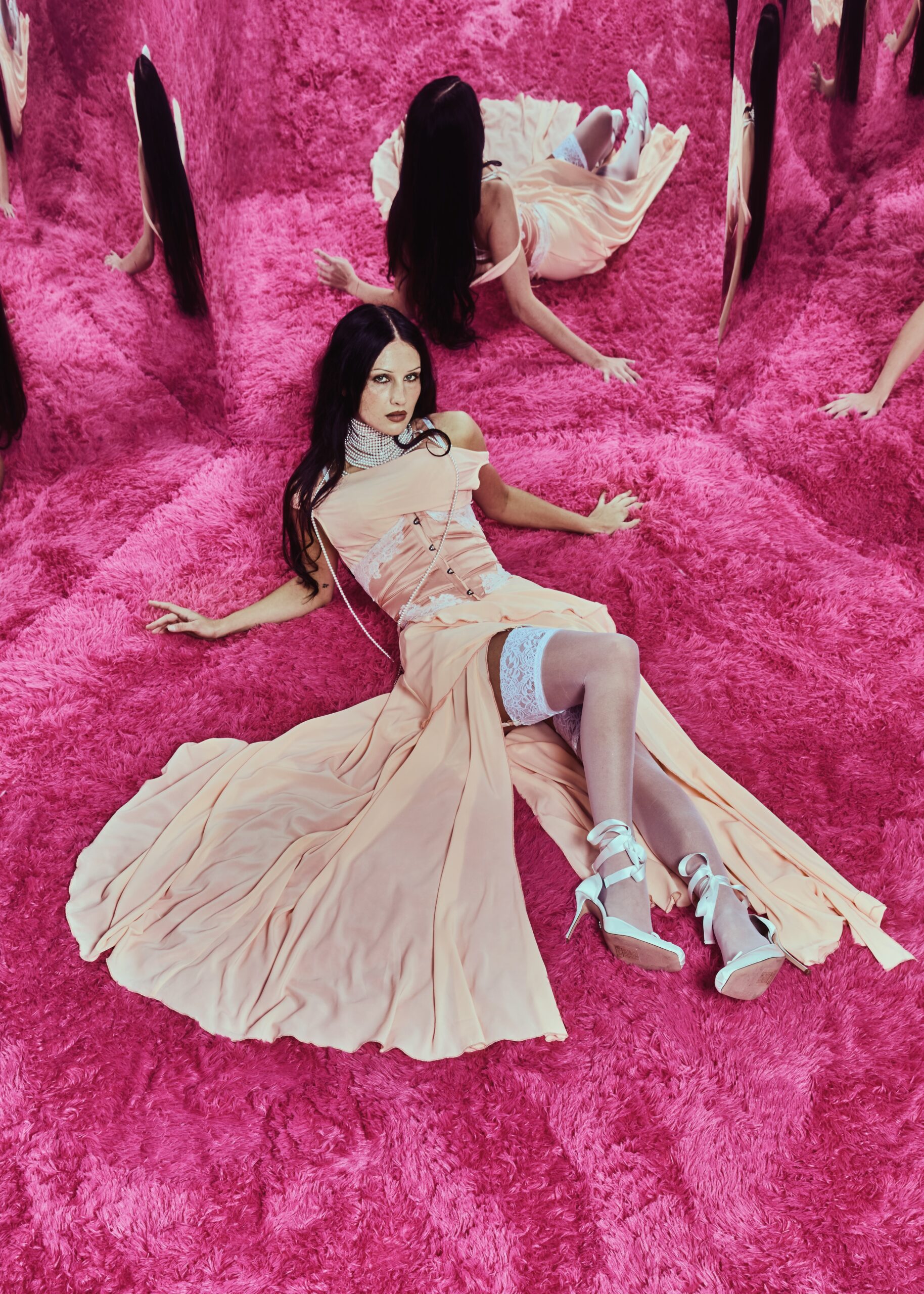
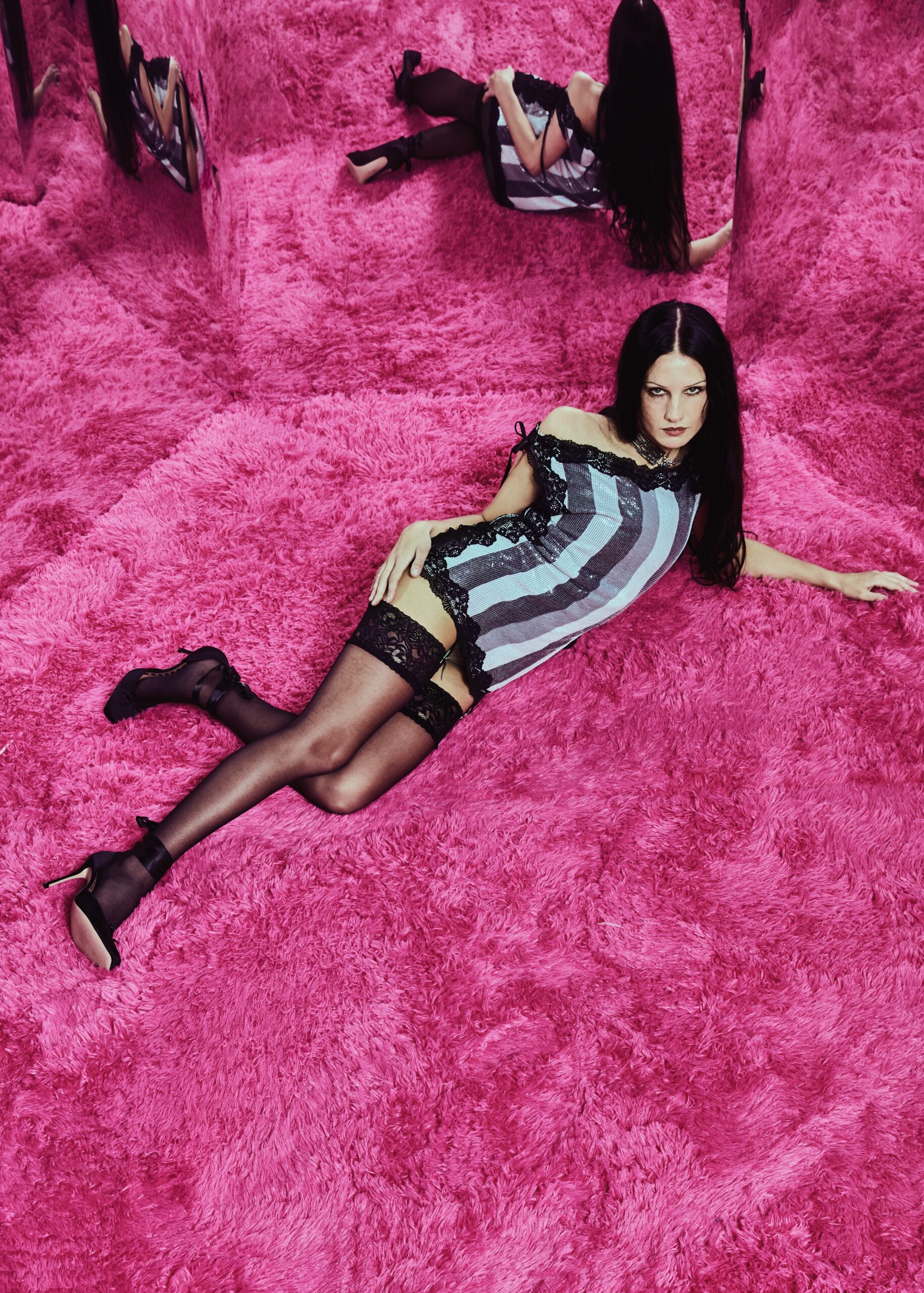
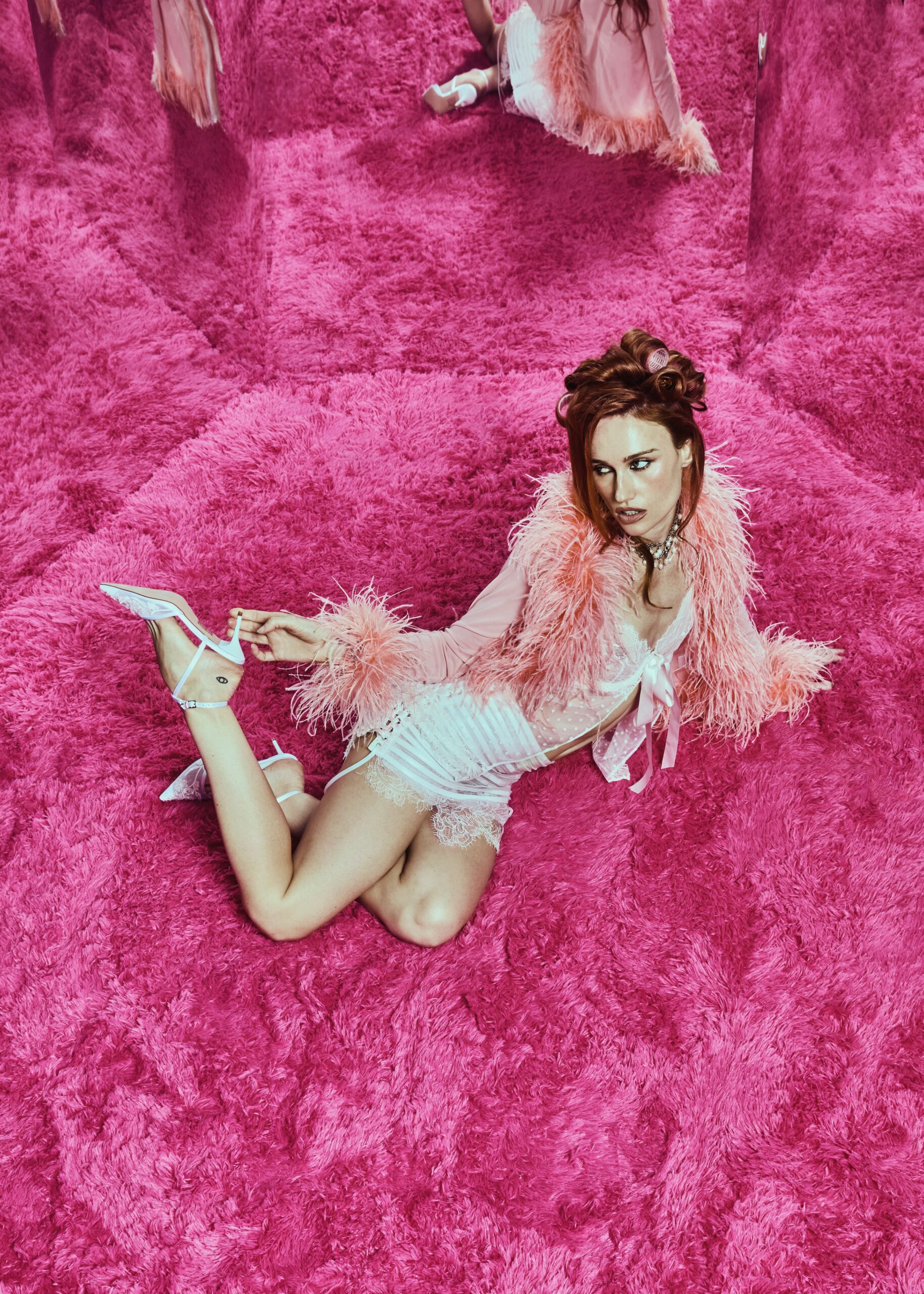
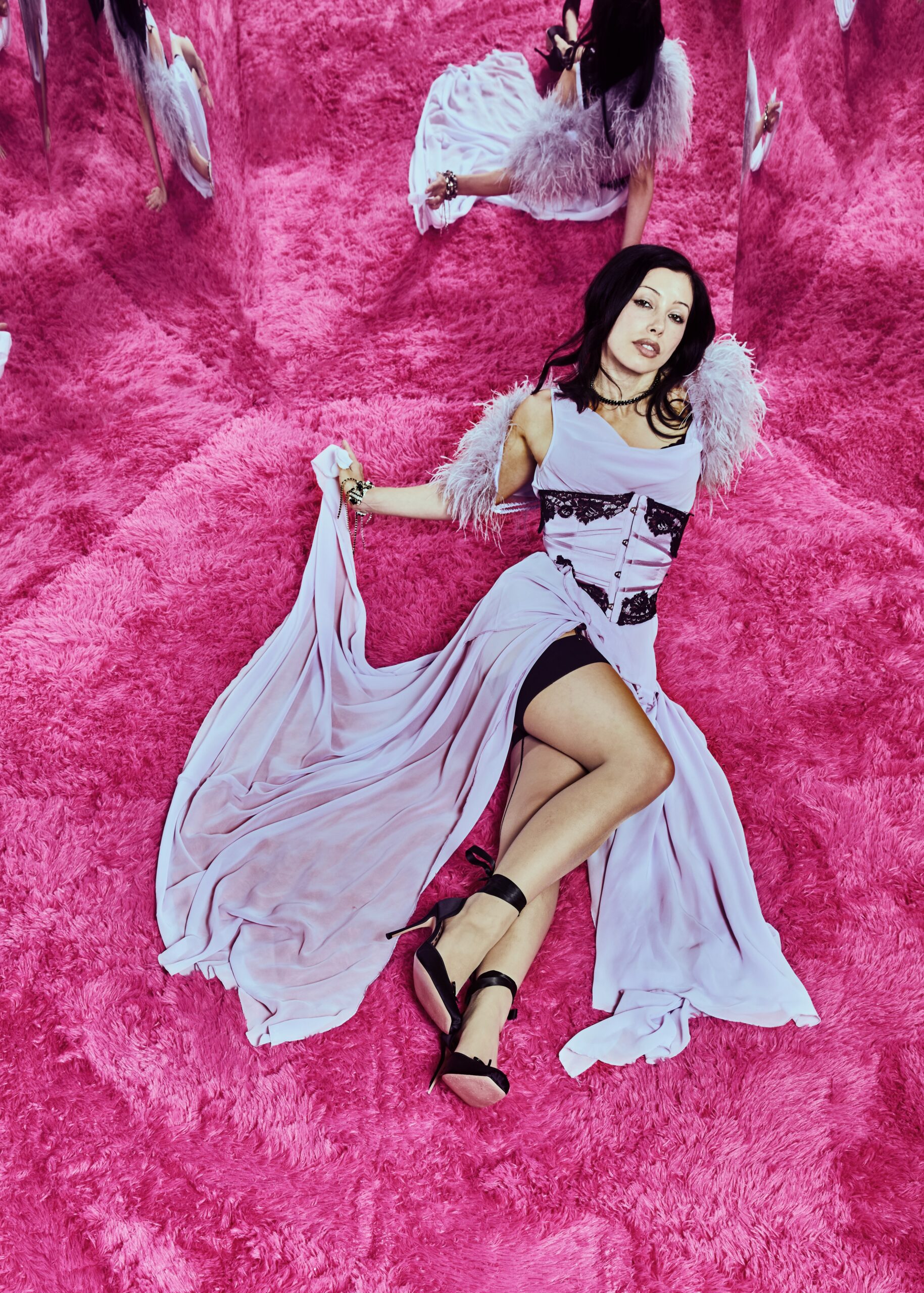
Sinead Gorey hosts a house party to present SS27 ‘Awakening’ collection
Women’s contemporary and technical partywear label Sinead Gorey presented its spring/summer 2027 collection, ‘Awakening’, through an immersive house party that moved from bedrooms into a downstairs club. Developed around the shared ritual of getting ready for a night out, the presentation positioned underwear, make-up and experimentation with clothes as the event itself.
The collection traced a shift from the privacy of the bedroom to the exposure of the dance floor, using body-conscious garments worn by models, friends and dancers. Trompe-l’oeil bras and knickers appeared across dresses and sheer separates, with lace alongside polished hardware, feathers and liquid chainmail. The styling left pieces deliberately undone, supporting the collection’s transition from intimate preparation to the disorder of a night out. “The collection is about reconnecting with your sensuality and confidence,” Gorey said. “It’s that feeling of getting dressed with your girls, trying everything on and slowly becoming the person you want to be that night.”
Gorey also collaborated with British lingerie retailer Ann Summers, styling its recognisable pieces throughout the presentation. The partnership connected Gorey’s contemporary interpretation of lingerie as outerwear with a brand associated with many British consumers’ early experiences of buying lingerie and dressing for fantasy. That setting gave the garments a lived-in context, with shapewear worn externally, slips recast as dresses and corsets styled as tops.
Heat-reactive textiles extended the theme by recording temporary evidence of contact. Fingerprints and handprints emerged on the fabric before fading, creating changing surfaces shaped by touch and movement. The technique extended Gorey’s established focus on London nightlife and technical partywear, which has defined the brand since its 2019 launch with support from the British Fashion Council. The label has since produced exclusive collections for Selfridges and SSENSE, while its designs have been worn by artists including Miley Cyrus, Cardi B, SZA and Kali Uchis.
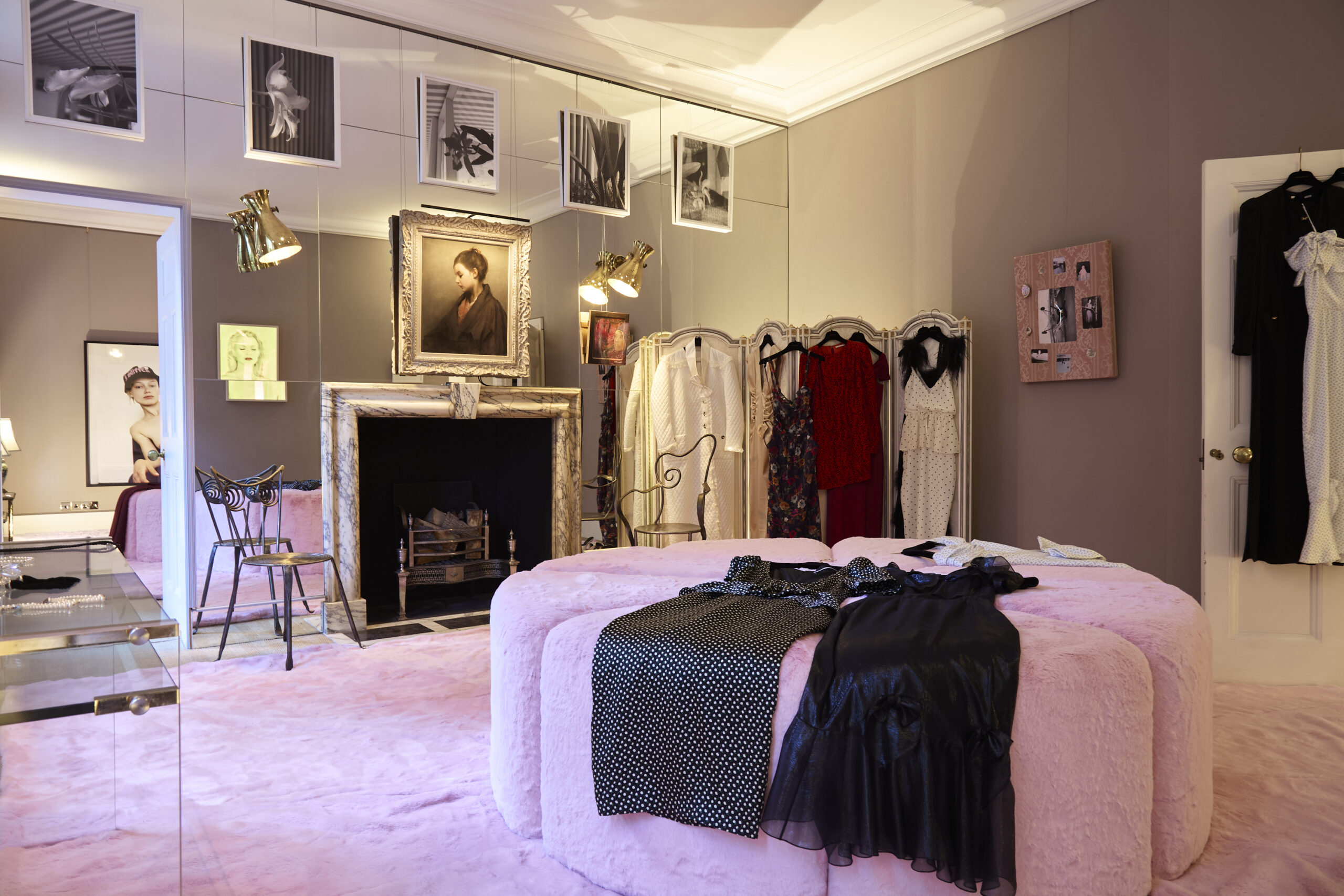
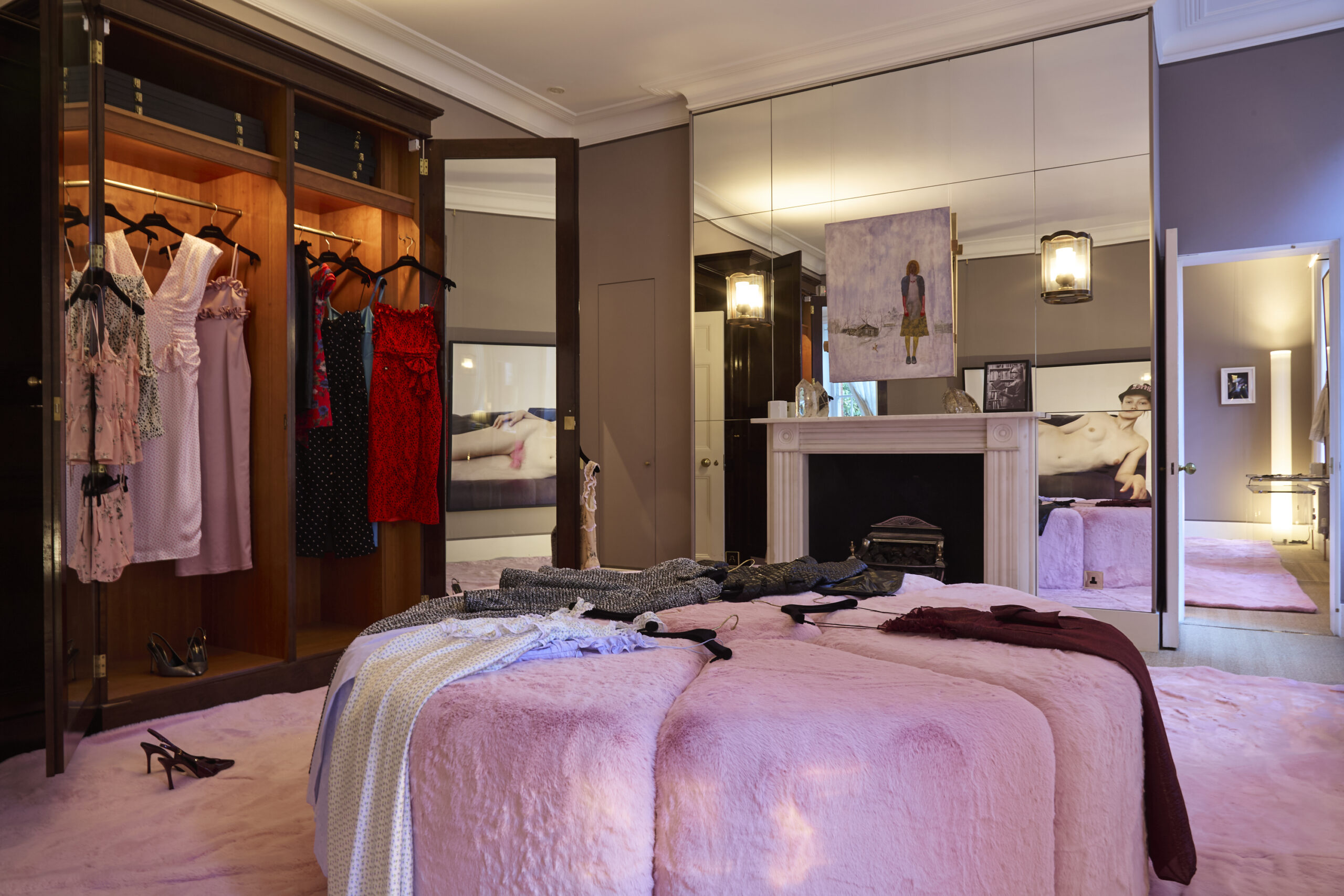
Alessandra Rich’s Pink Fury fills Mayfair boudoir with “magical” objects for SS27 presentation
Alessandra Rich presented her spring/summer 2027 ready-to-wear collection, ‘Pink Fury’, inside the Mayfair apartment that has hosted her presentations for the past year. The boudoir concept extended throughout the space, with a circular bed covered in pink fur and positioned on a matching rug as the collection’s domestic centrepiece.
The setting brought Rich’s personal and creative circles together by presenting works by Rich’s friends – Alma Berrow, a pottery artist; Marfa Journal founder Alexandra Gordienko; homeware designer Anissa Kermiche; photographers Polina Antipova and Guen Fiore; as well as painters Veronica Smirnoff and Polina Osipova.
In a statement on the SS27 presentation, Rich highlighted the importance of objects as “magical, emotionally resonant devices capable of revealing stories and forging bonds with people. A painting, a photograph, a jewel, a garment – living presences that kindle light, like mirrors in which to see oneself reflected”.
Yet the designer also noted how objects, notably vintage silks the designer found while treasure hunting, became the starting point for Rich’s team to design this season’s collection, translating the material into a floral pattern for a red mini dress with an off-the-shoulder neckline and an oversized bow at the back. More than 100 pieces were presented to buyers, including bouclé skirt suits in several lengths; a black velvet dress finished with a lace neckline; a poplin tea dress that evoked a nurse’s uniform; and a turquoise silk cocktail dress cut with a sweetheart neckline. The tailoring was embellished with micro-sequins and bandera embroidery.
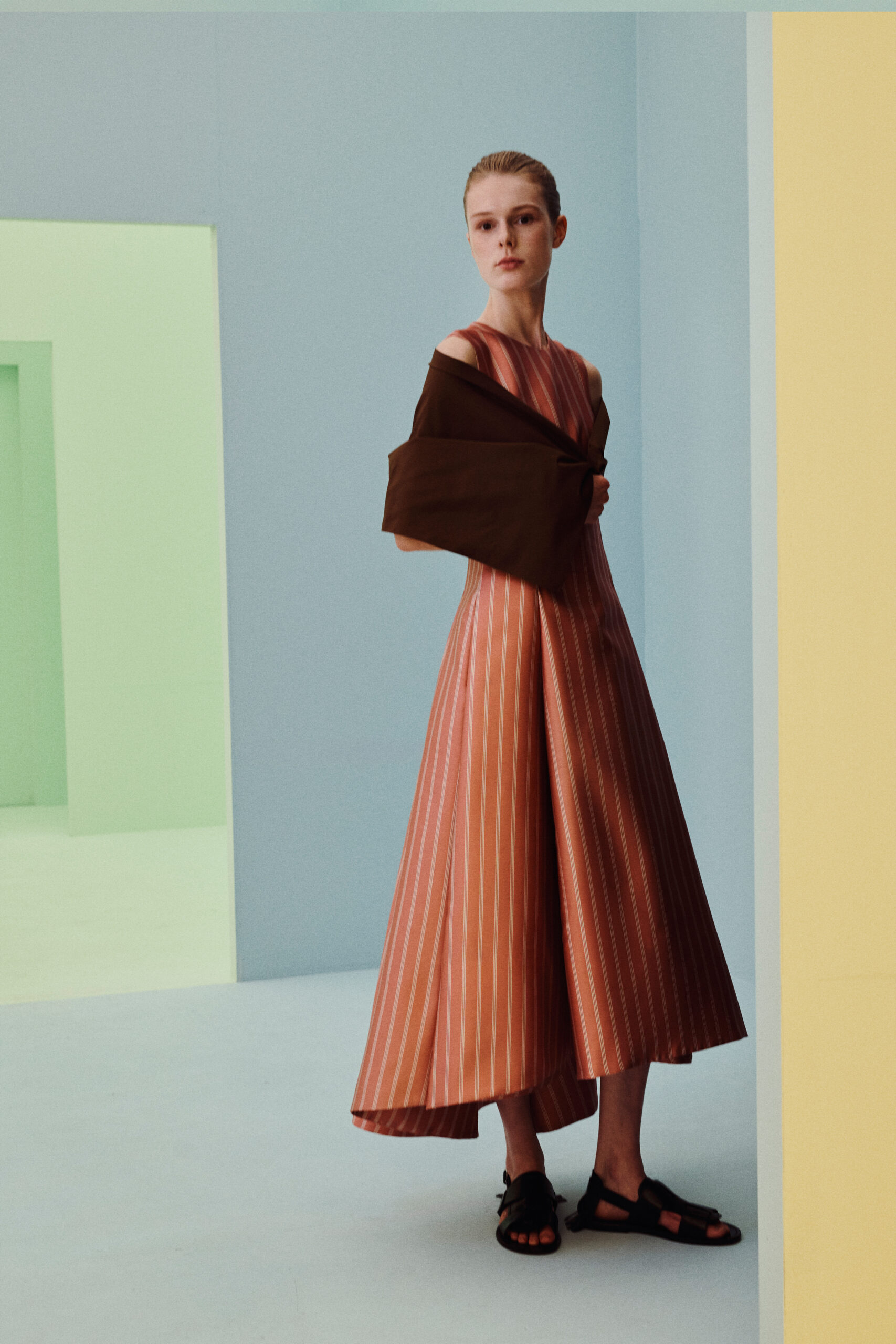
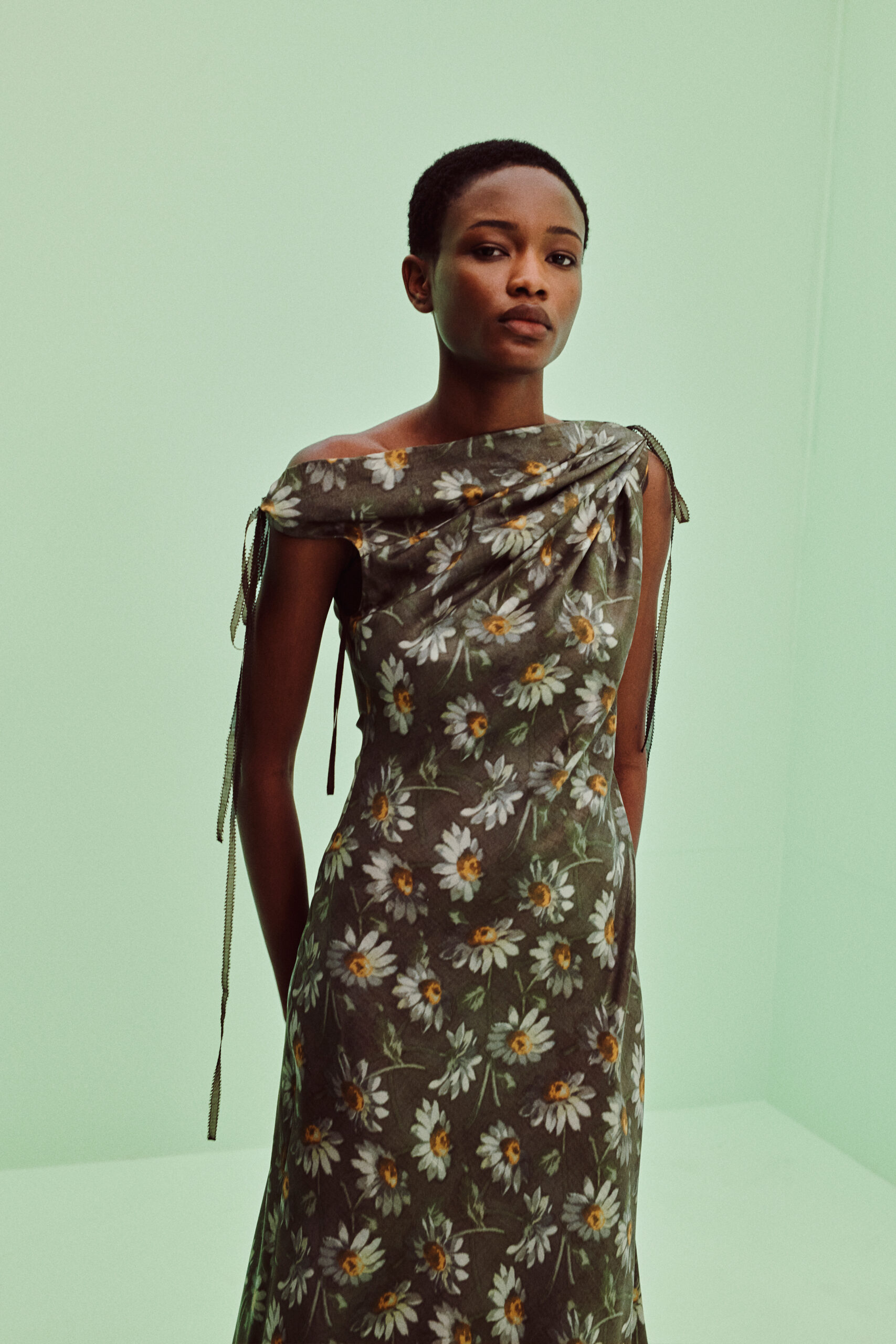
Emilia Wickstead explores confidence, colour and reinvention through Lee Krasner’s lens
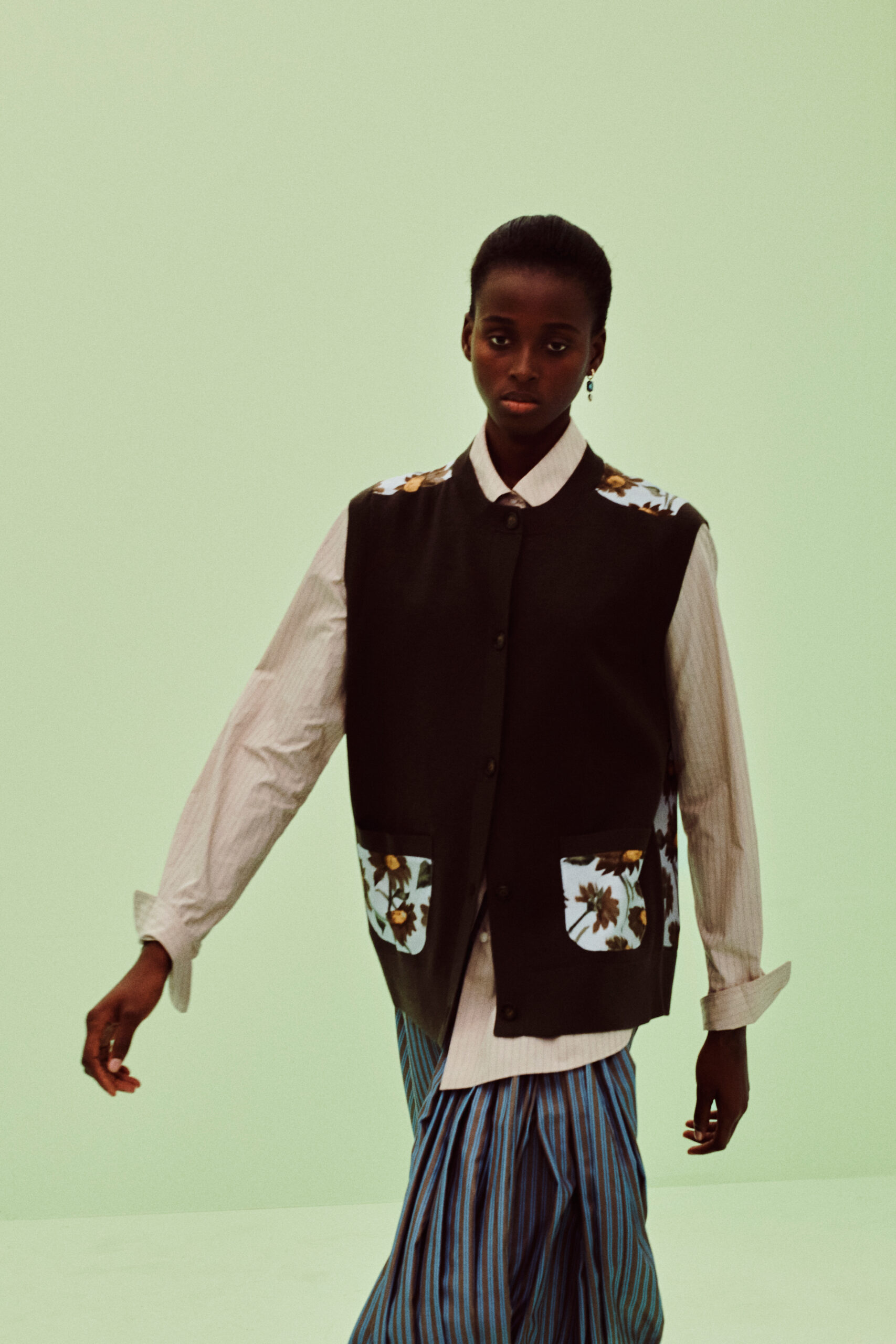
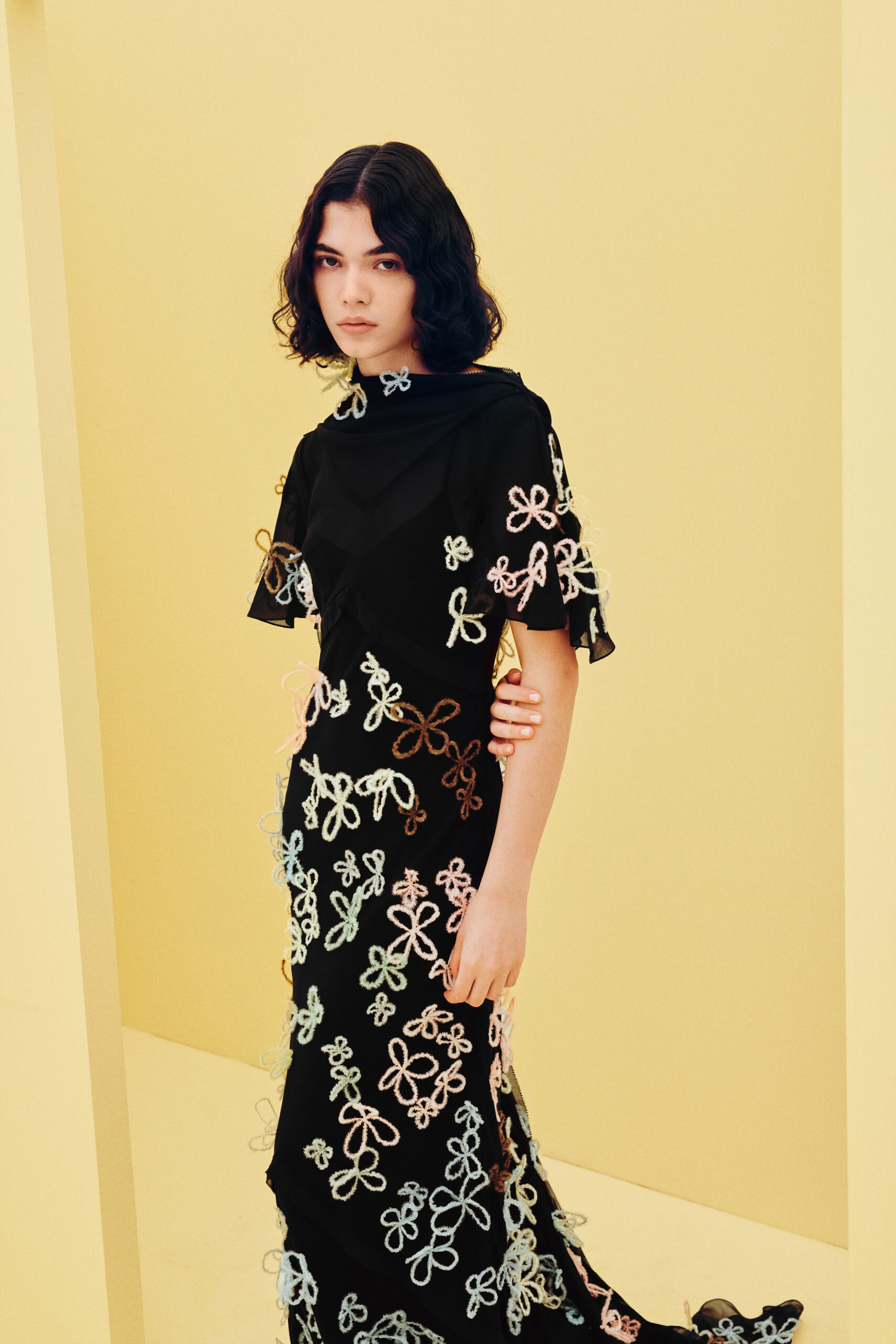
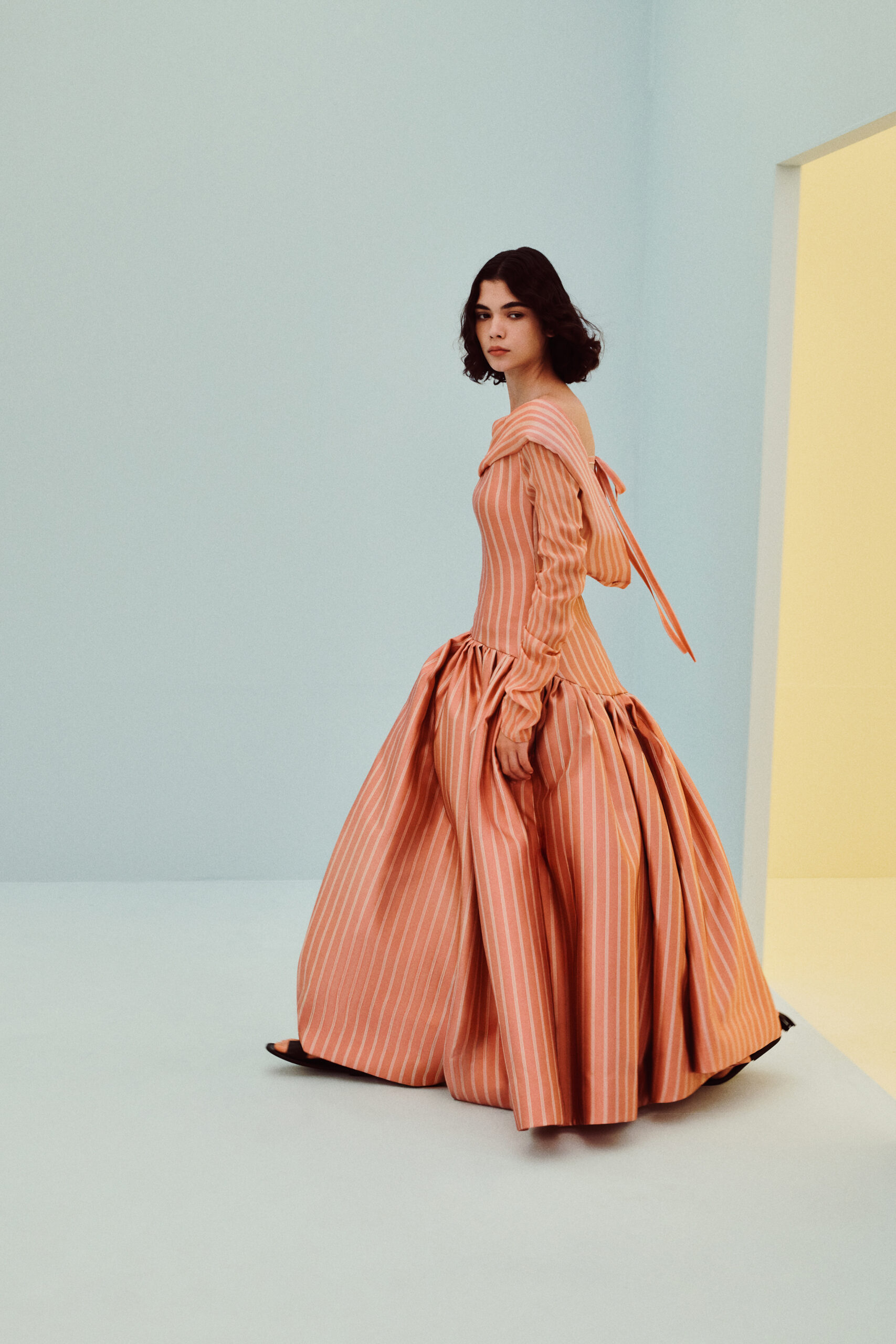
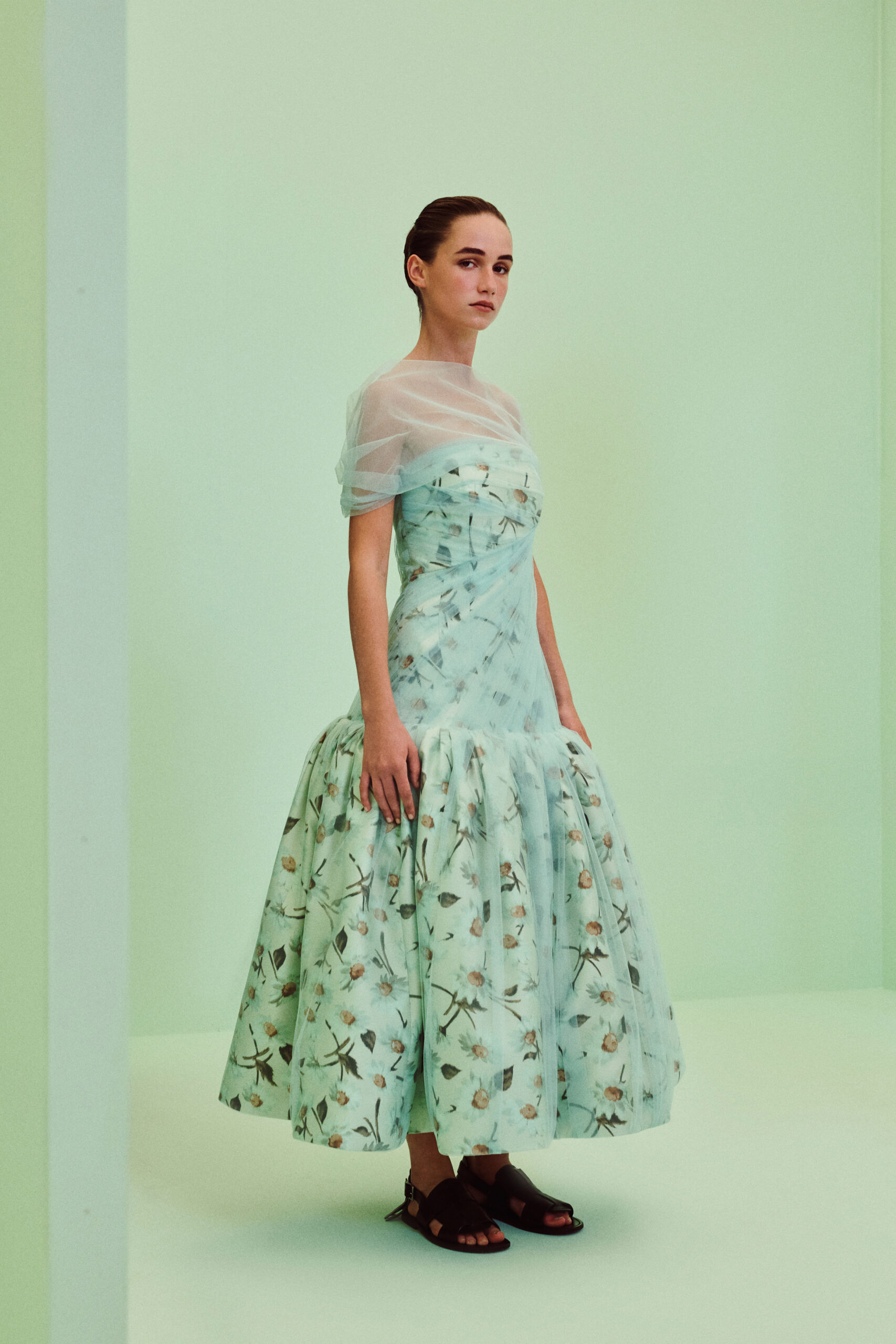
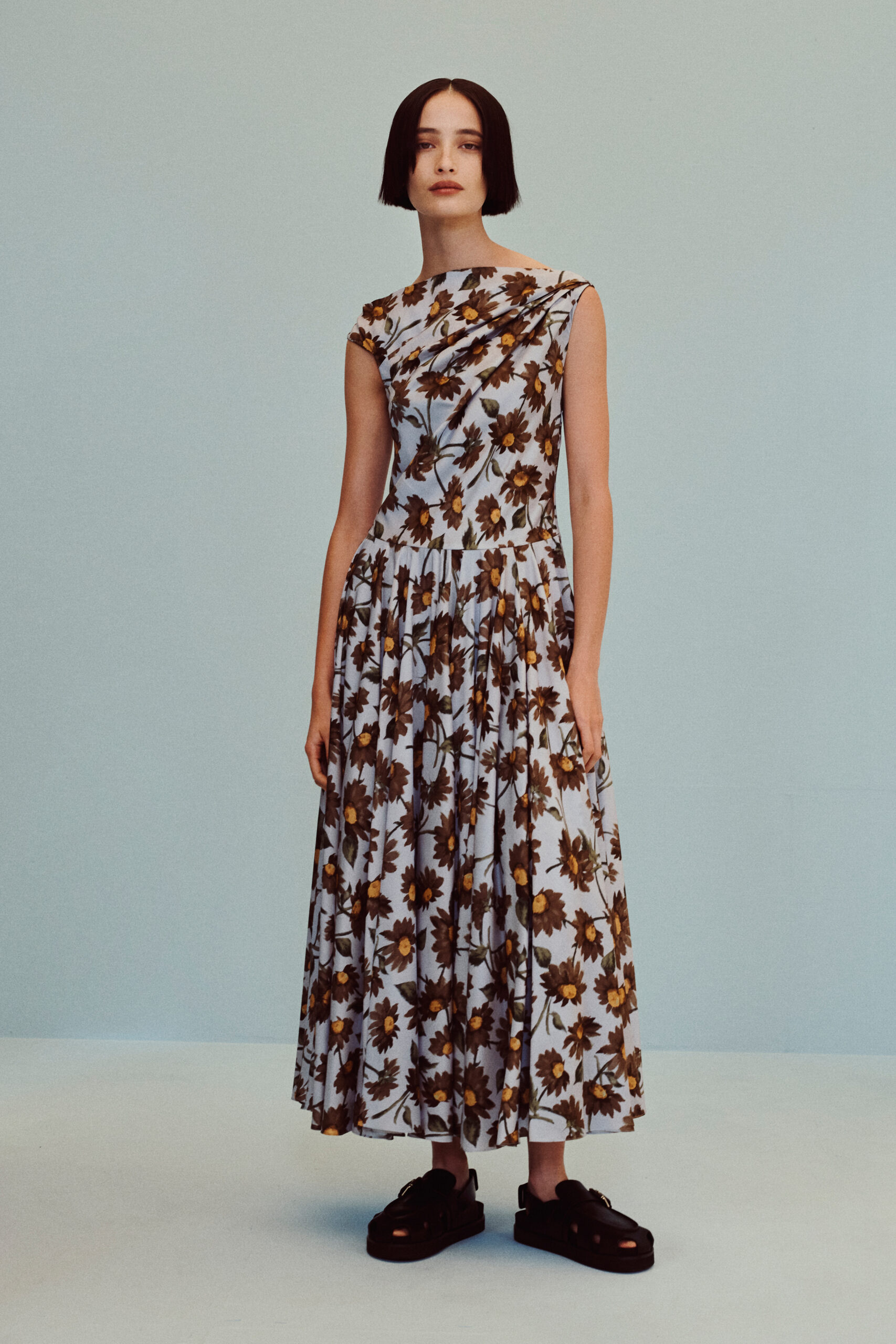
Emilia Wickstead took inspiration from artist Lee Krasner and her defining role in Abstract Expressionism. The luxury brand’s SS27 collection aims to reflect Krasner’s discipline, spontaneity and constant reinvention, exploring confidence, movement and the tension between structure and expression. Wickstead’s signature precision was balanced with more expressive, unexpected elements, presented in an in-store format.
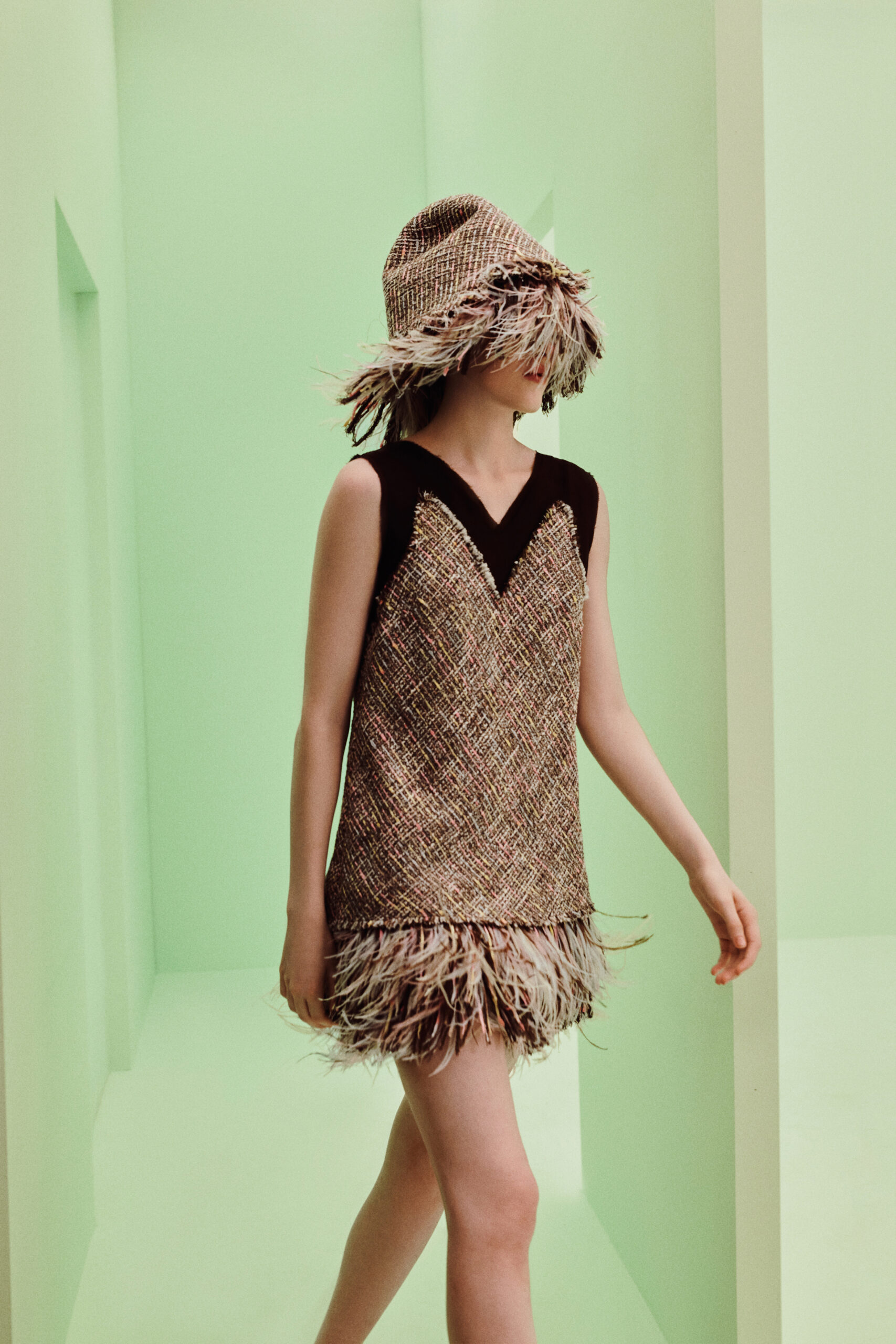
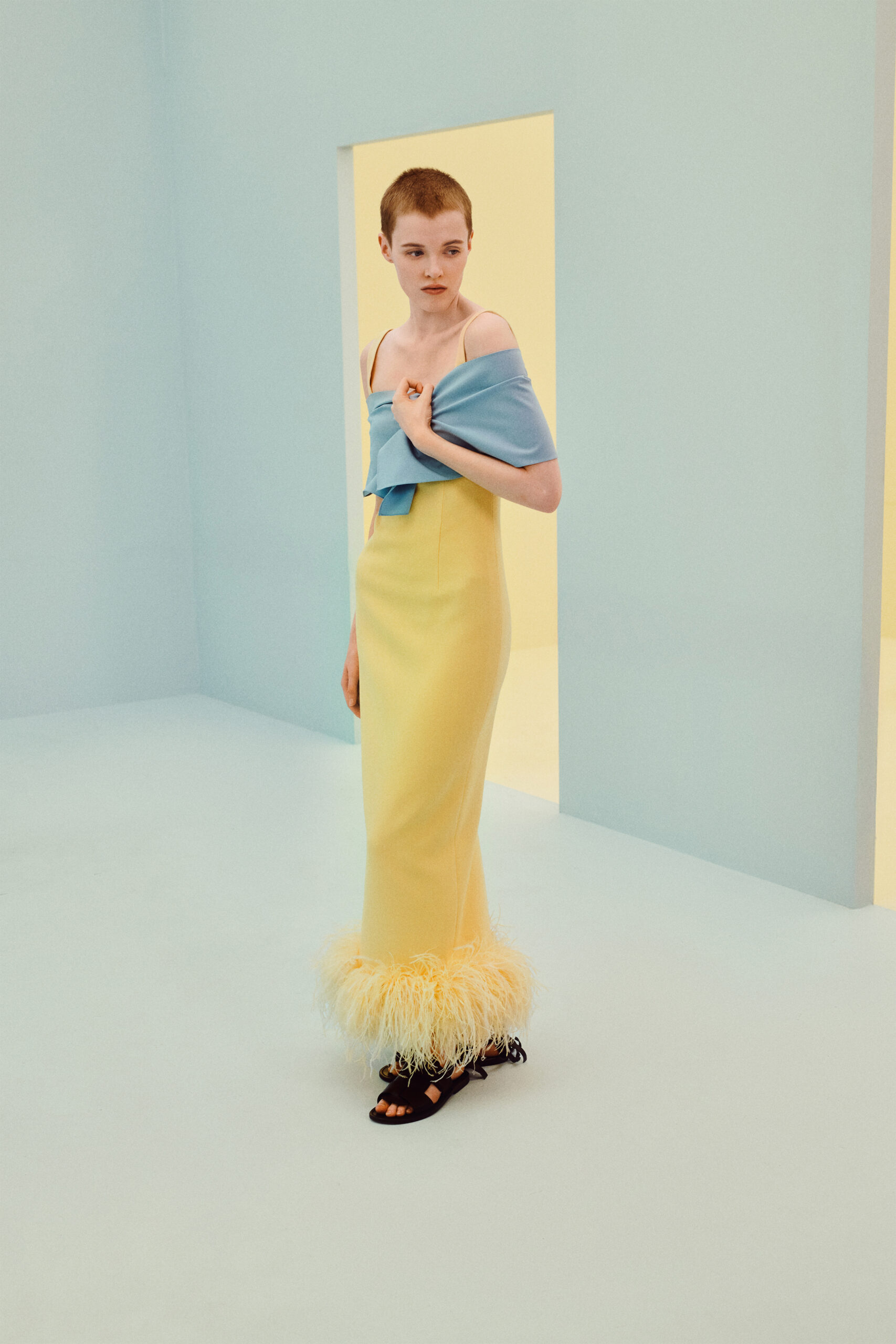
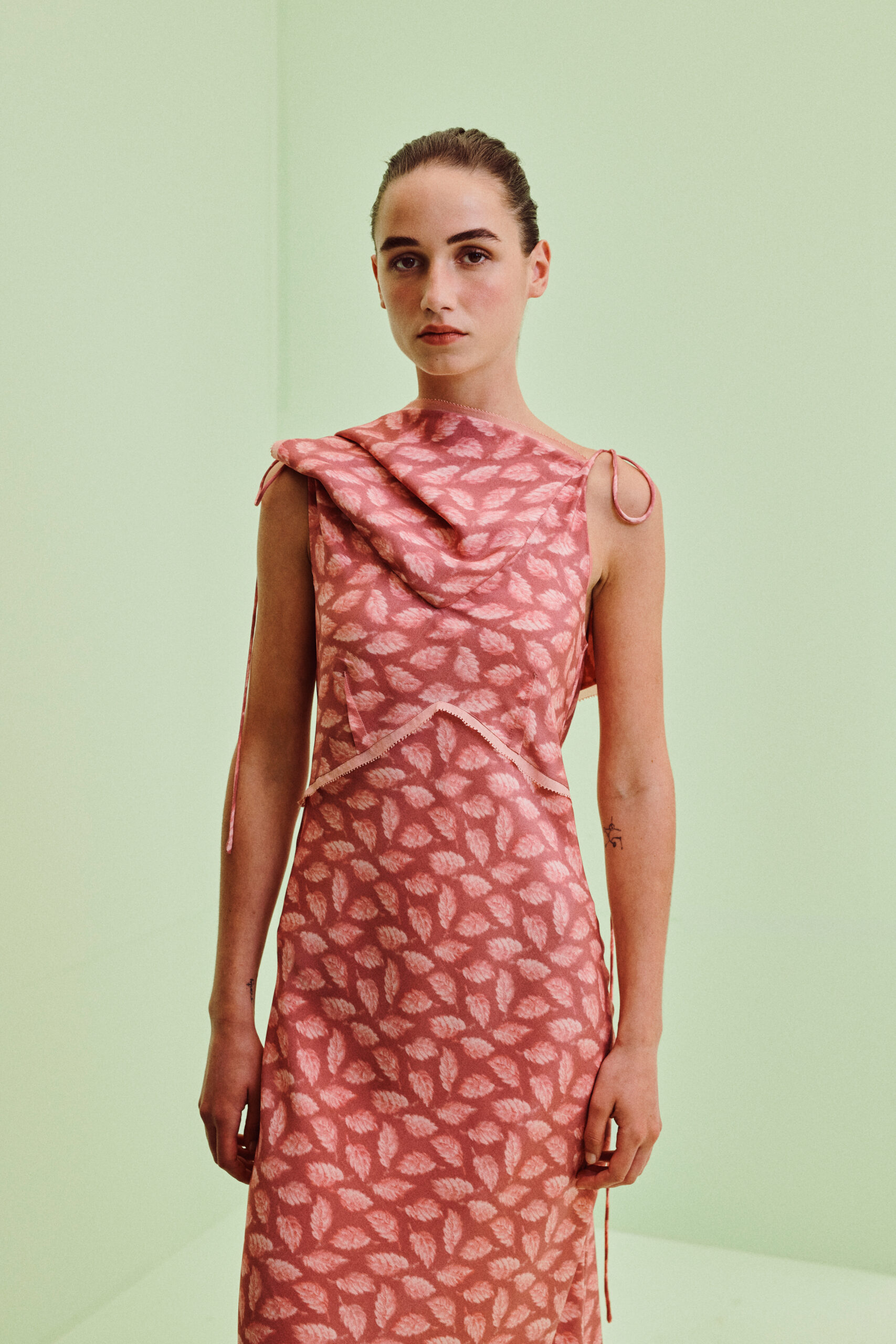
Light summer wool, sculptural tweed, precise tailoring and bias-cut separates contrasted with fluid chiffons, polished silks and oversized knits. Painterly tweeds, field daisies, frayed edges, transparency and hand-finished feathers added texture, while delicate picot edging and painterly trims brought softness without excess.
Beyond Krasner’s artwork, Wickstead was inspired by her independent, curious and continually evolving spirit. The collection reflects the designer’s belief that fashion gains meaning through the lives and memories created while wearing it, connecting clothing to people, places and occasions. Colour is equally instinctive yet considered. Powder pink, pale blue, lemon and lime introduced an optimistic lightness, grounded by chocolate, charcoal and black. Florals and organic motifs referenced Krasner’s lifelong relationship with the natural world, while the field daisy became a softer, more personal expression of the collection’s artistic starting point.
“For me, fashion has never existed in isolation. It becomes meaningful through the life lived in it – where you go, who you are with and the moments you remember,” Wickstead said.
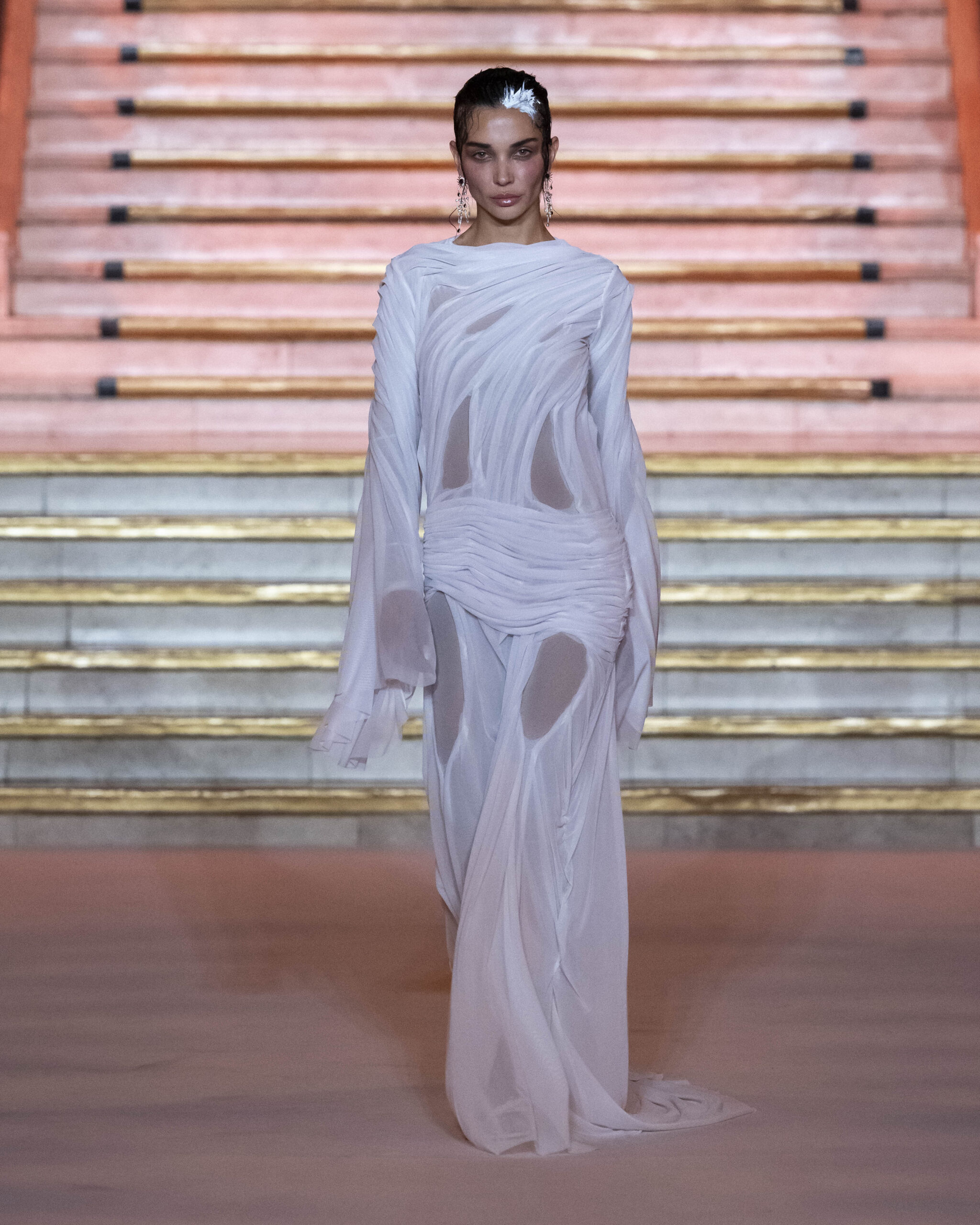
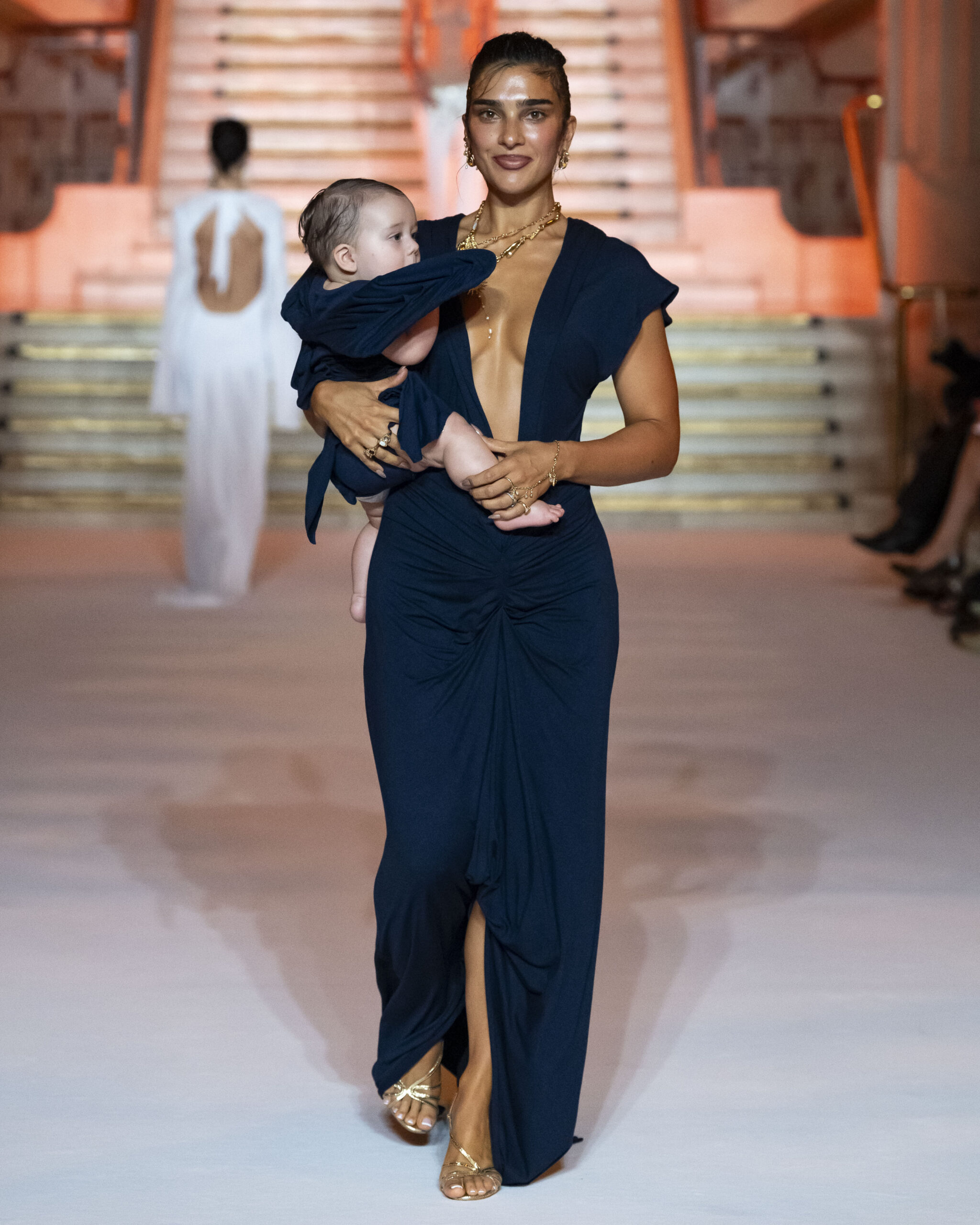
Di Petsa presents ‘HOLY MILK’, a study of motherhood and transformation
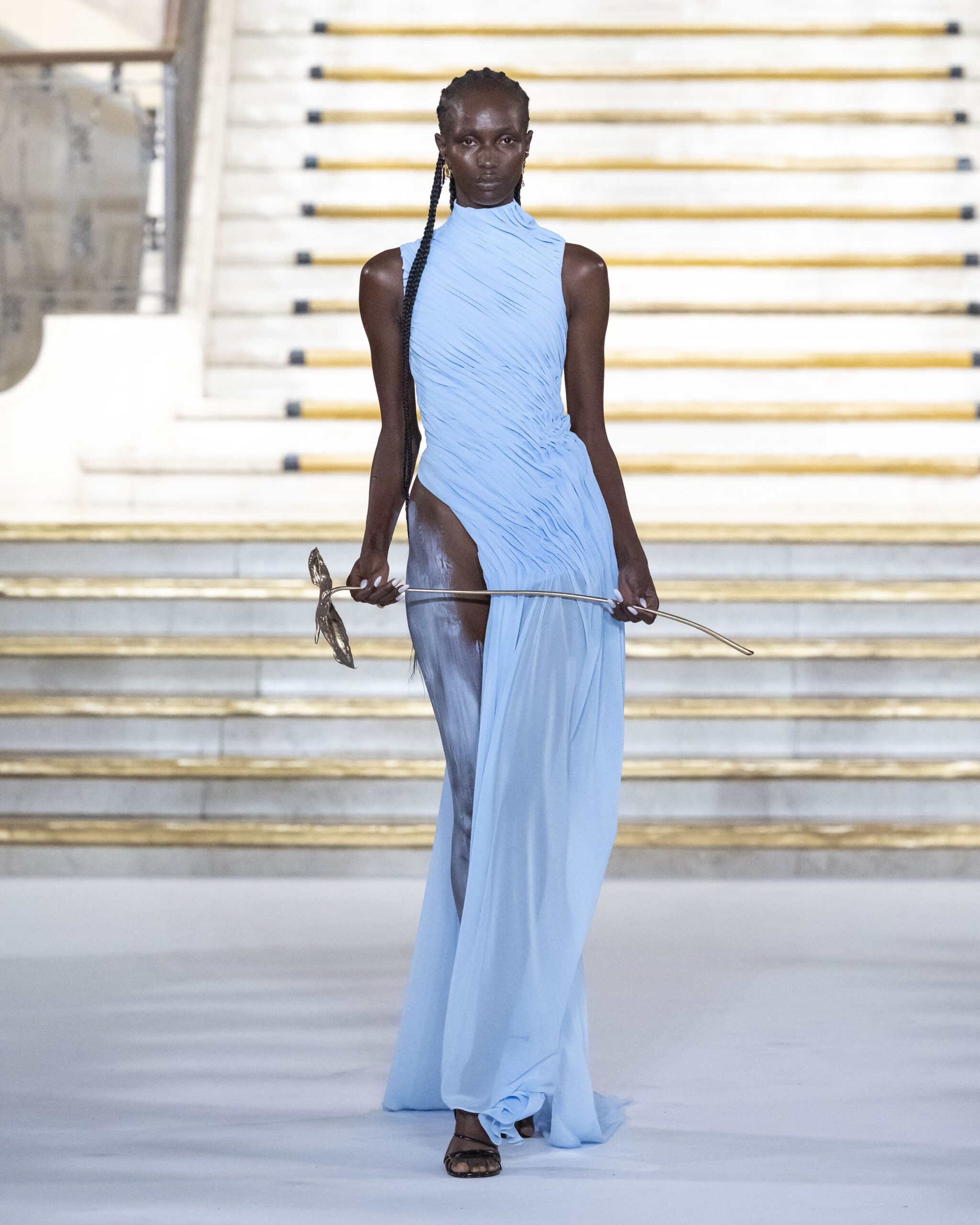
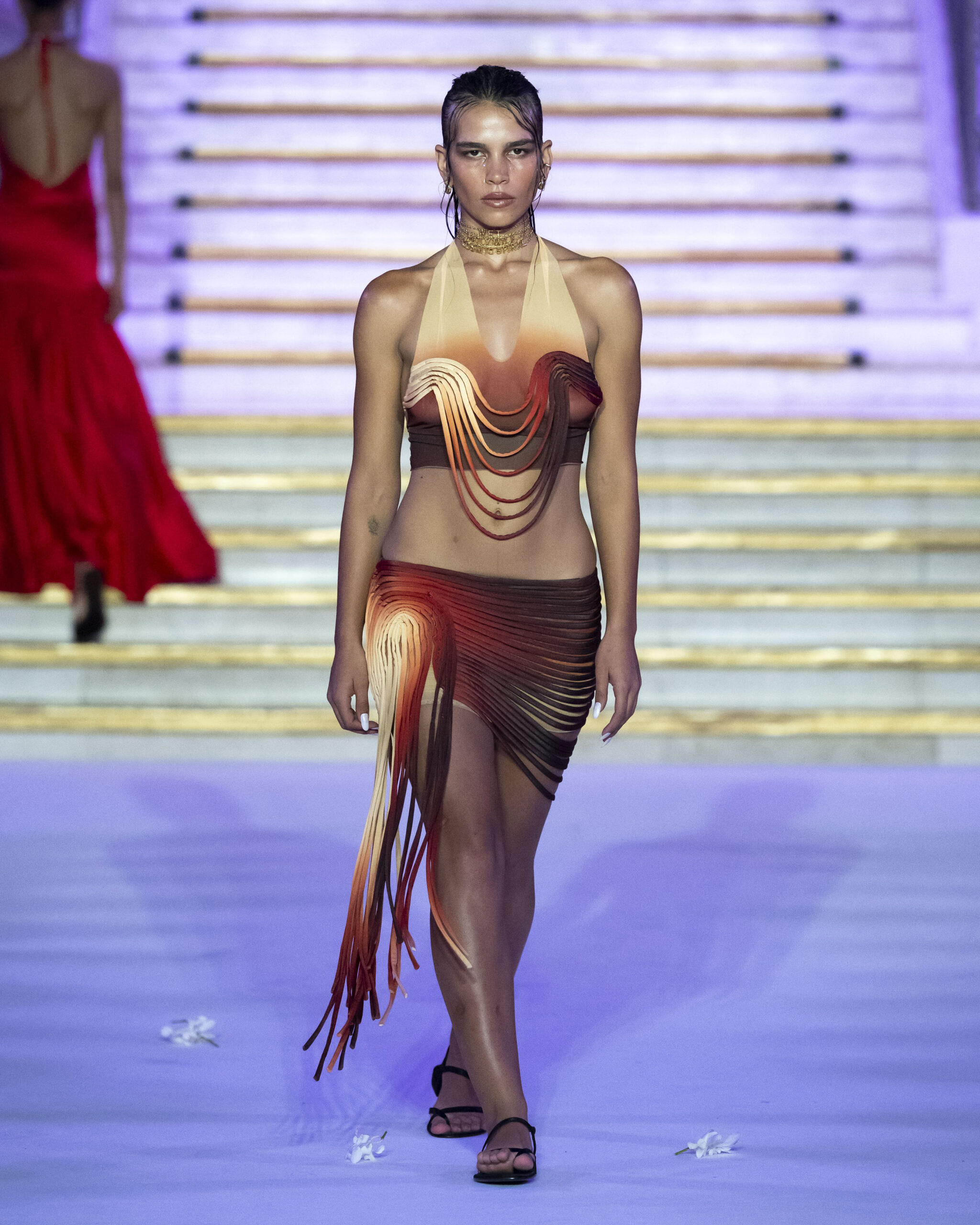
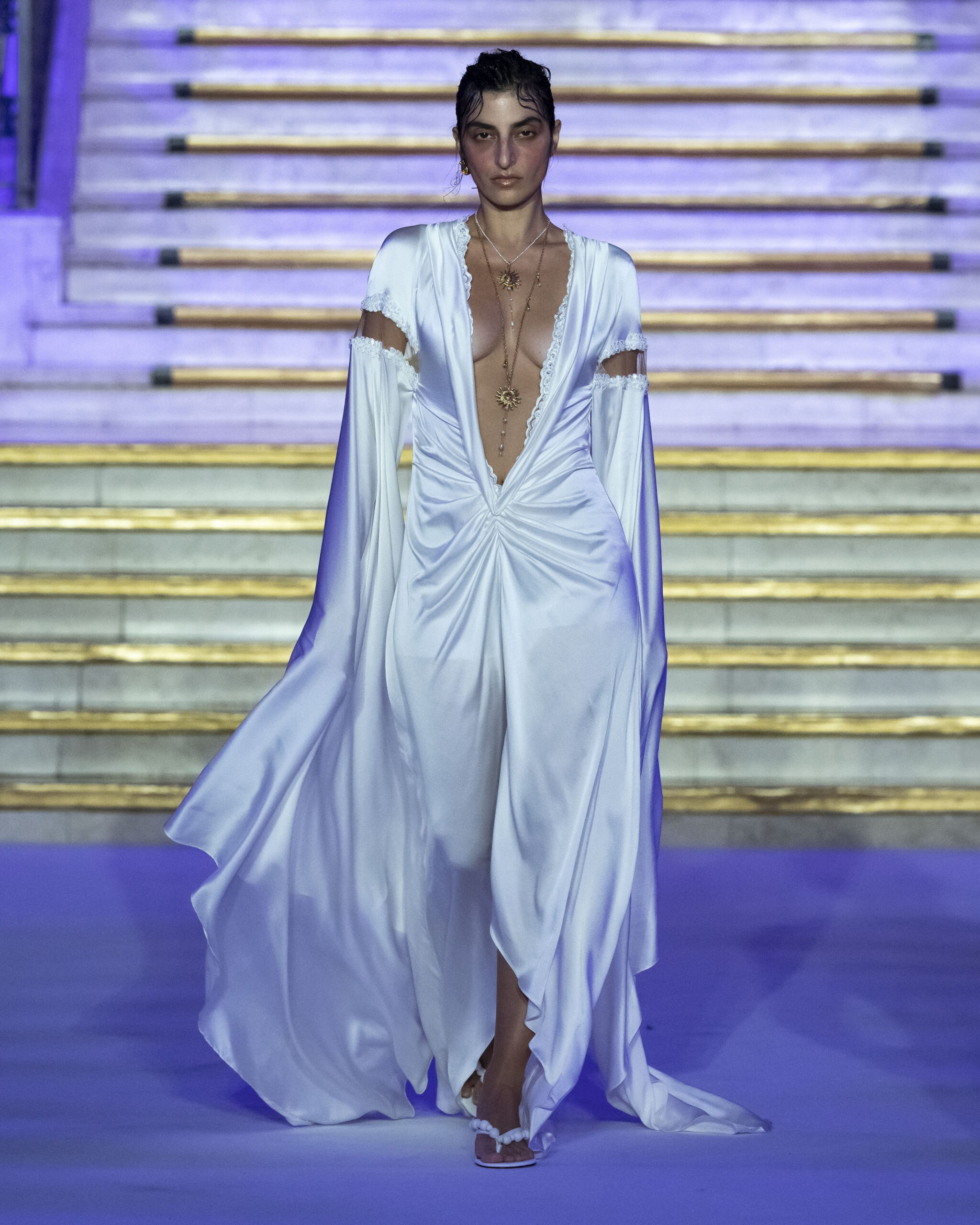
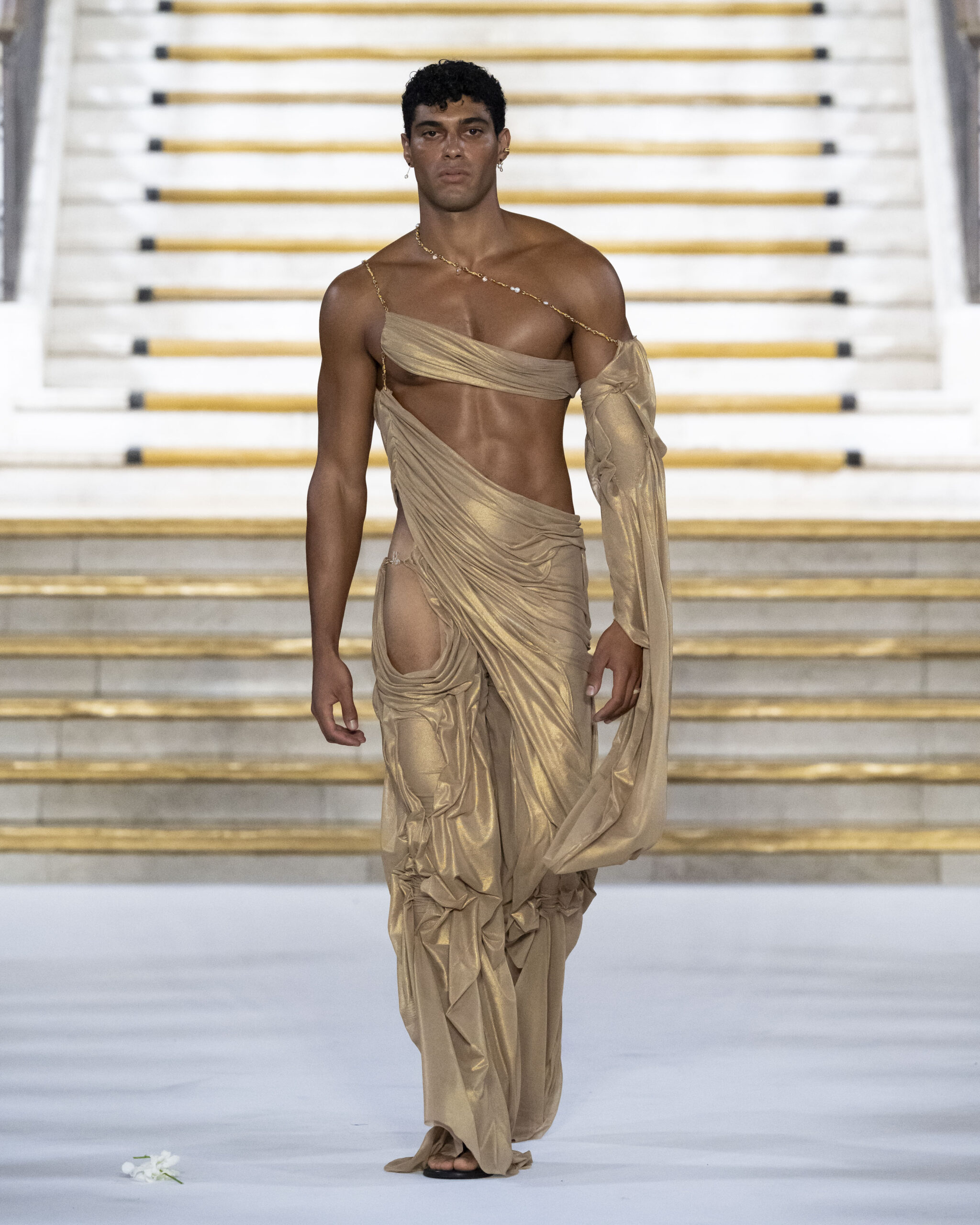
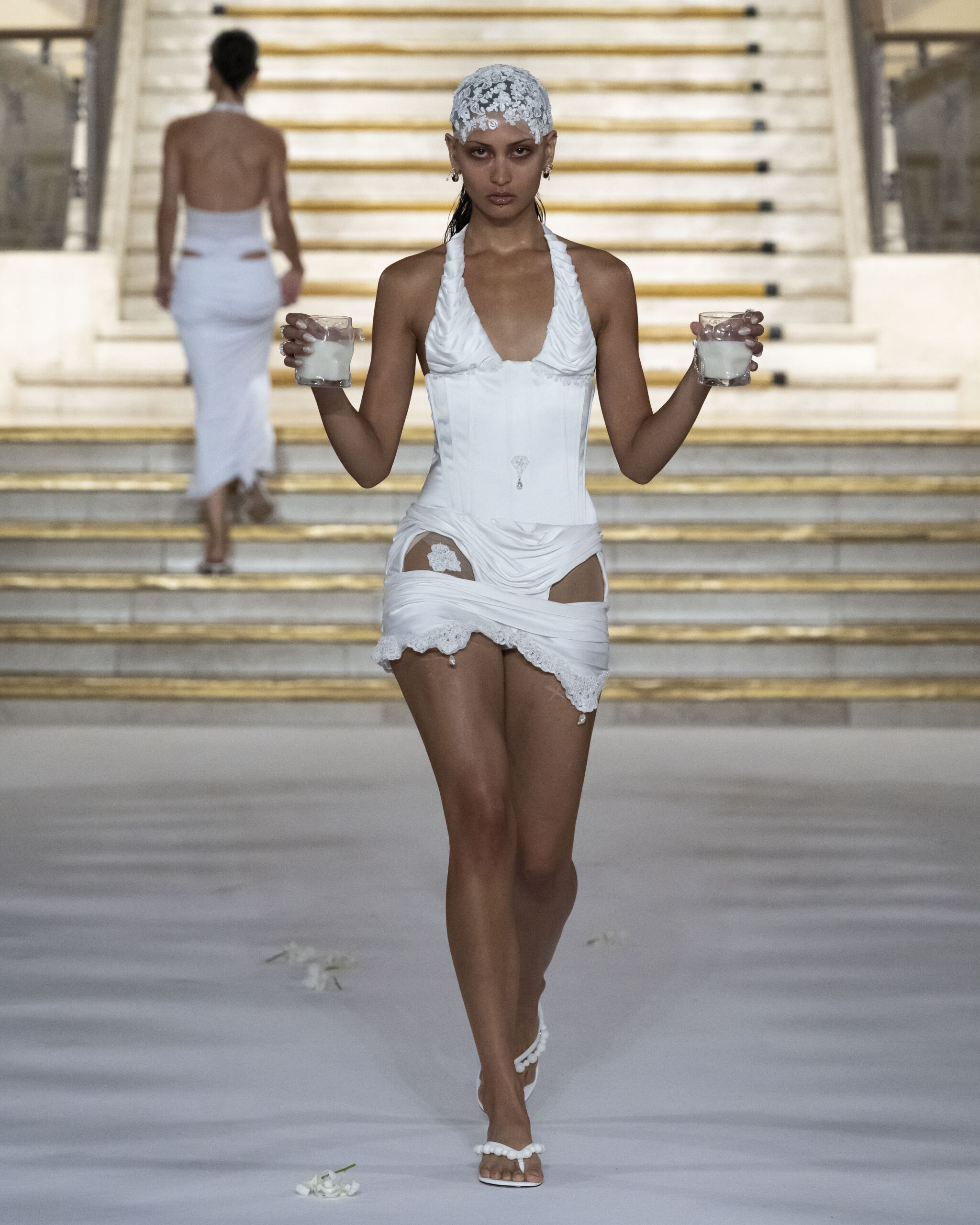
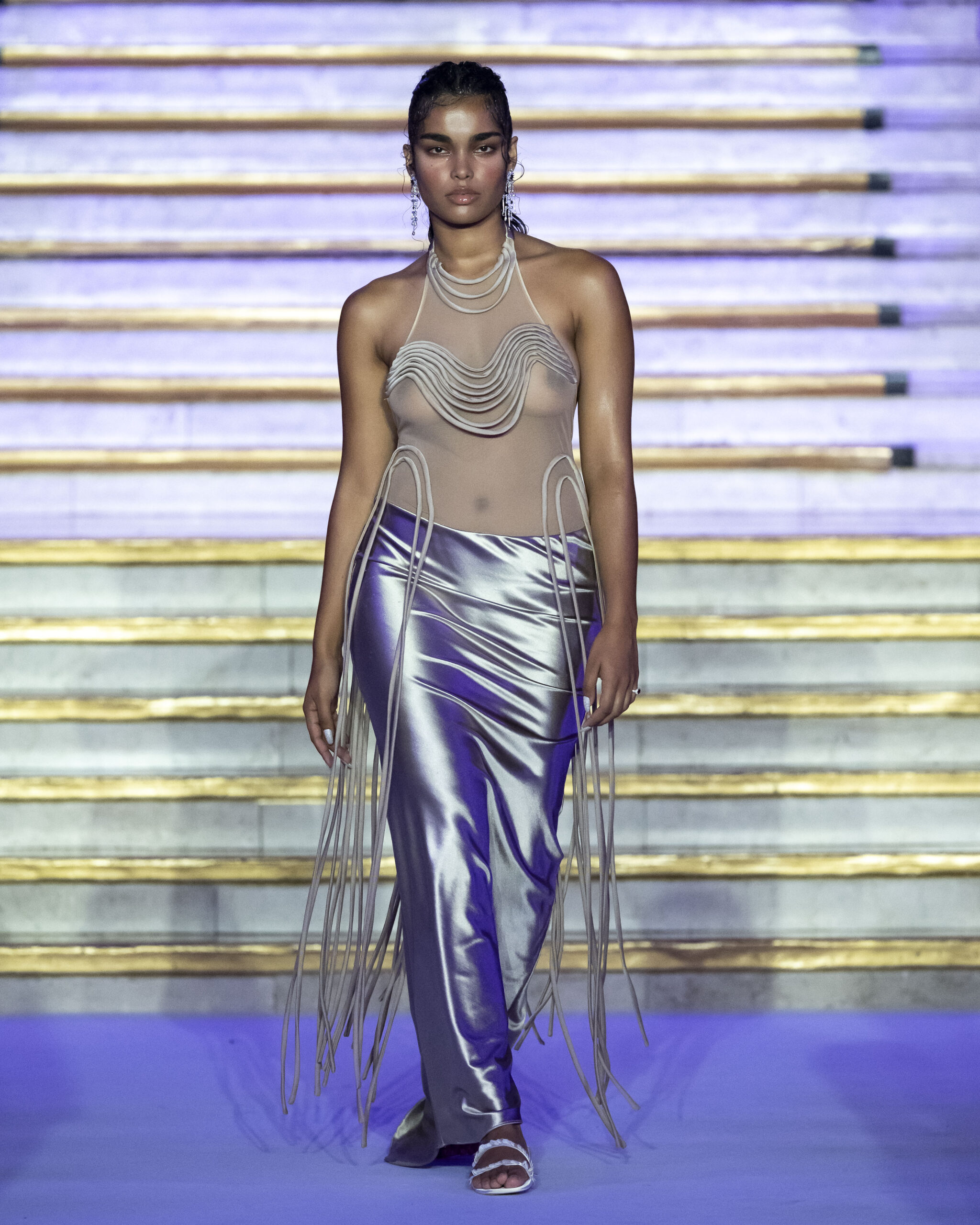
Di Petsa explored motherhood as both an ancient ritual and an intimate process of transformation. The collection considered not only giving birth to another life, but also the idea of “self-mothering” – continually giving birth to new versions of ourselves as we grow and change. Milk became a central symbol, representing maternal care, sensuality, spirituality and transformation, while the ocean was presented as a maternal force connecting the body to nature.
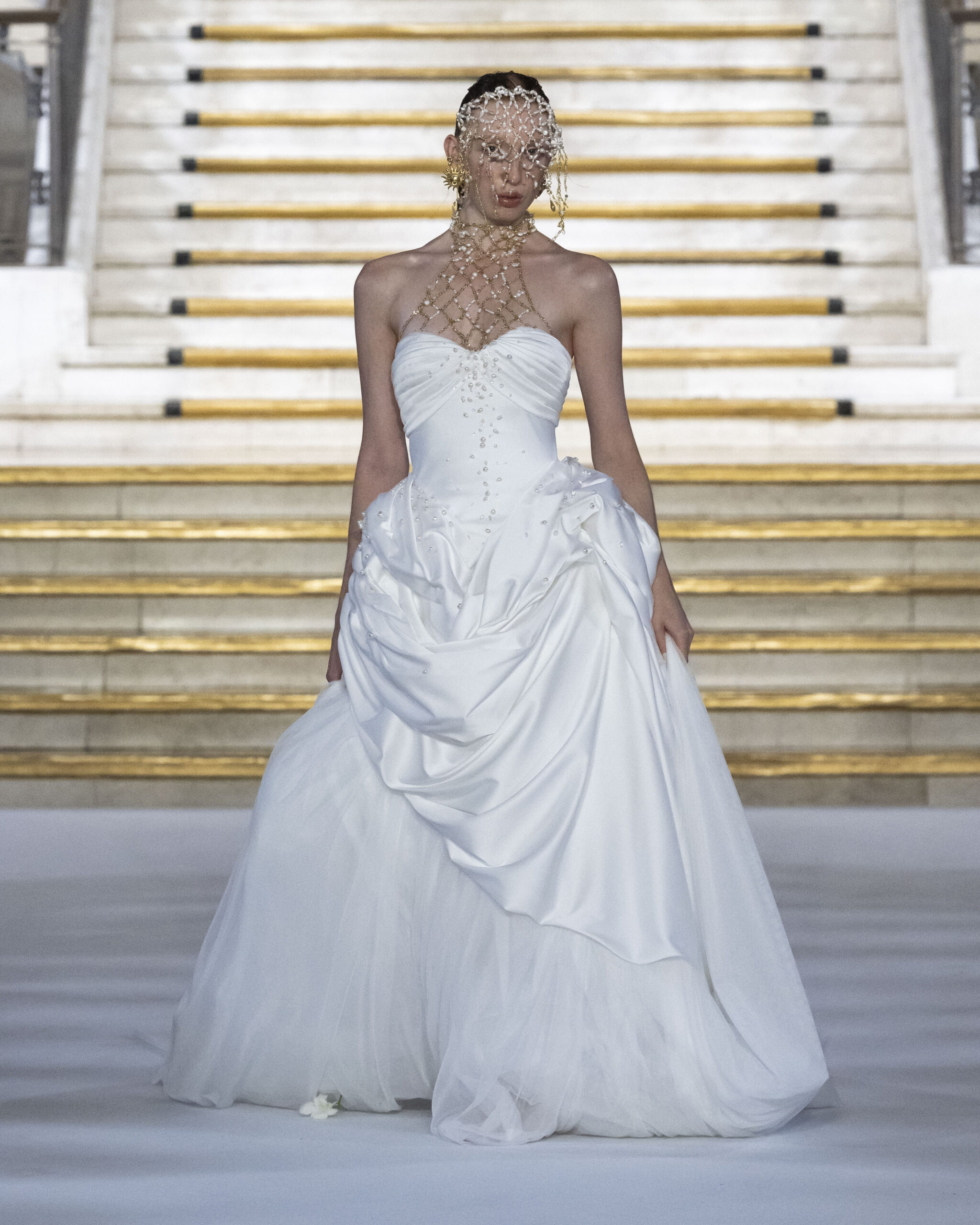
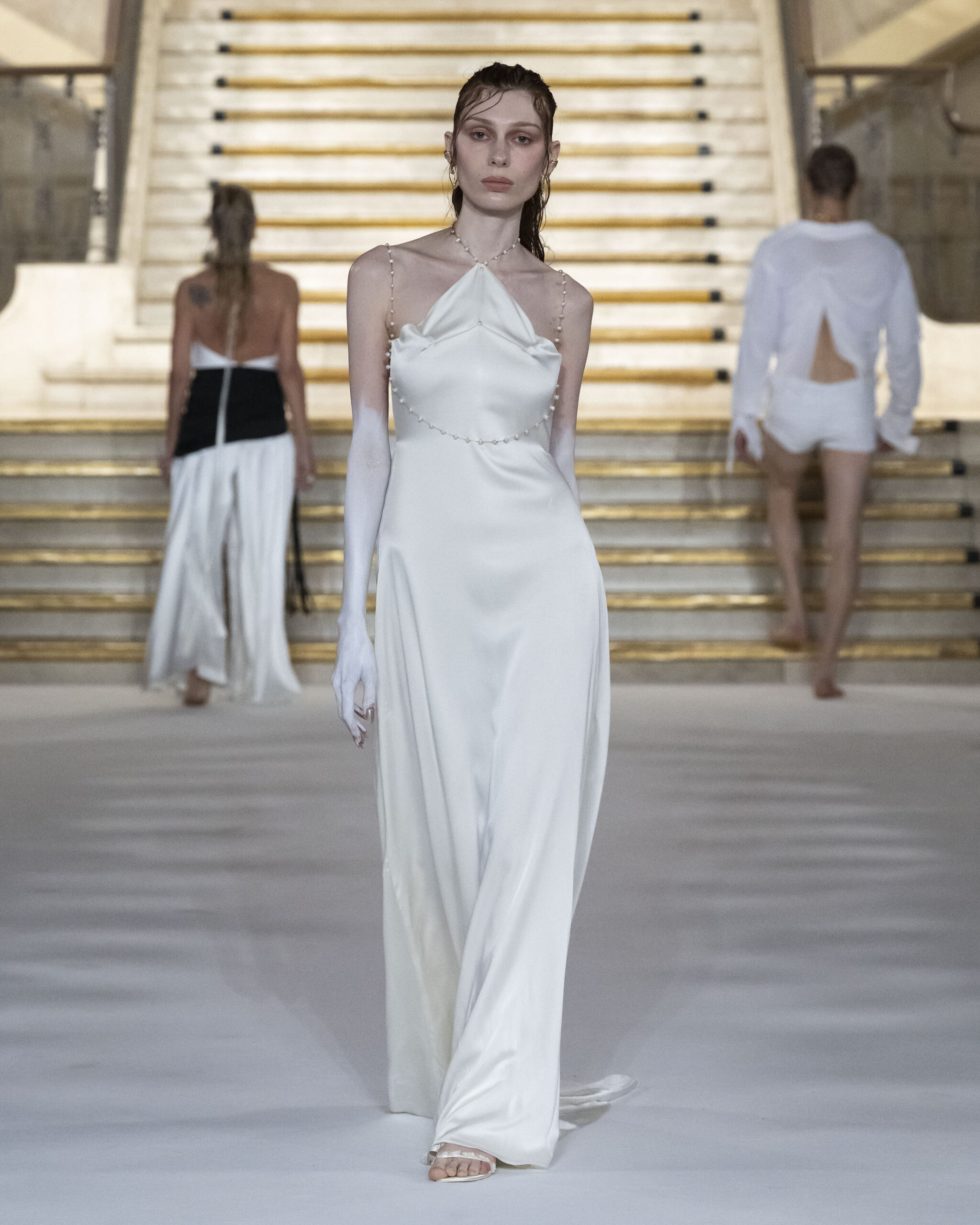
The collection’s visual language was built around white, translucency, lace, draping and luminosity, creating an atmosphere of softness and divine beauty. Bridal silhouettes sat alongside fluid, body-conscious designs, with exposed skin and liquid-like surfaces adding a visceral quality. Deep blue, black and liquid gold interrupted the predominantly white palette, creating a contrast between purity, sensuality and drama.
For SS27, Di Petsa collaborated with Awe Inspired on an accompanying jewellery collection. Pearls, stones, chains and sun motifs appeared across necklaces, chokers, earrings and body pieces, becoming extensions of the garments and the body. The collaboration also incorporated Awe Inspired’s distinctive “WET” pieces, reflecting Petsa’s fascination with water, movement and bodily fluidity. The jewellery debuted on the London runway, with the collection launching commercially in March 2027.
The runway transformed into a surreal, ritualistic landscape involving milk and water, with mothers, pregnant models and models carrying glasses of milk. A key piece was a sculptural lactating bra, modelled by singer Leanne Pinnock, which released streams of milk during the performance. The piece turned an intimate act of motherhood and care into a deliberately theatrical spectacle.
Tolu Coker exploring womanhood and the pursuit of greatness
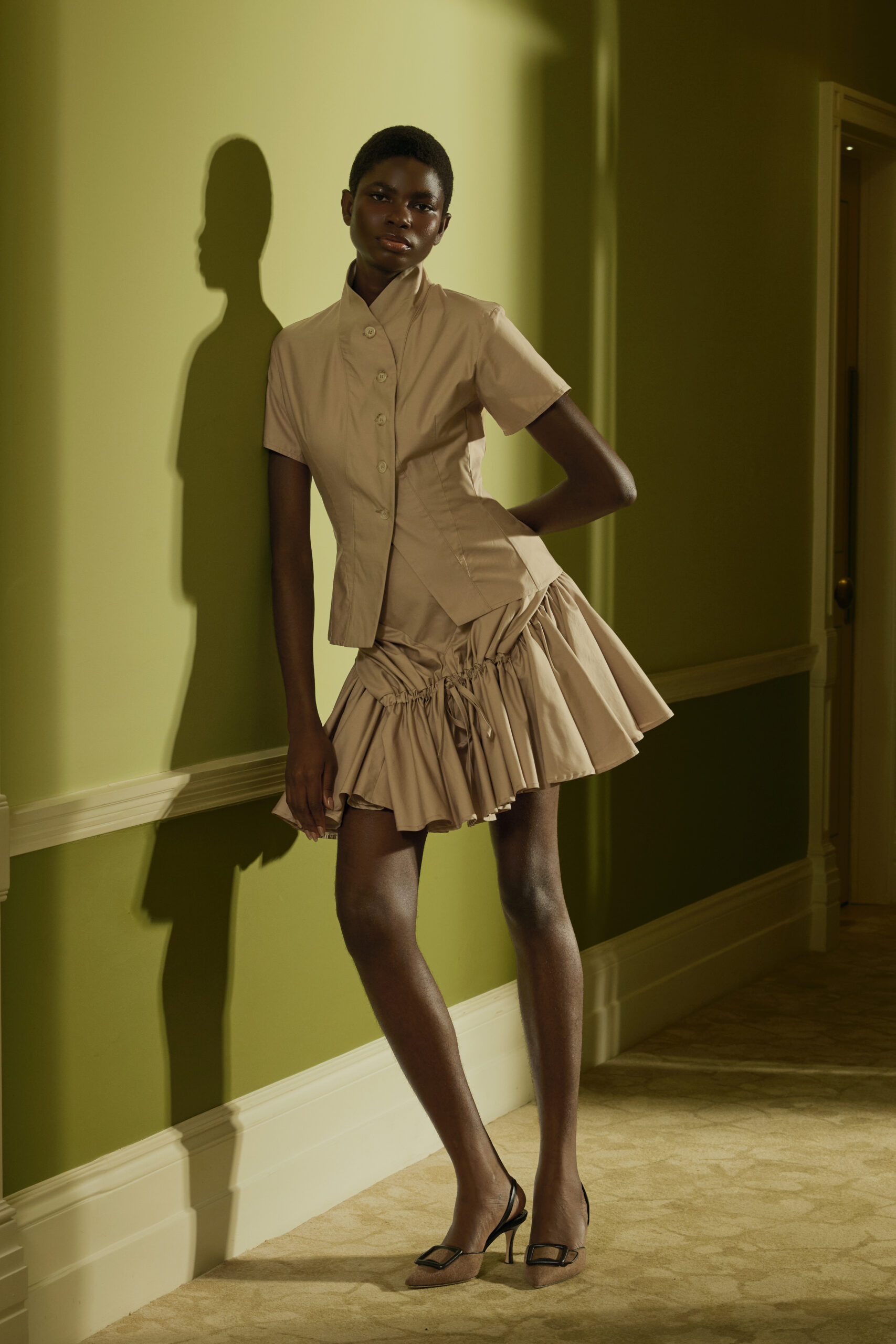
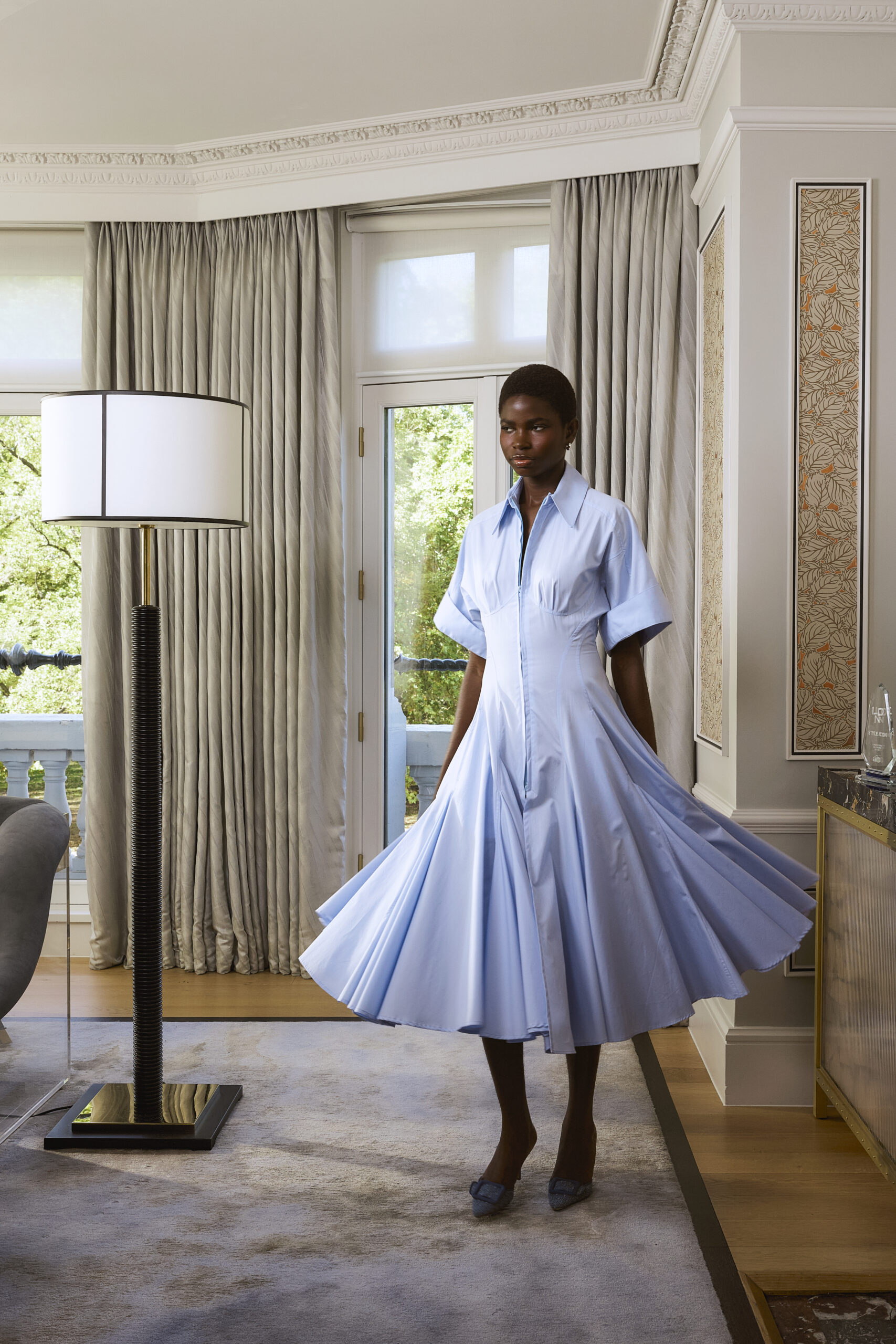
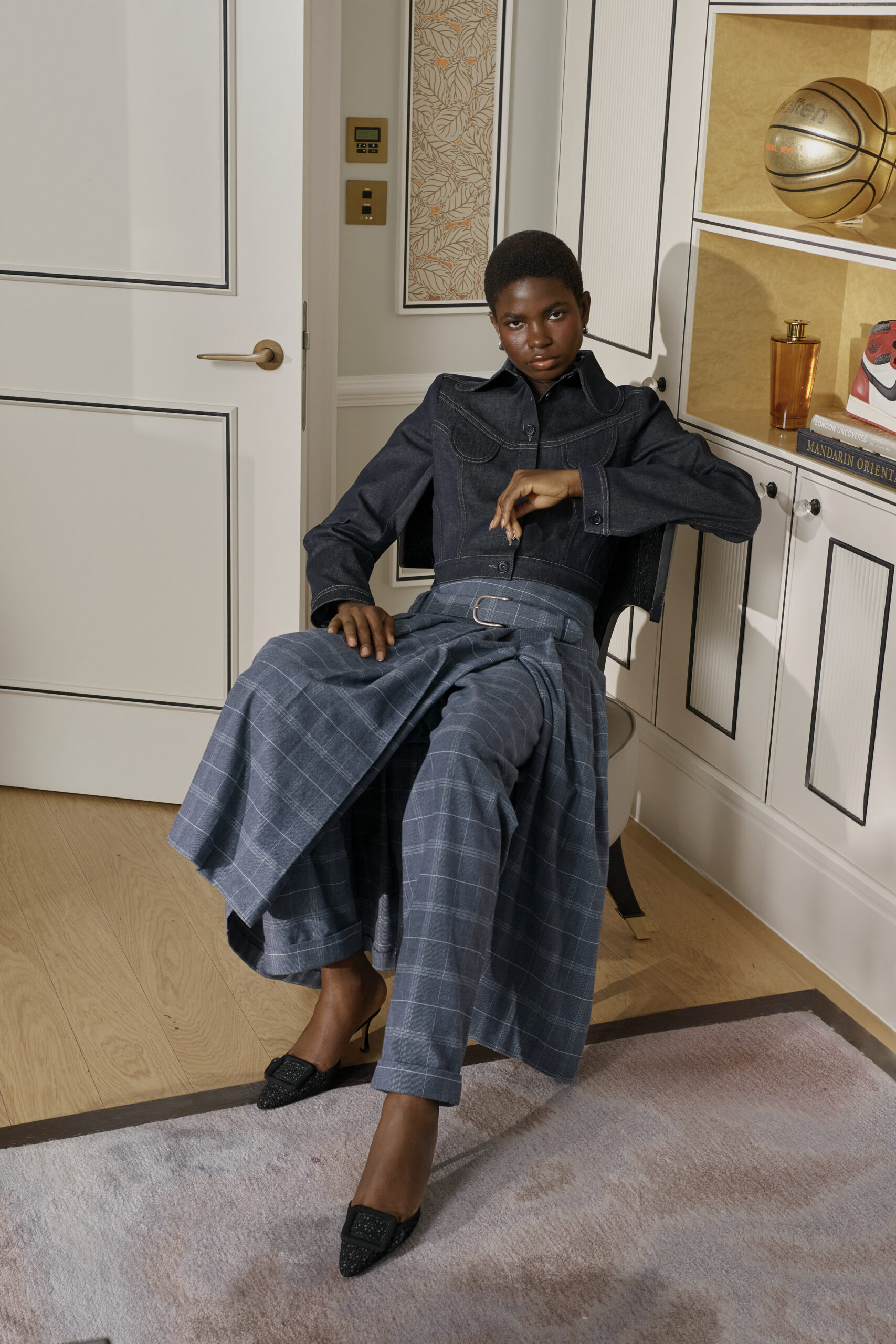
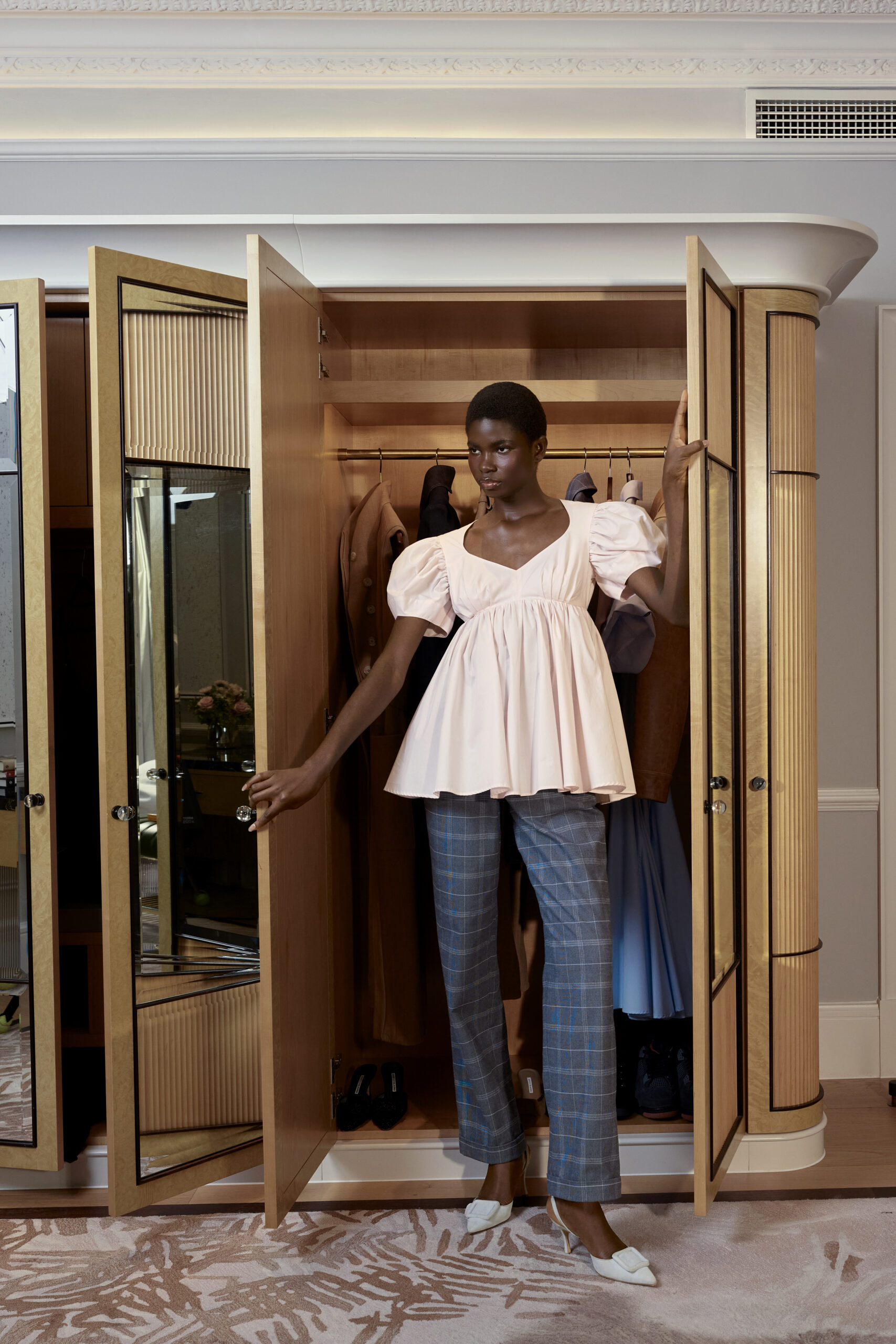
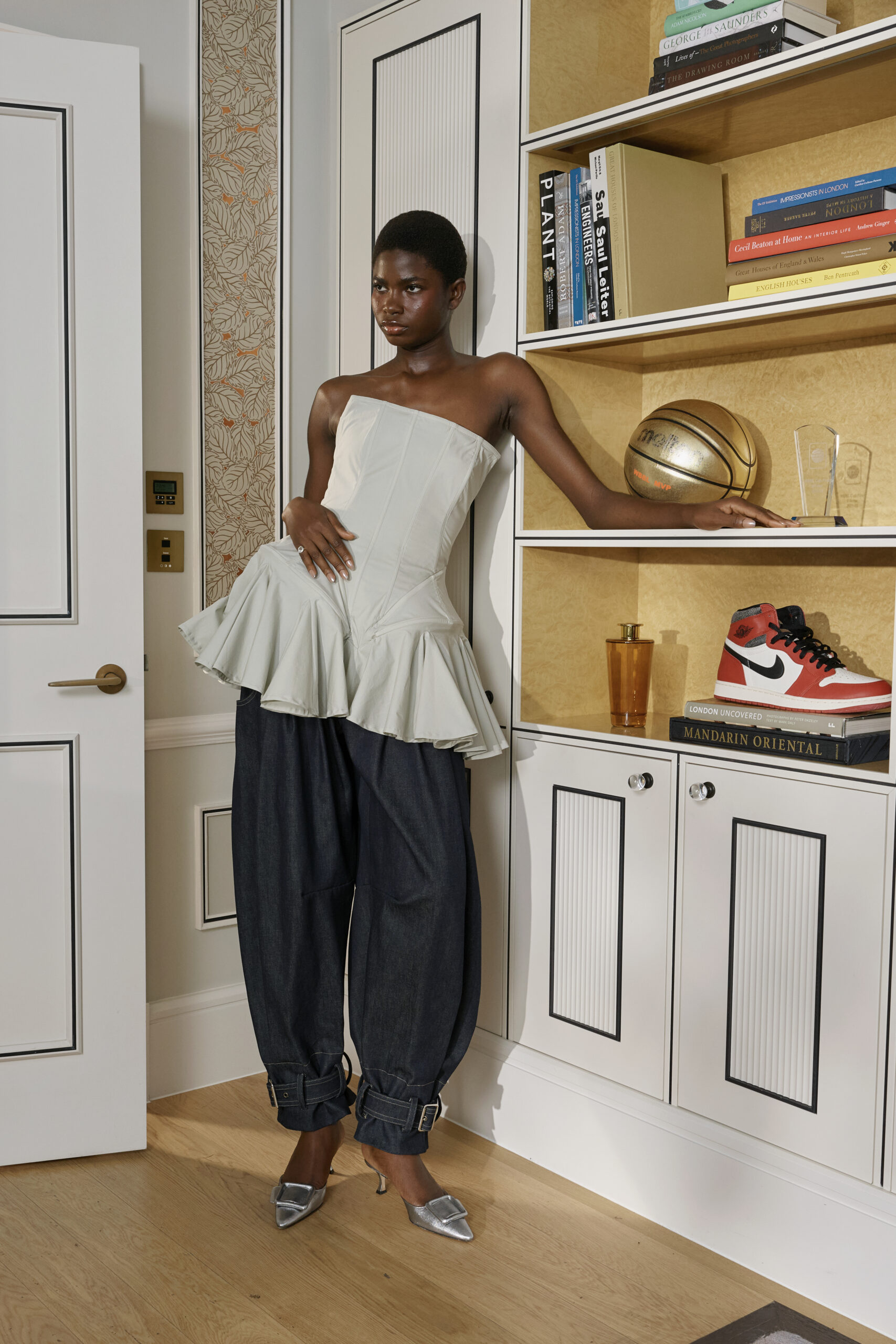
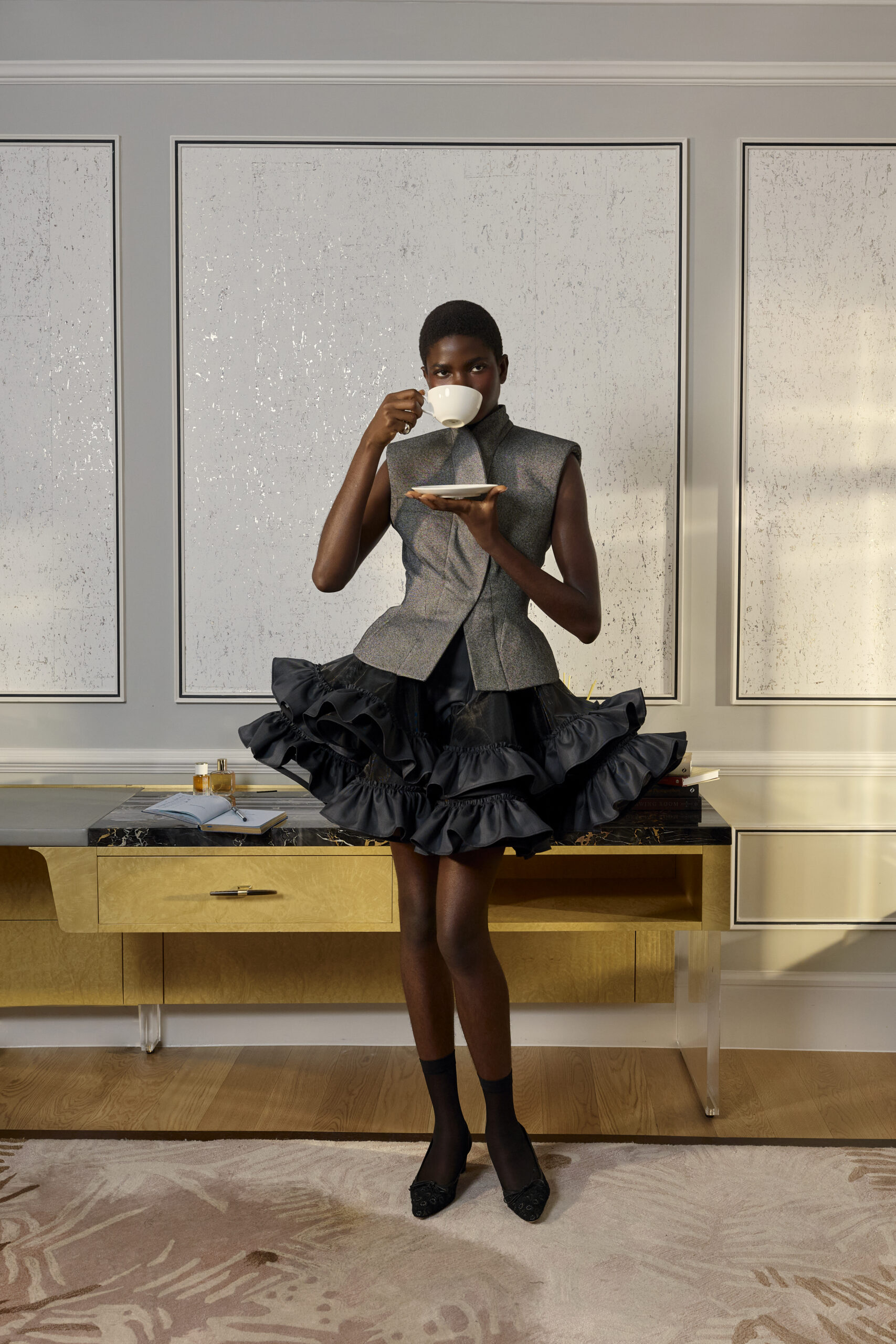
Tolu Coker’s SS27 collection opened the first chapter of her multidisciplinary project BEYOND BOUNDS. Following AW26’s Survivor’s Remorse, the collection focuses on a woman entering a new stage of life after moving beyond the council estate where she grew up, while remaining connected to the people, culture and experiences that shaped her.
The collection centres on female athletes and the pursuit of greatness, looking beyond visible success to the discipline, sacrifice, motherhood, family and communities that make achievement possible. Coker presents greatness as something collective rather than individual, celebrating women not only for their accomplishments but also for their identities, relationships and the legacies they create.
Designed and produced in London, the clothing develops Coker’s relationship between body, clothing and space, introducing athletic and movement-focused silhouettes. Double-breasted lapels, barrel-cut denim, articulated panels and expanded proportions provide protection, comfort and freedom of movement.
Chiffon also appears for the first time, bringing transparency and sensuality, while denim, cotton, heritage wool, upcycled leather and British tartans connect the collection to Coker’s heritage. Earthy neutrals are contrasted with colours inspired partly by her experiences in Brazil, while deadstock and upcycled materials reinforce her approach to clothing as heirloom pieces intended to be kept, repaired and passed on.