


Mulberry staged its first runway show in six years at London Fashion Week on Sunday afternoon, presenting a spring/summer 2027 womenswear collection that transformed the Bayswater handbag into leather garments, reworked founder Roger Saul’s Somerset roots into axe motifs, and drew its colour palette from the house archive.
The show, titled Mulberry by Christopher Kane, was the designer’s first public outing since he was appointed Creative Director of Women’s Ready-to-Wear in March. The collection will arrive in stores and online in January 2027.
Kane, working with his sister and longtime collaborator Tammy Kane, framed the collection around the contrasts and characters of British life: establishment and subculture, the precious and the practical, nature and industry, and uniformity and individuality.
Conceived as a standalone ready-to-wear and accessories line, it brings Kane’s distinct creative vision to the house through design, craftsmanship and culture, while opening a new chapter for Mulberry beyond its accessories core.

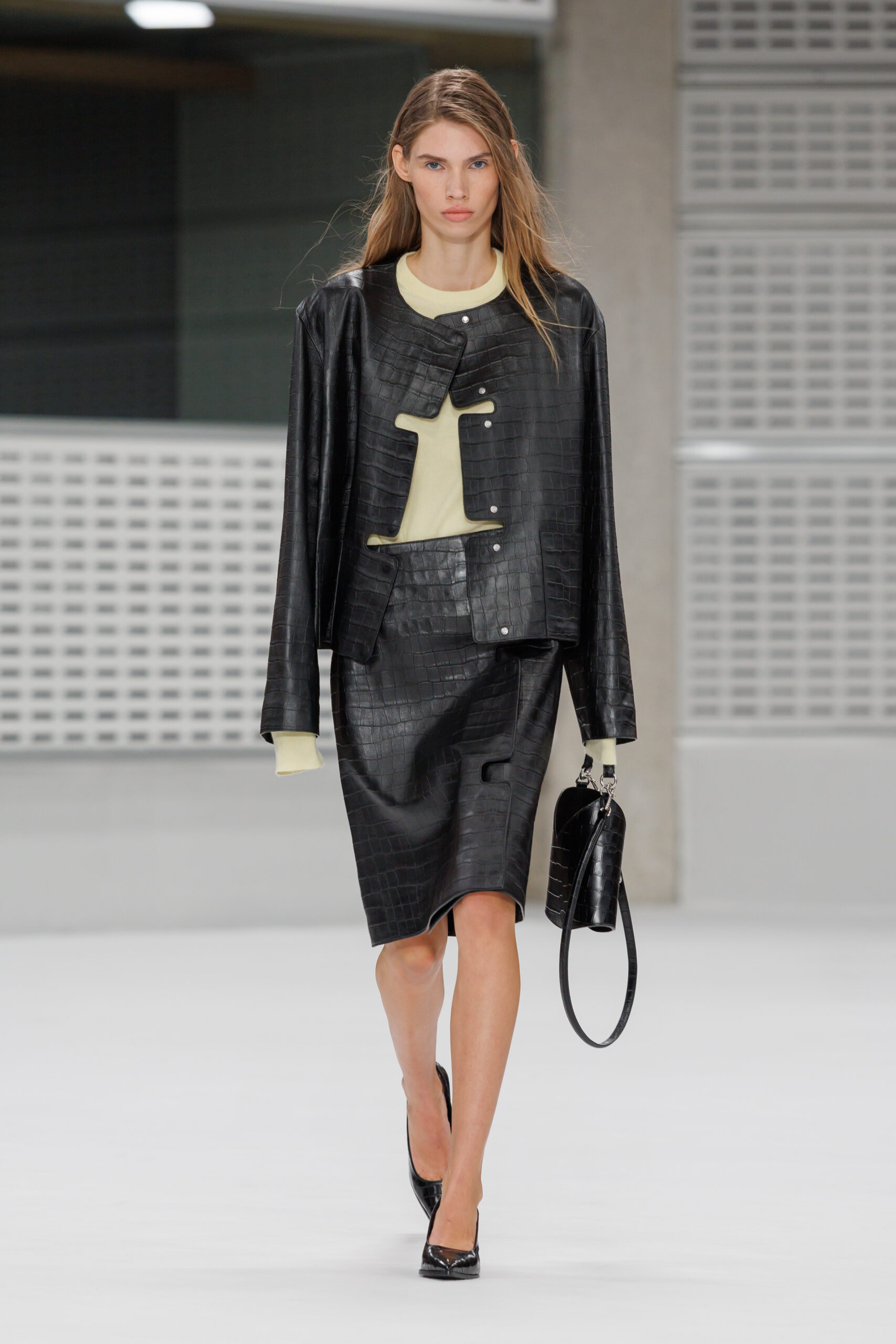
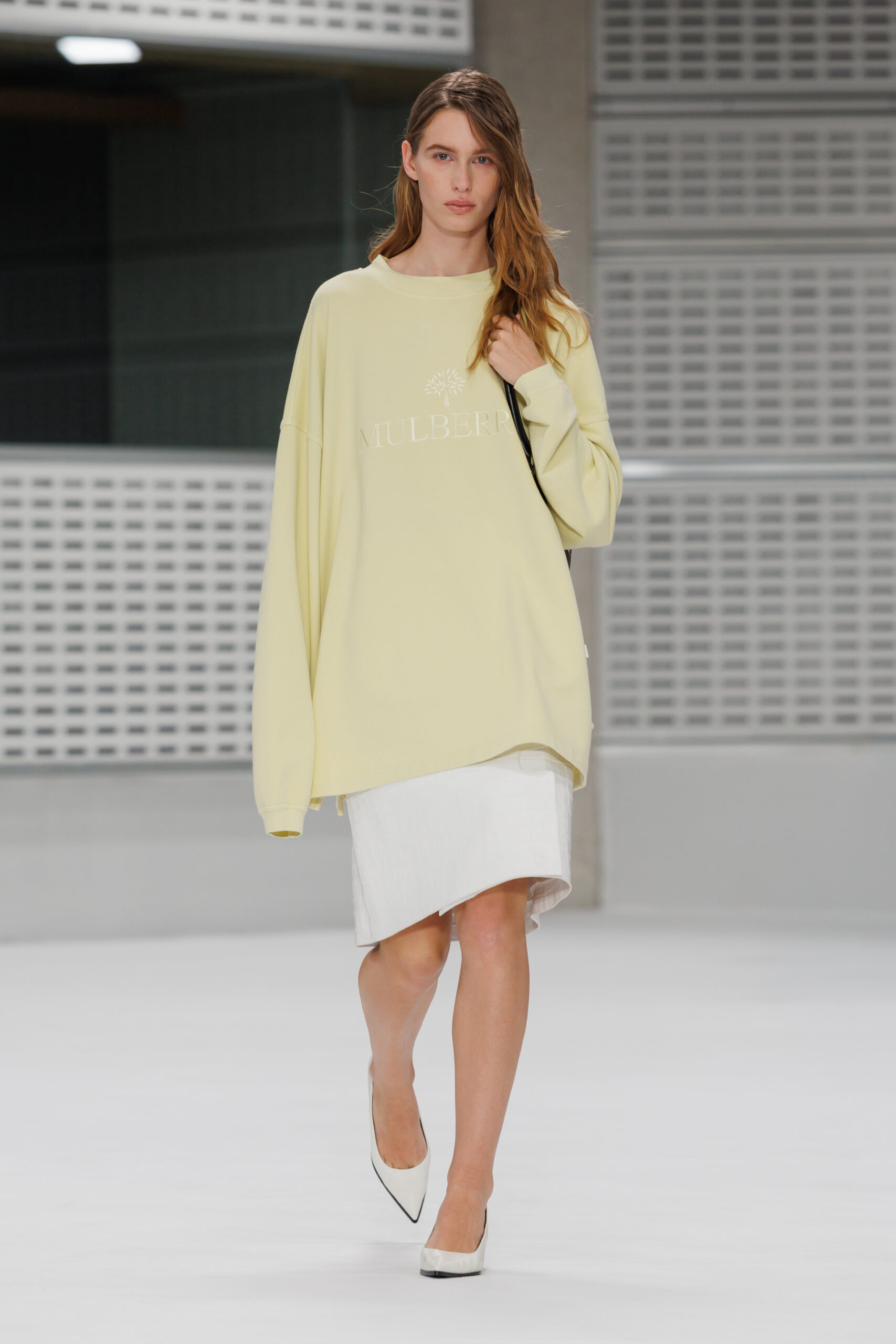
Leather provided the clearest link between Kane’s vision and the house’s heritage. A short white leather dress was constructed from horizontal geometric tiers shaped like the flap of the Bayswater bag, repeating the form down the body in place of visible branding.
“My point was to say ‘Mulberry’ without a logo,” Kane told British Vogue ahead of the show.
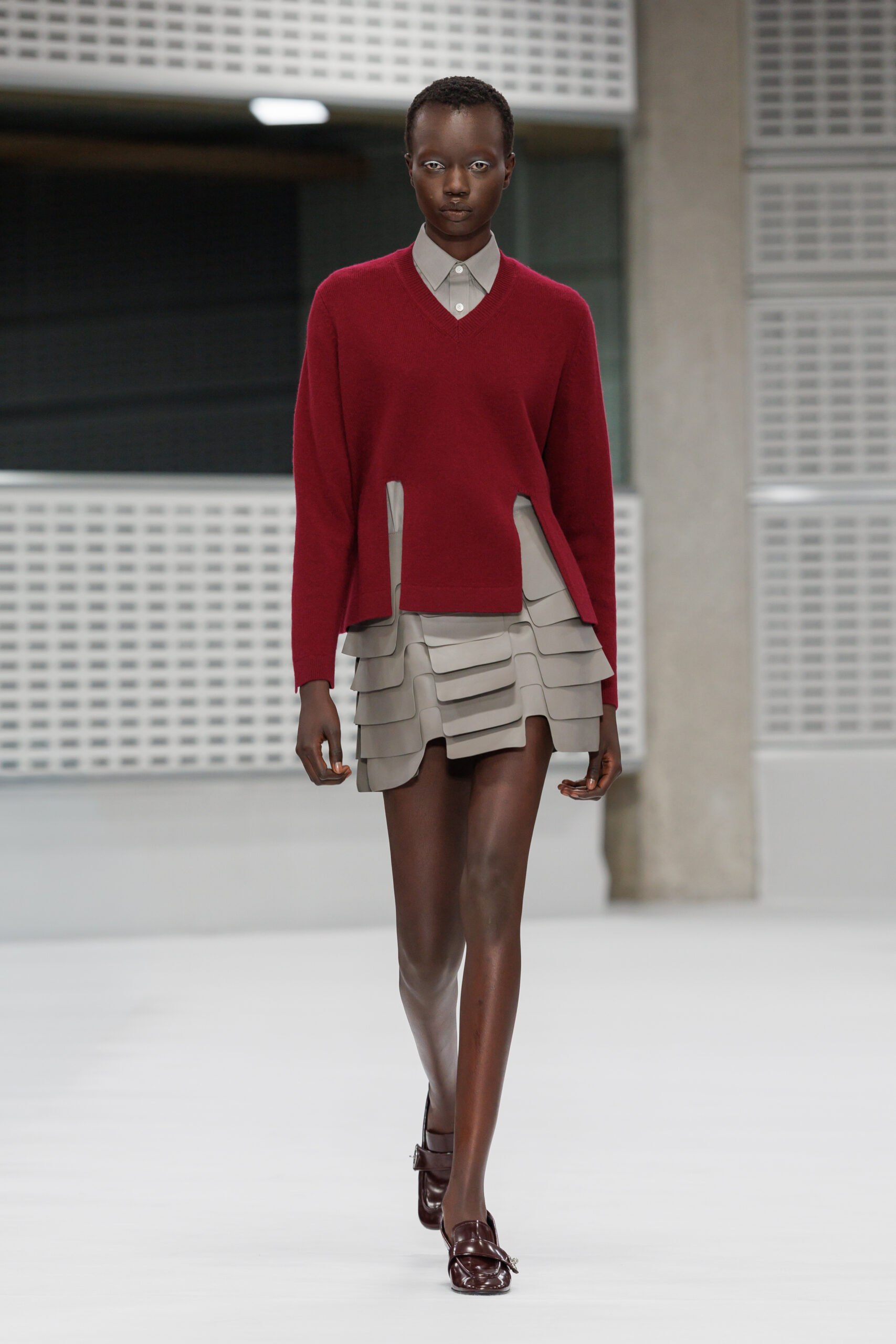
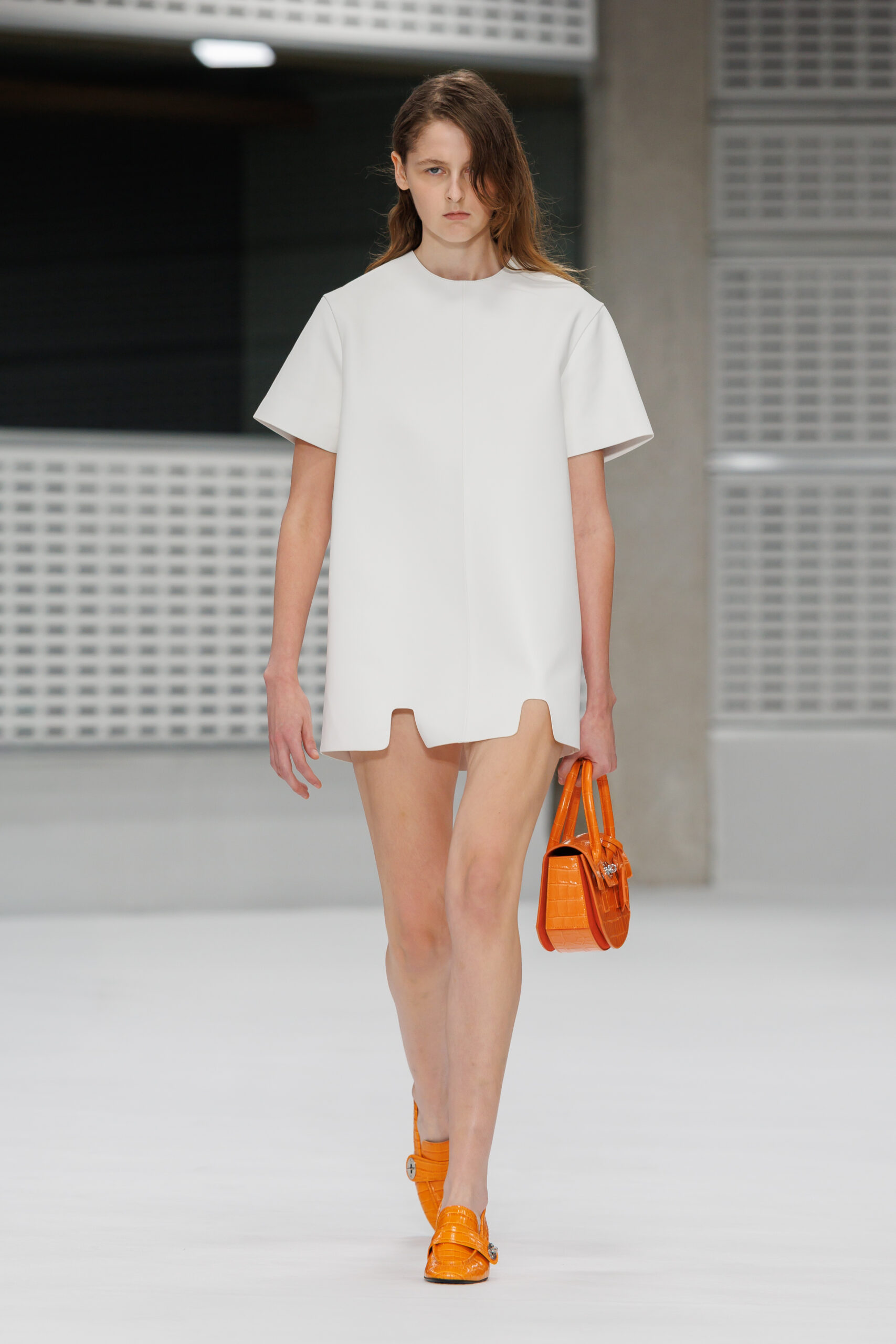
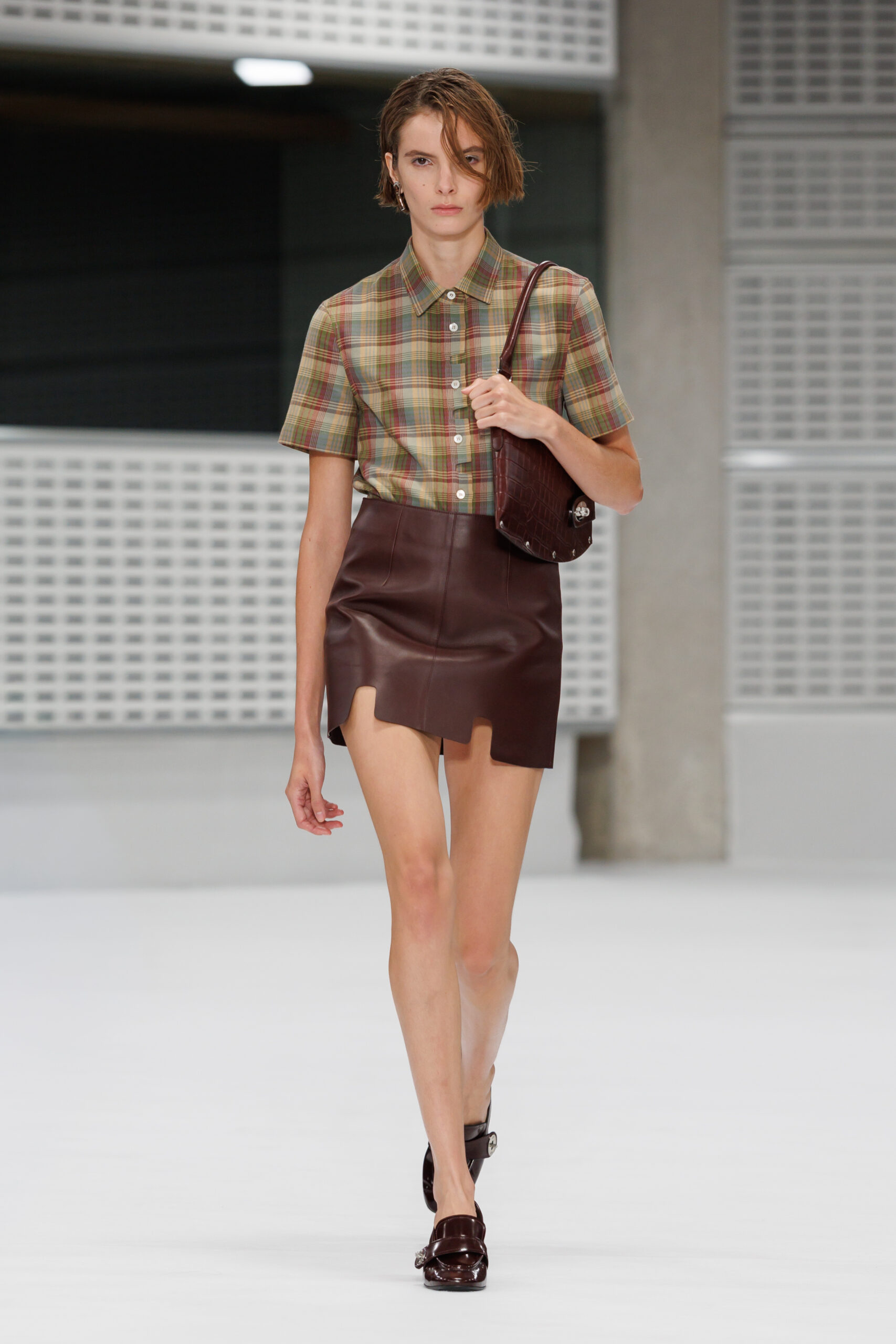
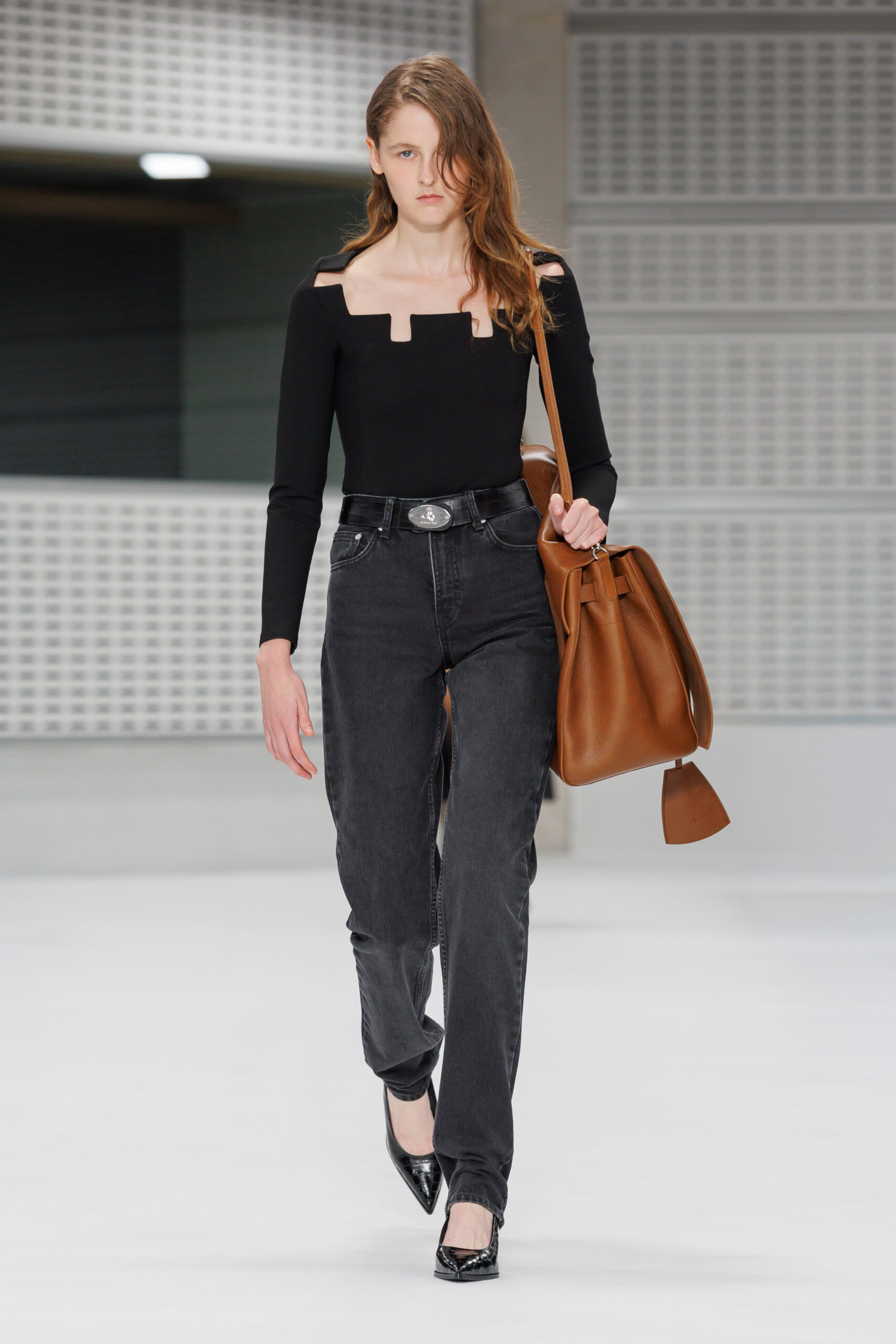
The Bayswater outline appeared frequently throughout the collection as a crenellated detail, traced through outerwear, tailoring, knitwear and dresses.
Leather panels on coats and skirts replicated the original construction, while the singular Postman’s Lock was translated onto belts and footwear.
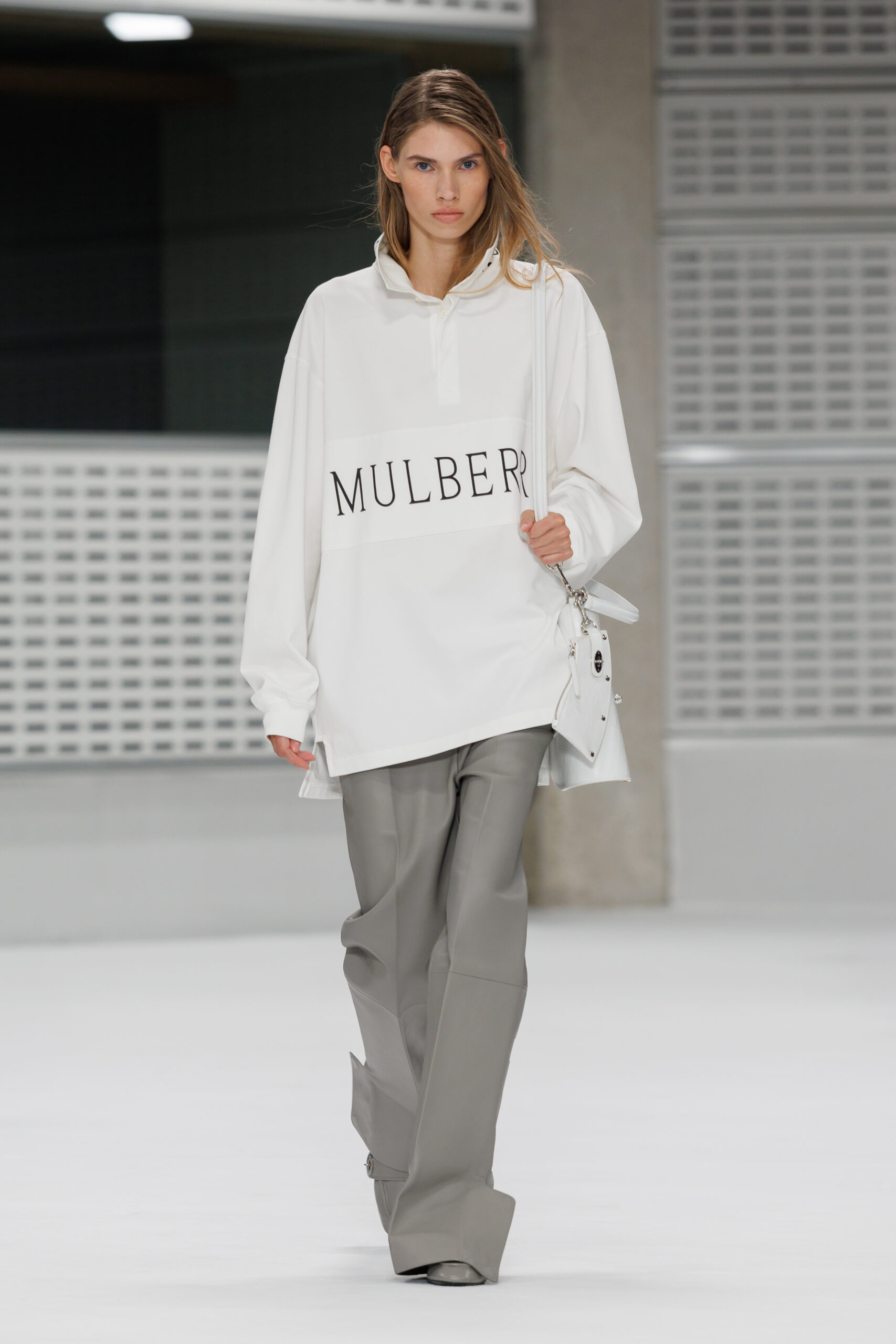
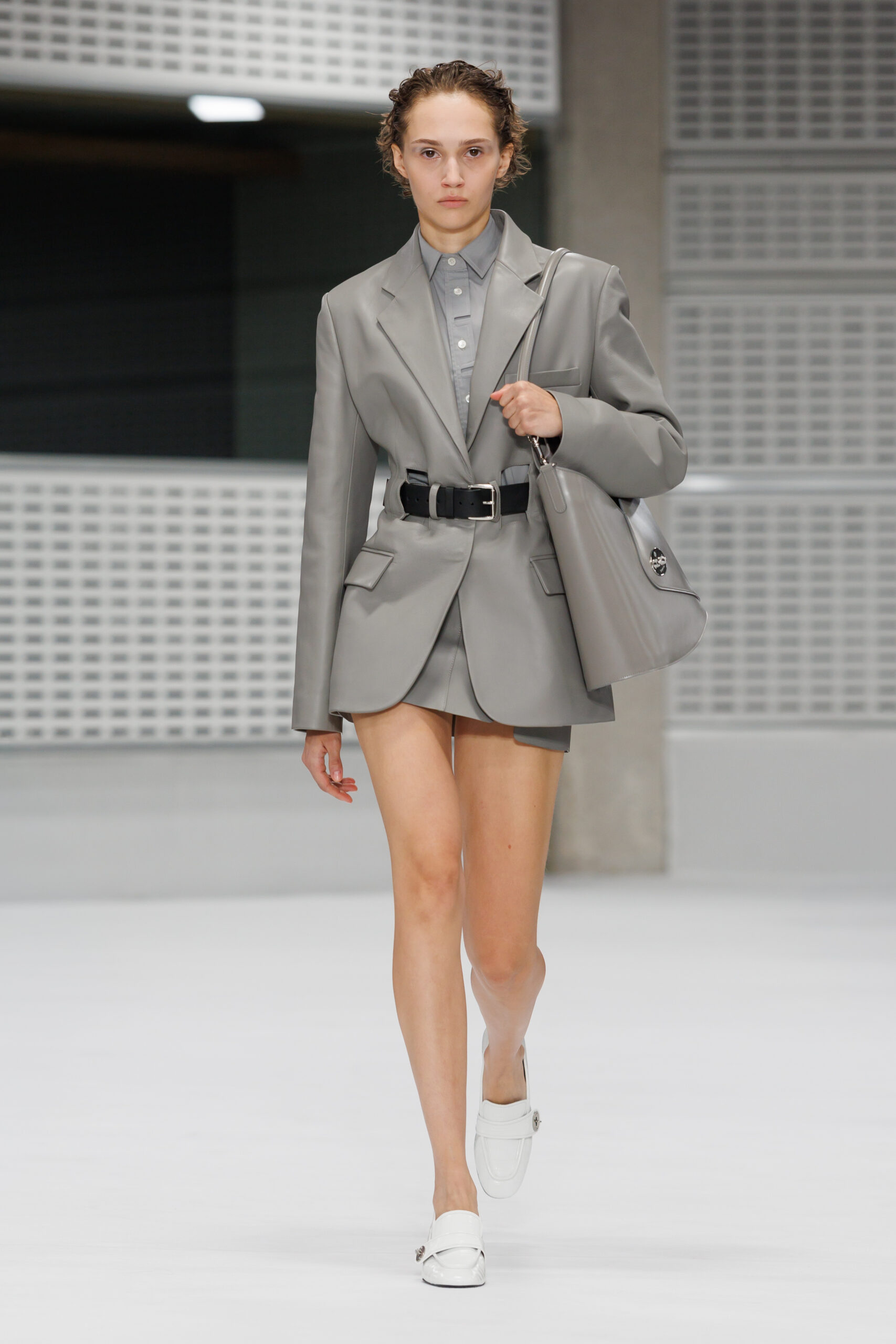
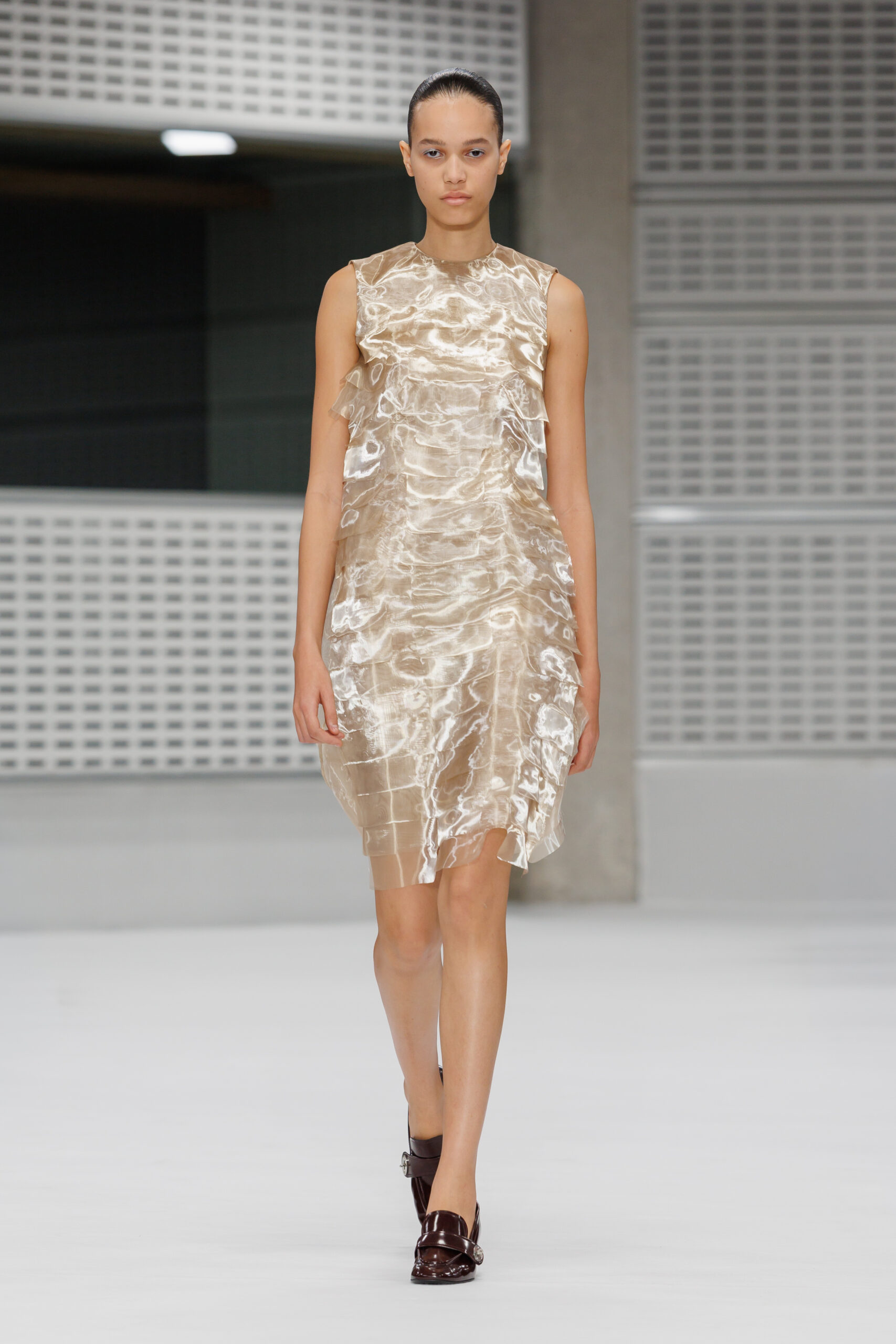
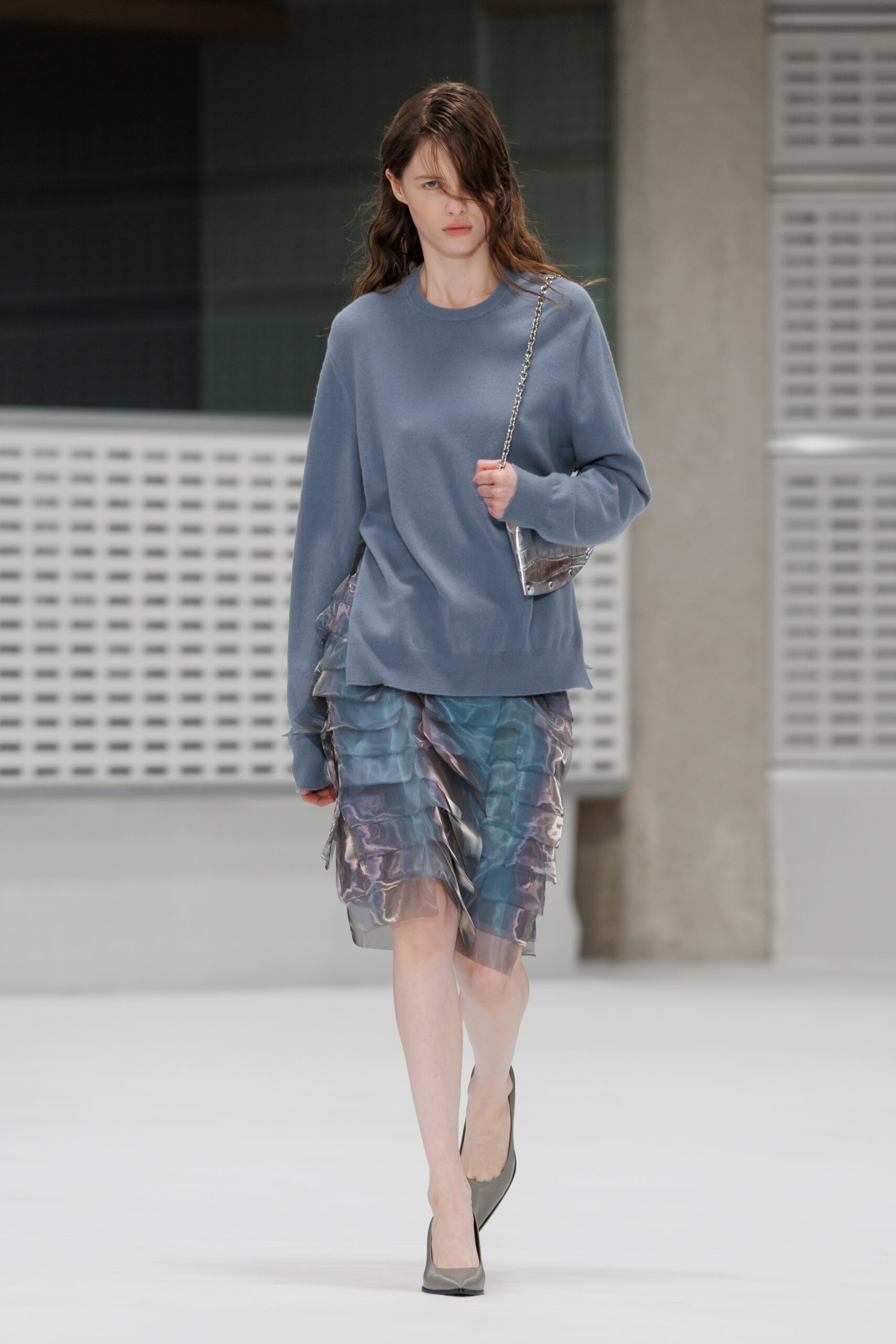
The collection also looked to the history and substance of Mulberry, reflecting on its beginnings in Somerset, founder Roger Saul’s references, the mulberry tree, leather and the codes that have shaped the house.
Saul began the business at 21 in his parents’ Somerset home, making belts from leather remnants his father brought home from the nearby Clarks shoe factory. He named the company after mulberry trees he saw from the train on his way to school.
That tree reference became axe imagery across the collection: an axe motif appeared on a T-shirt, mirrored heels were carved into axe shapes, and a flat, curved shoulder bag was named The Chop.
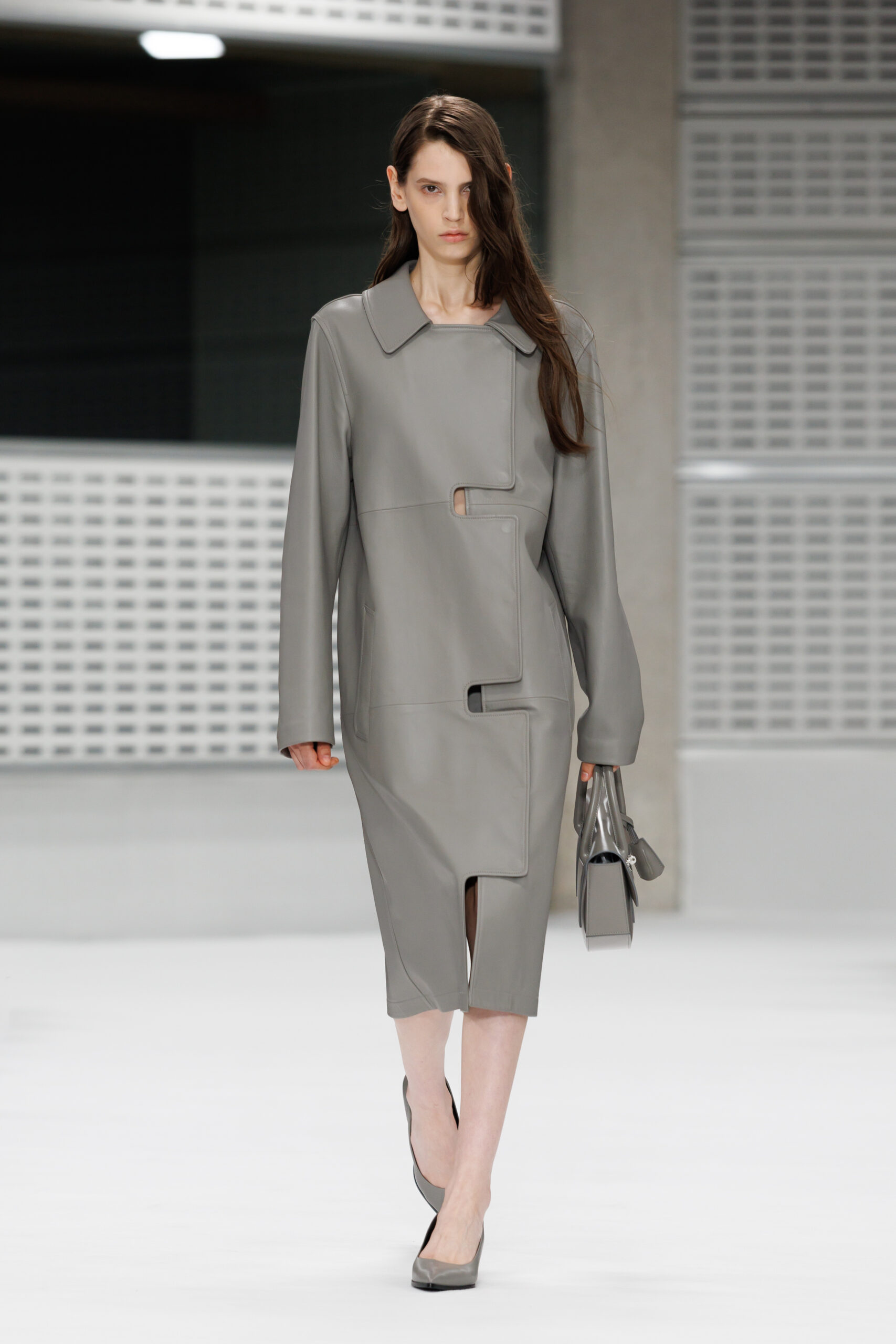
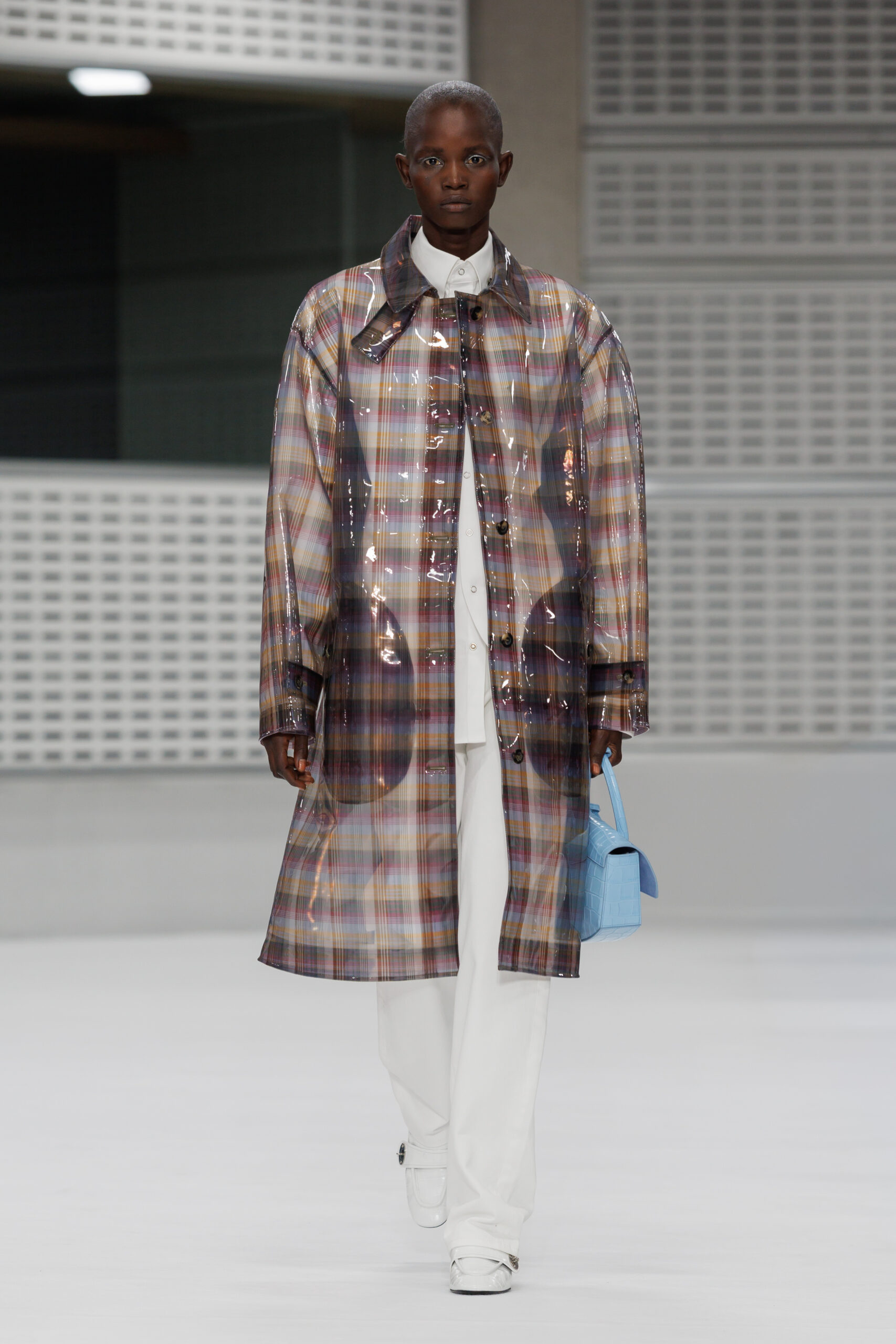
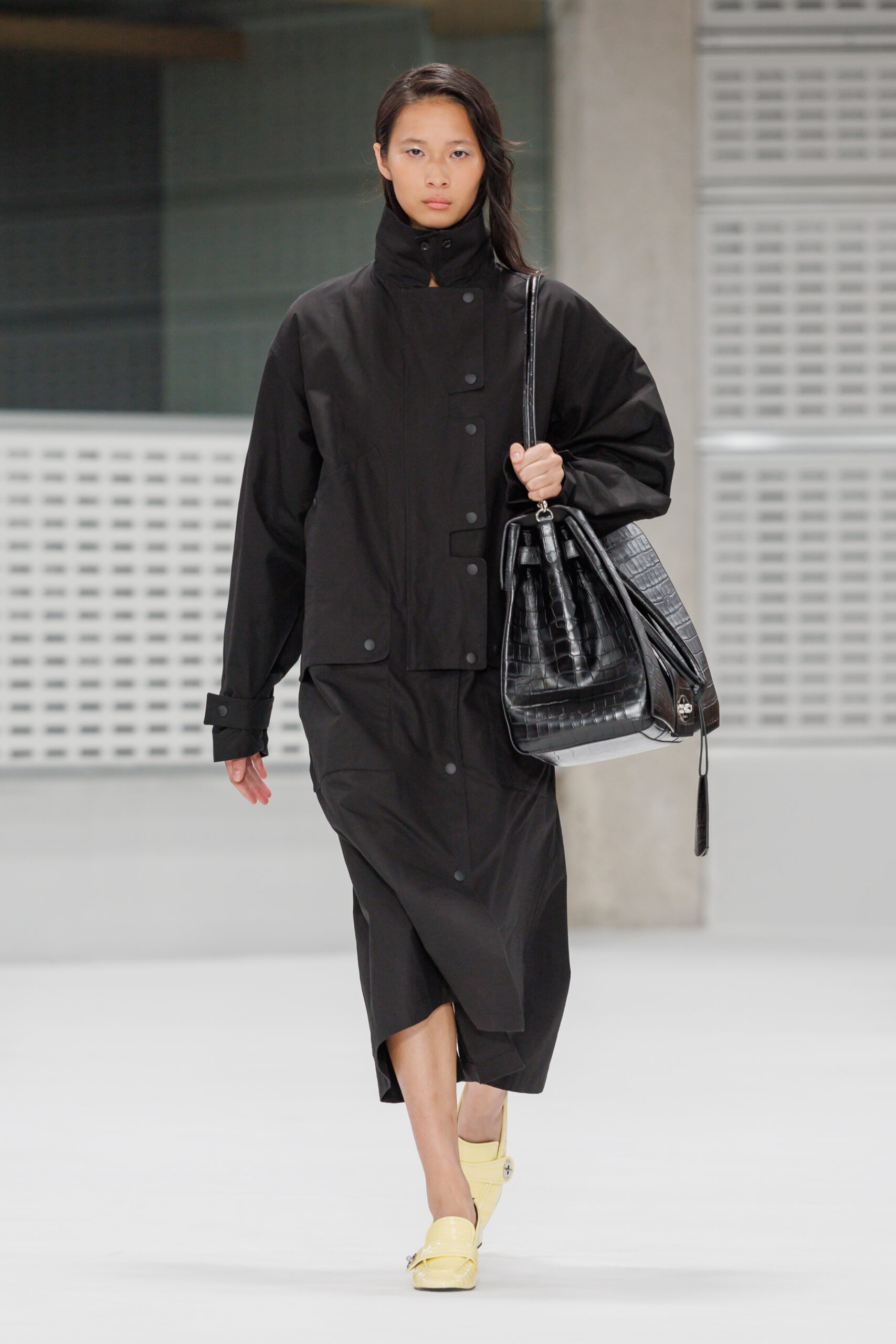
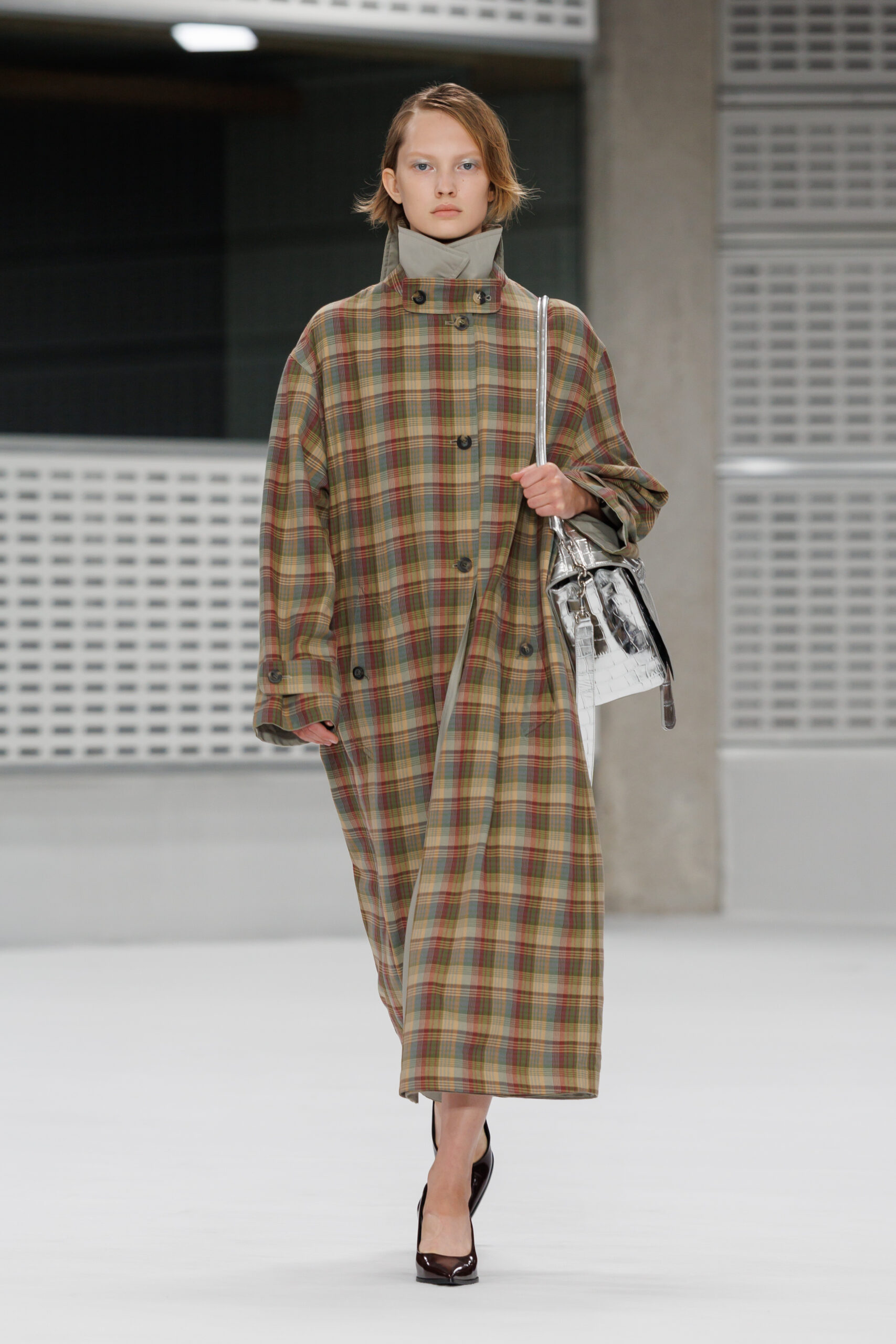
Outerwear included a long greige raincoat lined with a brown check, lifted from one of Saul’s original 1980s designs and left unchanged.
Colour was also drawn from the Mulberry archive. The heritage check formed the foundation of the palette, with its familiar shades extracted and reworked across the collection, taking another house code out of its original context and giving it new purpose.
Meanwhile, the original 1990s Mulberry sweatshirt was recreated with minimal intervention. Once adopted by football casuals as a badge of honour in Christopher Kane’s hometown, it conjures a lasting memory of what Mulberry meant to Kane growing up.
The show forms part of CEO Andrea Baldo’s “Back to the Mulberry Spirit” strategy, which aims to rebuild categories beyond the brand’s accessories core. As part of pandemic-era cost-cutting in 2020, Mulberry ended its clothing and footwear licence with Onward Luxury Group; its final ready-to-wear range, designed by Johnny Coca, was for autumn/winter 2020.
Baldo, who joined from Ganni in 2024, has early results to support the creative reset. In the 52 weeks to 28 March 2026, Mulberry recorded a 5.7% rise in total sales, while all markets grew in the second half and UK like-for-like sales were up 13.7%.
The return was also welcomed by British Fashion Council CEO Laura Weir, who framed the show as part of a wider effort to return established houses to the London schedule, with Alexander McQueen also showing in the city for SS27 after years in Paris.
“As one of Britain’s most iconic luxury houses, its return strengthens London Fashion Week creatively, culturally and commercially. This marks an exciting new chapter for the brand under Christopher Kane’s creative leadership and an important moment for British fashion,” Weir said.