

British luxury department store Liberty appointed Sinead O’Brien as Head of Design last month as it looks to develop its in-house fashion collections and expand its offer across womenswear, menswear and accessories. Having previously worked at Vivienne Westwood, Erdem, Roksanda and Temperley London, O’Brien joins with a focus on Liberty’s extensive archive and distinctive prints, exploring how these can be reinterpreted across new categories.
In conversation with TheIndustry.fashion, she discusses Liberty’s loyal customer base, the relationship between its fashion and interiors teams, and the role of storytelling in her approach to design.
What initially attracted you to Liberty and why is now the right time to join the business?
When I started interviewing and meeting the team, it became really clear that they wanted to change the direction of the brand and expand on what they already have. The womenswear has started to build quite a collection over the last couple of seasons.
The archive was the main thing that stood out to me. Throughout my career, I’ve always worked with brands that have really significant and culturally important archives. I would always identify a brand’s archive, its archetypes and the symbols or images that people pick up on, because they are what make a brand what it is.
Liberty has such a huge history and I’ve been really enjoying getting to know it. I started by visiting the physical archives, with papers and folders of paisleys and paintings. You could spend weeks there. It’s a wonderful resource.
How do you decide which elements of the archive to revisit, and how do you make them relevant to new generations of customers?
On my first visit, I wanted to keep my beginner’s mind, my fresh eyes and my outsiderness. Most of it is print-based, but there are also some really antique, historically significant garments. I started collecting intuitively, almost mindlessly, building up a big resource to take back and share with the team.
For me, the archive is a living thing, and that’s a connection I want to keep. How do you make it live again? How do you make it live in a different way?
I also think the team is part of the archive. You have people who have been there for 20 or 30 years. They give me the context, and I can ask one question and somebody has the whole history of it in a split second, which is incredible and quite rare.
When you’ve worked in fashion for a long time, you know things work in cycles. It’s about knowing when the timing is right to bring something back.
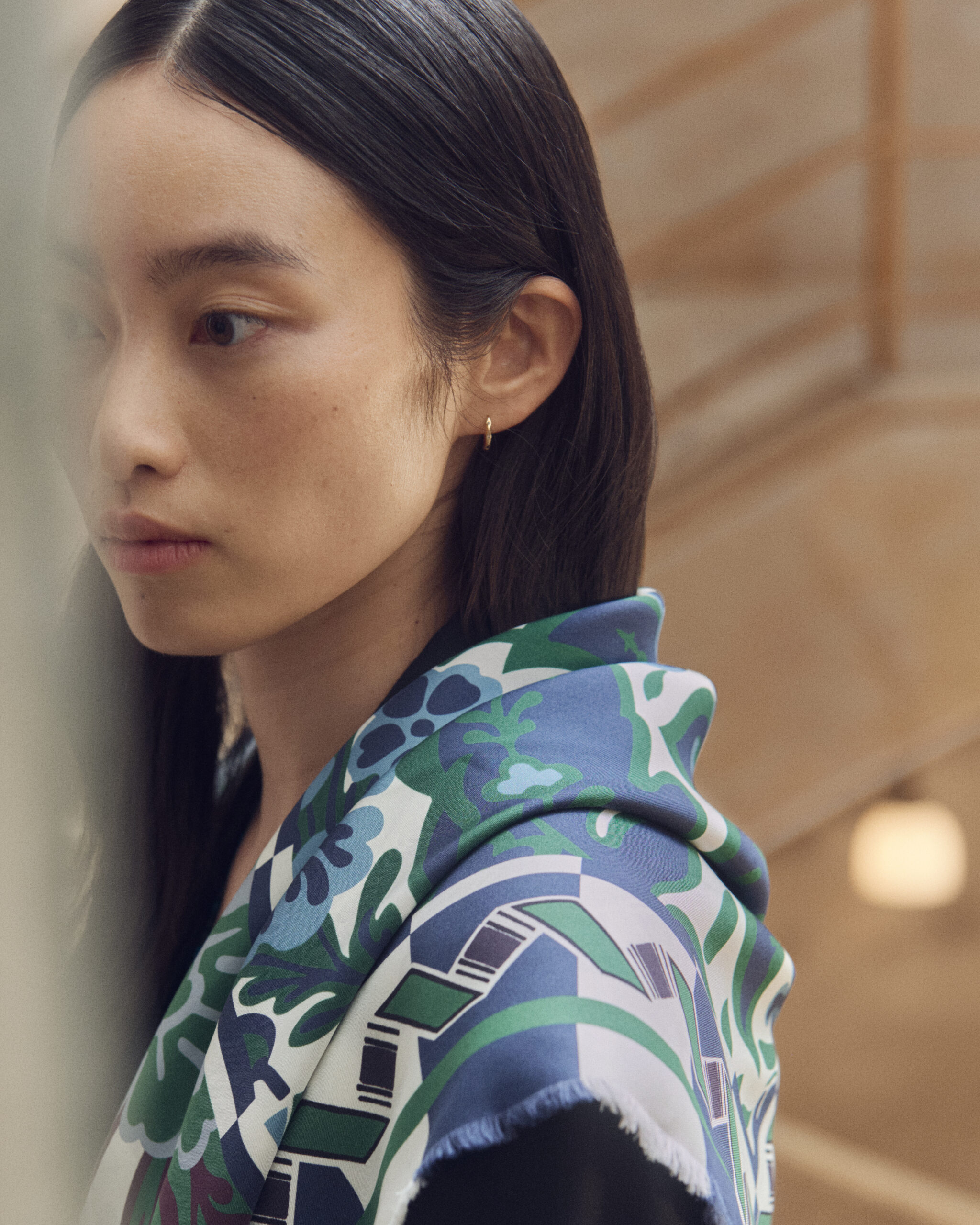
How closely do you see Liberty’s fashion and interiors teams working together, and what opportunities does that create for product development?
I sit next to the interiors team, so I have these incredible boards of original research coming from a different point of view and another person’s creative mind.
We naturally have these threads running throughout the business because of our design pillars and different print archetypes. There’s a really organic, natural thing that can happen, and it should happen more. I want it to happen more.
There’s a lot of cross-pollination. Sometimes ready-to-wear will inform what the bags are doing, and somebody will say, “I’ve borrowed this from your board”. I can then develop it further.
It’s also really important that the womenswear can stand on its own. We’ll see that through the techniques, whether it’s a print in a knitwear jacquard, on a massive scale on a trench coat, or on a micro scale on a lovely ditsy all-over shirt.
Who do you have in mind when designing for Liberty, and what have you taken from your previous roles?
I would always be designing for somebody who isn’t just into clothing, but is into style. It’s about a sense of style and a way of putting things together. A curator, a collector, somebody who’s very much into culture.
I bring a lot of things from performance, dance, theatre, film and art into the design process. At Vivienne Westwood, it was highly theatrical, and that was the time and place for it. It’s a slightly different thing here, but we have such an established customer. We’re so lucky to have that already.
I’m on the shop floor a lot, talking to staff about what people are asking for. It’s not about individual voices. It’s about putting that information together and trying to represent our customer.
When I start at a brand, I study the archive. That’s my map. I start to remember collections and past seasons so I know what I can draw on and what we’re missing. I also like to bring ideas into the team and see what’s missing, what we could get from interiors, and how everything fits together.
Who are your personal influences in fashion, and how do they feed into your approach to design?
For me, it’s about storytelling. I love when a brand successfully tells a story. Margiela has always been a favourite for the storytelling and the concept. I really love the Alexander McQueen era of McQueen, too. When I was studying, I thought that if you could do that in fashion, I wanted to do it, because I’m equally interested in storytelling and design.
I absolutely love Dries Van Noten for the embellishment, colour, print sensitivity and the way things are put together.
But when I approach a brand, it’s not about bringing my own taste with me or imposing a look onto it. I think one of my strengths is coming into a brand and working with it, rather than imposing something external. The respect I have for Liberty is the most important thing. In years to come, somebody will look back at the archive and this period, and it has to feel right.
What can customers expect from your collections? How do you see menswear and accessories developing?
It’s very, very early stages. We’ll definitely have more outerwear, which is exciting because the outerwear in the collection that’s in store now has been really well received. We’re also expanding the knitwear, with a beautiful partnership with Albion, a British knitwear company.
Longer term, we’re considering all the categories, but we’ll be selective about what we do and when. I have all these ideas and want to do absolutely everything, but I’m mindful of the right timing.
Accessories are definitely going to be more integrated. We’re starting to use fabrics that will pair back or accompany the ready-to-wear. I’m also overseeing scarves and soft accessories. Liberty’s scarves, alongside its archival prints, is what I see as the Liberty print language. I want to find interesting ways to feed that through into the garments.
Menswear is a smaller, tighter collection at the moment, but I think there’s a lot of possibility. We have all these chore jackets, and they take the print so well. They almost feel woven. It feels like the right thing to be doing for menswear at the moment.
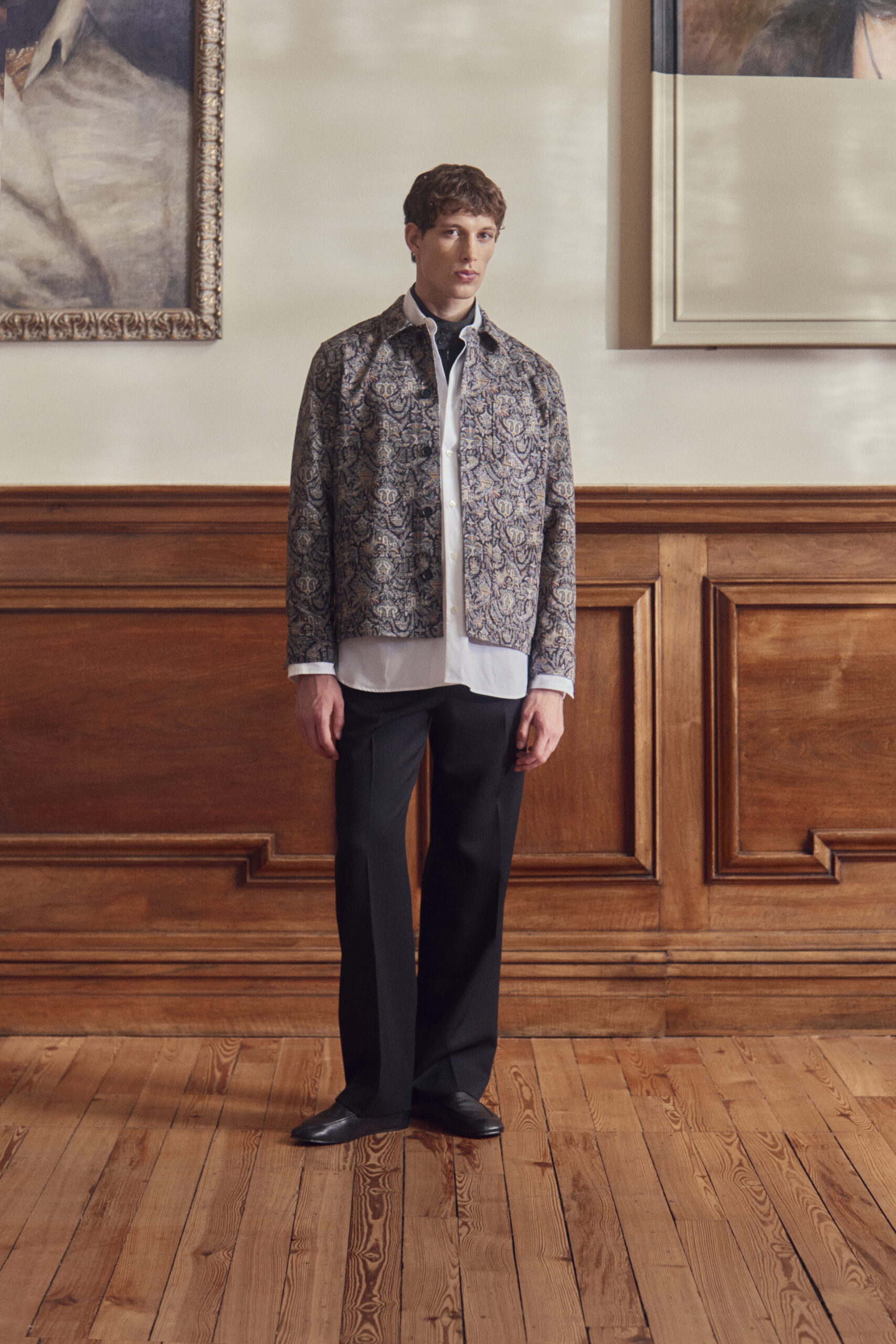
What does the Liberty male customer look like?
He’s cool.
He might choose a tie or scarf, but make quite a bold choice. We’ve started to branch out in the garments, adding things like an overshirt or a mac. I feel like he wants more than just a chore jacket. He wants to start layering, playing and putting things together.
They’re a bit eccentric, too, which I love. I feel a little bit of the Vivienne Westwood influence there. It’s more subtle, but I feel it. I can picture him in my head now.
What would you most like customers to discover when they encounter Liberty’s fashion collections?
I want to develop a language from the archive that feels recognisably Liberty, but that people encounter in a fresh and surprising way. I really want to attract curiosity.
It would be incredible if people were exploring the store, found the womenswear department and thought, “What brand is this? Whoa! I didn’t realise”. I want that sense of discovery to go to a new level, where people are surprised by the collections, almost as if they’ve appeared fully formed out of nowhere.
It’s about taking prints that we know so well and finding a new way to use them, while keeping that connection to their history. Almost like a face that you recognise in a crowd. That’s what I want, actually. That’s the feeling.