


International and UK expansion are key strategic priorities for fashion businesses, according to a live audience poll conducted by logistics specialist and principal partner Bleckmann at TheIndustry.fashion Summit. Meanwhile, slow returns and refunds were identified as the leading causes of customer dissatisfaction with online services.
The session, titled “Logistics: Building a Platform for Success”, was led by Robert Kiewik, Director of Sales at Bleckmann, and Dorota Tankink, Head of Marketing Communications at Bleckmann. The panel kicked off a day of insightful discussions, combining expert perspectives with an interactive audience survey to explore the key challenges and opportunities shaping the future of fashion logistics.
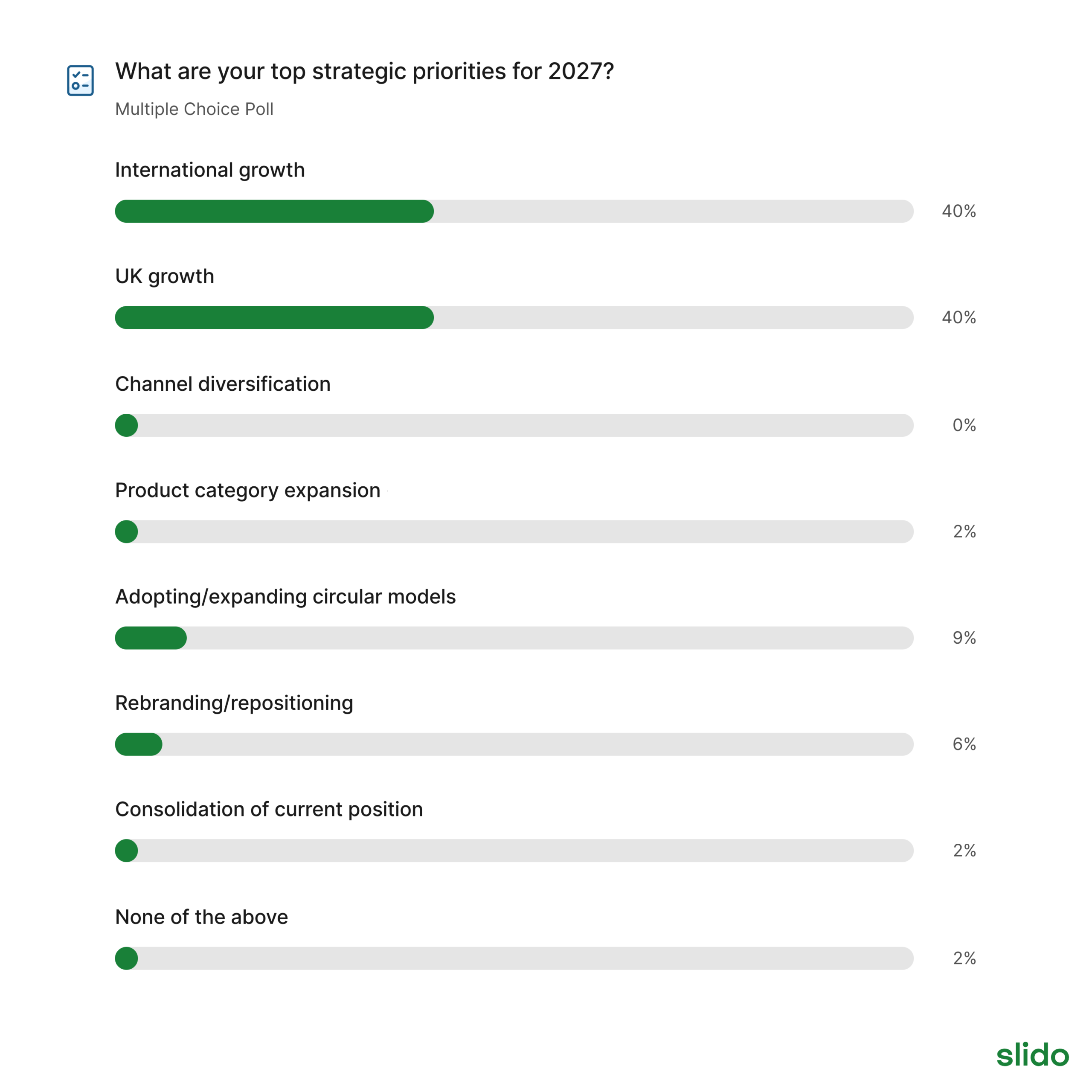
International and UK growth emerged as joint top strategic priorities for 2027, each accounting for 40% of responses in the audience poll. Adopting or expanding circular business models was cited by 9% of respondents, while 6% identified rebranding or repositioning as their main priority.
Physical retail ranked as the leading priority channel, ahead of direct-to-consumer (DTC) and e-commerce, followed by marketplaces. However, Bleckmann noted that marketplaces were generating a significant share of its enquiries, highlighting continued interest in the channel.
Consumer confidence was the biggest concern for the Golden Quarter, cited by 26% of respondents, followed by getting promotional strategy and pricing right (20%) and maintaining correct stock levels (15%). This concern comes against a backdrop of subdued consumer sentiment: the GfK Consumer Confidence Barometer stood at -13 in September, up one point on August but still in negative territory.

In-store service levels were generally rated positively by attendees, while online services attracted a more mixed response, with brands and retailers expressing lower levels of satisfaction with the customer experience across their digital channels.
When asked to identify their customers’ most common complaints, attendees ranked slow returns and refunds as the leading issue, followed by slow or inflexible deliveries and stock availability. One audience member attributed the disparity to infrastructure, noting that businesses have greater control over the in-store experience, while online operations present more potential points of failure.
“Being a consumer while working in logistics gives me a different perspective and makes me a much more critical consumer,” Tankink added. She highlighted this with an example of ordering an expensive pair of shoes that arrived worn or damaged, only to discover that returning them would incur an additional cost.
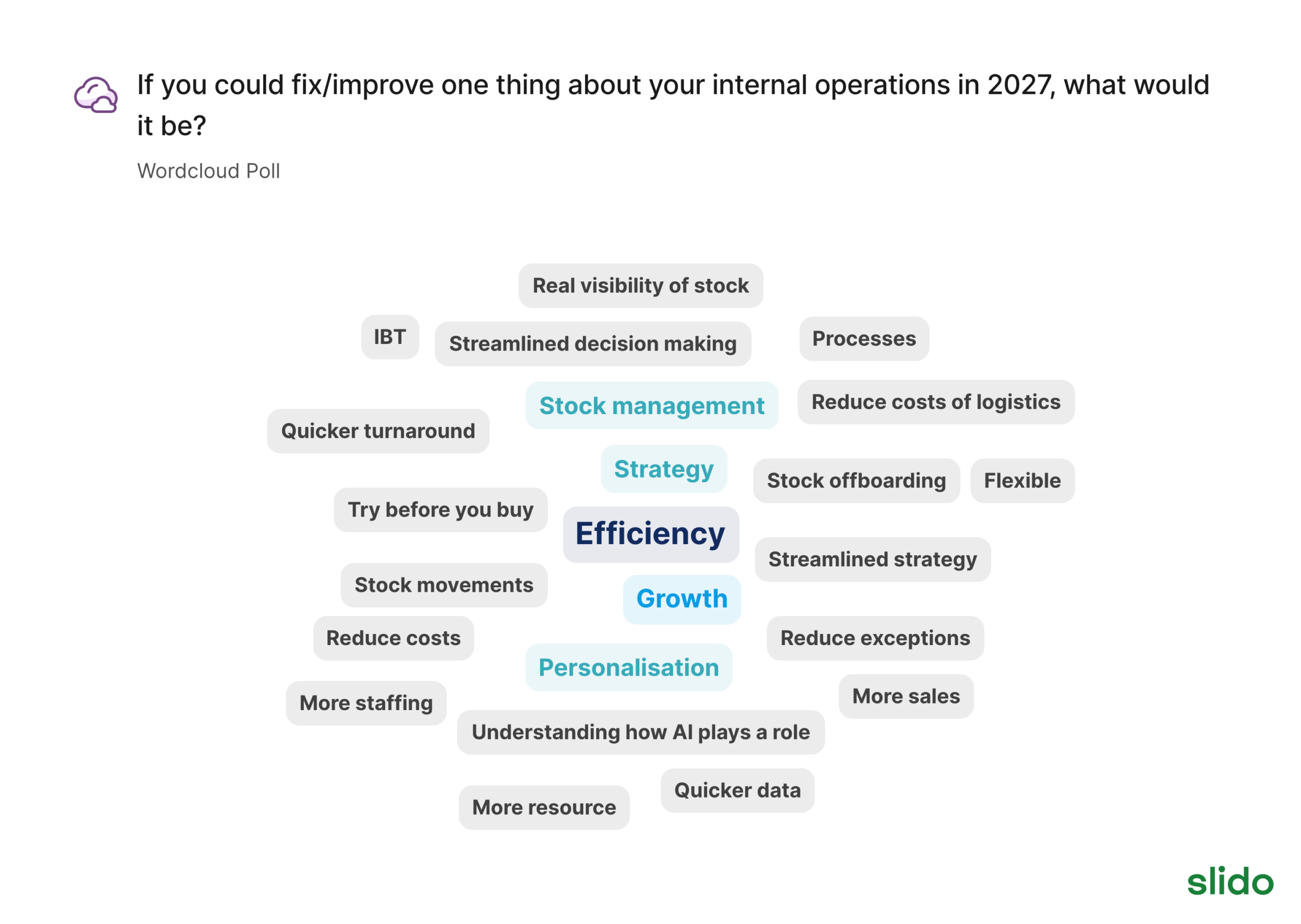
Later in the session, attendees identified faster response times as the top priority for improving customer service, followed by greater staff availability and a more human approach. When asked to identify their main internal operational priorities, respondents placed efficiency at the top of the list, ahead of growth, strategy, stock management and personalisation.
Kiewik emphasised that improving efficiency must start with data. “Everyone wants to facilitate growth, but efficiency starts with sitting down with clients, reviewing the data, and identifying where improvements can be made,” he said.
“We support our clients through continuous improvement and regular business reviews, ensuring we’re always looking for ways to work smarter and more effectively. By taking a collaborative approach, we can identify opportunities, address challenges, and ensure that nothing gets overlooked.”
Kiewik also emphasised the importance of supporting emerging and smaller brands alongside established names. “It’s not just about the larger, well-known brands; it’s also about supporting smaller businesses. Everyone starts somewhere, and with bScale, we can support them, too,” he added.

Bleckmann’s bScale offering provides modular warehousing and fulfilment services on a pay-for-what-you-use basis, giving brands the flexibility to scale their operations as they grow. Its wider service portfolio for fashion and lifestyle brands includes warehousing, omnichannel fulfilment, freight forwarding and customs services.
Additional services include packing and personalisation, as well as returns management. Through its circular services, Bleckmann helps brands restore unsold or unsellable stock to a saleable condition, supporting more sustainable and efficient inventory management.
“Things change and unexpected issues can arise on a daily basis,” Kiewik concluded. “What matters is how we respond, how we help, and how we support businesses when they need it most.”