


From emerging designers and established names to major retailers and heritage brands, London Fashion Week is expanding beyond the traditional runway, embracing new formats, fresh perspectives and more immersive ways to experience fashion.
At Friday’s LFW Network Breakfast, British Fashion Council CEO Laura Weir presented new research by BOP Consulting showing that 89% of Londoners are aware of London Fashion Week, while more than 80% of 18-to-24-year-olds have engaged with it. The findings form part of the BFC’s push to broaden the event’s reach across consumers, commercial partners, designers, buyers and media, with alternative formats including screenings and appointments up 100% this season.
That shift is evident across the programme, from Bora Aksu’s tribute to 17th-century artist Mary Beale and Mithridate’s New Romantic references, to Marks & Spencer’s archive-led debut, eBay’s pre-loved runway and H&M’s fusion of fashion and technology. Barbour has also taken its heritage off the runway with an immersive tartan exhibition at the Saatchi Gallery.
TheIndustry.fashion rounds up some of the additional SS27 highlights from London Fashion Week so far…
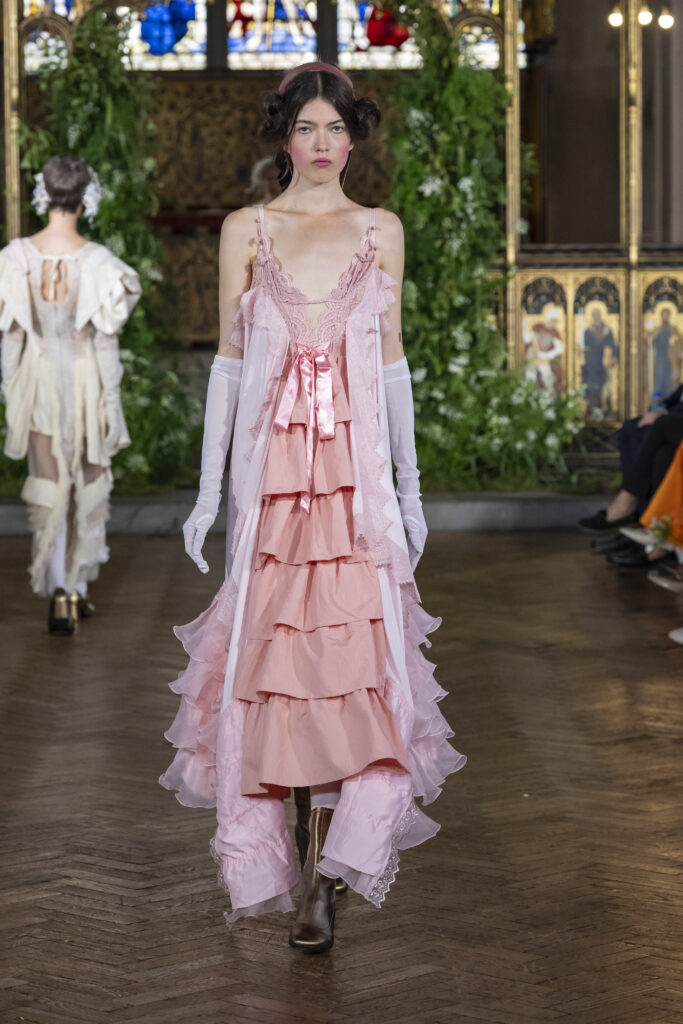
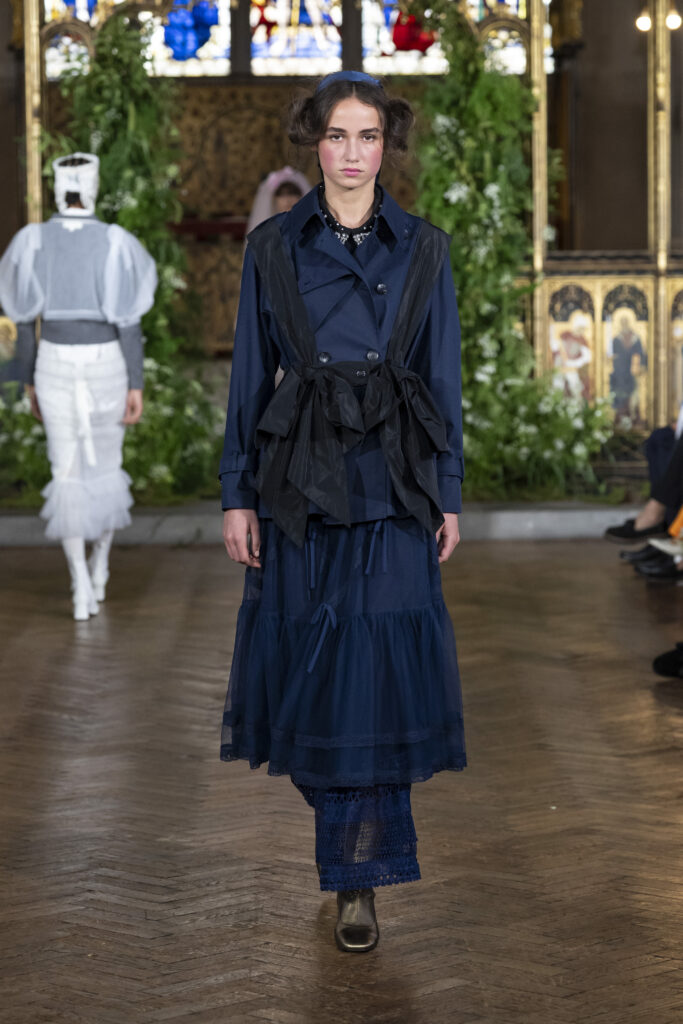
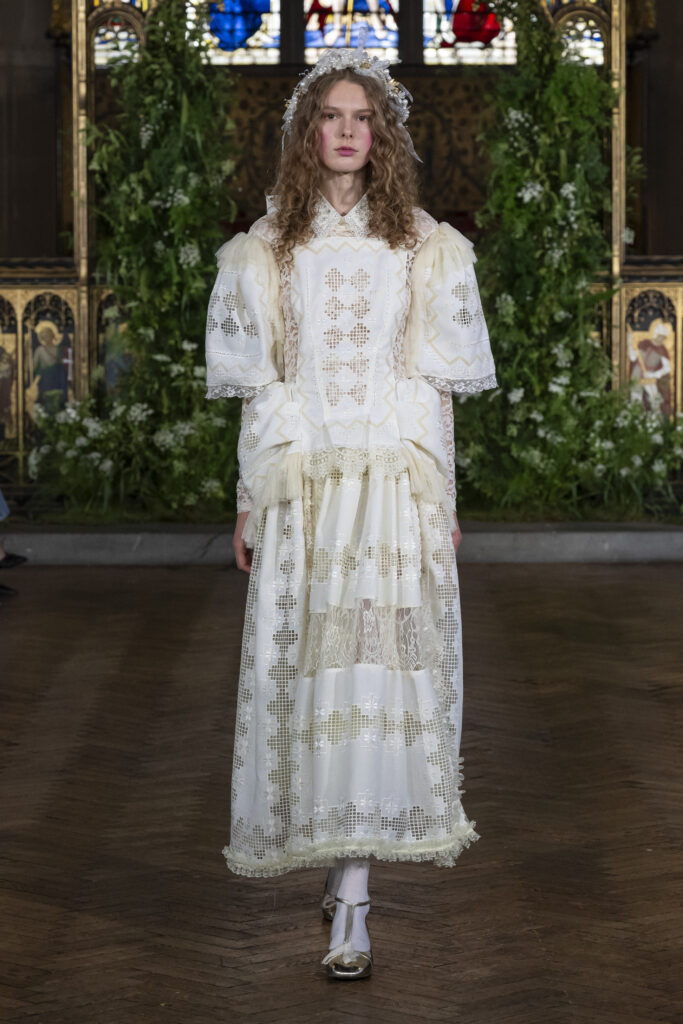
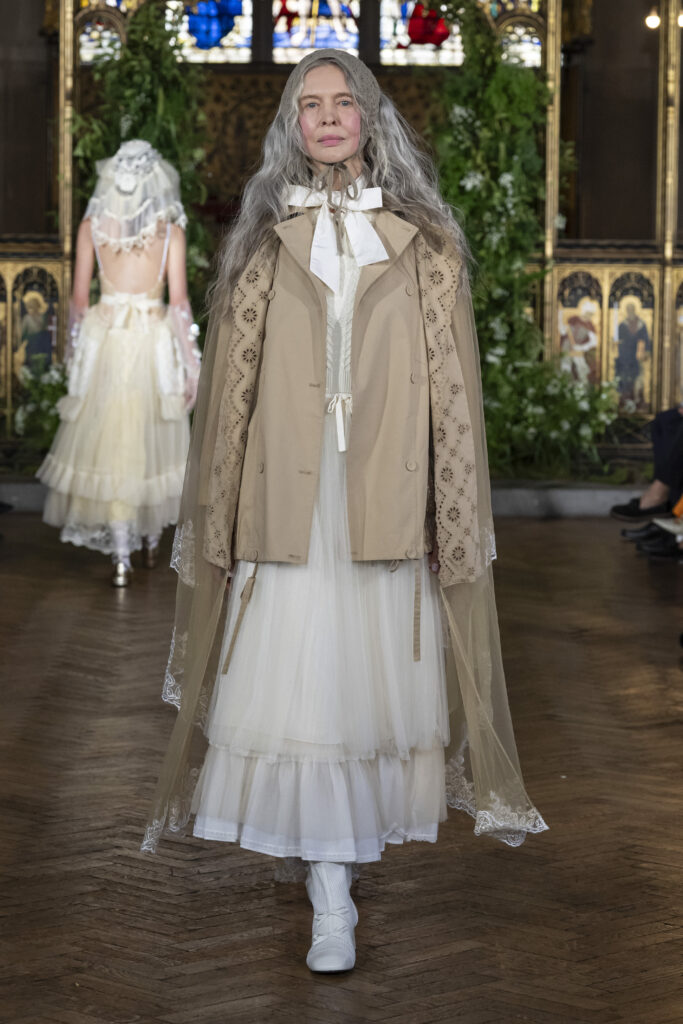
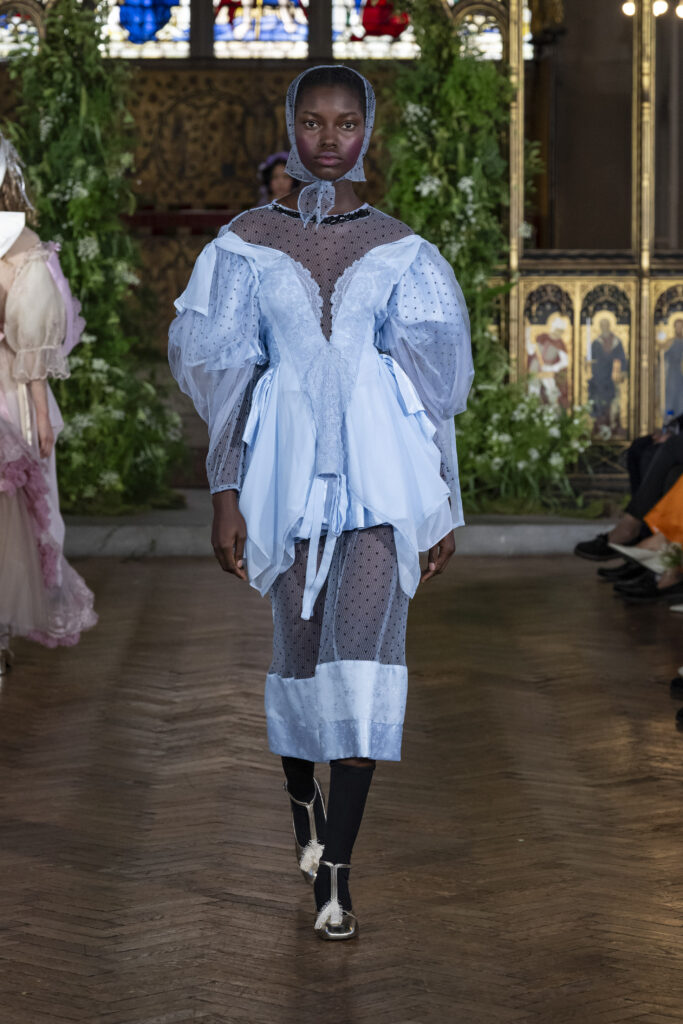
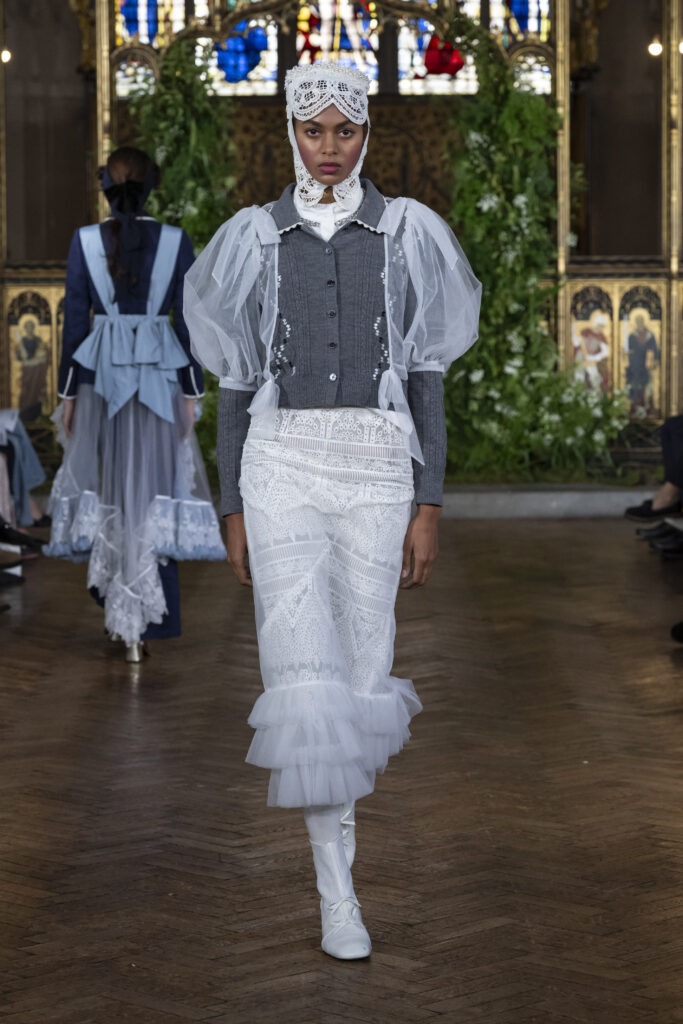
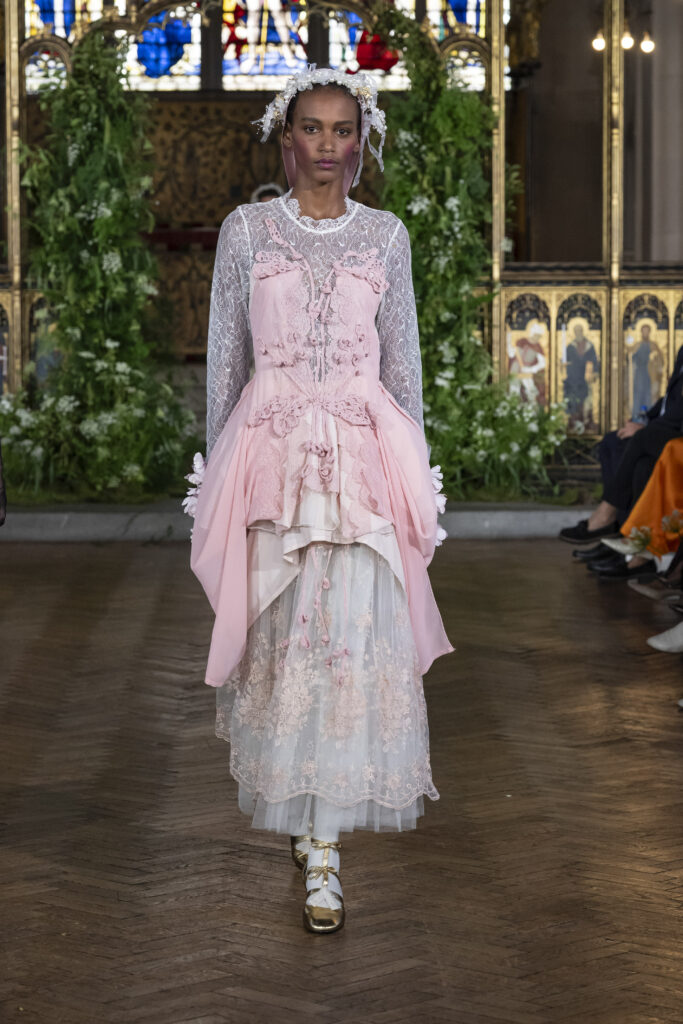
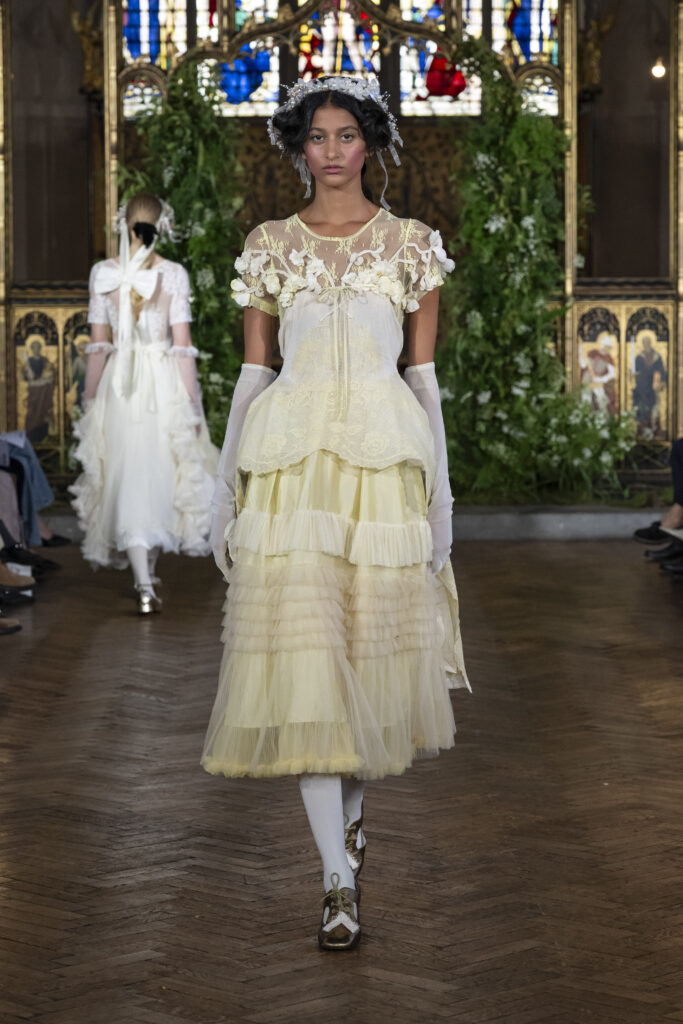
Bora Aksu brings 17th century artist Mary Beale’s story to life for SS27
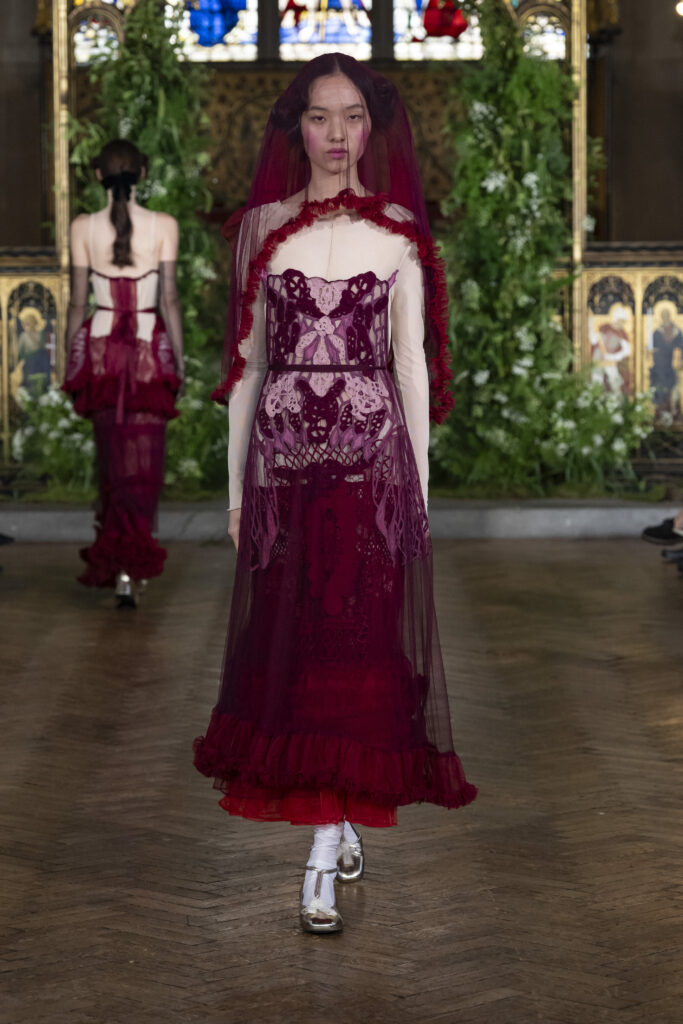
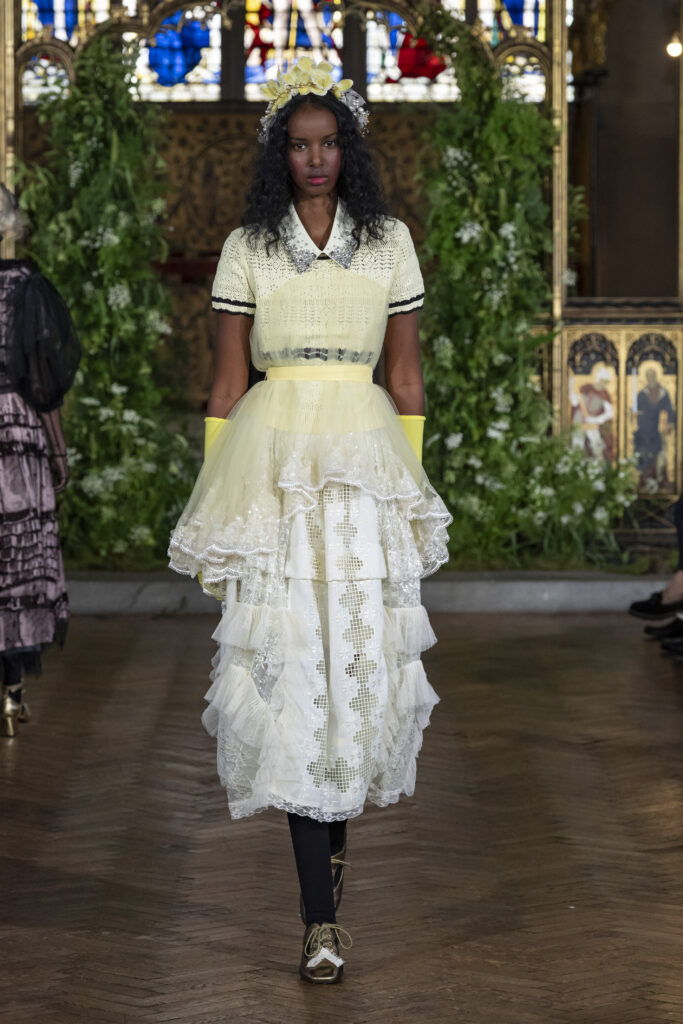
Bora Aksu looked to the life and work of 17th-century artist Mary Beale for SS27, presenting the collection inside St Cyprian’s Church, which was built between 1901 and 1903 and designed in the Gothic Revival style.
Foliage had also been added around the space, adding to the atmosphere as models walked through the church in a collection filled with references to historical dress.
Aksu drew on 17th-century menswear, bringing tailoring, structured shoulders, waistcoats, shirting and masculine closures into romantic womenswear. Structured pieces were contrasted with softer fabrics and delicate details, while lace and embroidery added texture to the more tailored looks.
Antep embroidery, a centuries-old craft from Gaziantep, Turkey, was another key part of the collection. Aksu worked with local artisans to create handmade lace and embroidery in cream and delicate pastel tones, with some pieces taking up to six months to complete. The intricate work stood out against the cleaner lines of the tailoring.
The collection took Beale’s story as its starting point, using historical menswear alongside delicate fabrics and intricate handwork to create a contemporary take on romantic dressing. Tailoring and feminine details were constantly played against each other, with the craftsmanship giving the historical references a more modern feel.
Marks & Spencer draws on 100-year archive for shoppable runway debut
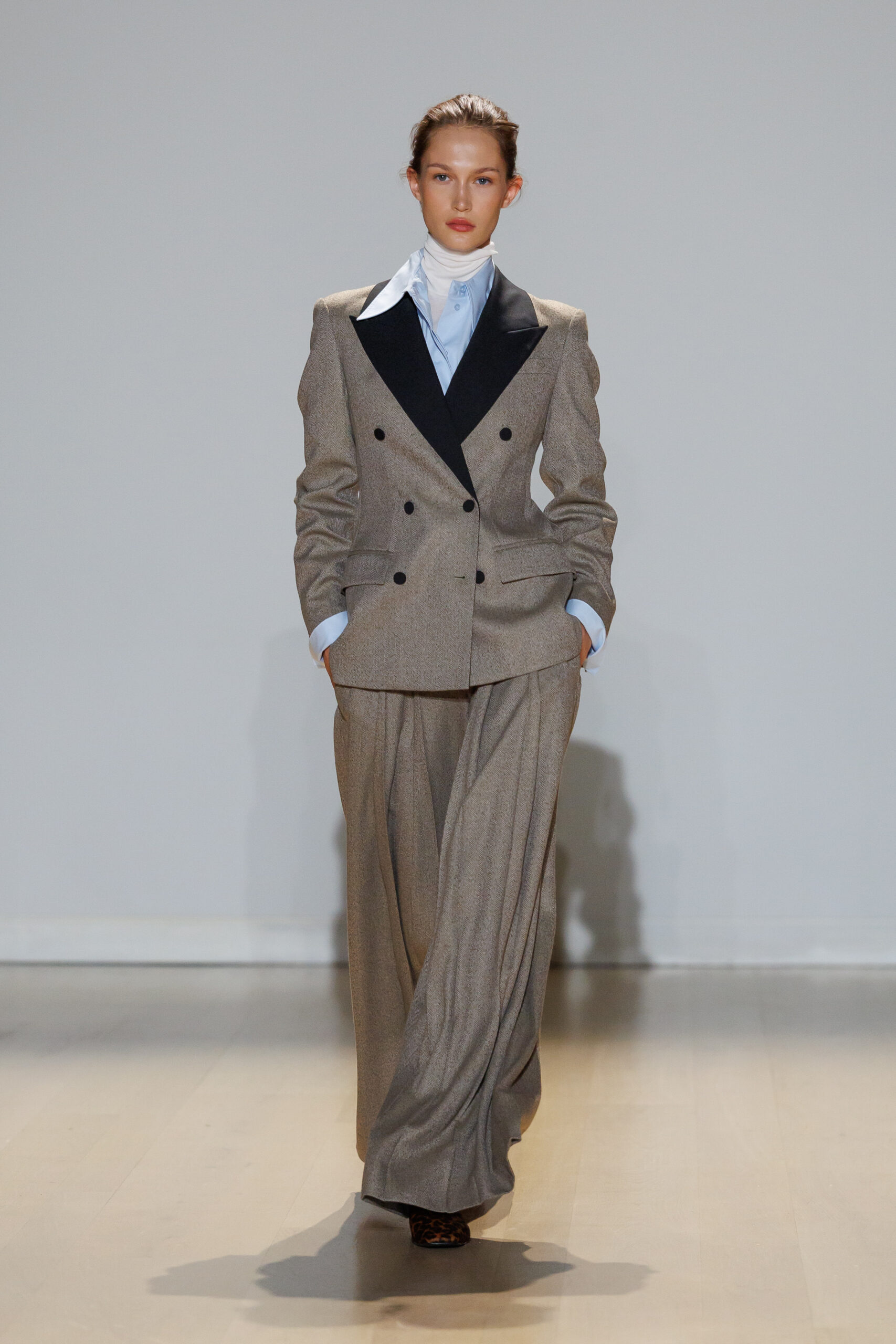
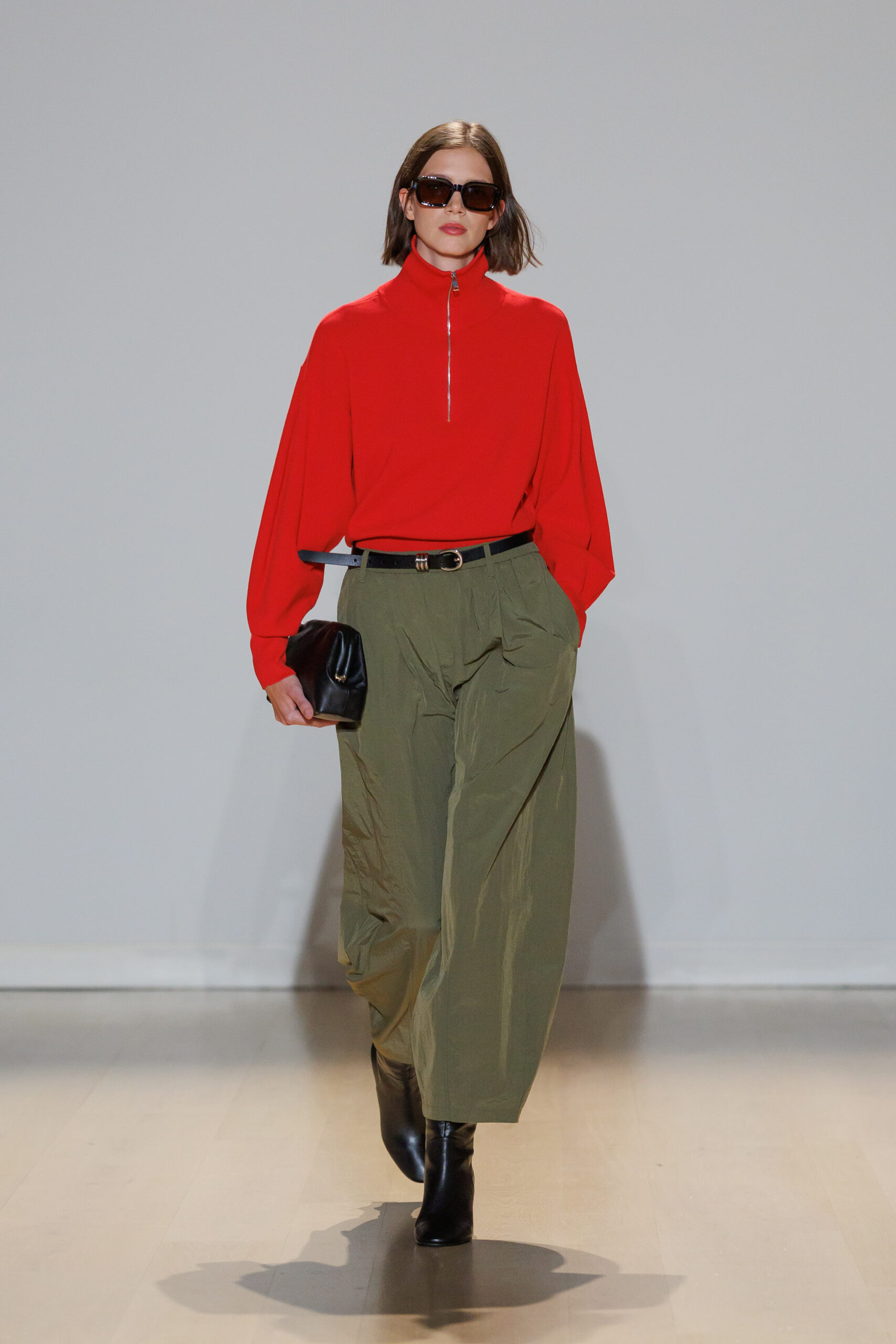
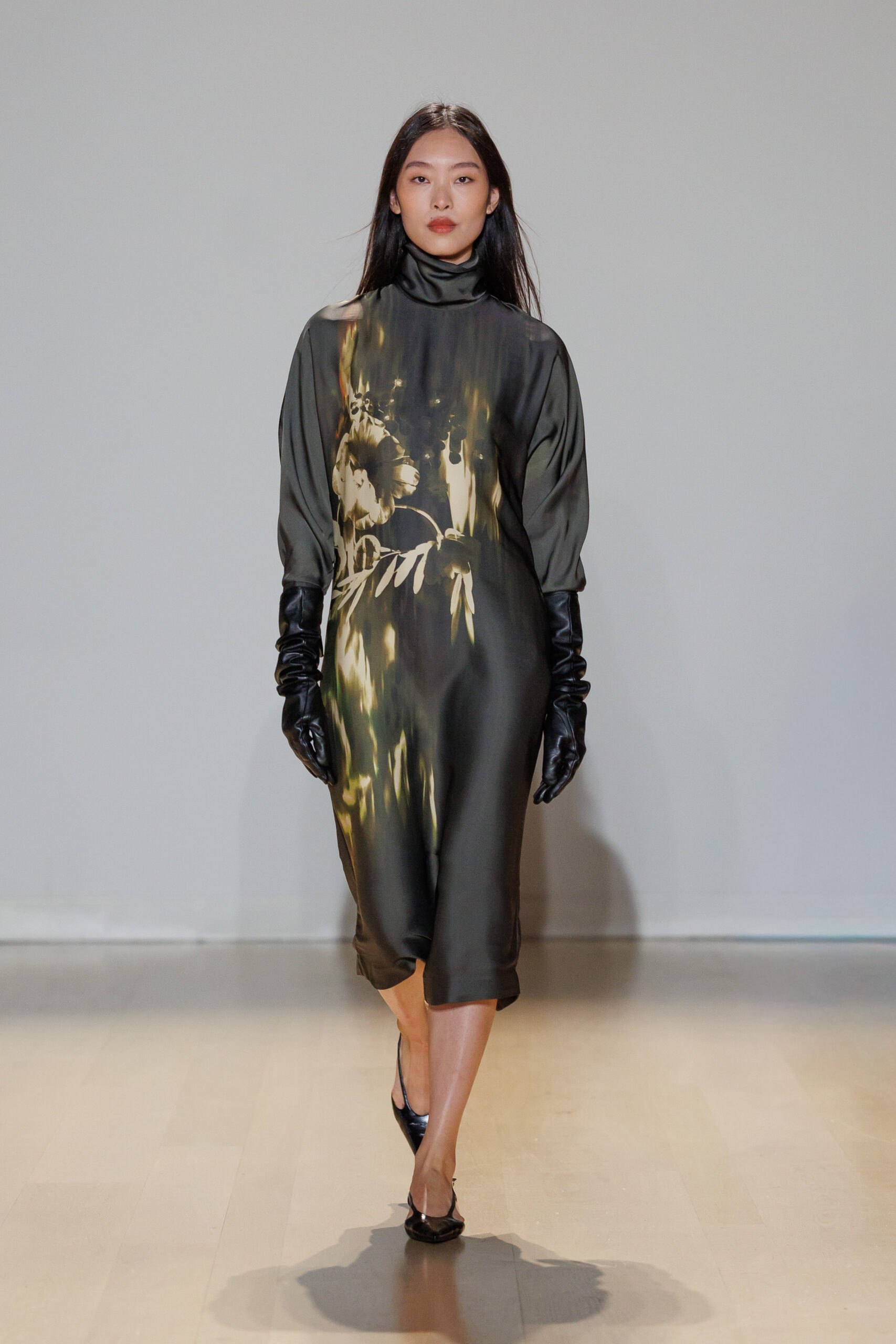
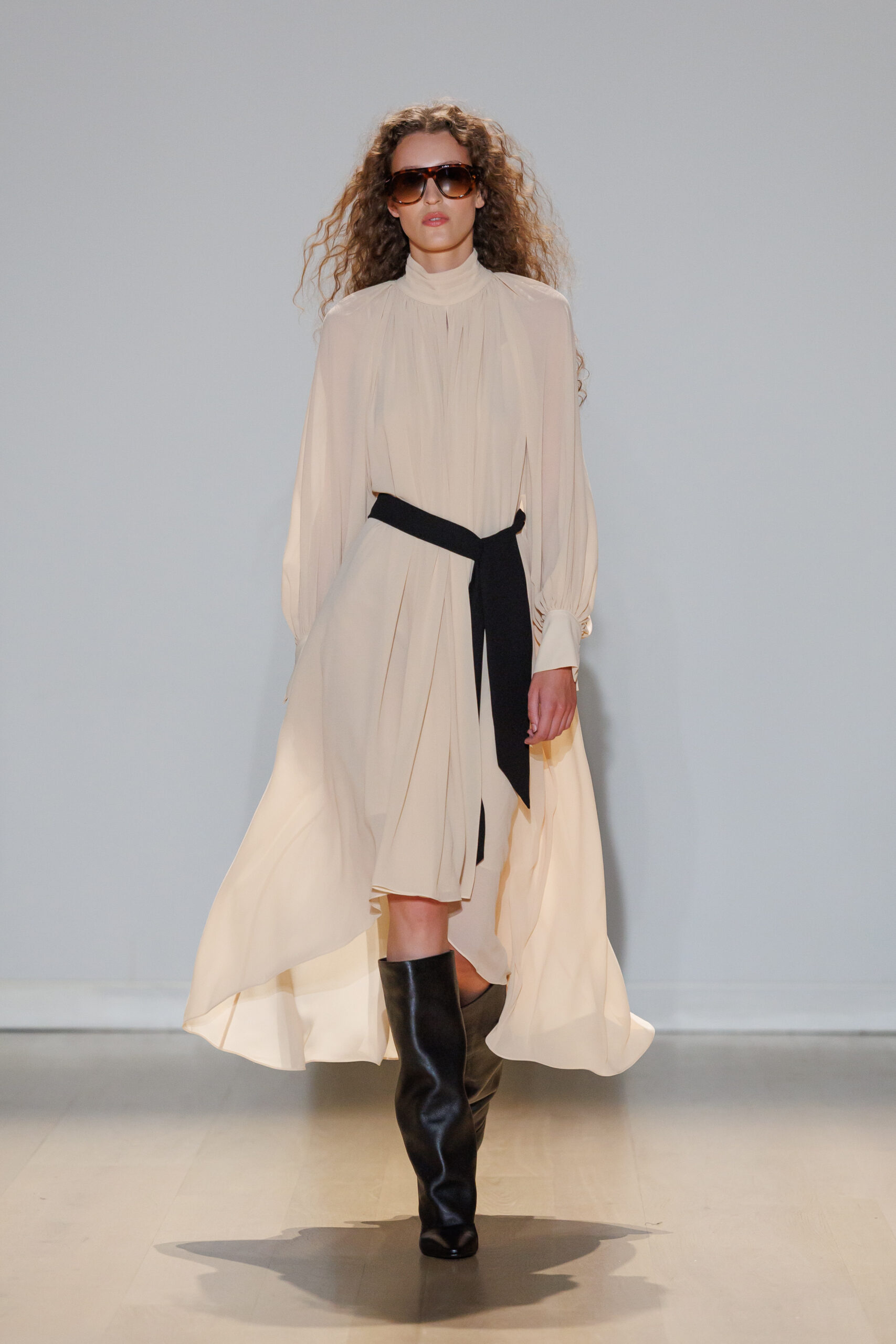
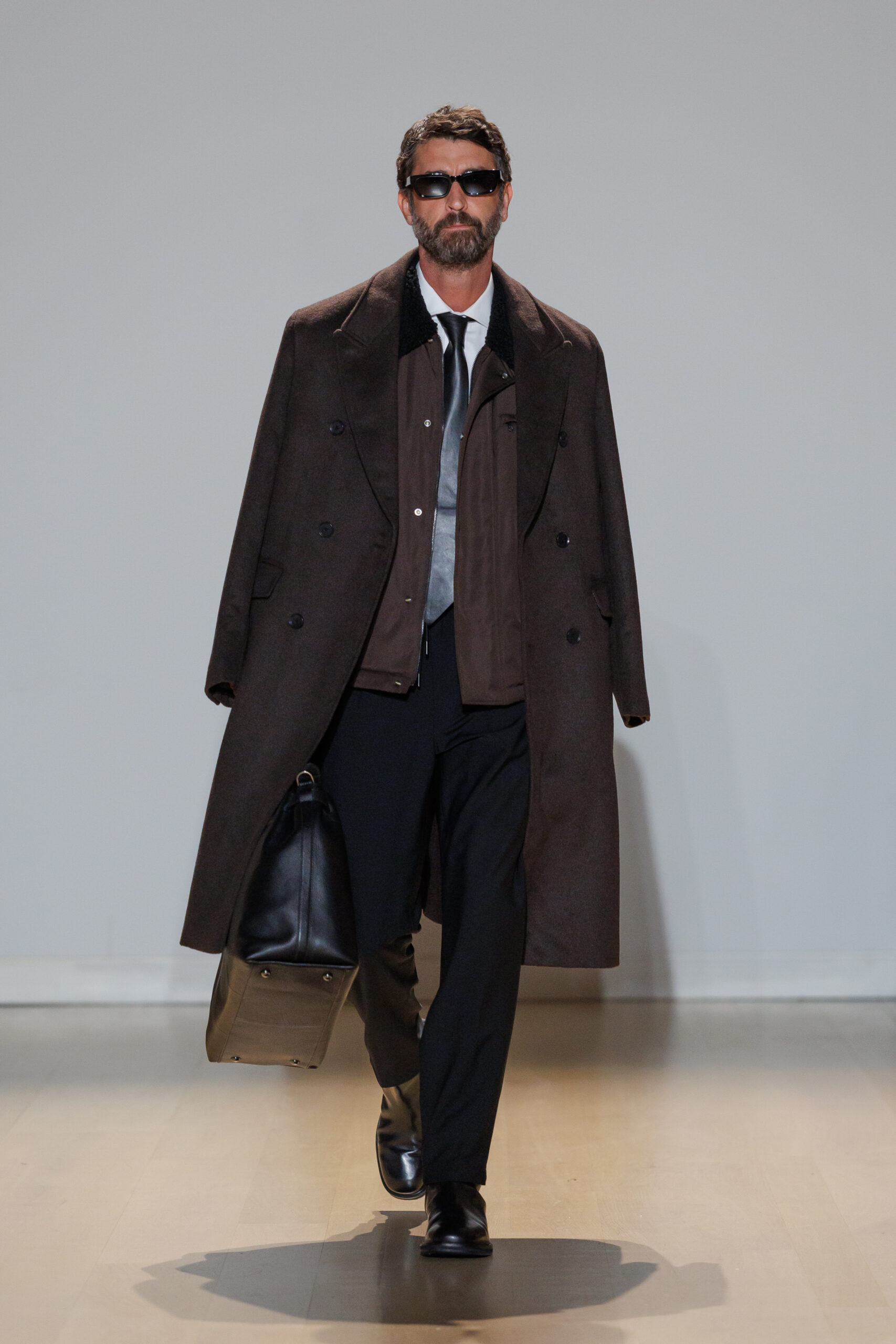
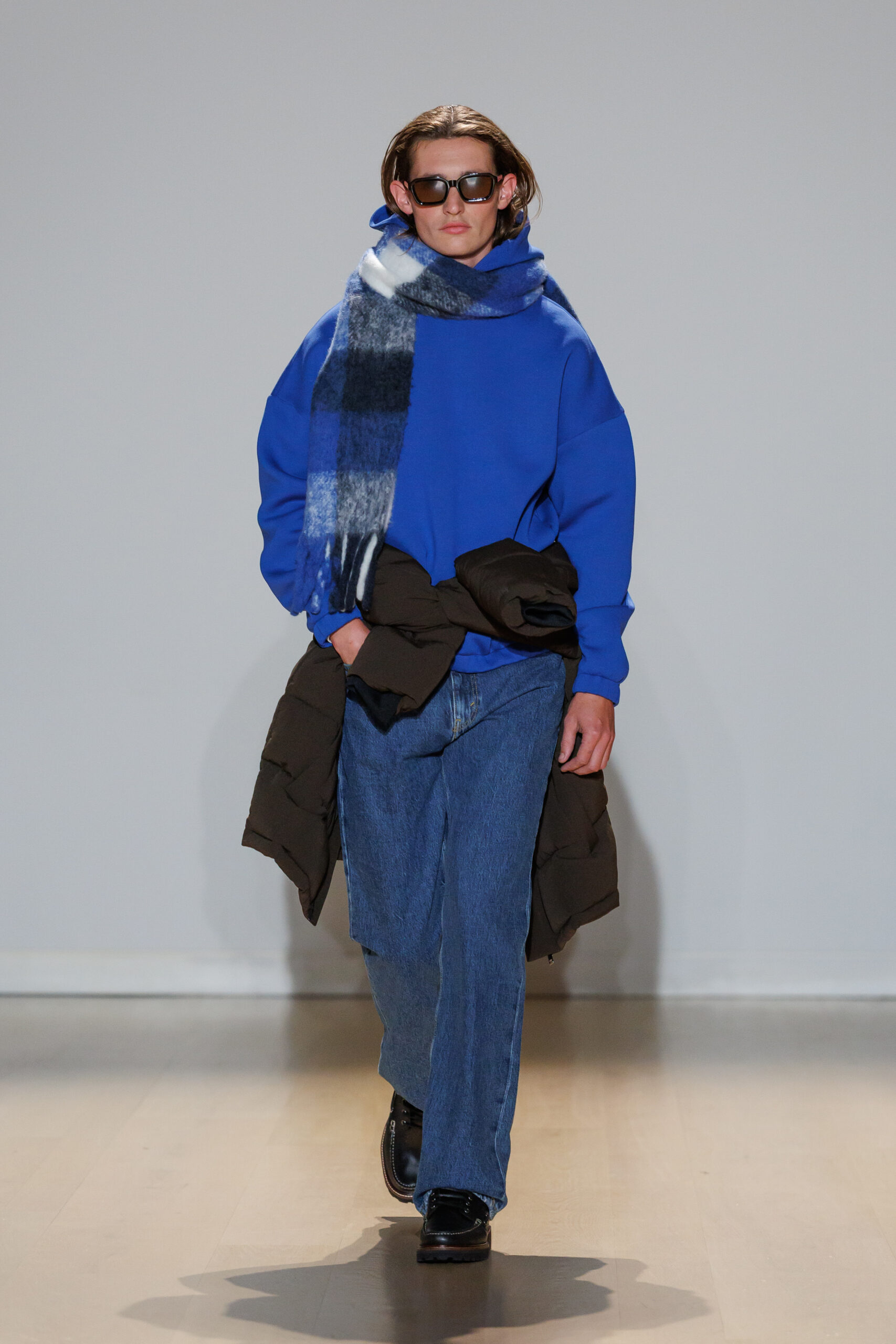
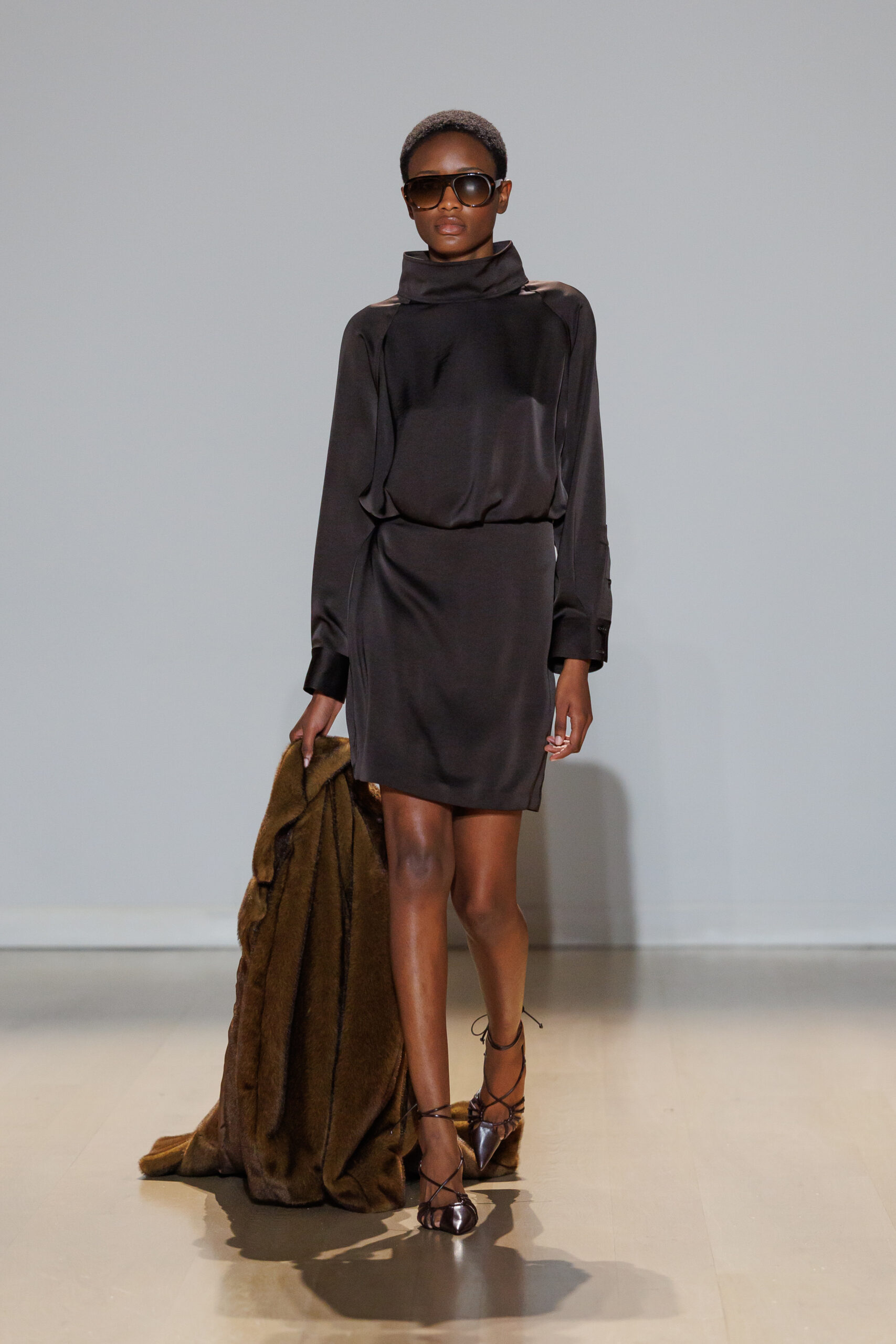
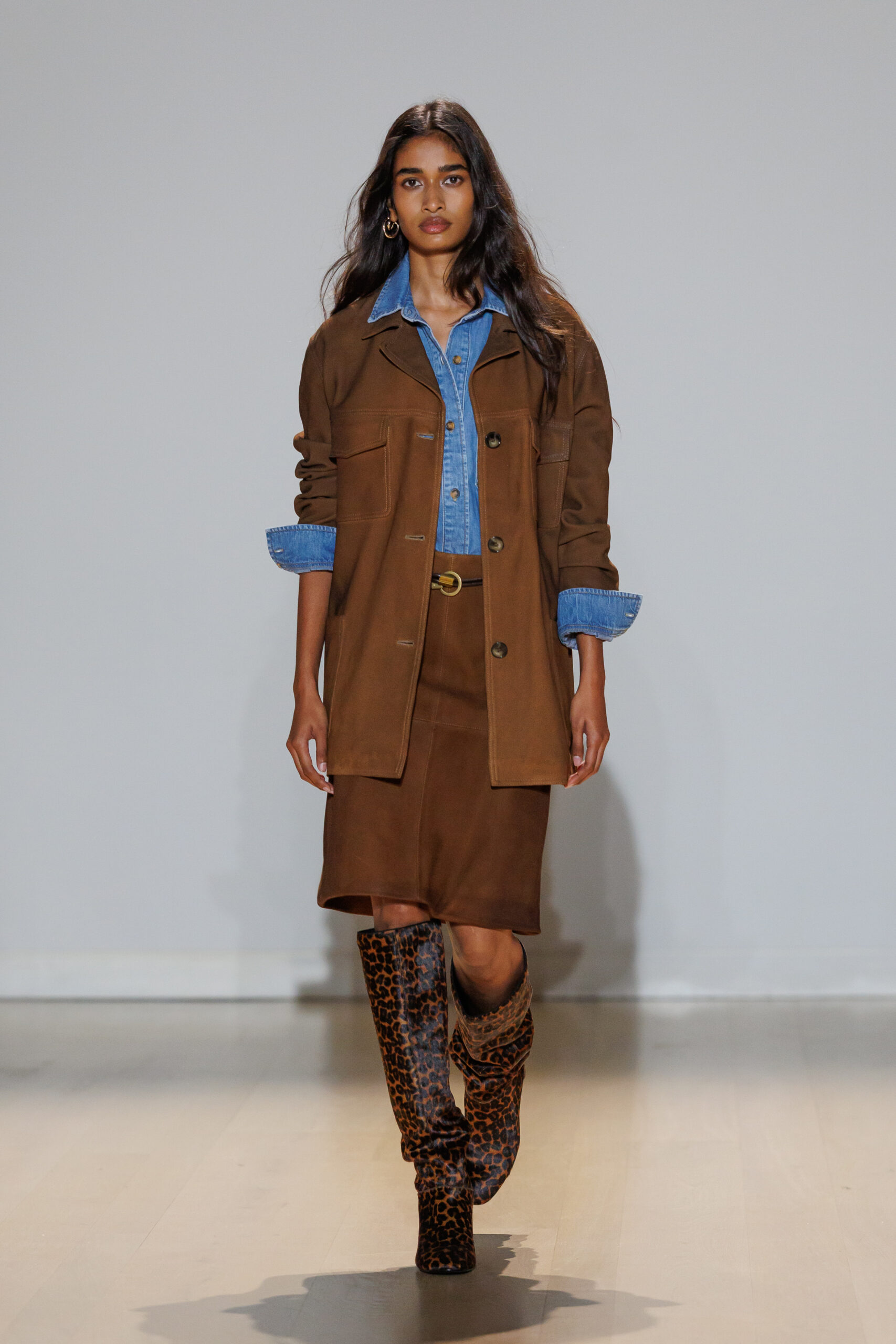
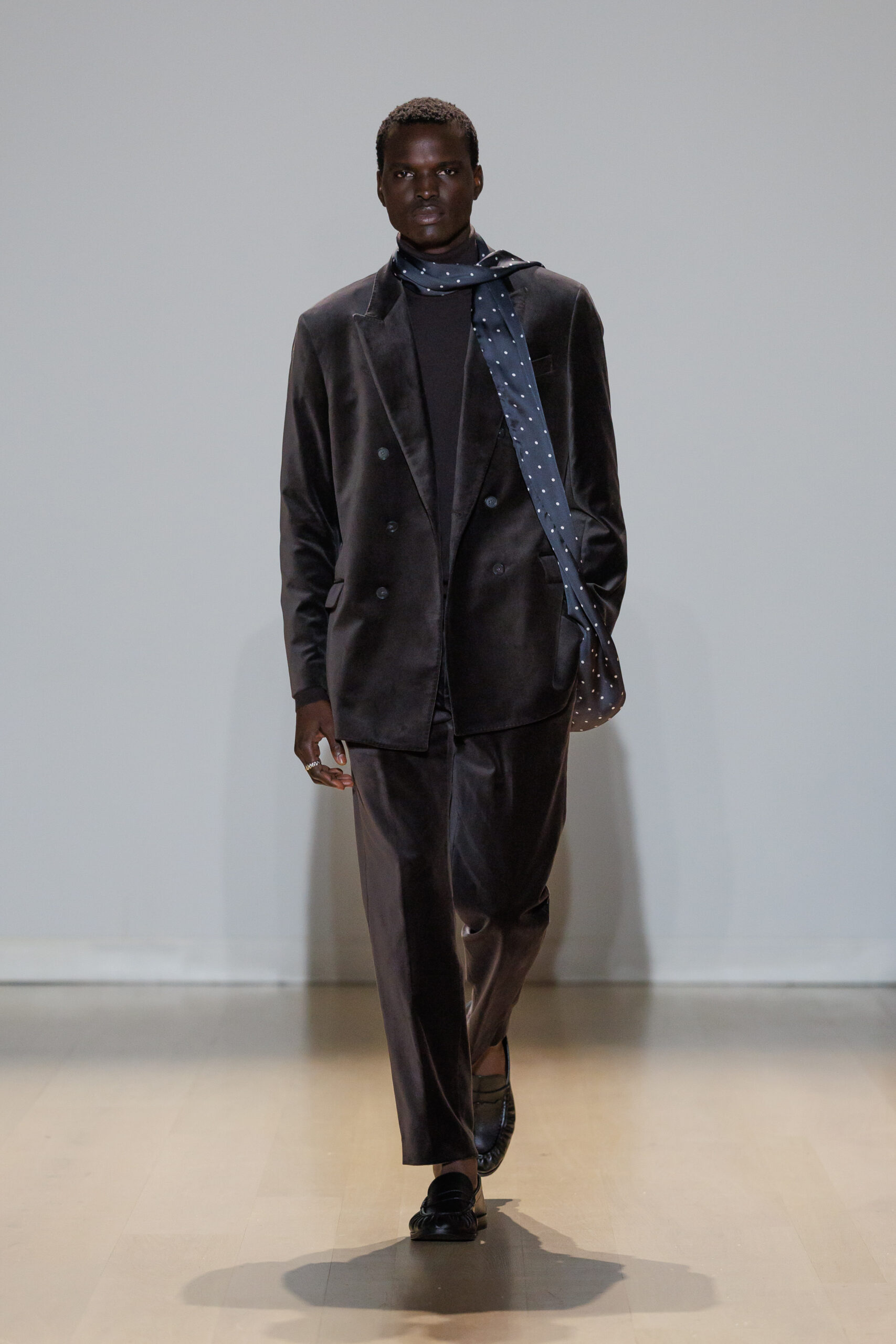
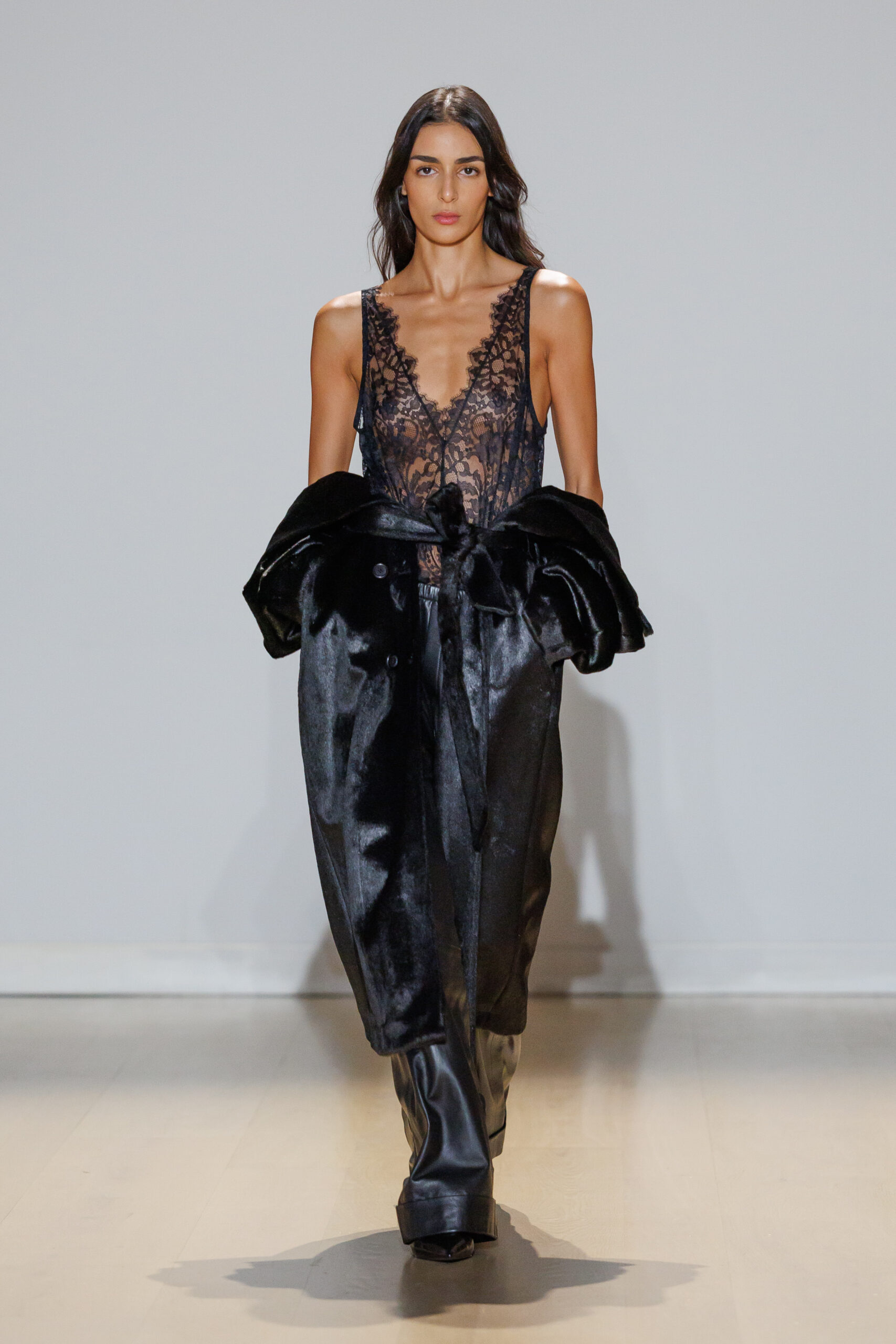
Marks & Spencer made its London Fashion Week debut with an archive-led, immediately shoppable collection, celebrating 100 years since the British retailer first began selling clothing. Staged at the Design Museum, the show featured 41 womenswear and 16 menswear looks, all created by M&S’s UK-based design teams. Models including Jodie Kidd and Karen Elson took to the runway, bringing the collection’s blend of heritage and contemporary styling to life.
And what better way to mark the centenary than by looking back through the M&S Archive in Leeds? Home to more than 72,000 historical items, the archive proved an important source of inspiration throughout the design process. Teams explored garments from across the decades, studying their silhouettes, fabrics, prints and styling details before reinterpreting them through new fabrics, proportions and cuts.
One of the clearest examples of this archival approach was a tan leather Borg jacket, directly inspired by a vintage St Michael design. Elsewhere, the sharp tailoring worn by Christy Turlington in M&S campaigns during the 1990s was revisited in the form of a sleek black tuxedo, styled with a crisp white shirt.
The menswear offering looked to the 1980s for its velvet tailoring, while other pieces included a dry-wax car coat, Japanese selvedge denim and heritage-check outerwear. Meanwhile, Marks & Spencer’s established lingerie business also influenced underwear-as-outerwear looks, along with camisoles and lace bodies.
True to the retailer’s commercial focus, the presentation followed a “see now, buy now” model, with pieces made available immediately after the show through M&S’s digital channels and ten flagship stores across the UK and Ireland.
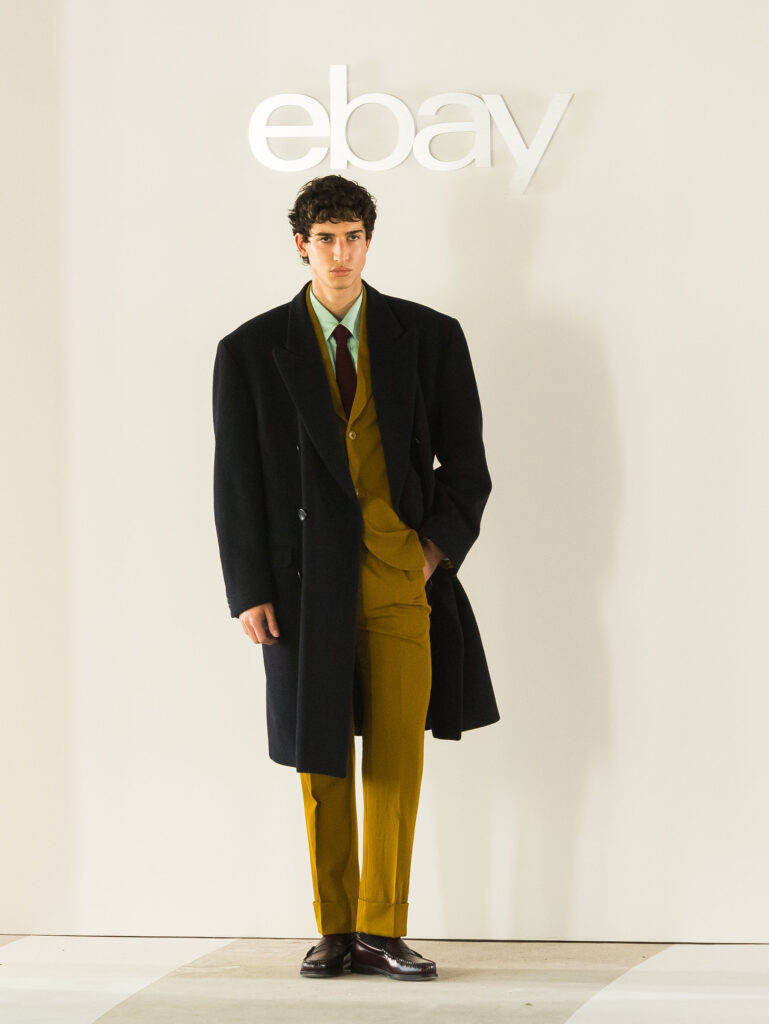
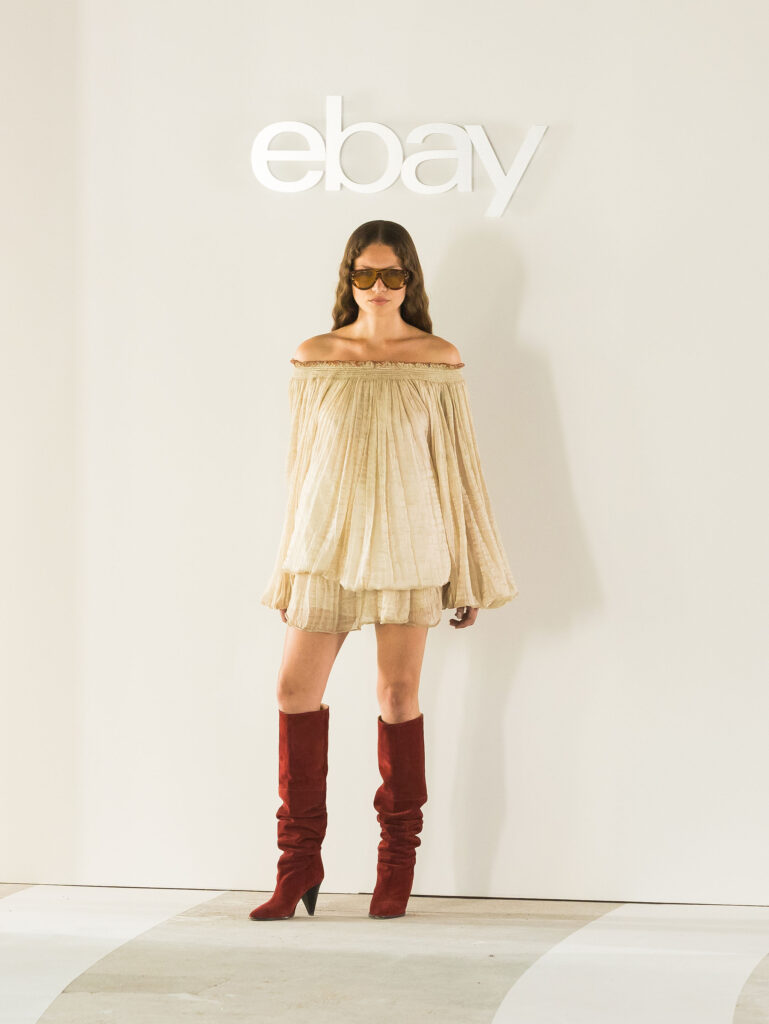

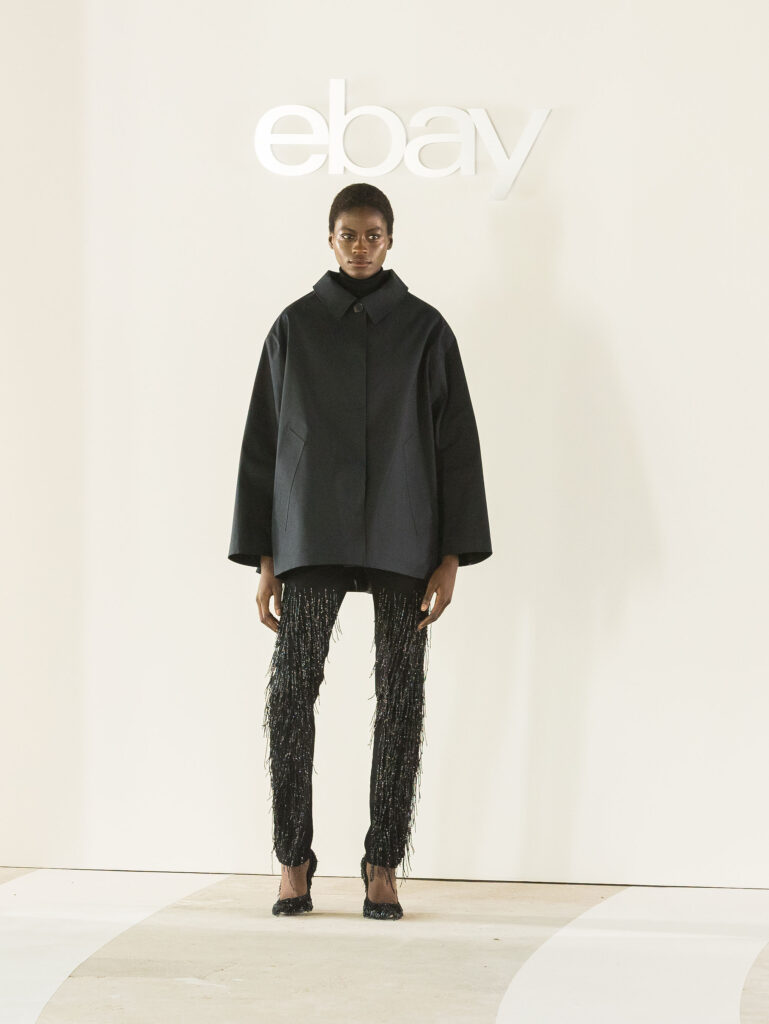
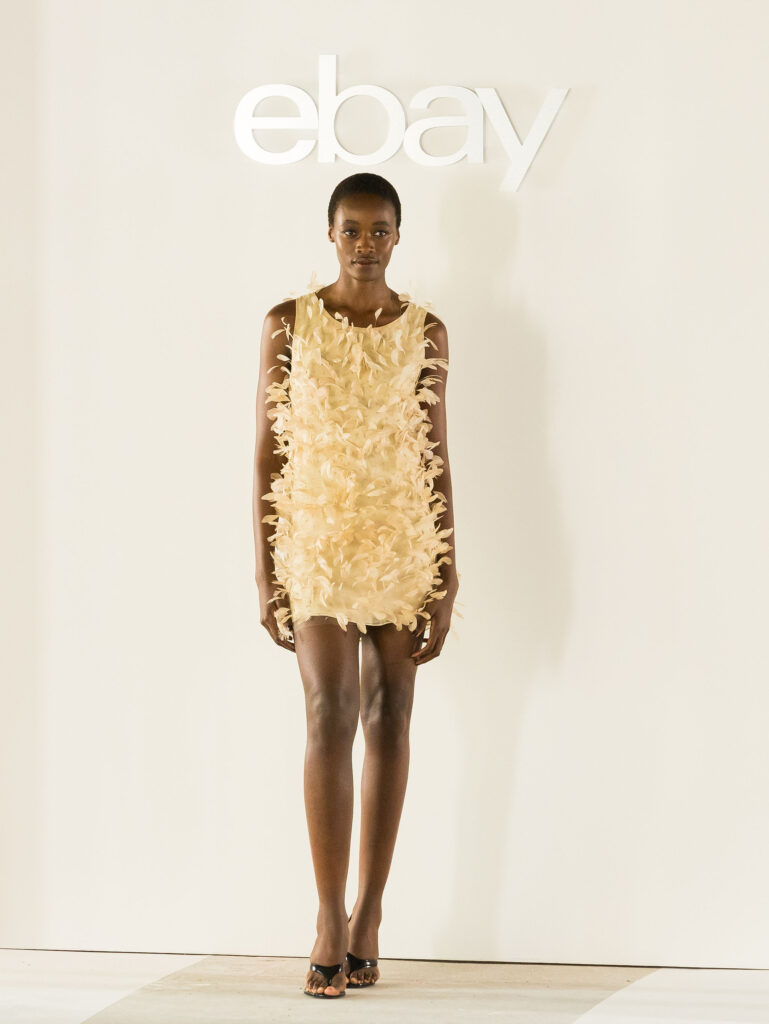
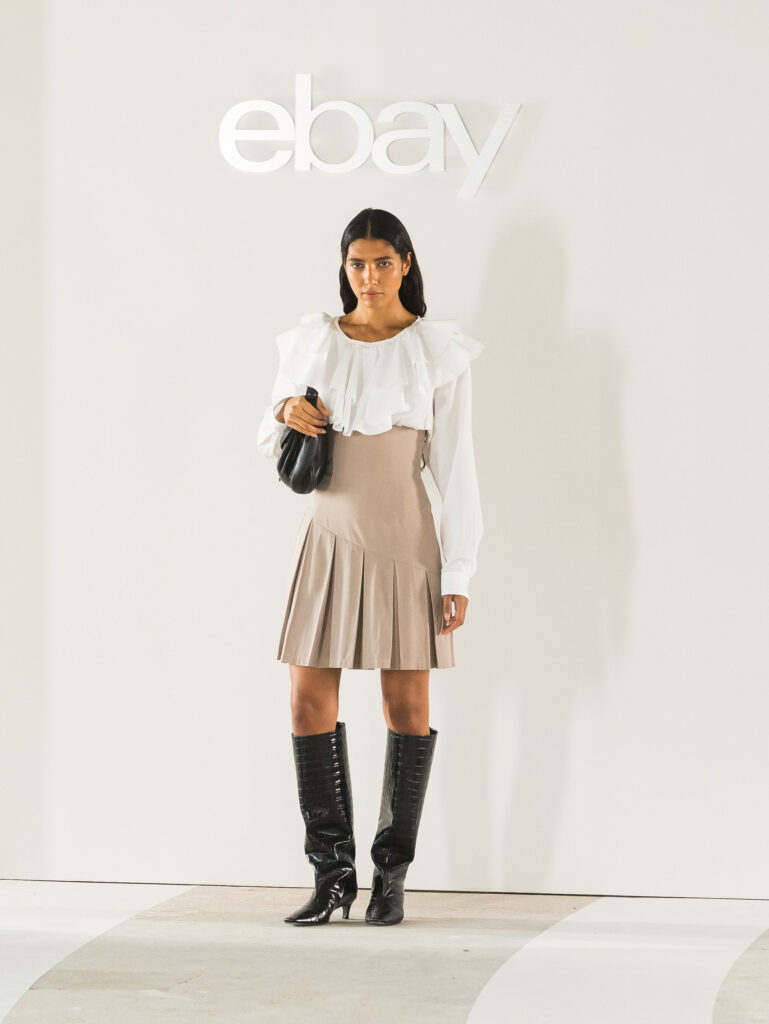
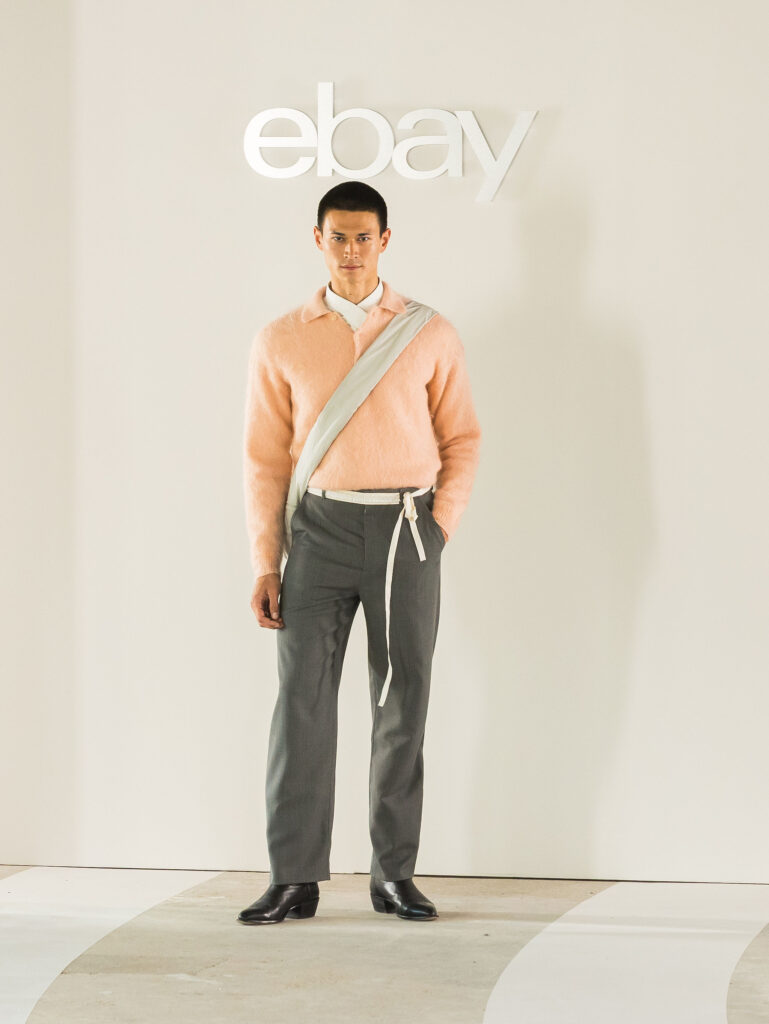
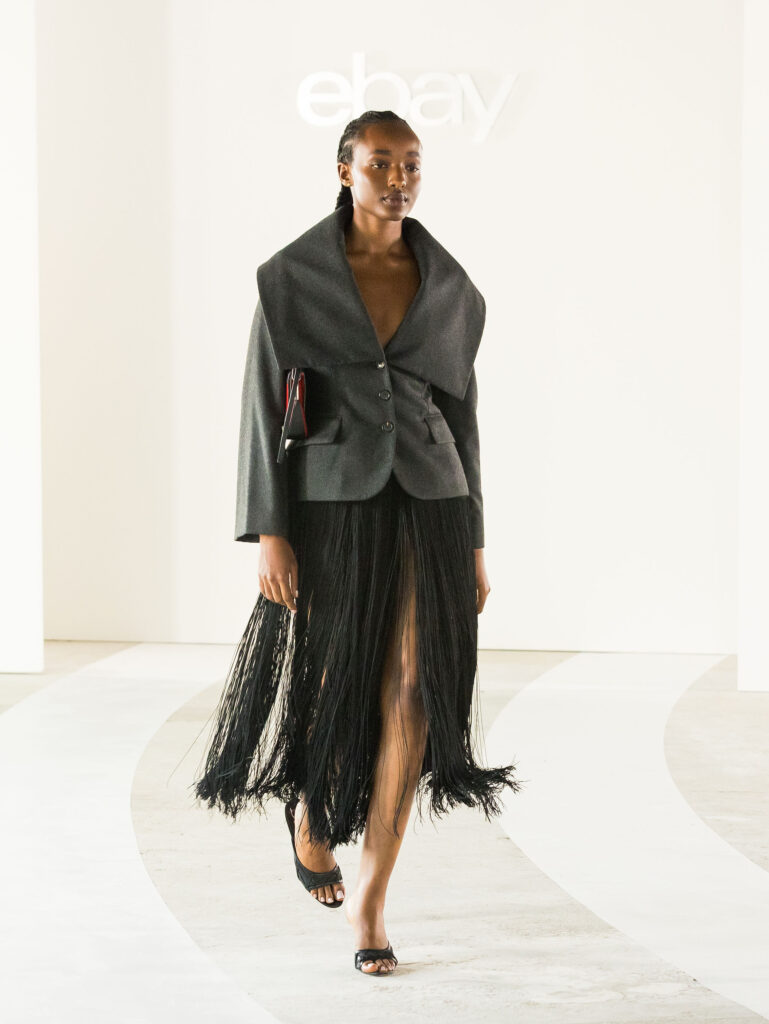
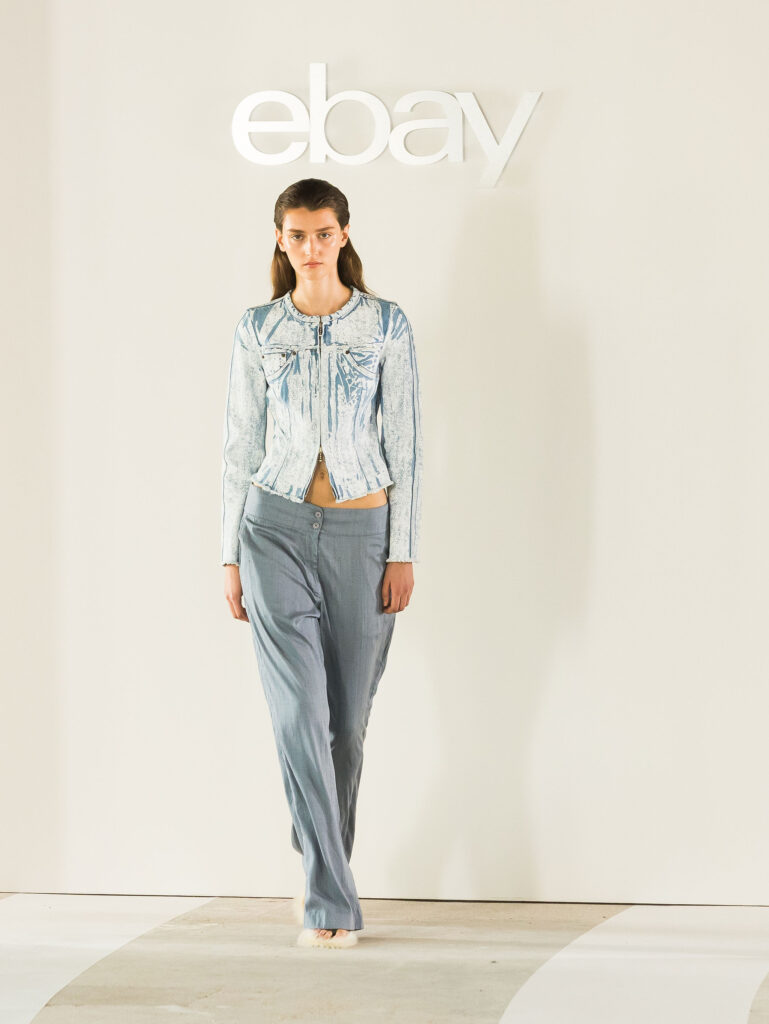
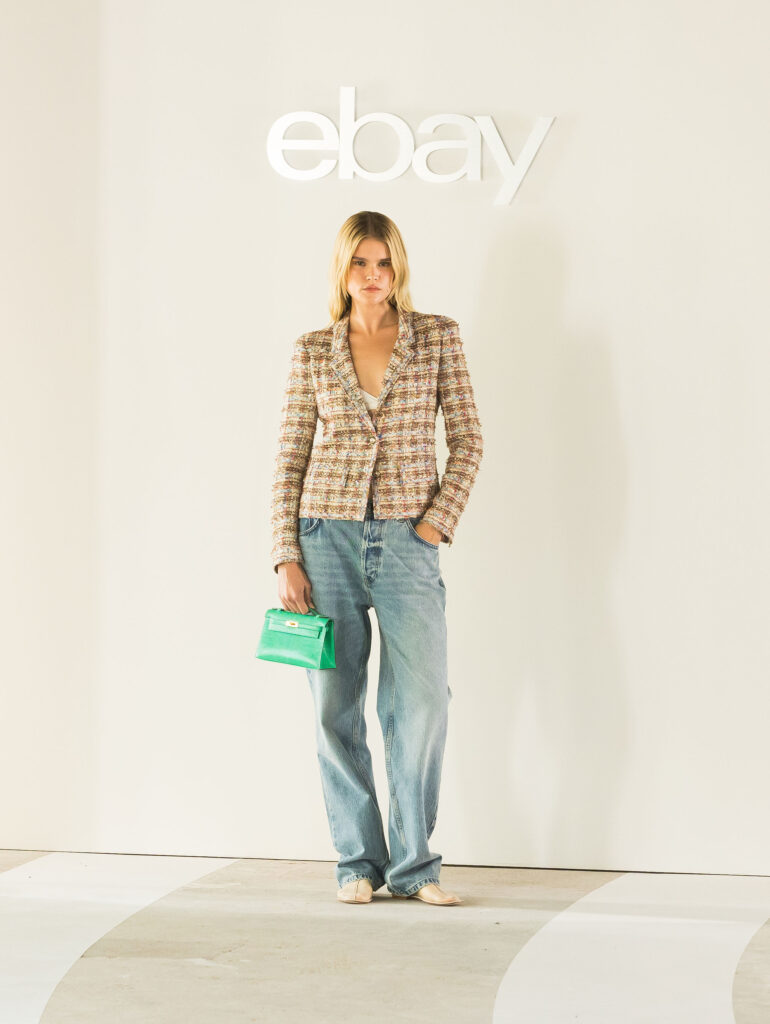
eBay celebrates pre-loved fashion with its third Endless Runway
eBay’s Endless Runway returned to London Fashion Week for its third year, bringing together creatives from fashion, film, literature, art and culture around the theme ‘Forever’. Held at 180 Studios, the shoppable runway was hosted and presented by Raven Smith, with viewers able to interact with the show and shop the looks through eBay Live as they appeared on the catwalk.
The looks included an Auralee leather trouser look contributed by Raven Smith, Coach leather dungarees from Kai-Isaiah Jamal and a Prada shirt contributed by Harry Lambert. Other standout combinations included a Chanel jacket with Raey jeans and a Hermès Kelly bag, while Charles Jeffrey’s Comme des Garçons Homme shirt was styled with a John Galliano skirt and Christian Dior saddle bag.
There was also a strong focus on pieces with their own stories. Sandy Powell CBE contributed a nightgown made for Scarlett Johansson in The Other Boleyn Girl, while Giles Deacon contributed one of his own dresses, which had been reworked over several years. Daisy Edgar-Jones contributed an Acne Studios crochet dress and a Gucci shoulder bag, while Adwoa Aboah contributed Alaïa pieces, including a skirt and heels.
The mix of personal pieces, vintage finds and designer fashion gave the runway a distinctly individual feel, while the live format made the audience part of the shopping experience rather than simply watching from the sidelines. With pieces available to buy as they appeared, eBay brought an interactive element to the traditional LFW runway format.
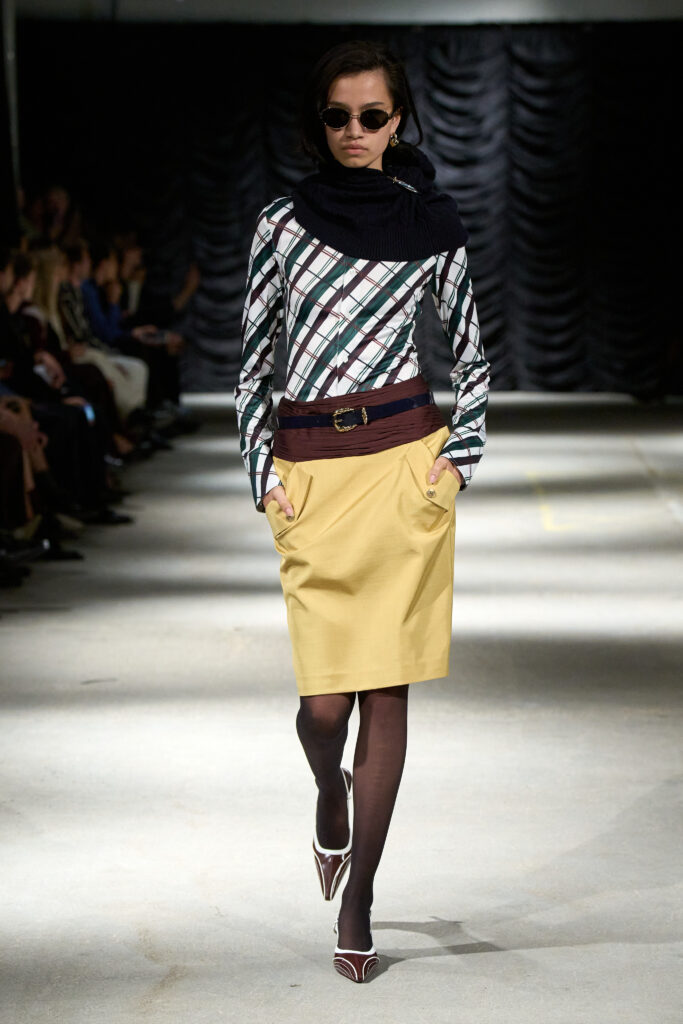
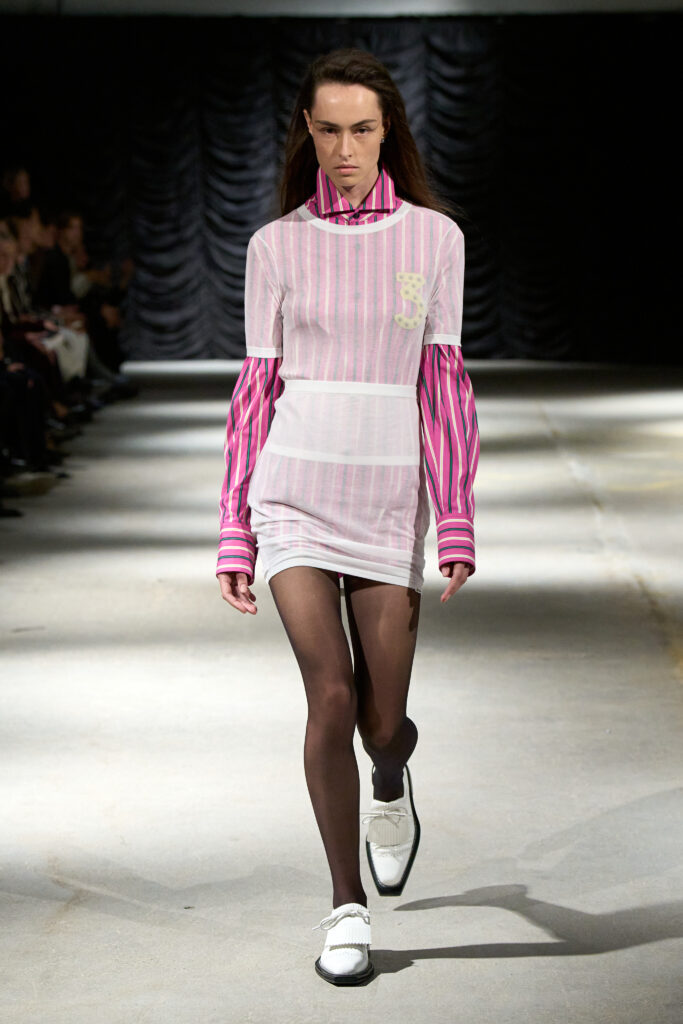
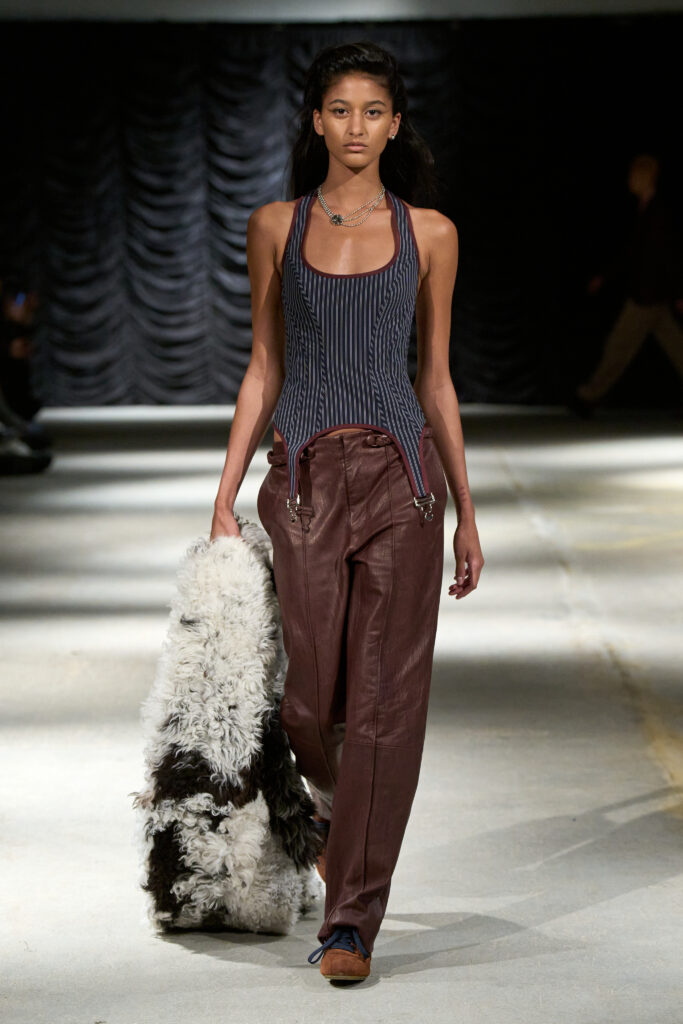
Mithridate draws on 1980s New Romantic style for SS27
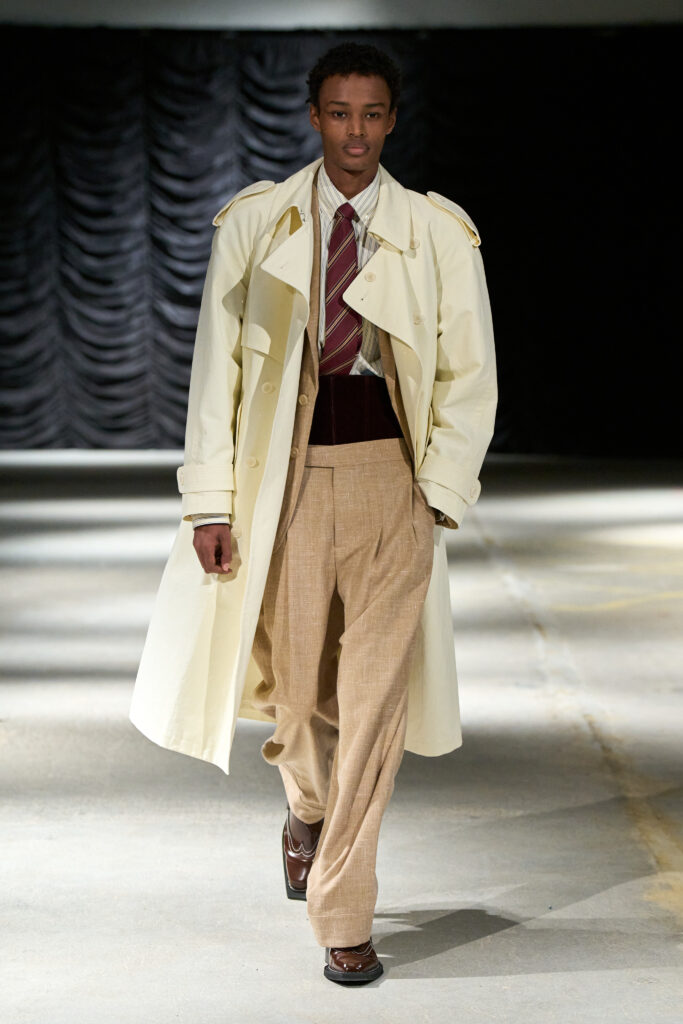
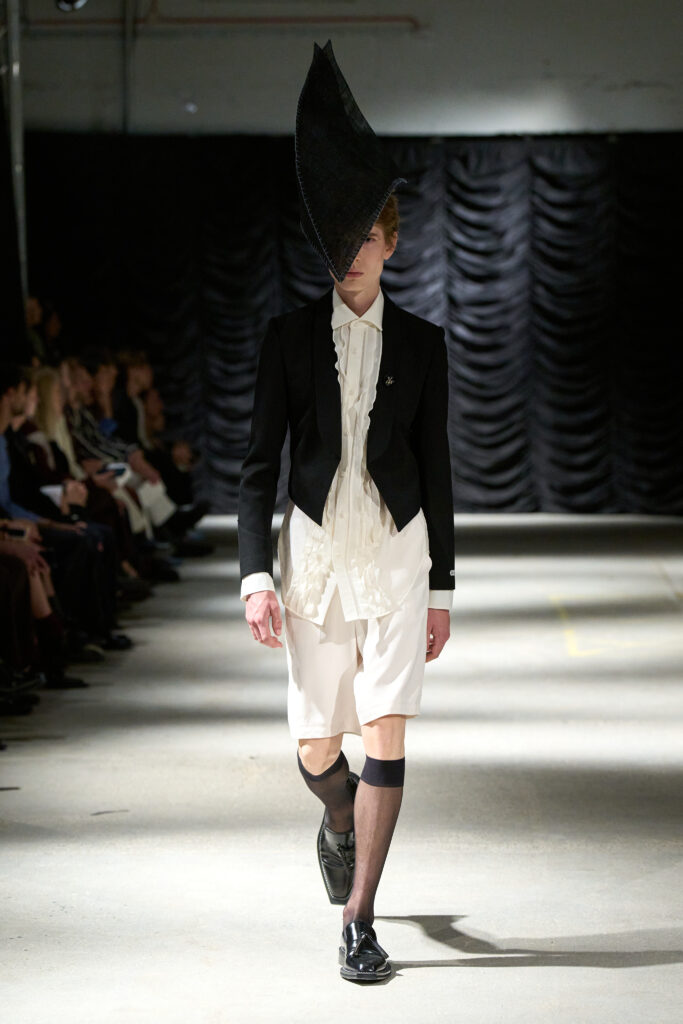
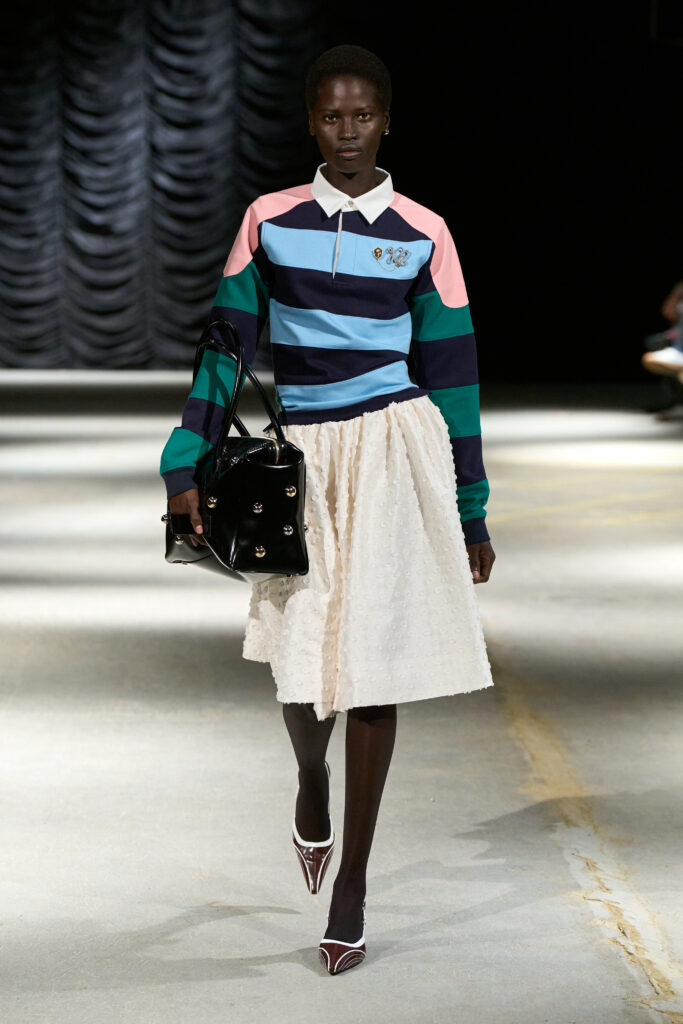
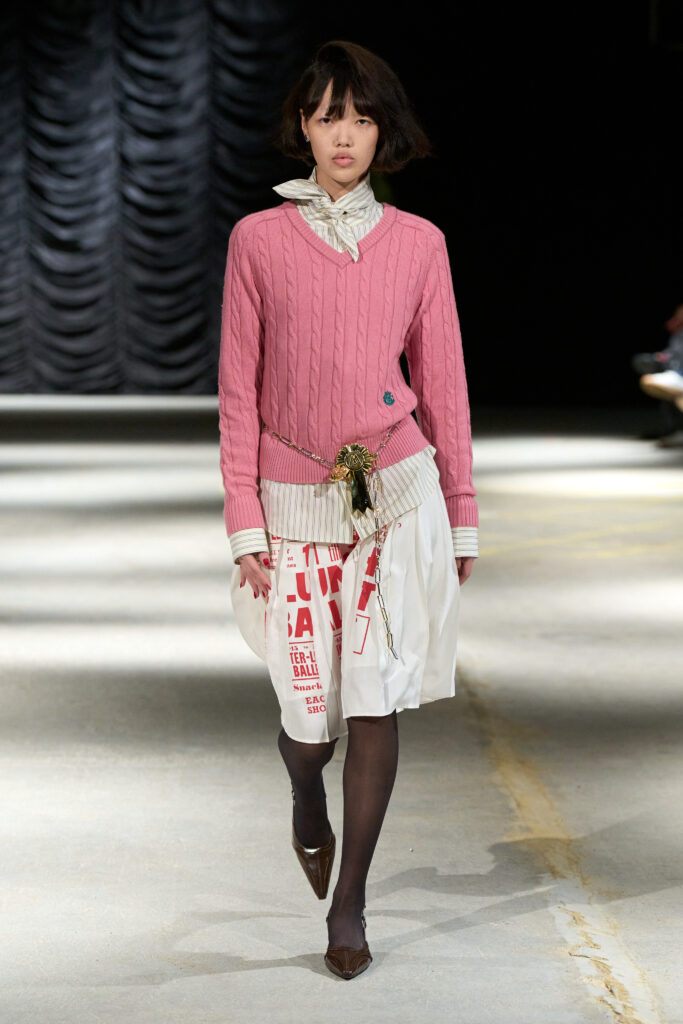
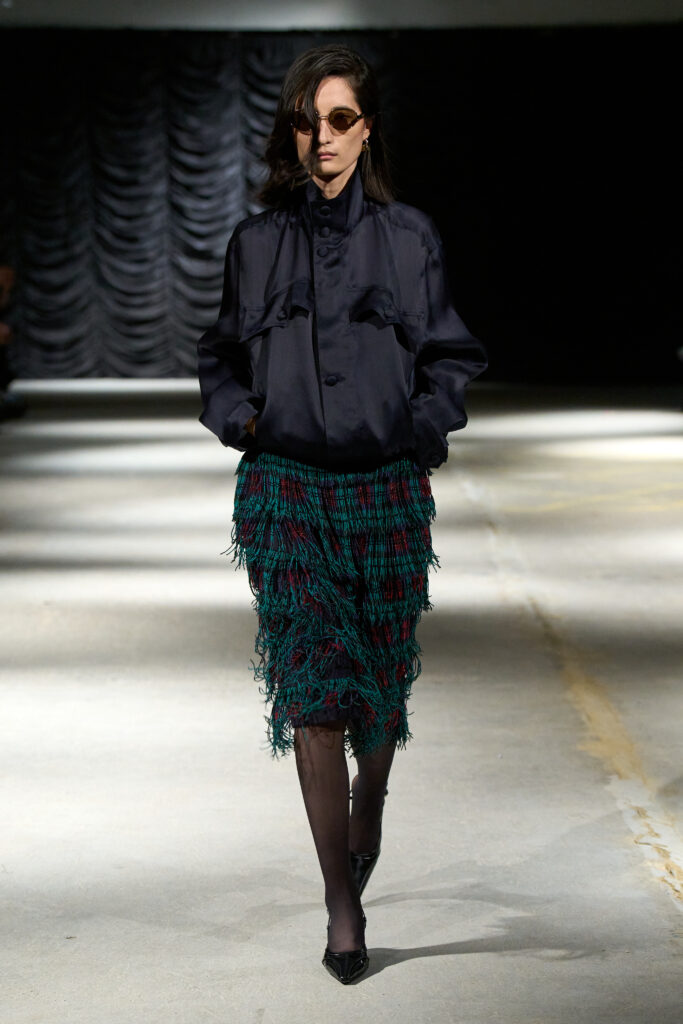
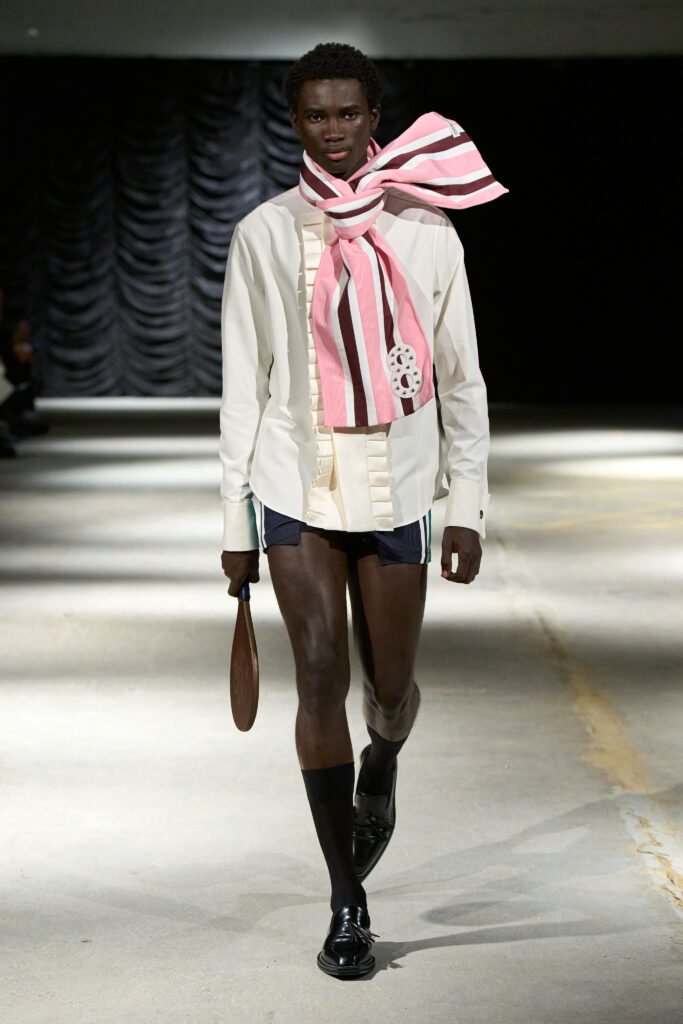
Mithridate looked to London’s New Romantic scene for SS27, with Creative Director Daniel Fletcher drawing on the style of the 1980s subculture for a collection centred on self-expression and dressing outside convention.
The collection referenced the Blitz Club, where figures including Steve Strange helped shape the scene, as well as the military clothing that was adopted and reworked by the New Romantics.
Victorian and Edwardian military uniforms informed details across the collection, appearing on party dresses with bubble hems and reworked tailoring. Theatre costumes also featured, while feather-covered bodice dresses, tulle-trimmed gowns and exposed suspender clips added to the theatrical feel. Ballerina references came through in candyfloss-pink tutus and fine knitwear resembling sheer rehearsal hosiery.
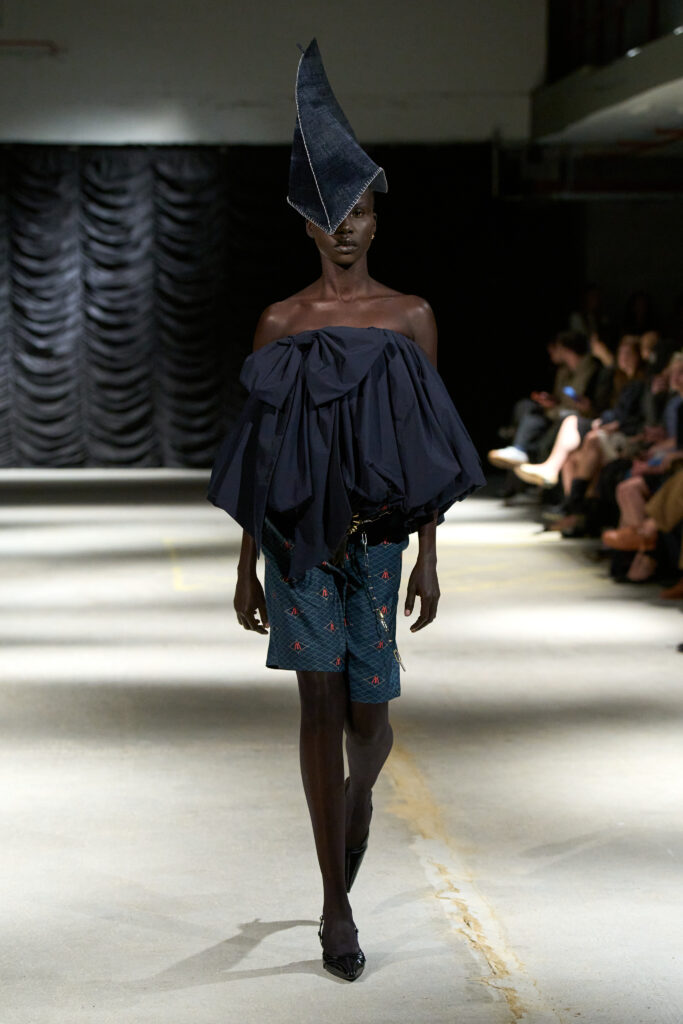
Proportion was another key part of the collection, with oversized studs decorating relaxed denim, micro shorts paired with billowing trench coats and shrunken cable knits worn with broad-shouldered jackets. Accessories added to the eclectic styling, including glossy leather belts, cummerbunds worn over silk shirts and Bicorn hats by milliner Noel Stewart.
The colour palette moved away from more conventional combinations, pairing hot pink with scarlet, cornflower blue with emerald green and navy with black. Striped moiré school scarves were turned into wearable sculptures, while West End theatre advertisements appeared as oversized graphics on pleated skirts. Numerical motifs, a signature of Mithridate, were also printed across shirts and accessories, bringing the collection’s mix of 1980s references and contemporary styling together.
H&M unites fashion and technology in immersive ‘see now, buy now’ show
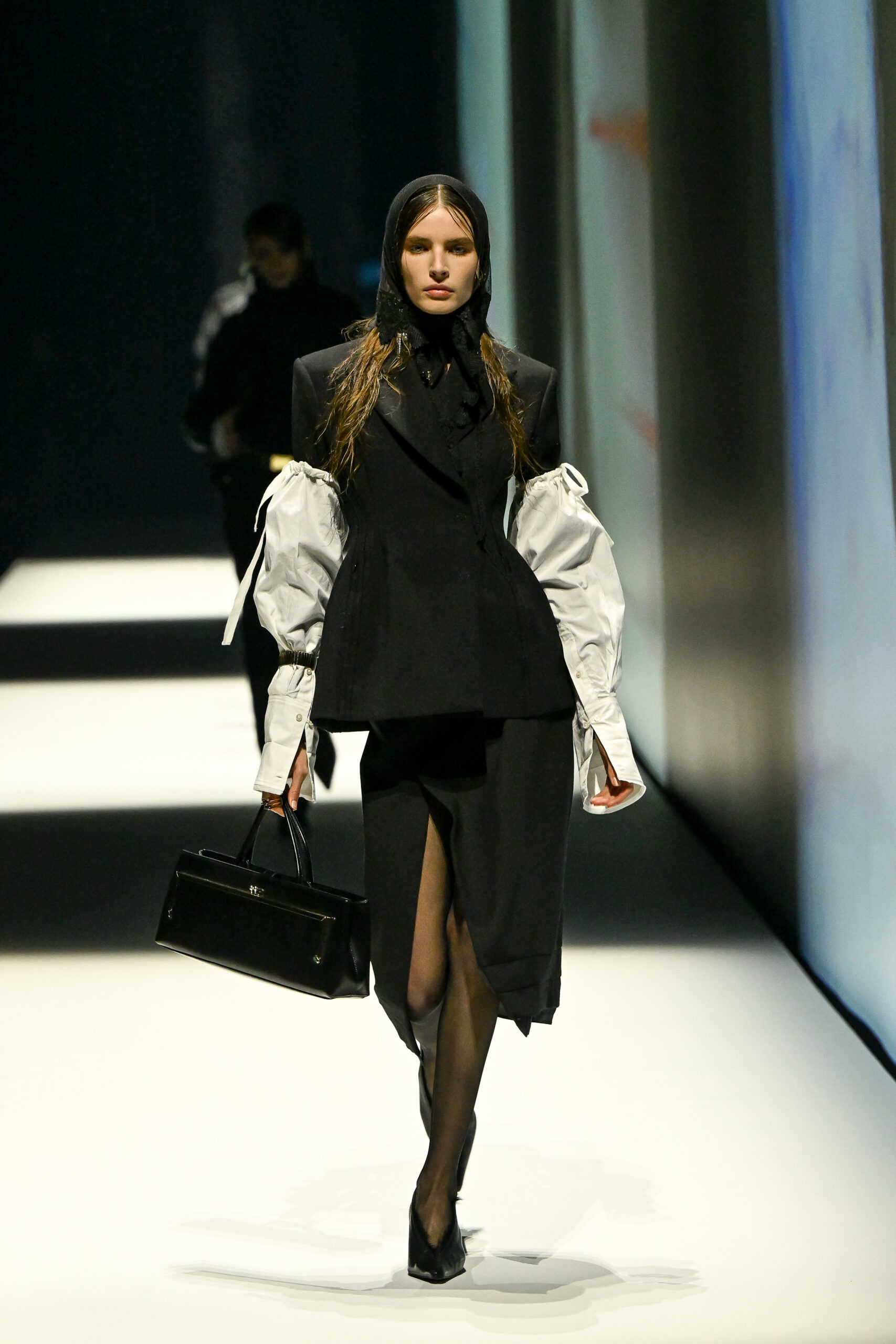
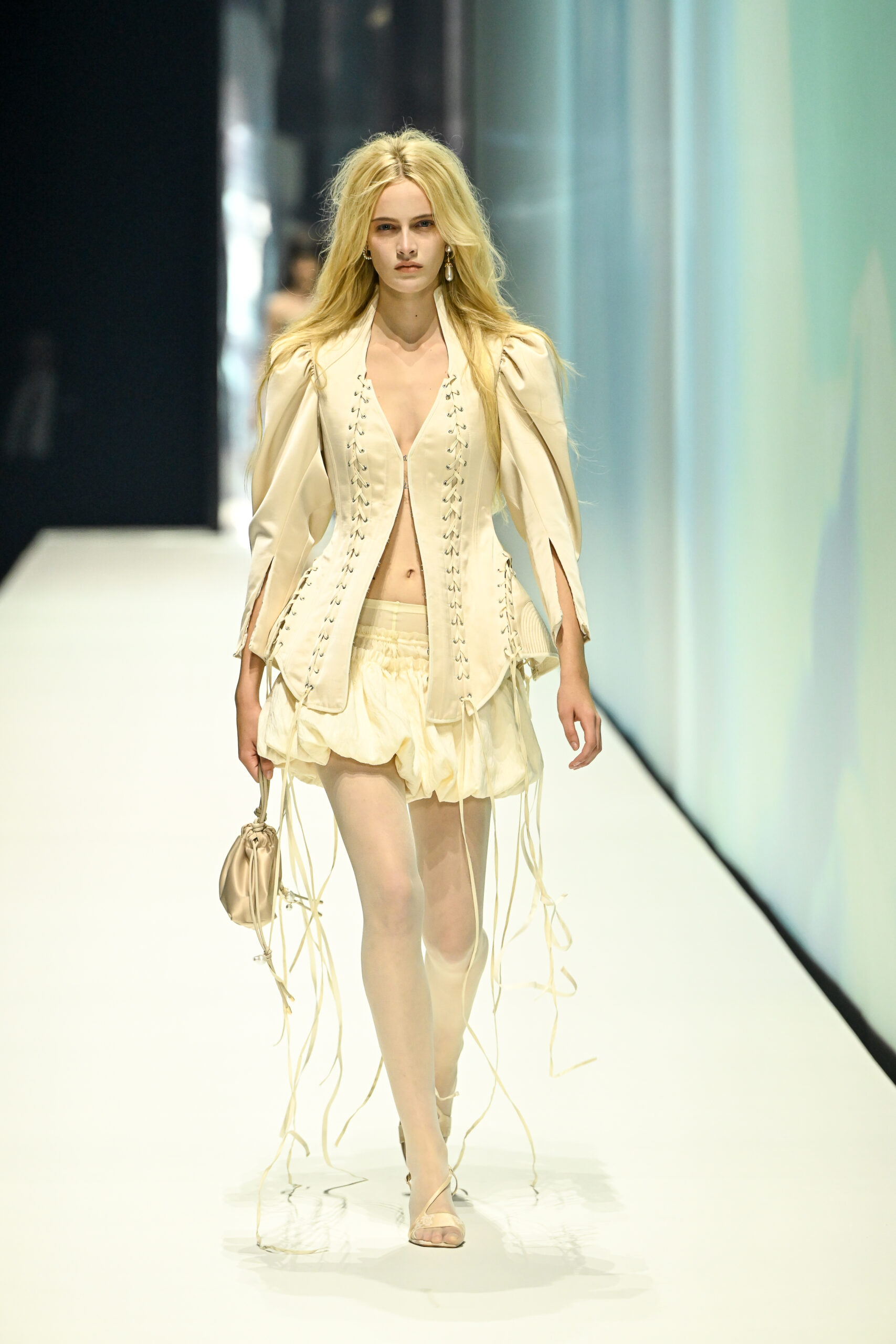
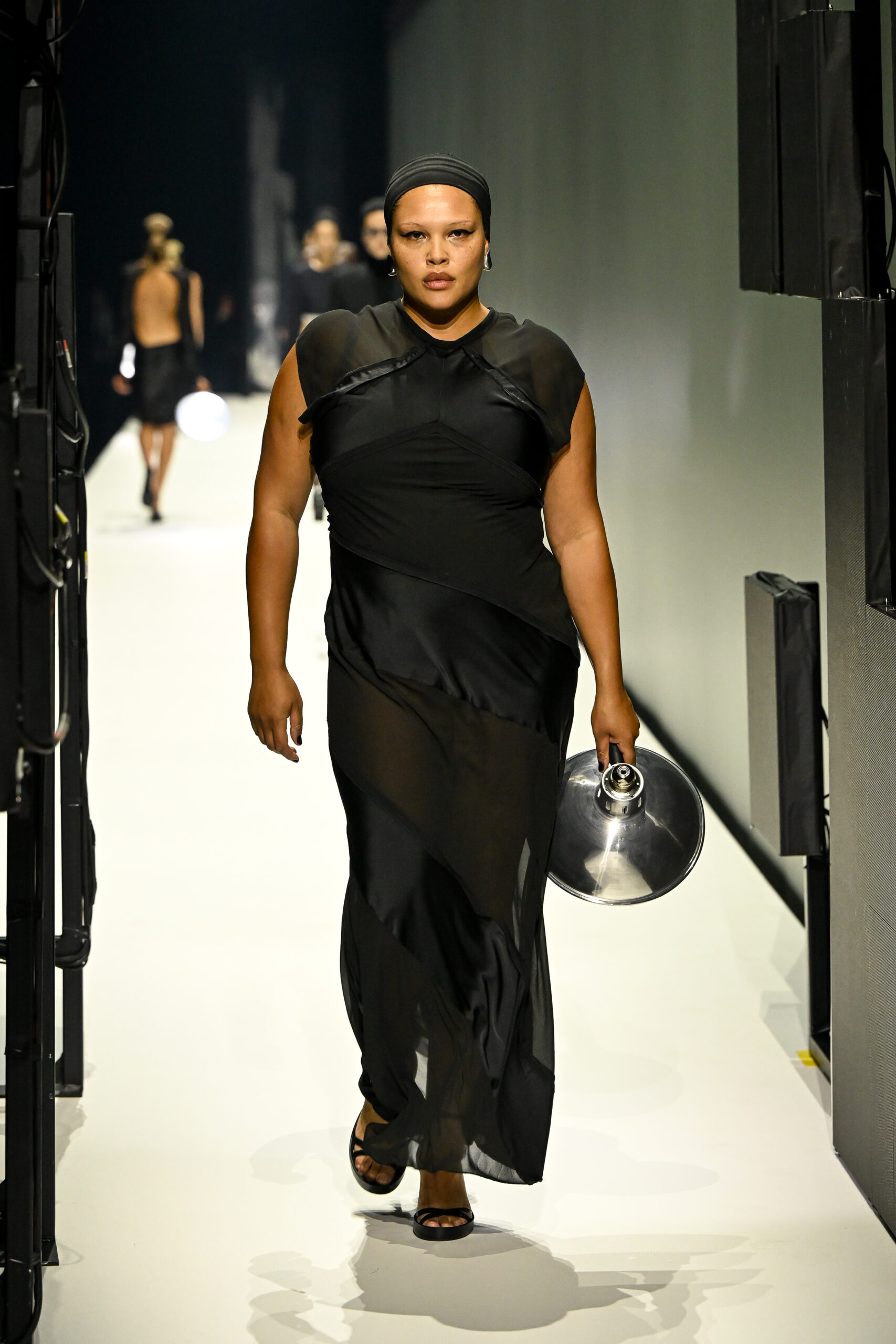
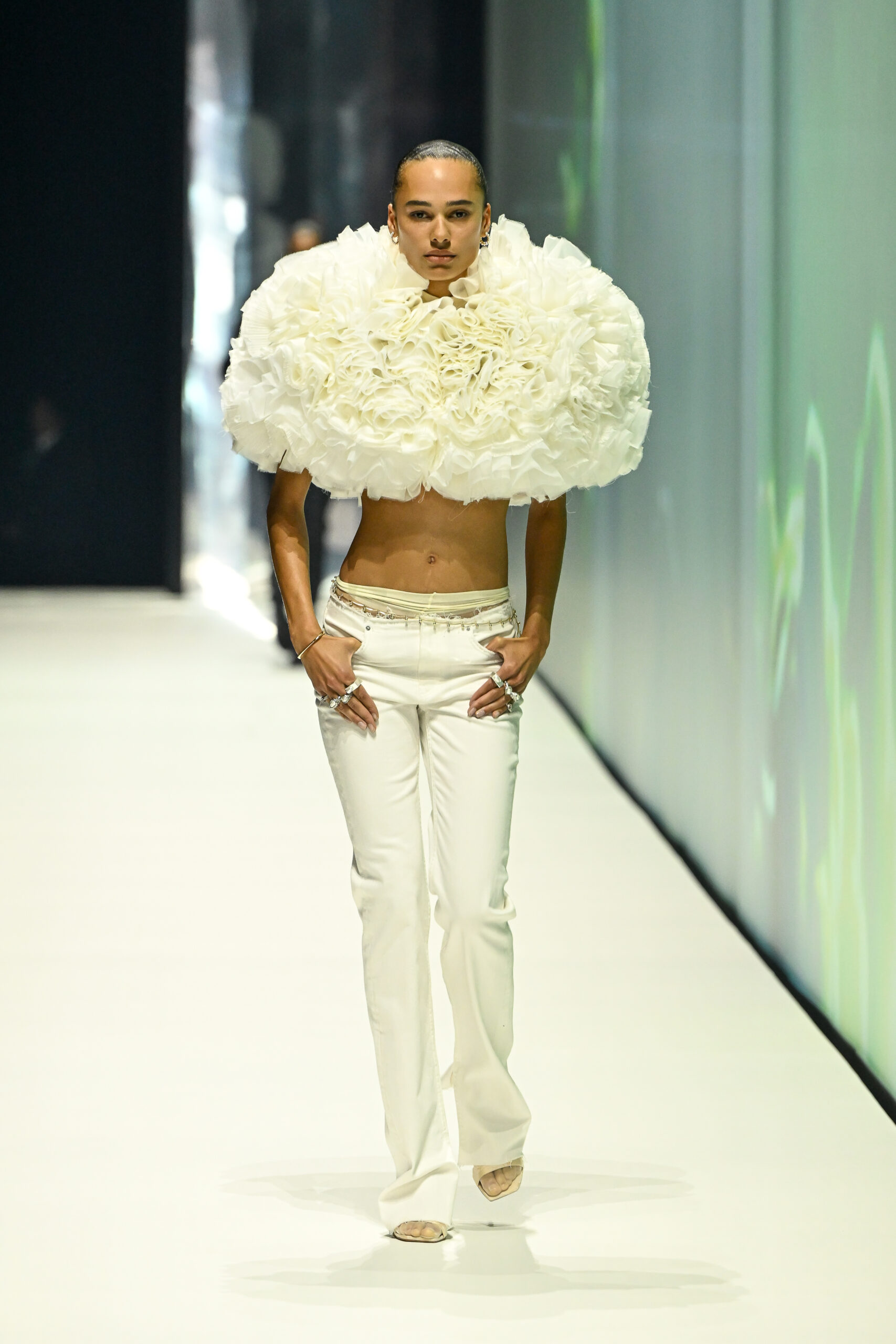
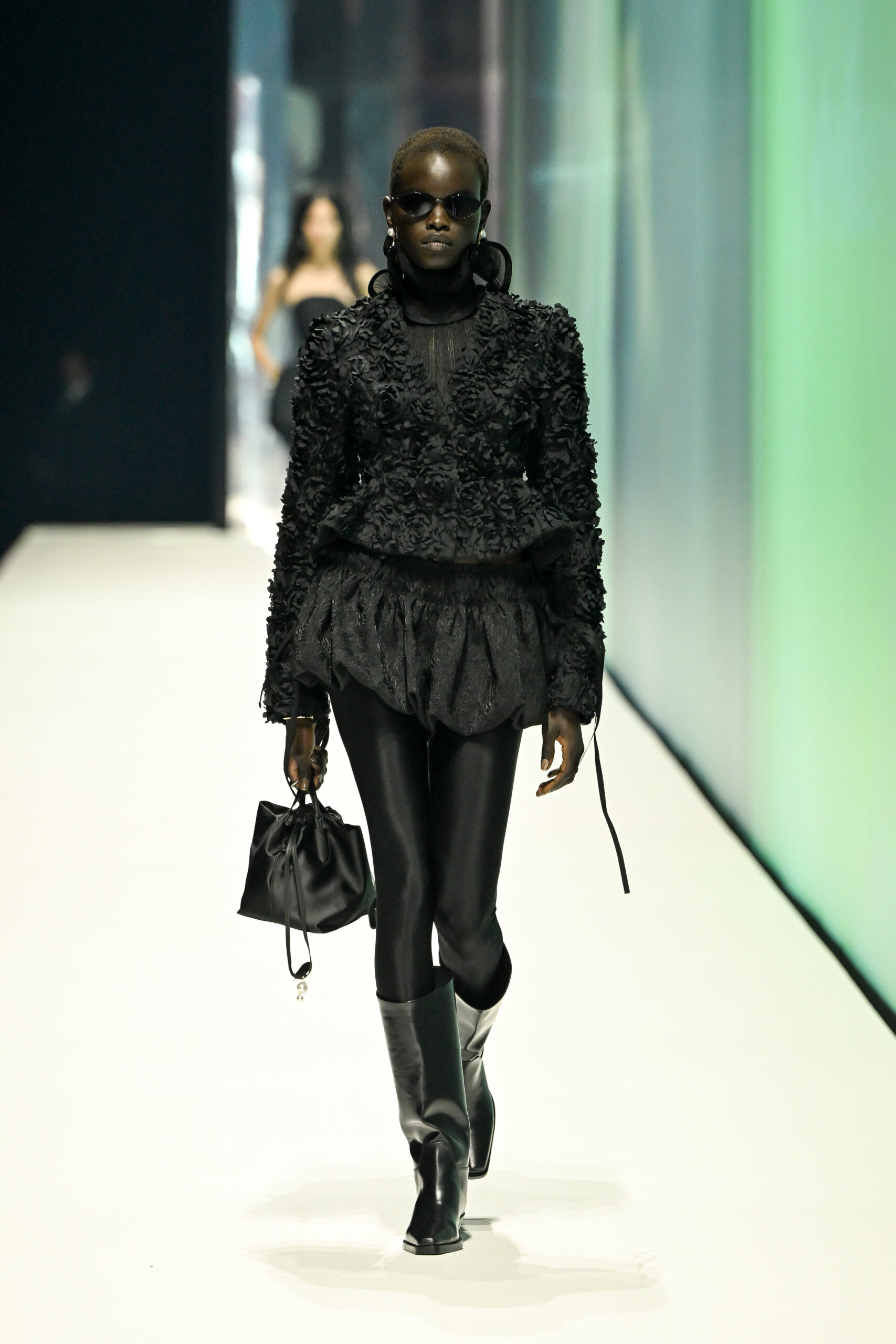
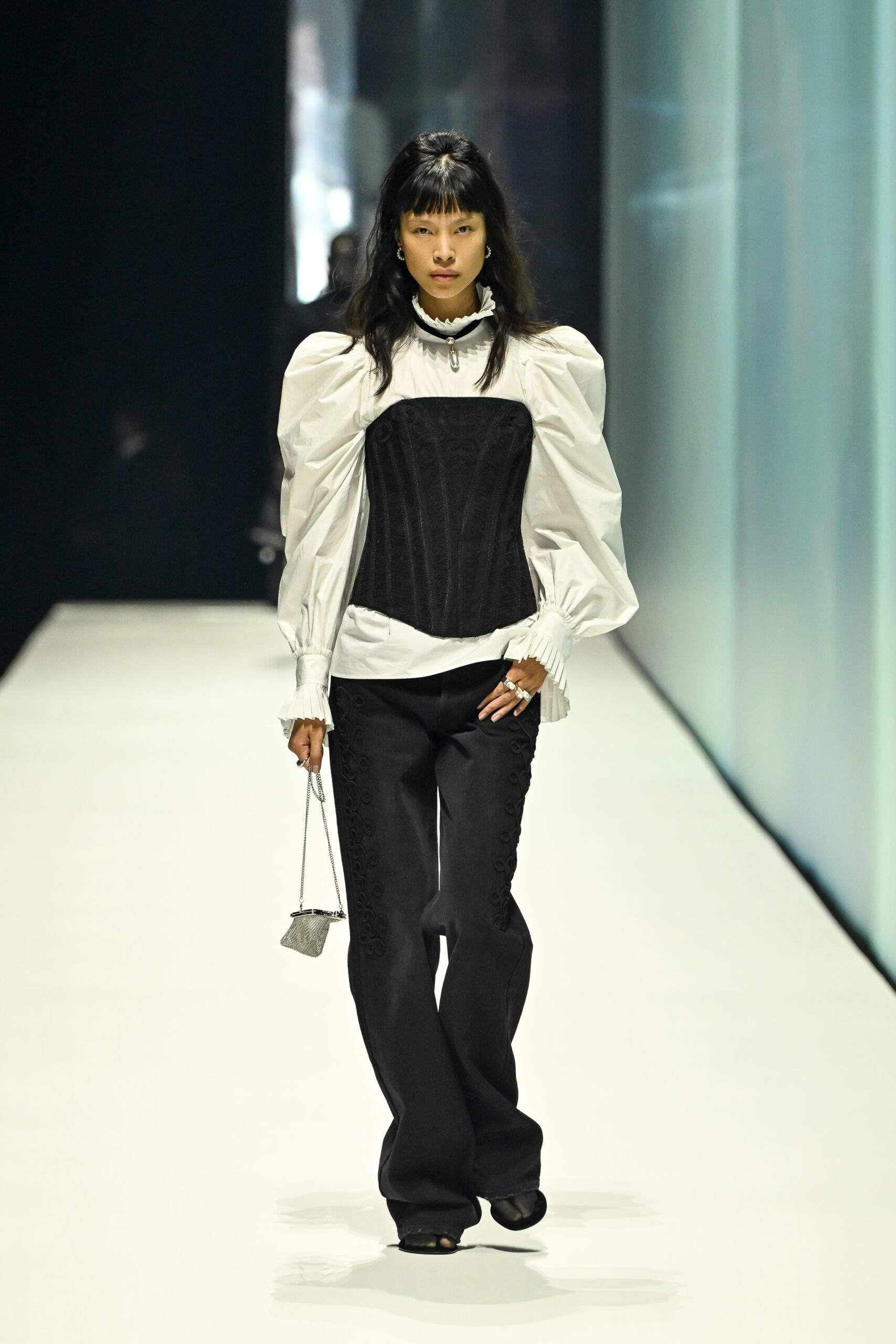
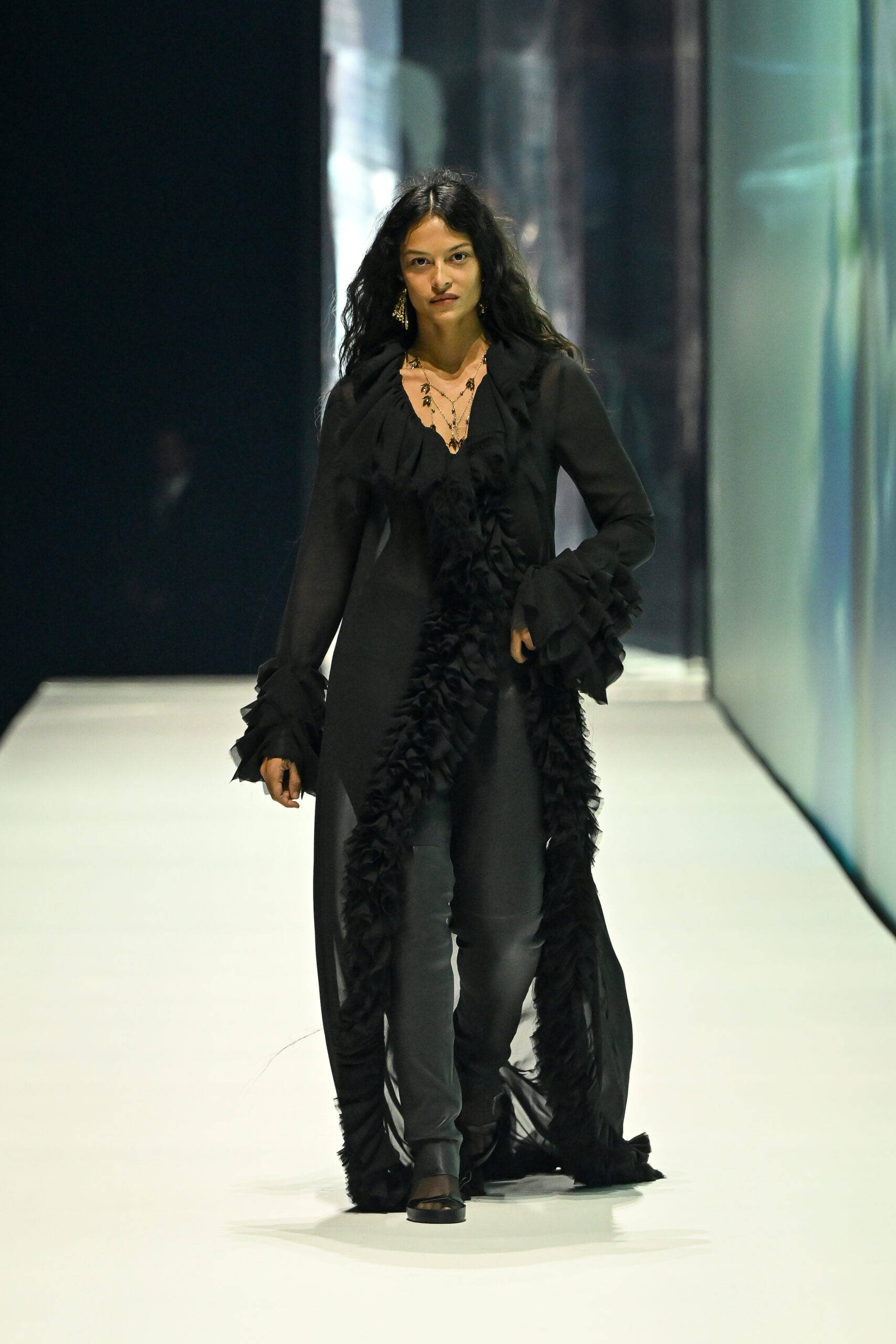
H&M brought fashion and technology together at London Fashion Week, staging its show with British photographer Nick Knight and SHOWstudio. Soundtracked by Labrinth, the show presented three drops from H&M’s Autumn 2026 womenswear collection, alongside pieces from H&M Studio and the H&M Atelier menswear line.
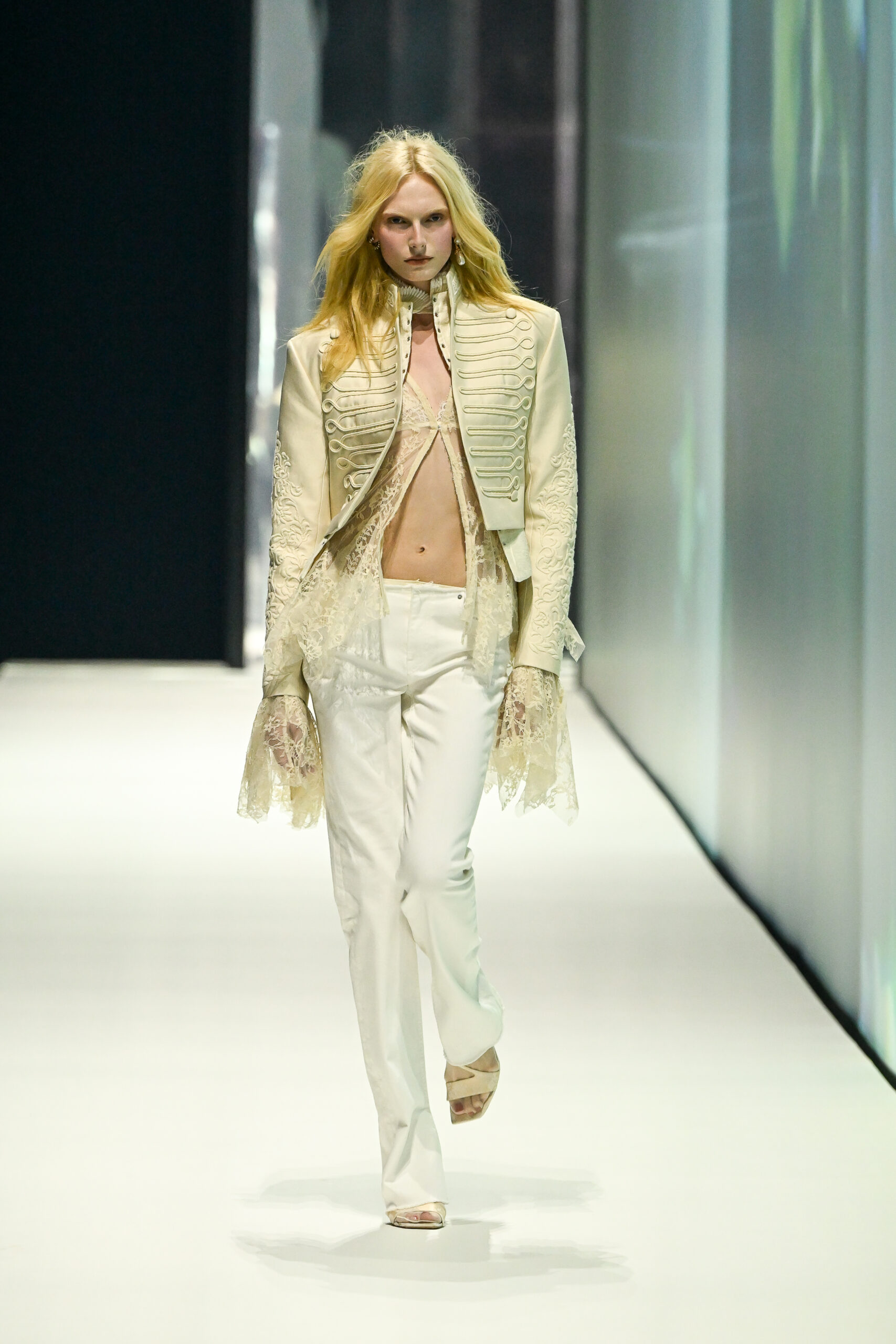
Alex Consani opened the runway in a cropped ivory jacquard jacket, sheer lace blouse, slim white trousers and cream jacquard heels, setting the tone for a collection that moved between historical opulence, contemporary minimalism and sharper tailoring. Models including Paloma Elsesser, Karen Elson, Lila Moss and Archie Renaux followed, with sculptural silhouettes and strong lines appearing alongside softer, more romantic looks.
Knight’s influence was most visible in the way the physical runway was combined with moving imagery. Curved mirrors lined one side of the space, while a video installation by Tokyo-born artist and engineer Karyn Nakamura occupied the other. A fashion interactive developed by SHOWstudio used imagery Knight created with Consani and Renaux earlier this year, bringing the models’ movements and digital visuals together in real time.
During the H&M Studio section, the interactive shifted again, with models appearing alongside digital illustrations by artist Cliff Warner. The clothes themselves leaned into strong tailoring and sculptural forms, while the technology changed around them as they walked.
The show closed with Consani and Renaux delivering a spoken-word performance inspired by Foreigner’s ‘I Want to Know What Love Is’, before Labrinth performed the song live on the runway. Consani wore a ruffled cream gown, while Renaux wore a look from H&M Atelier.
Anton Schnaider’s Creative Director Debut at KSENIASCHNAIDER
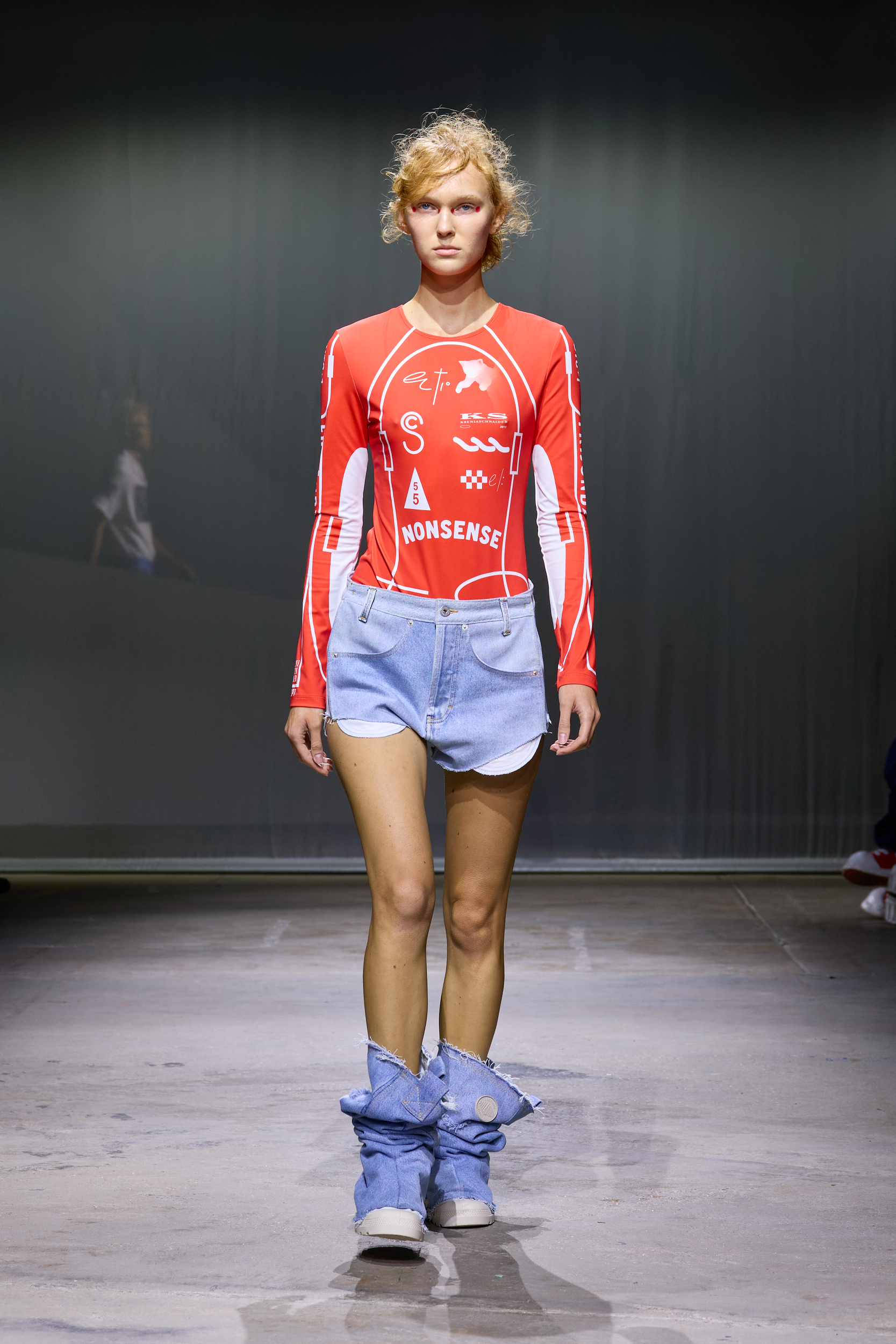
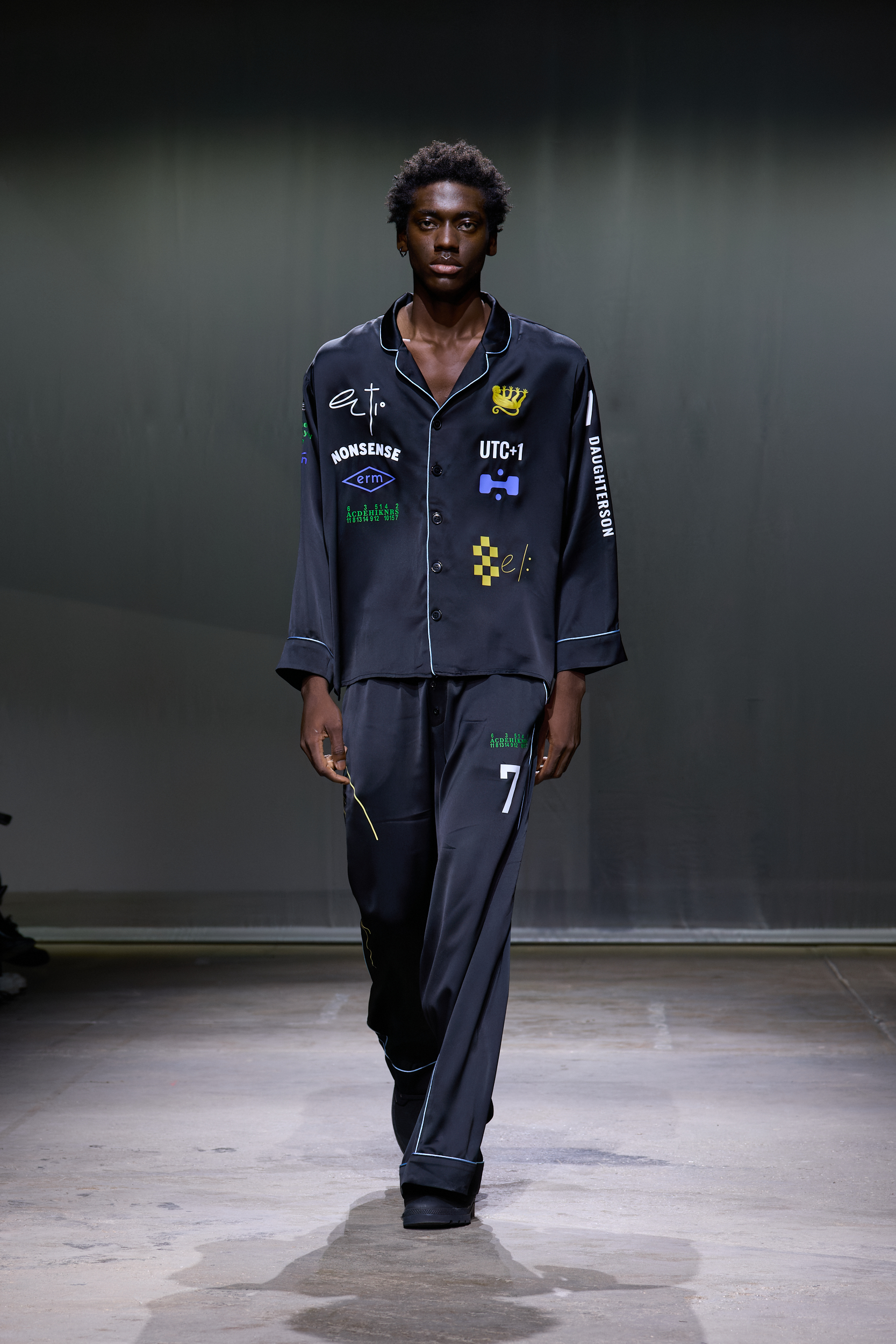
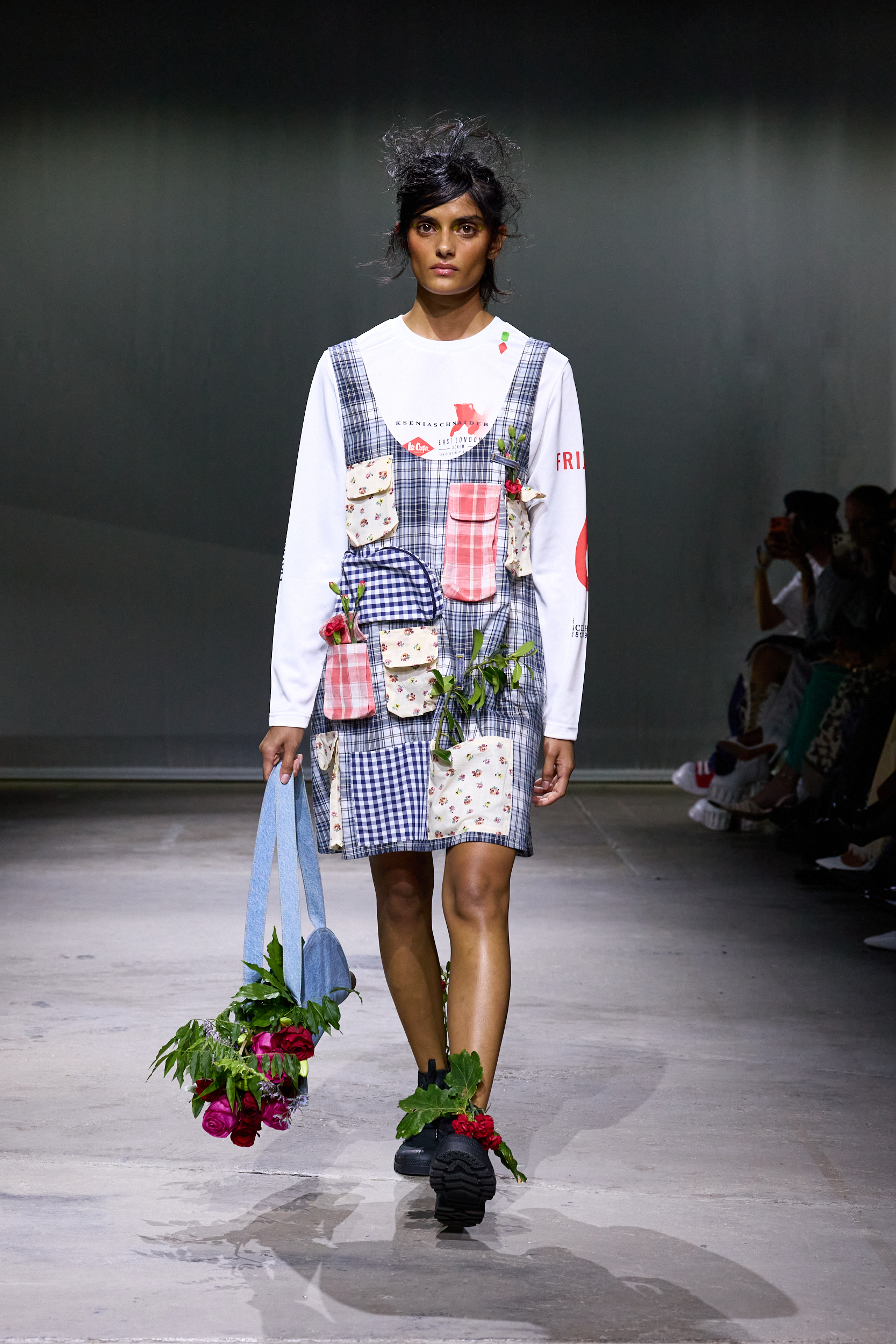
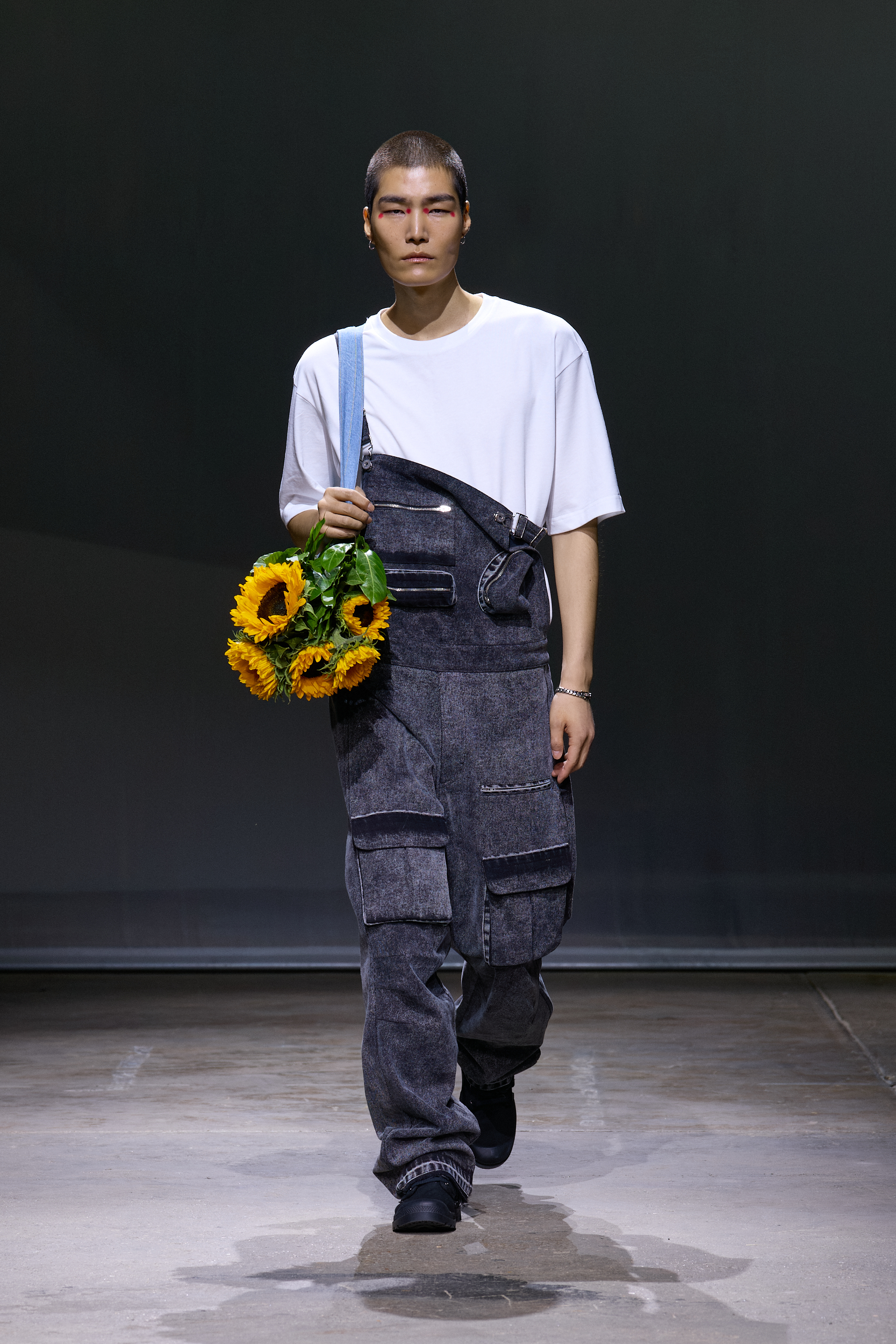
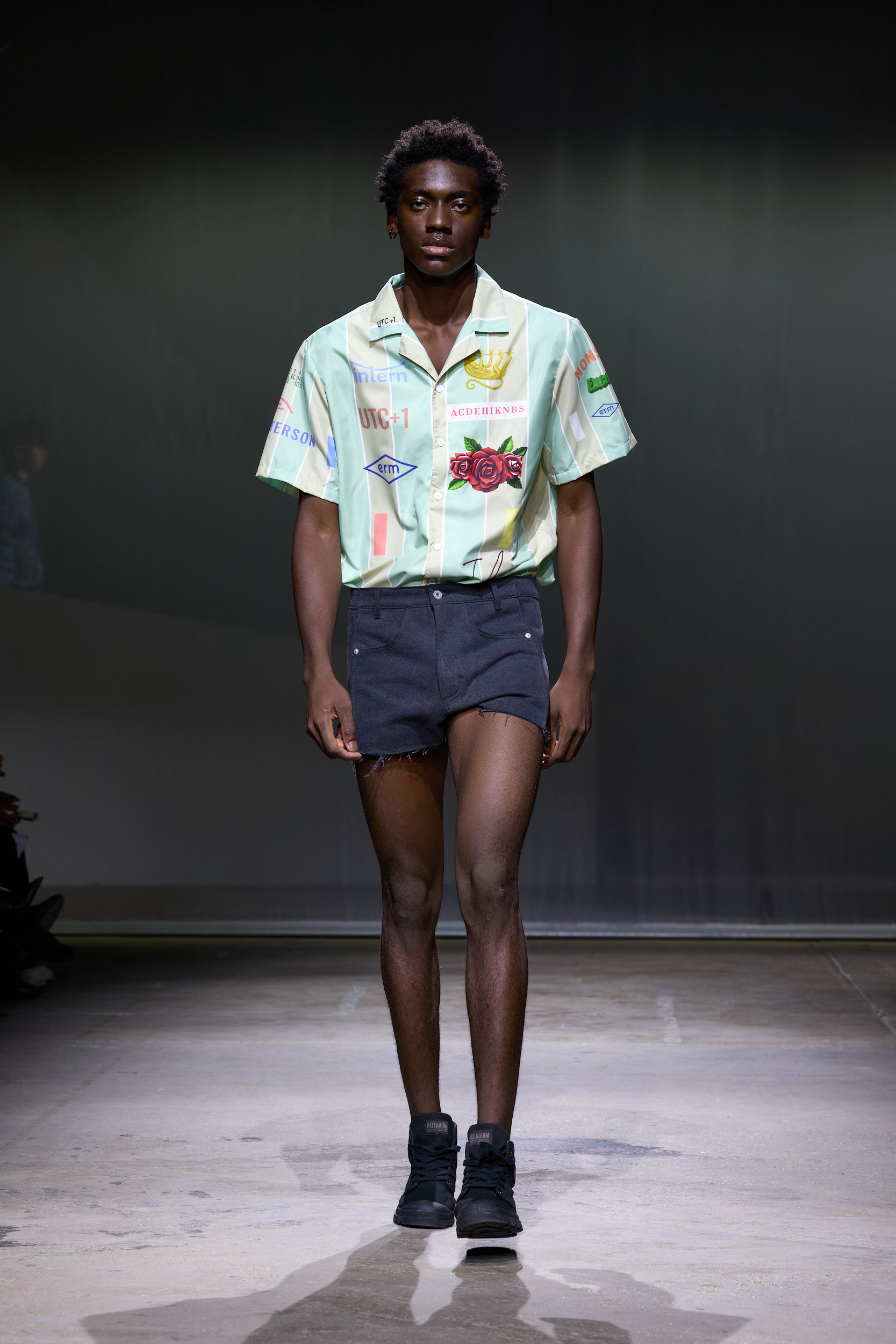
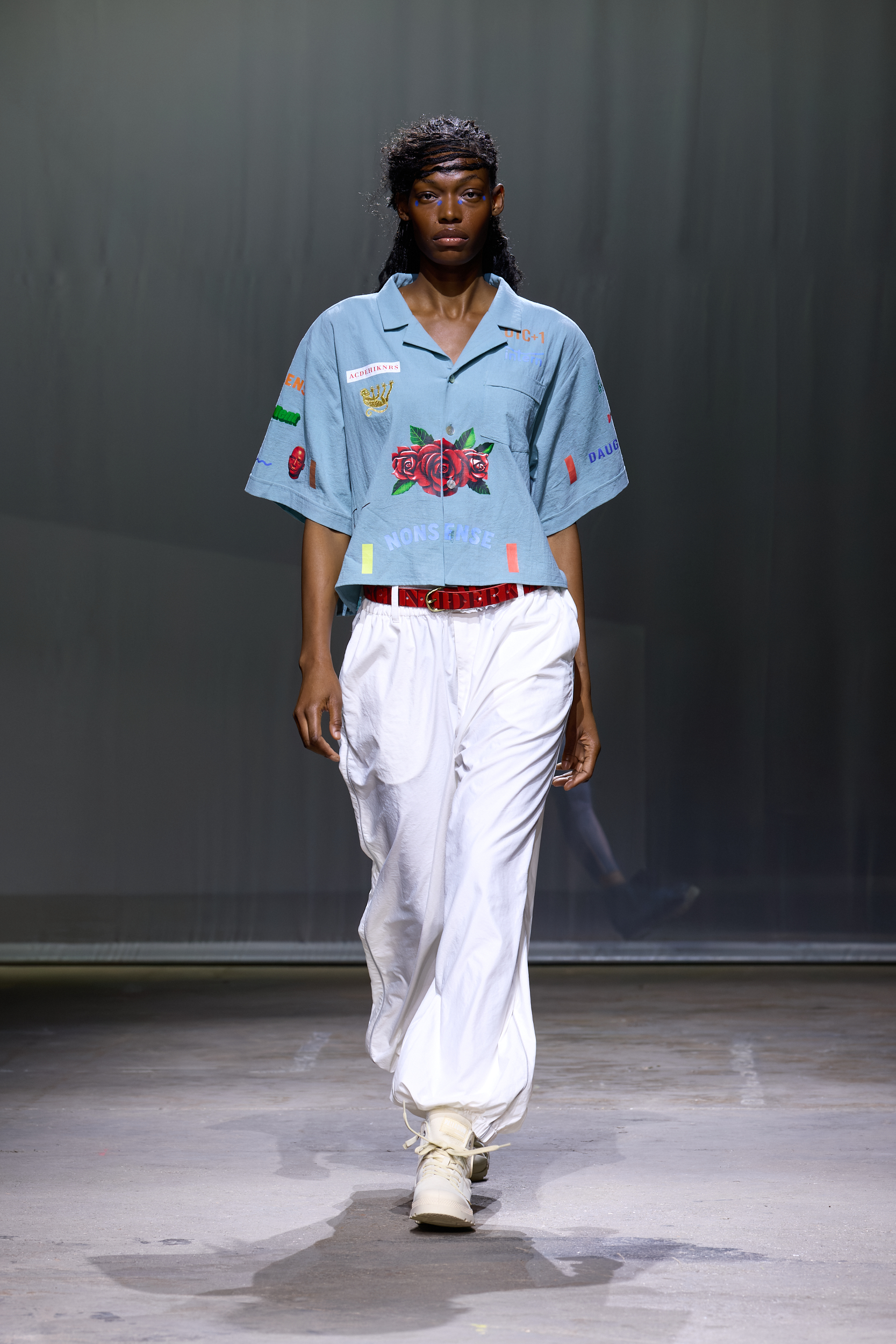
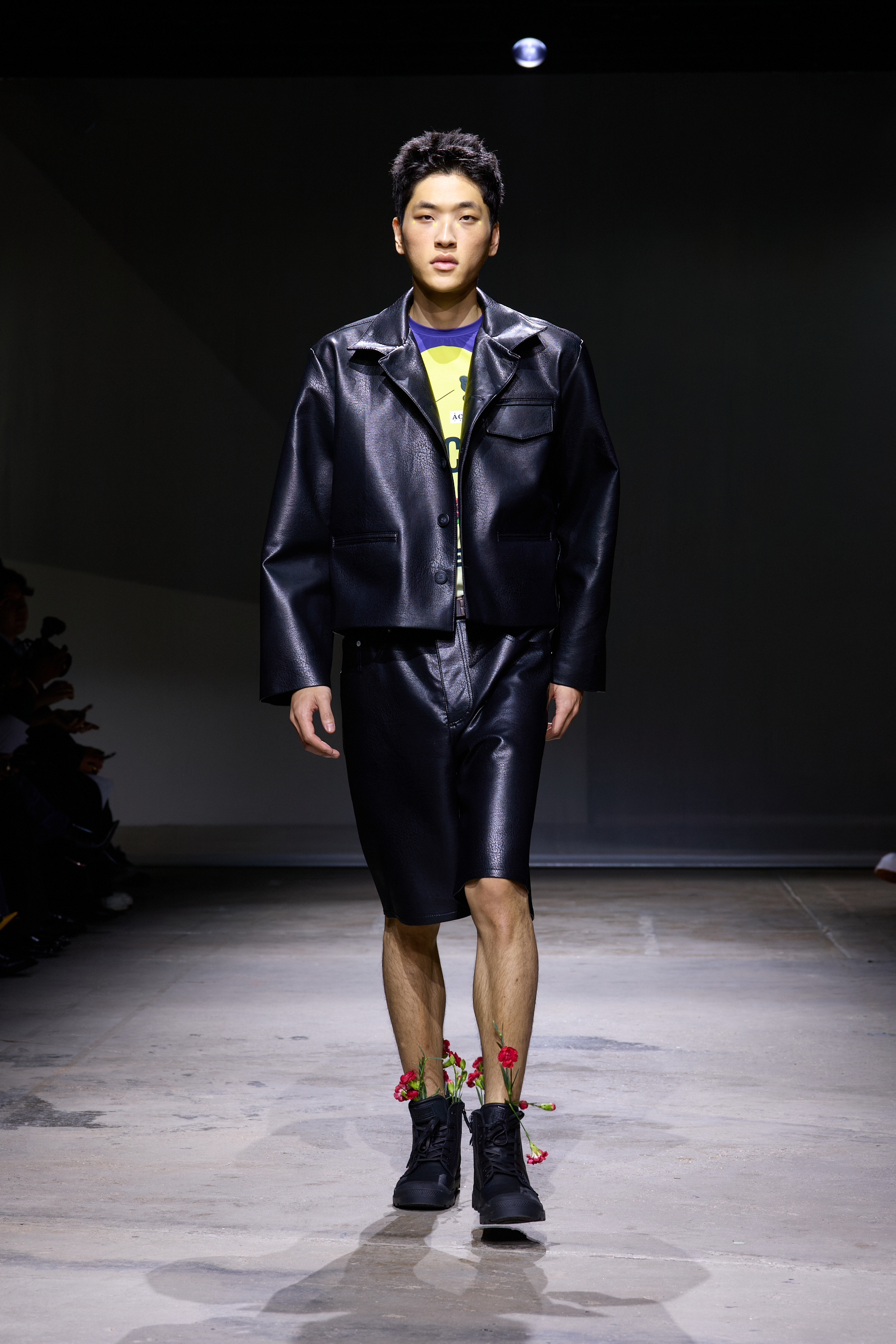
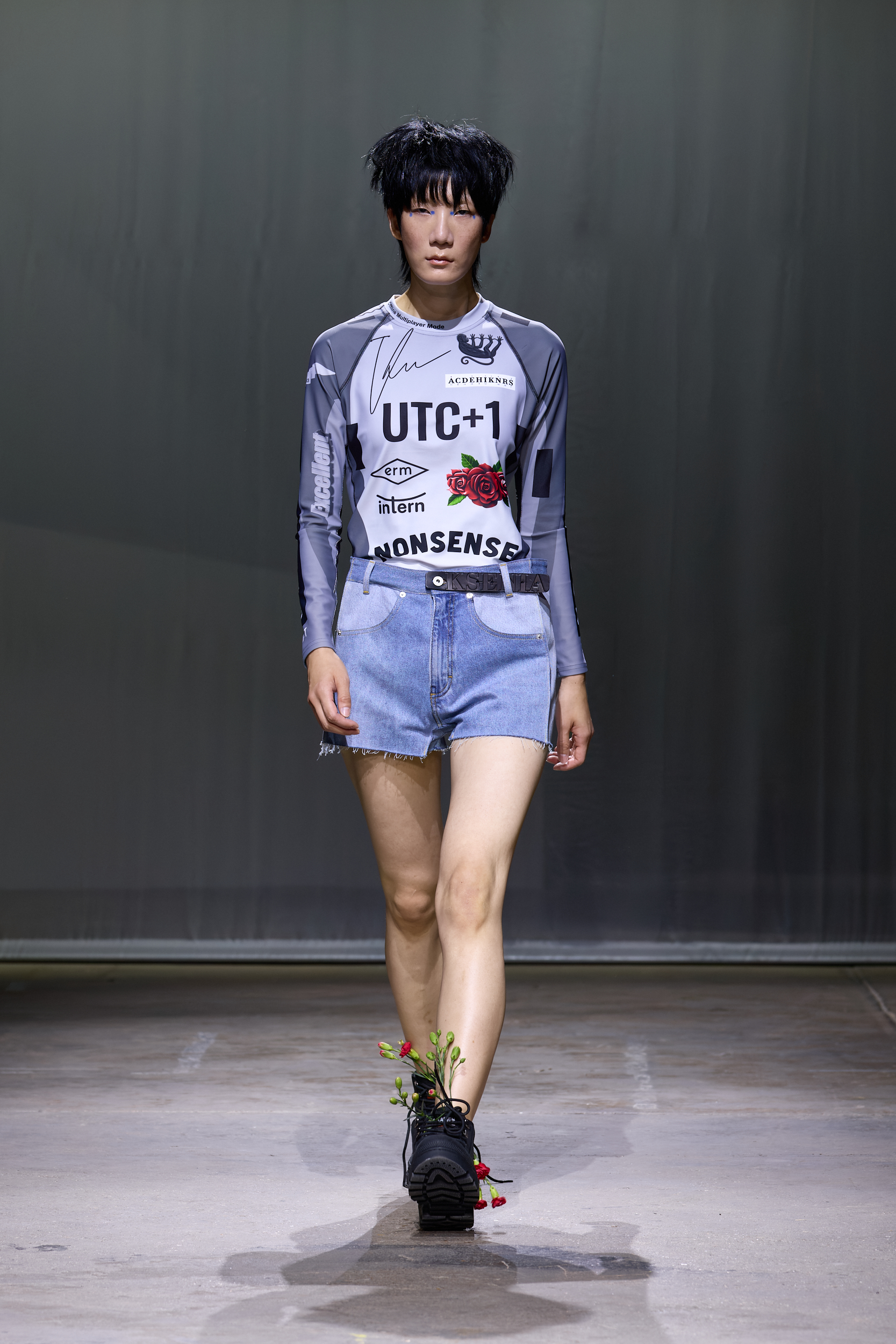
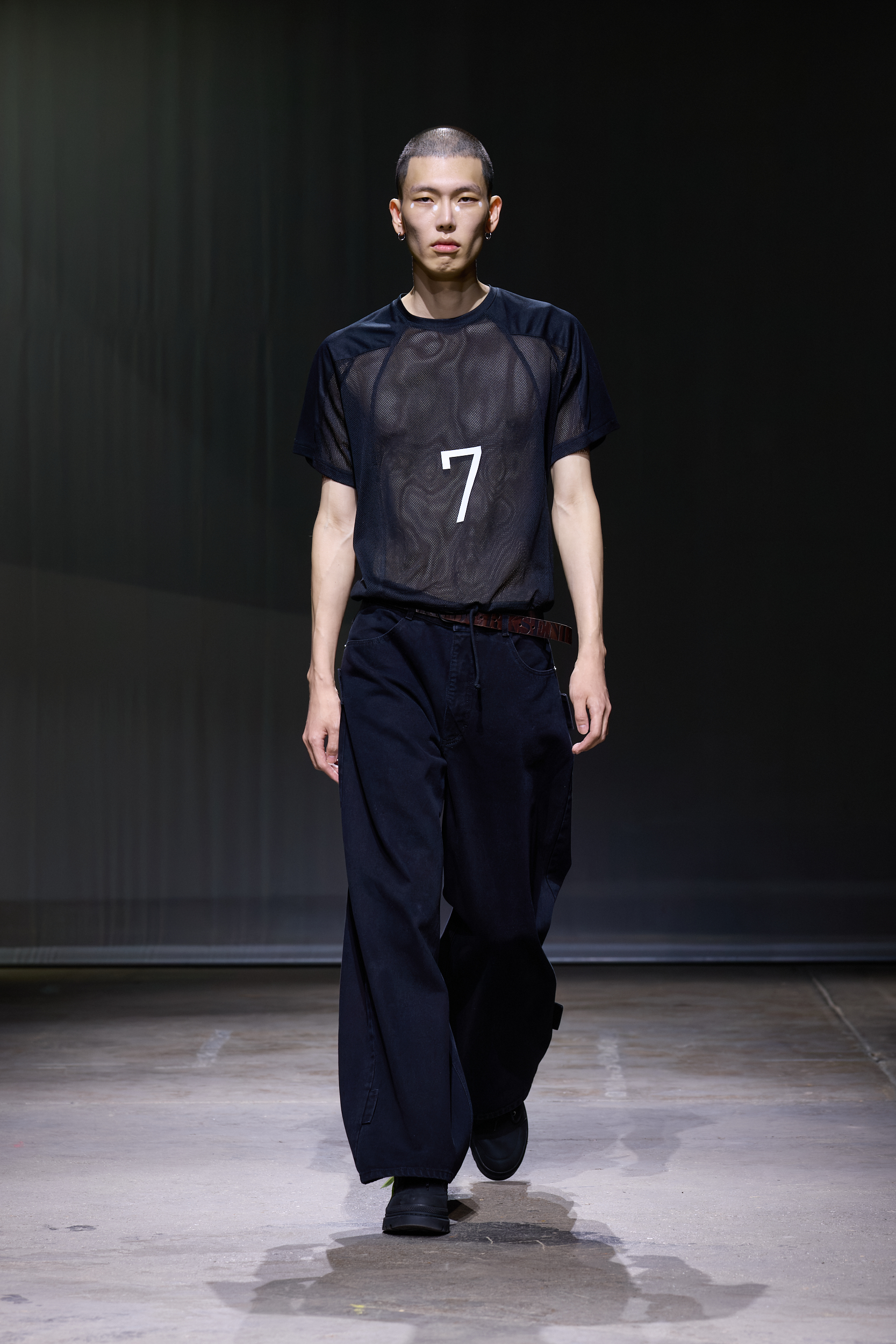
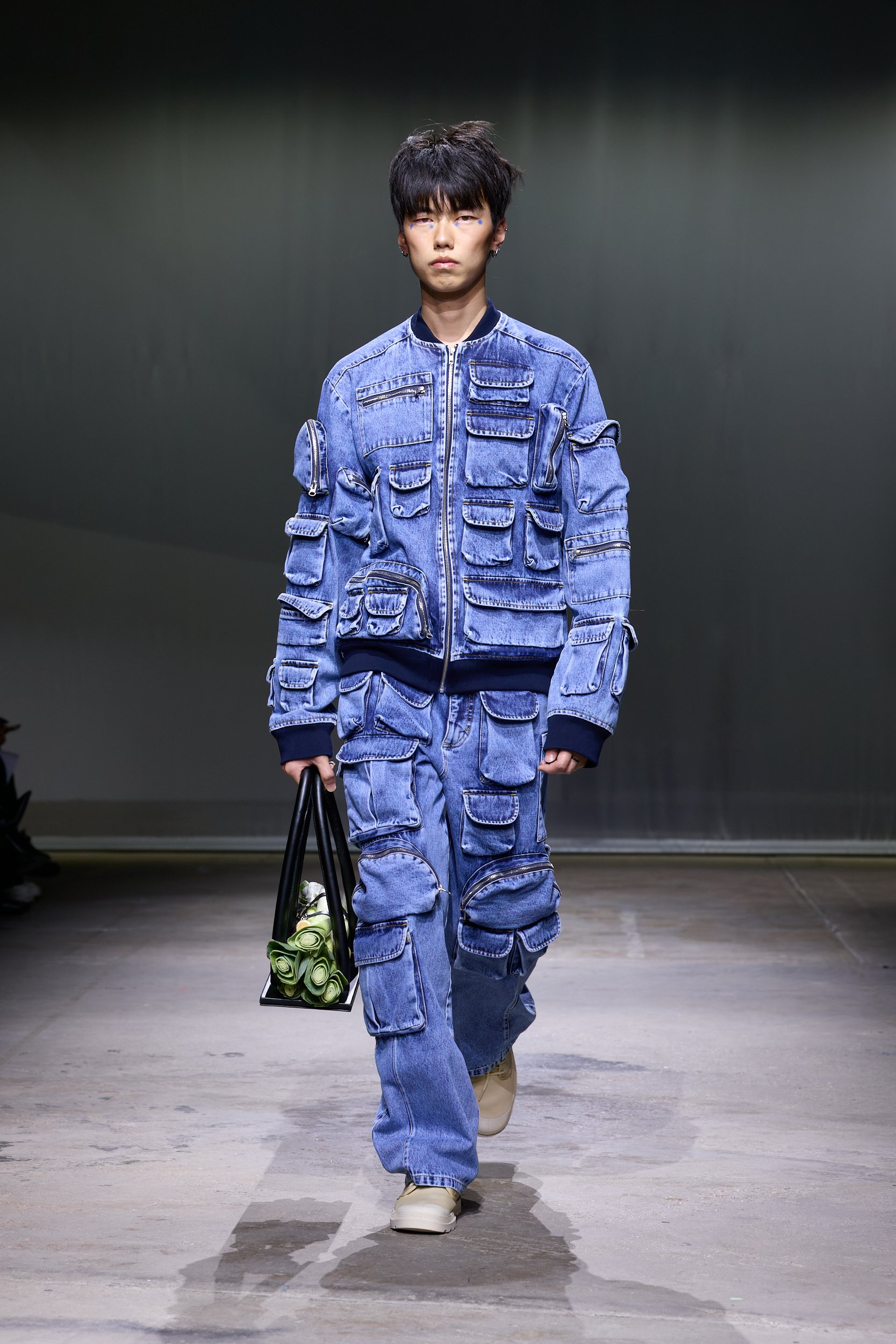
For SS27, KSENIASCHNAIDER shifted perspective as Anton Schnaider took on the role of Creative Director for the first time since co-founding the Kyiv-based brand with Ksenia in 2011. Drawing on his background in graphic design, Anton brought his own memories, obsessions and visual references to the collection.
The designs explored the visual language of football shirts, racing uniforms, club merchandise, sportswear and travel clothing. Logos, numbers, surnames, flags, sponsor marks and crests suggested loyalty, origin and collective identity, while altered and disappearing graphics created a fictional affiliation – what the brand described as the feeling of belonging to something that doesn’t quite exist.
Elsewhere in the collection was “walkwear” – clothing designed for the flâneur, traveller and urban nomad. Multi-pocket garments eliminated the need for a bag, sunscreen bodysuits brought performance protection into everyday life, and pseudo-belts transformed familiar functional details into graphic signs. Function and symbolism continuously overlapped.
Despite its fictional identities and shifting affiliations, UTC+1 had a tangible point of origin: every piece was made in Kyiv, Ukraine, at KSENIASCHNAIDER’s own production facility. The result moved between sport and street, function and fiction, graphic design and clothing – looking as though it belongs somewhere without ever saying exactly where.
Barbour opens Tartan Reimagined at the Saatchi Gallery
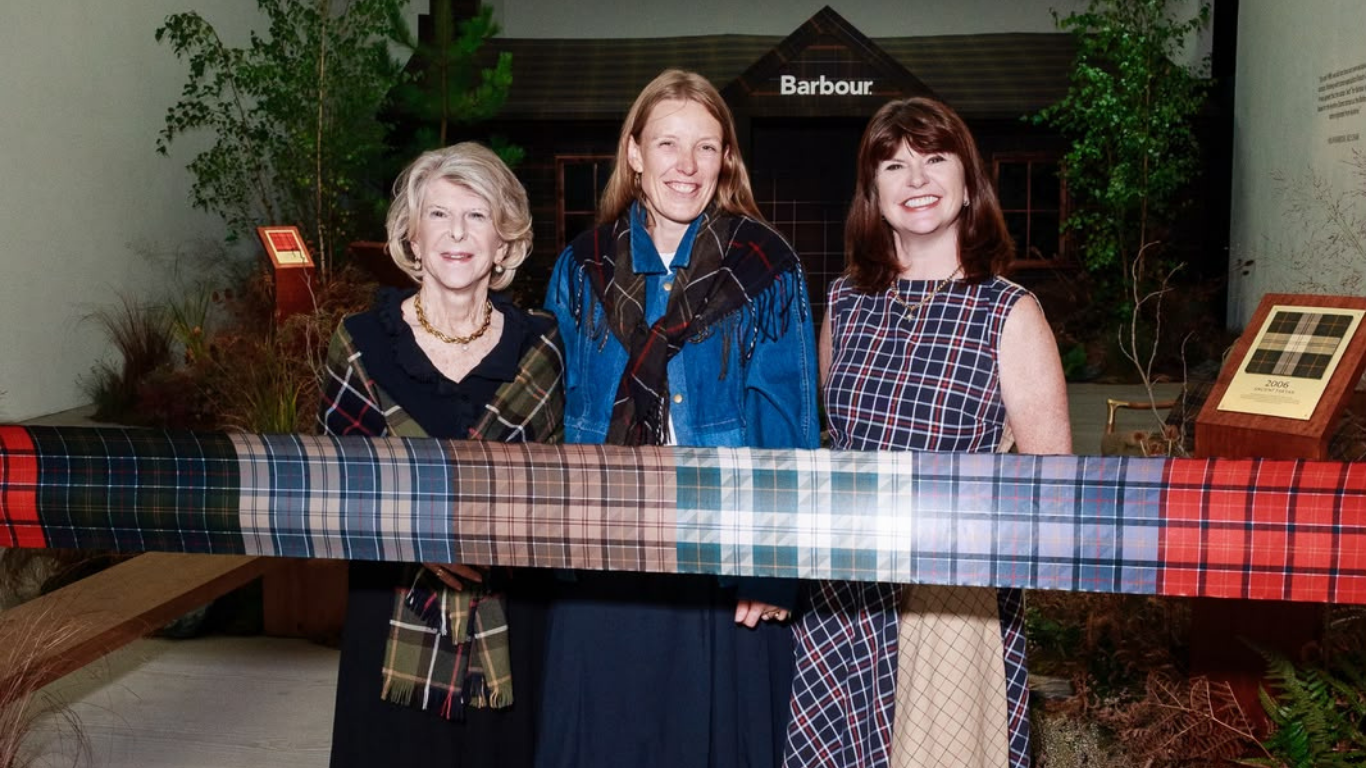
Dame Margaret Barbour and Helen Barbour cut the ribbon alongside Clara Mercer, CMO of the British Fashion Council, officially opening Tartan Reimagined: The Barbour Way at the Saatchi Gallery yesterday. The immersive exhibition explores Barbour’s Scottish heritage, craftsmanship and evolving approach to tartan.
Running Friday 18 and Saturday 19 September, the two-day public exhibition takes visitors through a series of conceptual galleries exploring Barbour’s tartan heritage, the AW26 collection and the future of the brand. Barbour Re-Loved creations and a live working factory installation place the making of the product at the heart of the experience, alongside the winning designs from the Barbour x British Fashion Council Tartan Reimagined competition.
Barbour’s family tartan is a defining design code of the brand, woven through more than 130 years of history since founder John Barbour opened his first store in South Shields in 1894. The exhibition celebrates not only the brand’s family legacy and craftsmanship, but also its resilience – demonstrating how heritage and authenticity can continue to evolve while remaining deeply relevant today.
Mark Fast SS27 fuses sensuality, texture and contrast
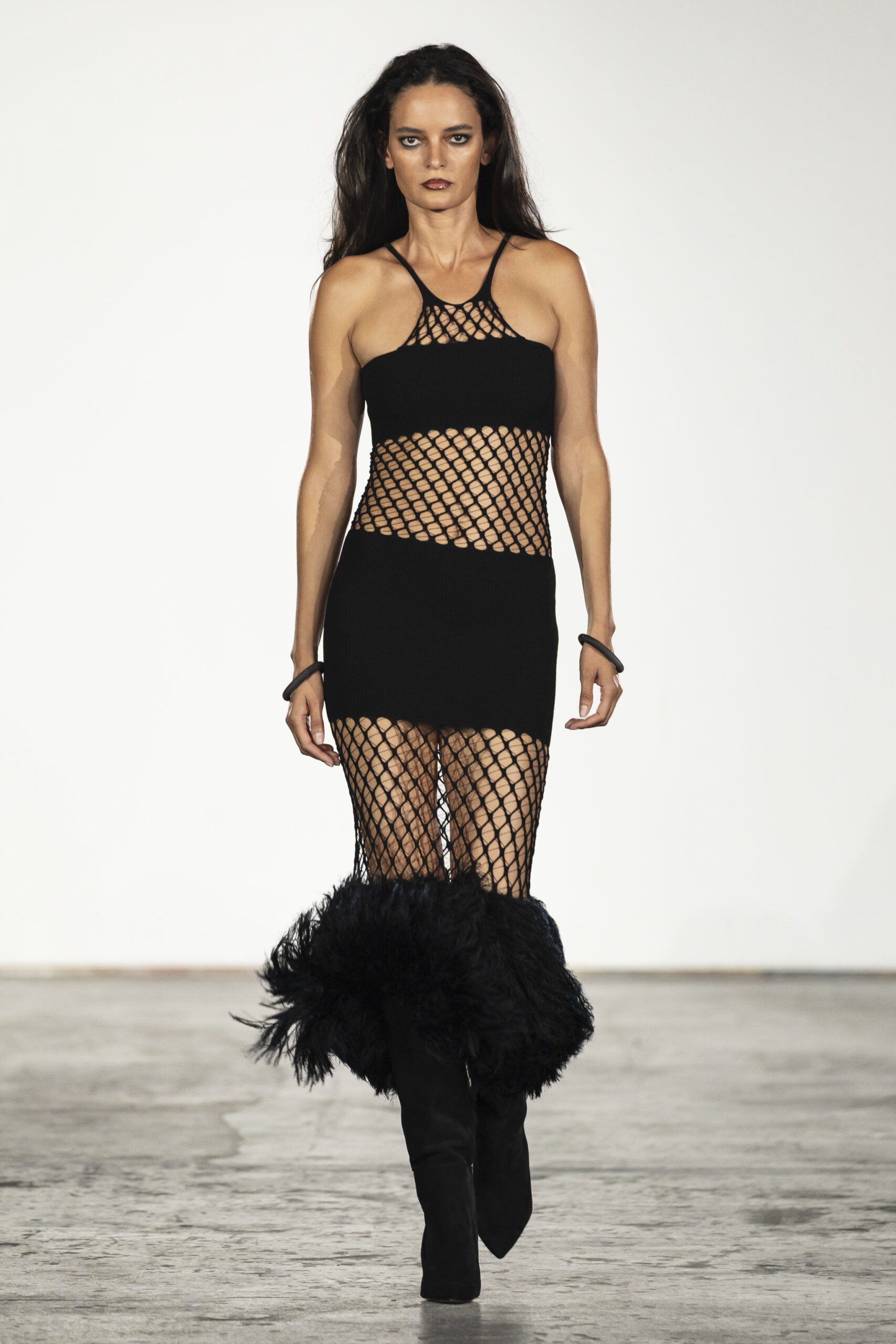
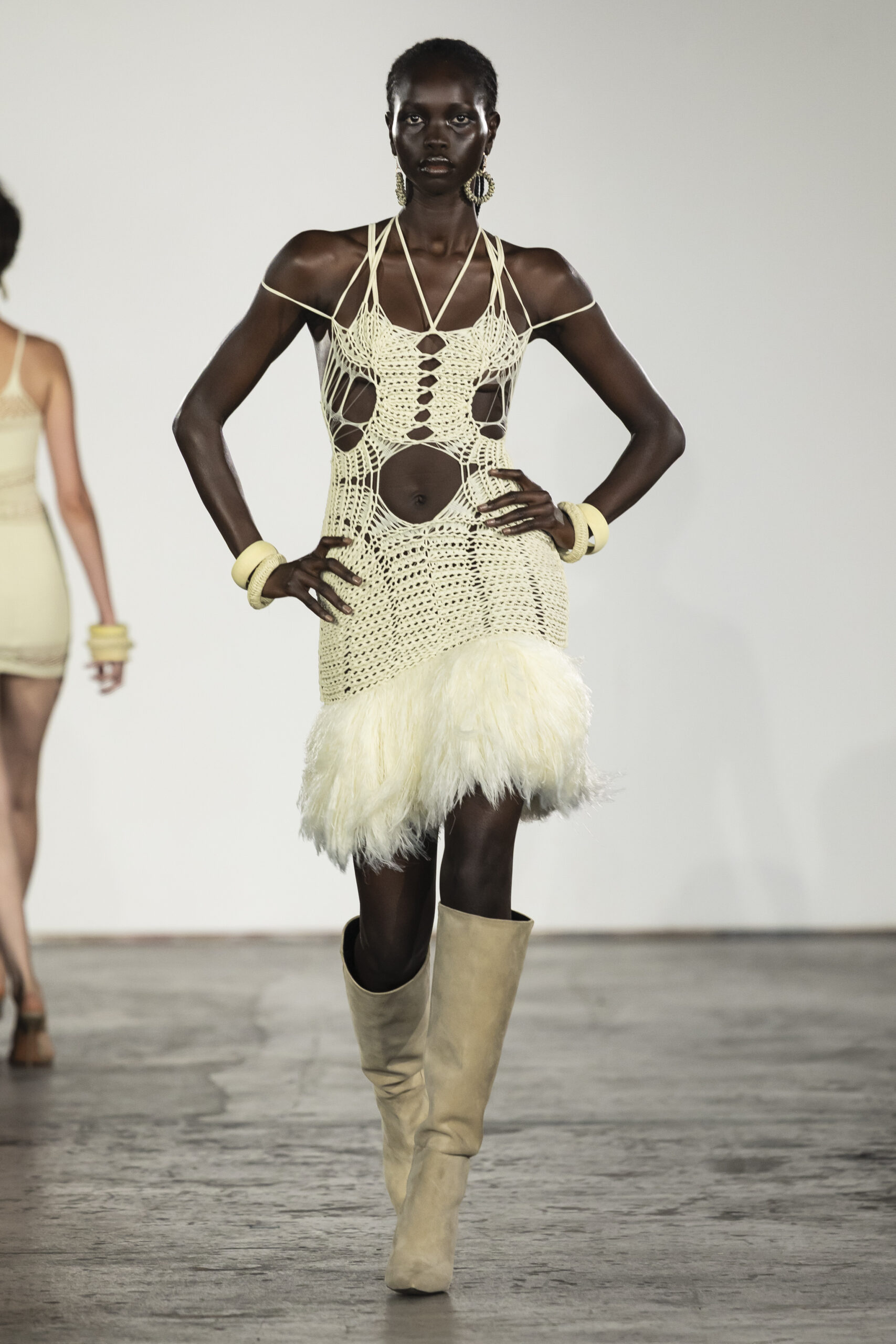
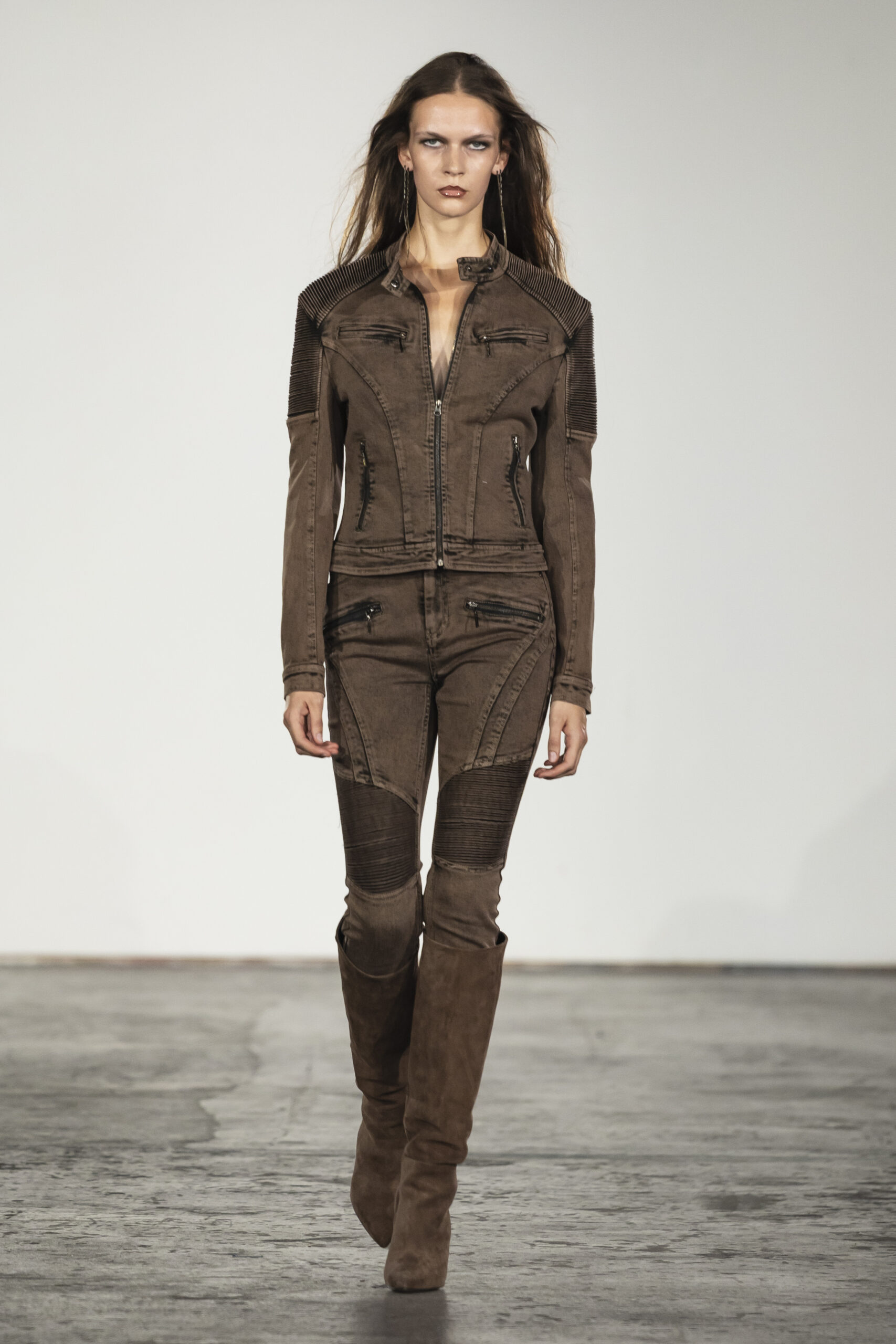
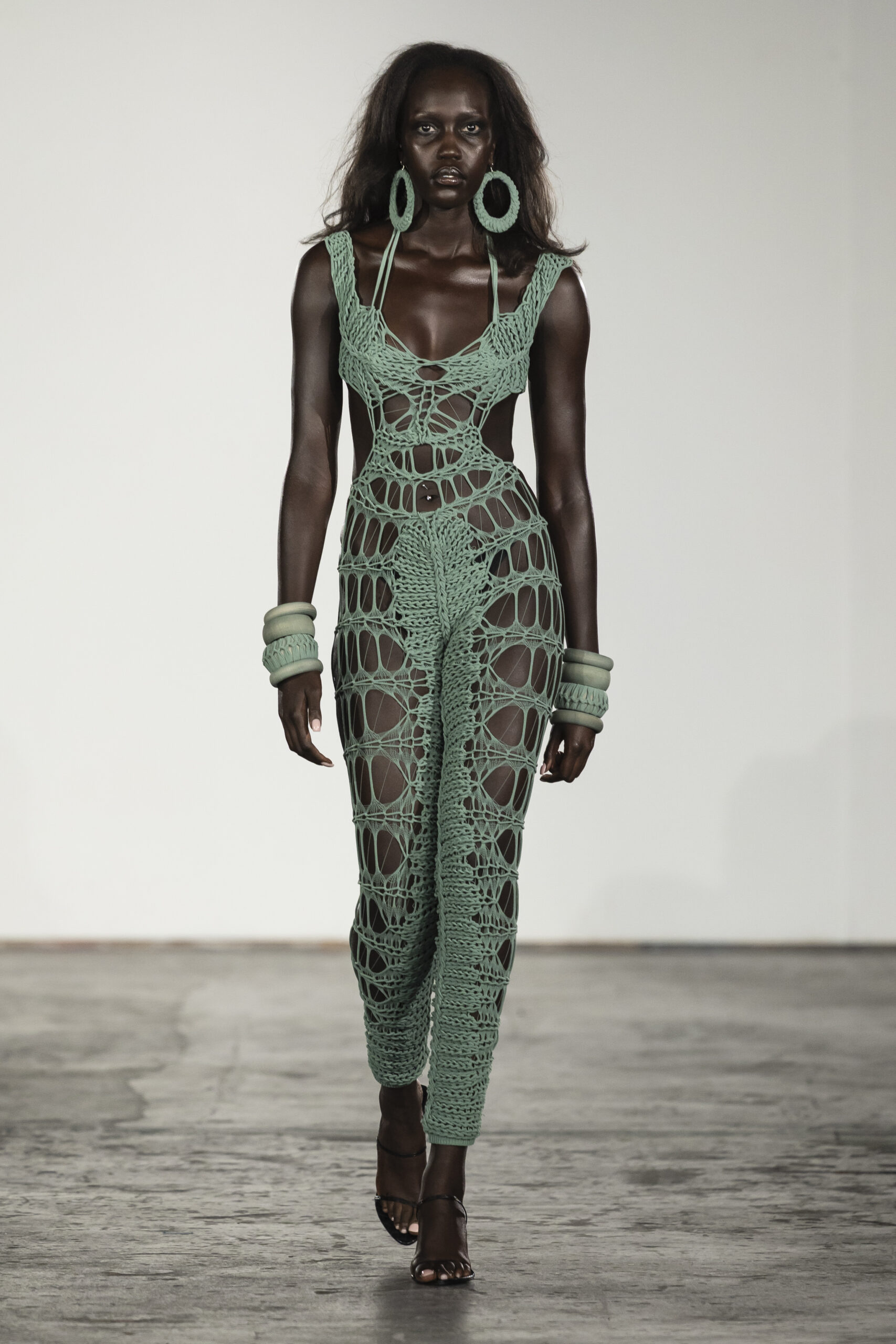
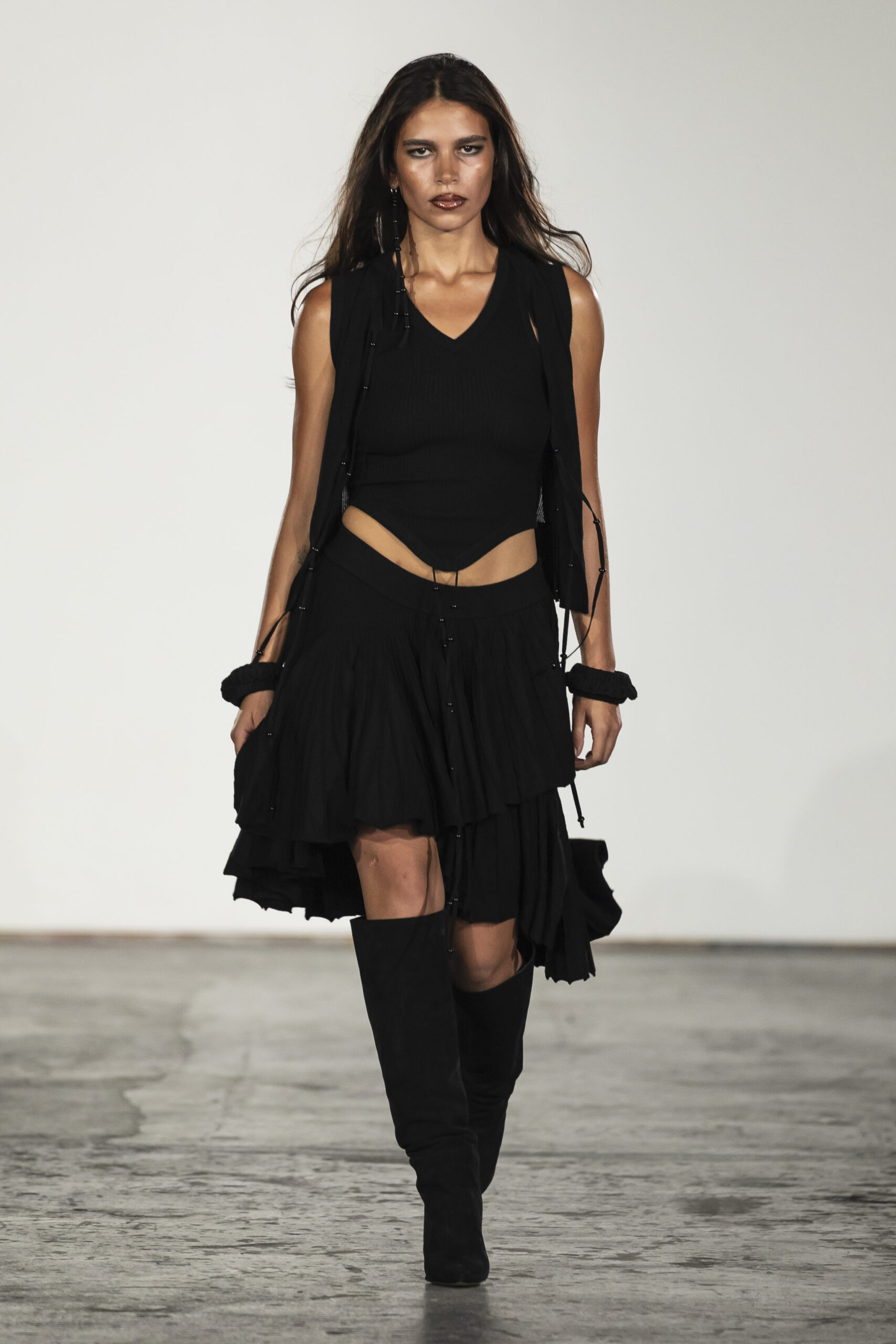
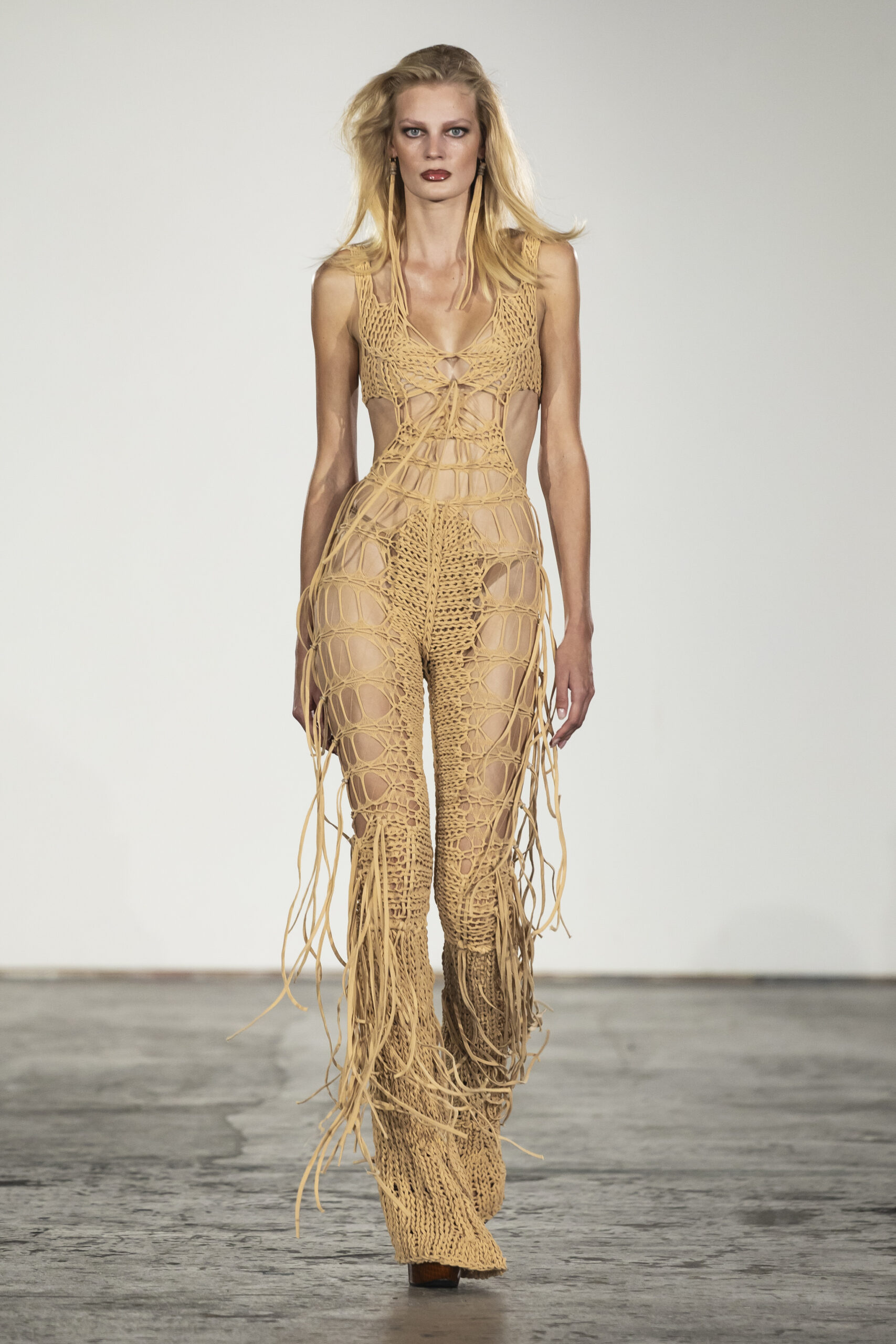
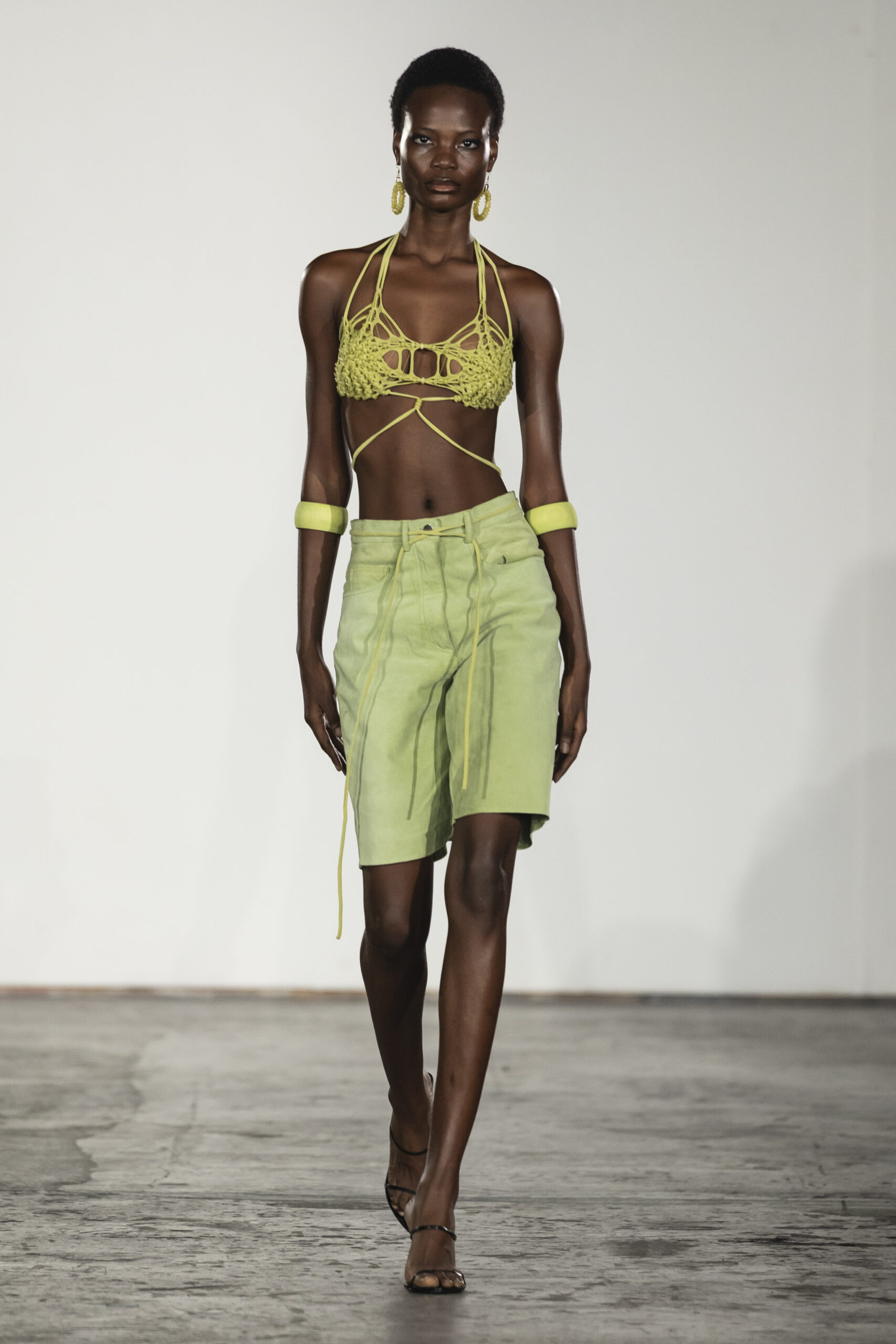
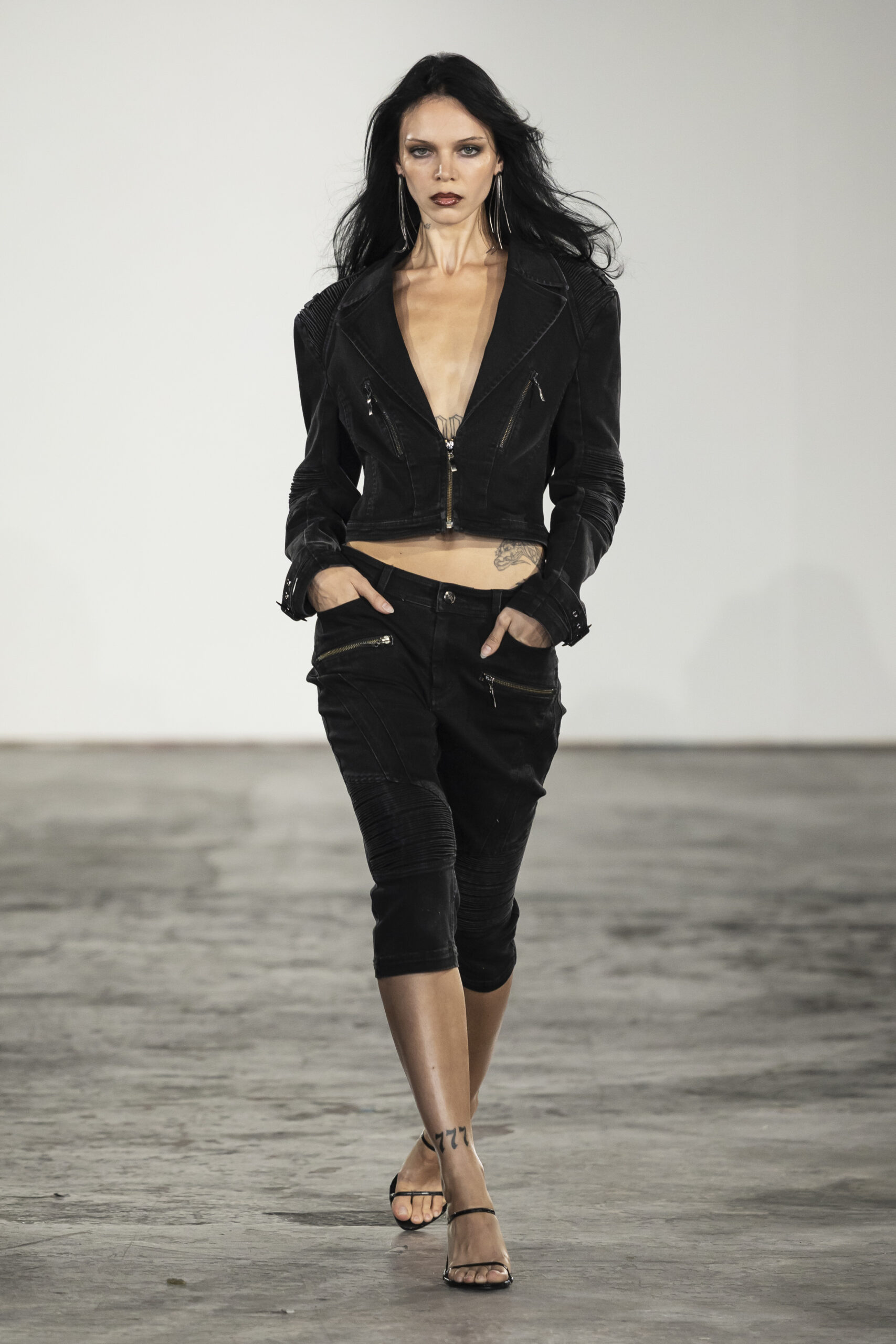
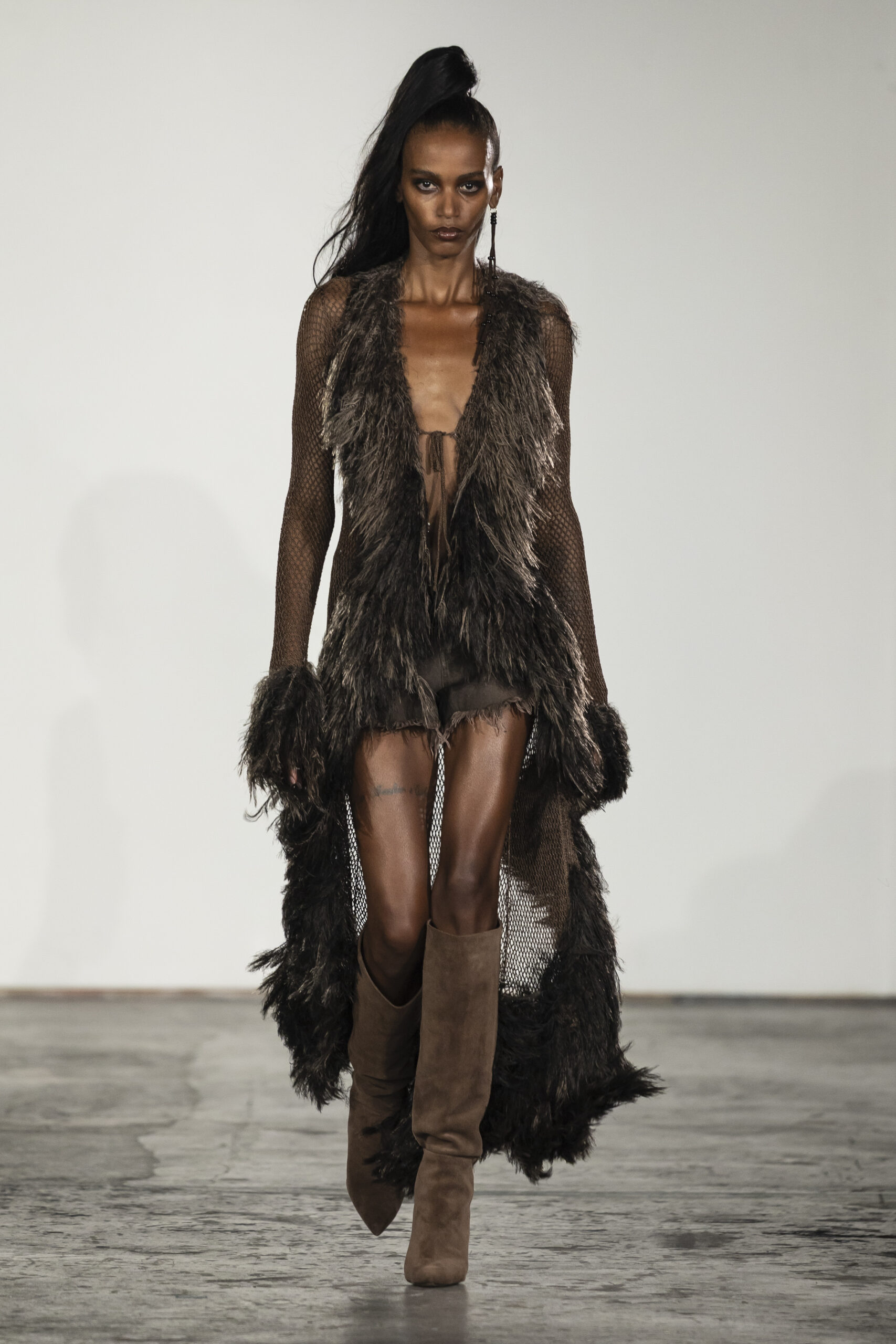
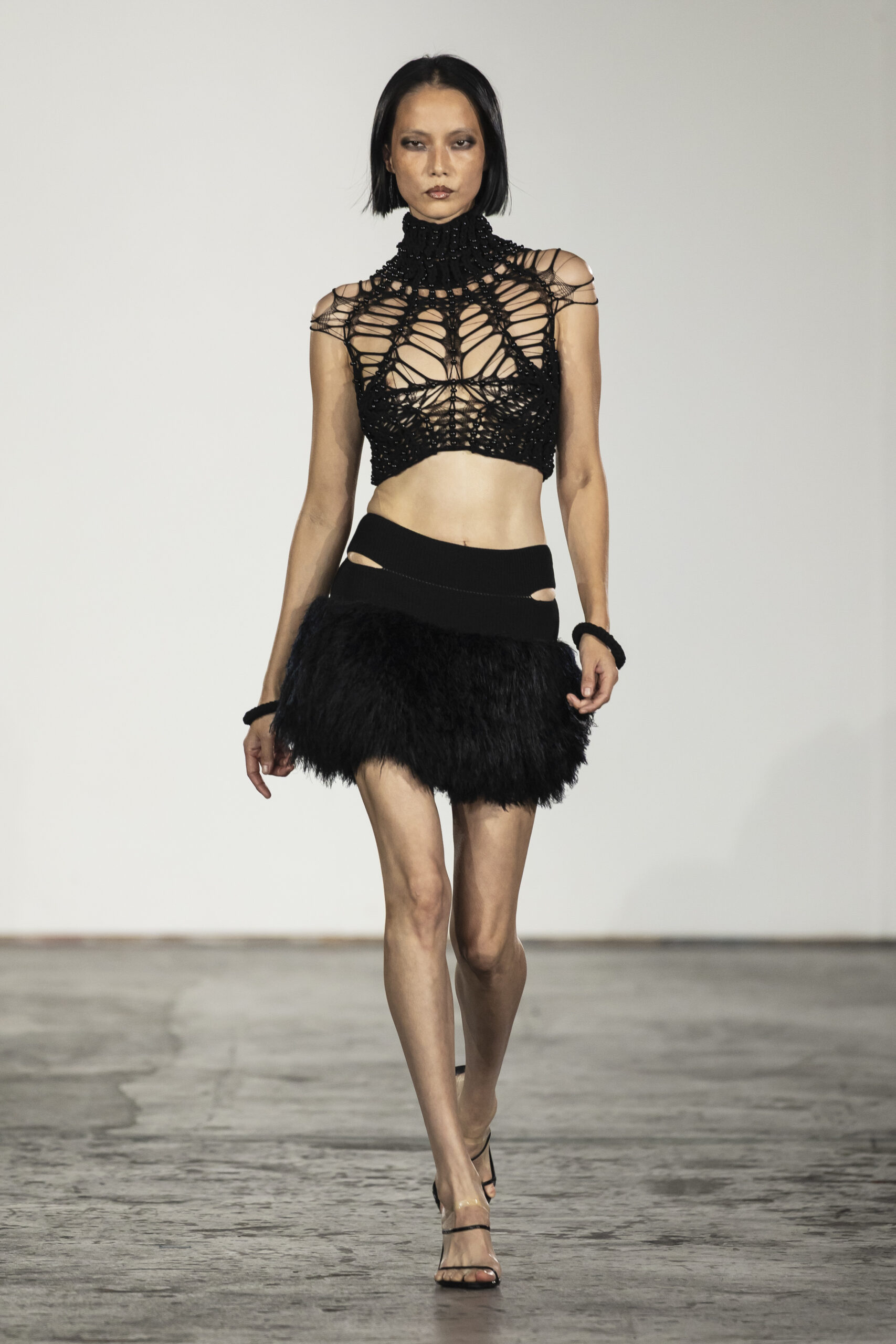
Mark Fast showcased Primal Glamour, a collection exploring the balance between instinct and control through the brand’s signature sensual, body-conscious knitwear. Engineered knits, open mesh, crochet and laddered details shaped and revealed the body through changes in texture, transparency and tension.
Animal-inspired details appeared through reptile-like textures, feathered finishes and long fringes, while Gothic romance came through sheer layers and distressed details. The collection also featured knitted suede-like textures, washed denim, liquid stretch fabrics and relaxed tailoring.
Long, slim silhouettes were inspired by the glamour of 1970s cinema. Ballerina-inspired details, including micro skirts, ruffles and lace, were mixed with oversized outerwear, distressed denim and relaxed tailoring. The colour palette of sand, bone, chalk and faded neutrals was balanced with earthy tones and black, creating a contrast between light and dark.
Throughout SS27, contrasting elements came together: hard and soft, exposed and covered, romantic and raw. At the centre was the Mark Fast woman – “confident, instinctive and unapologetically untamed”. Primal Glamour captured this contrast through a wardrobe that combined vulnerability and strength, creating a modern take on glamour.