


London Fashion Week kicked off in style this morning, with Paul Costelloe once again opening the official schedule, as William Costelloe presented his second collection at the helm of the house.
Elsewhere, the opening day of SS27 brought Keburia’s first-ever menswear showcase, Maximilian Raynor’s theatrical village green fantasy and Agro Studio’s exploration of transparency, distortion and sculptural form.
From Eighties glamour and equestrian references to British eccentricity, experimental craftsmanship and fashion’s evolving relationship with waste, here are some of the standout moments from London Fashion Week so far…
William Costelloe puts modern spin on Paul Costelloe’s Eighties legacy
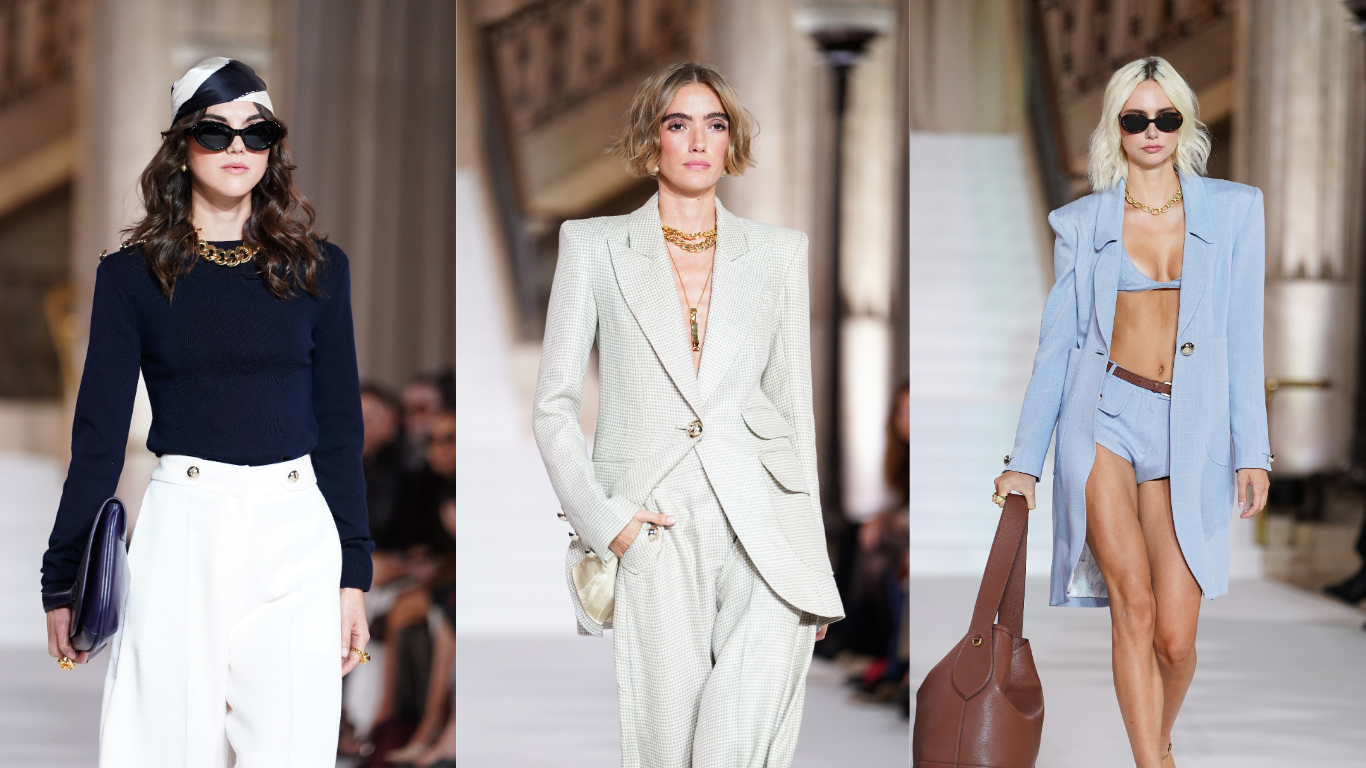
Shoulder pads, pussy-bow blouses and silk headscarves returned to the runway at Paul Costelloe, as William Costelloe followed in his father’s footsteps for his second collection at the helm of the Irish fashion house. After making his debut as Creative Director in February, following the death of his father, Paul, last year, William returned to open London Fashion Week with a SS27 collection that looked back to one of the house’s most recognisable eras: the Eighties.
William returned liberally to his father’s Eighties vocabulary, while introducing more contemporary touches, from oversized clutches to bralettes. Print was noticeably scarce, allowing cut, proportion and fabrication to take centre stage. The colour palette remained similarly restrained: navy, cream and white dominated, with touches of sky blue and, later, flashes of butter yellow.
With its pared-back palette, reduced reliance on print and increasingly unconventional proportions, William appears to be testing just how far he can push the house beyond its established codes. For now, he has one foot in each era: the pussy bows and shoulder pads still belong unmistakably to Paul’s legacy, while the balloon capris and knitted hot pants feel distinctly his own.
Keburia brings equestrian references and theatrical details to SS27
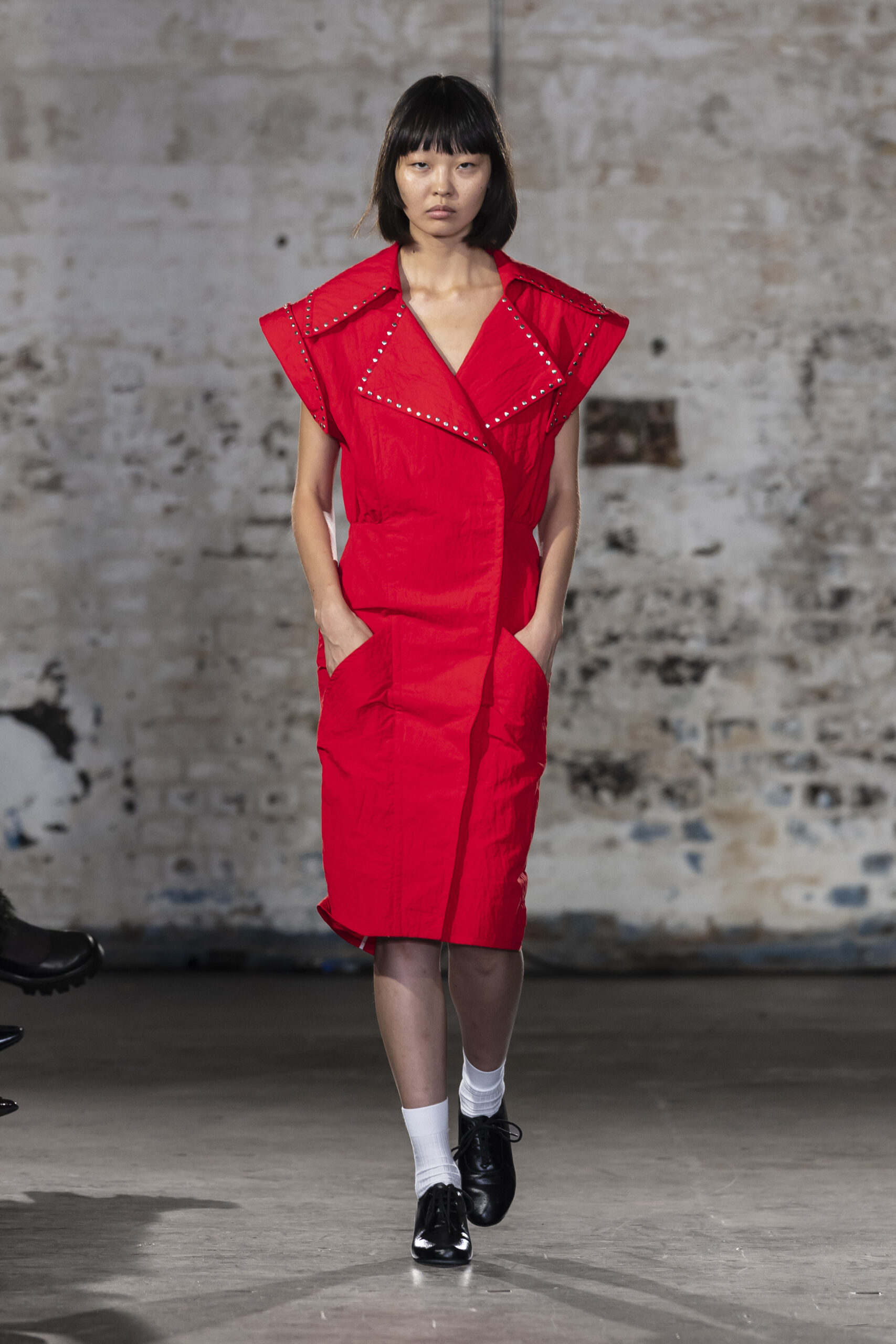
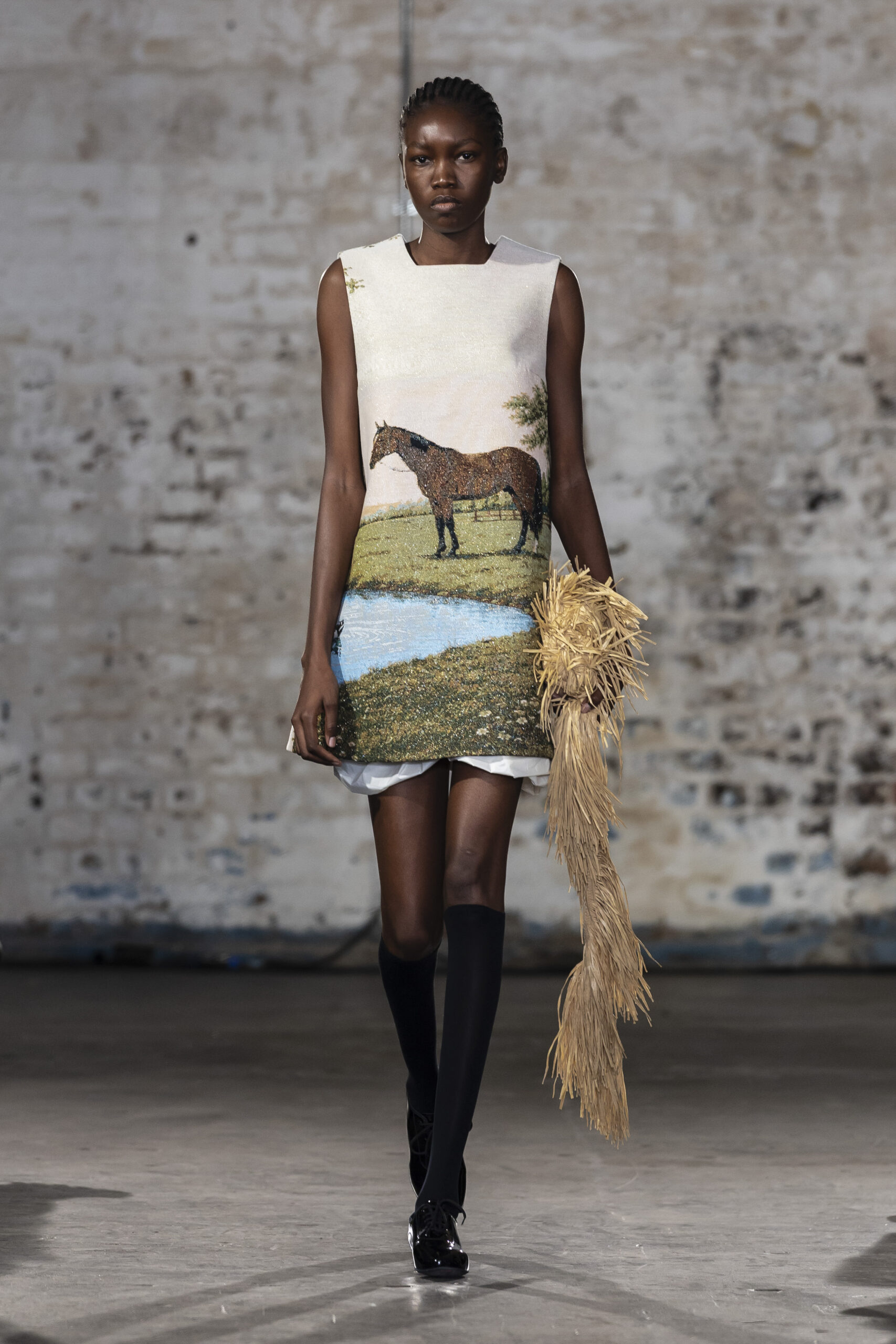
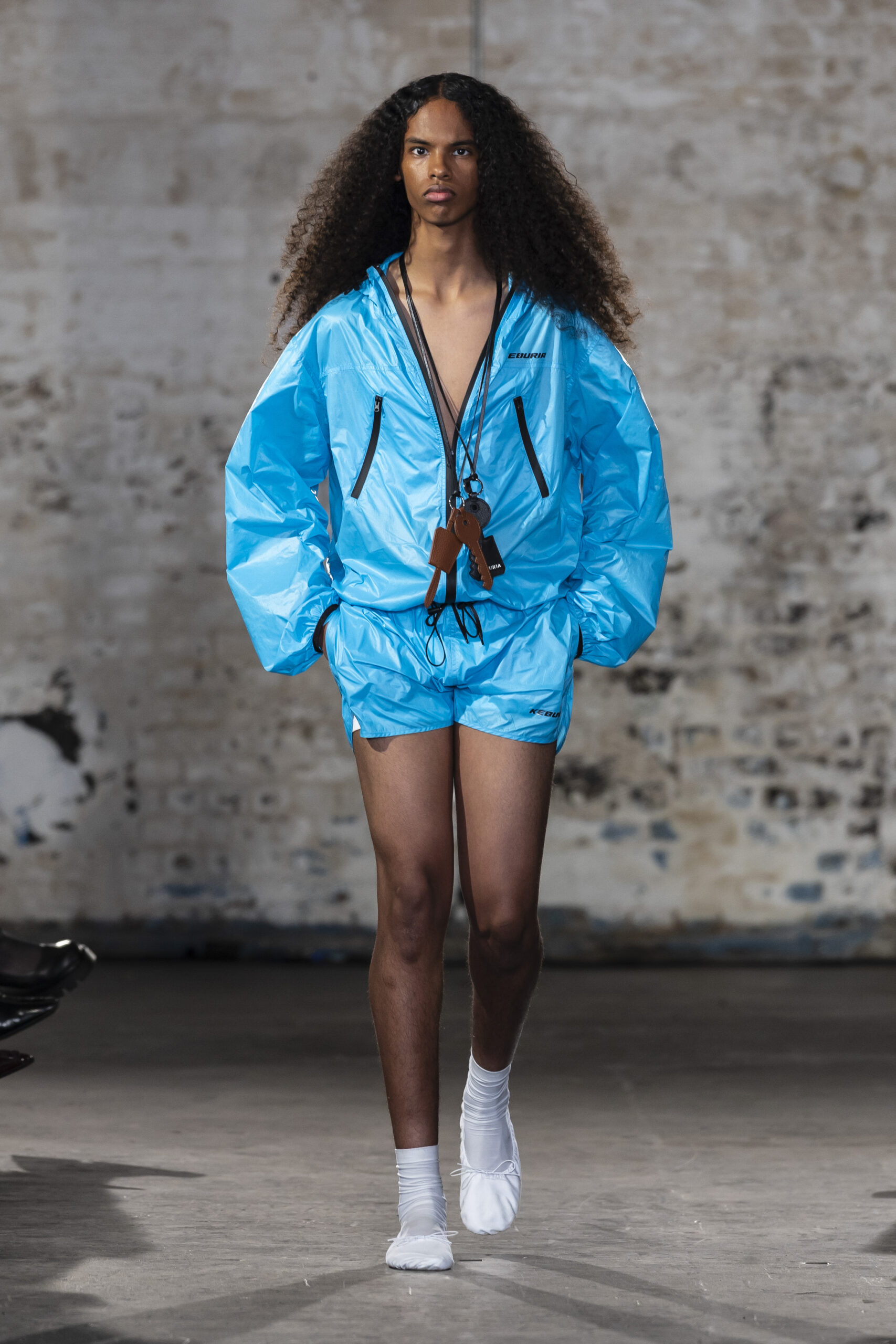
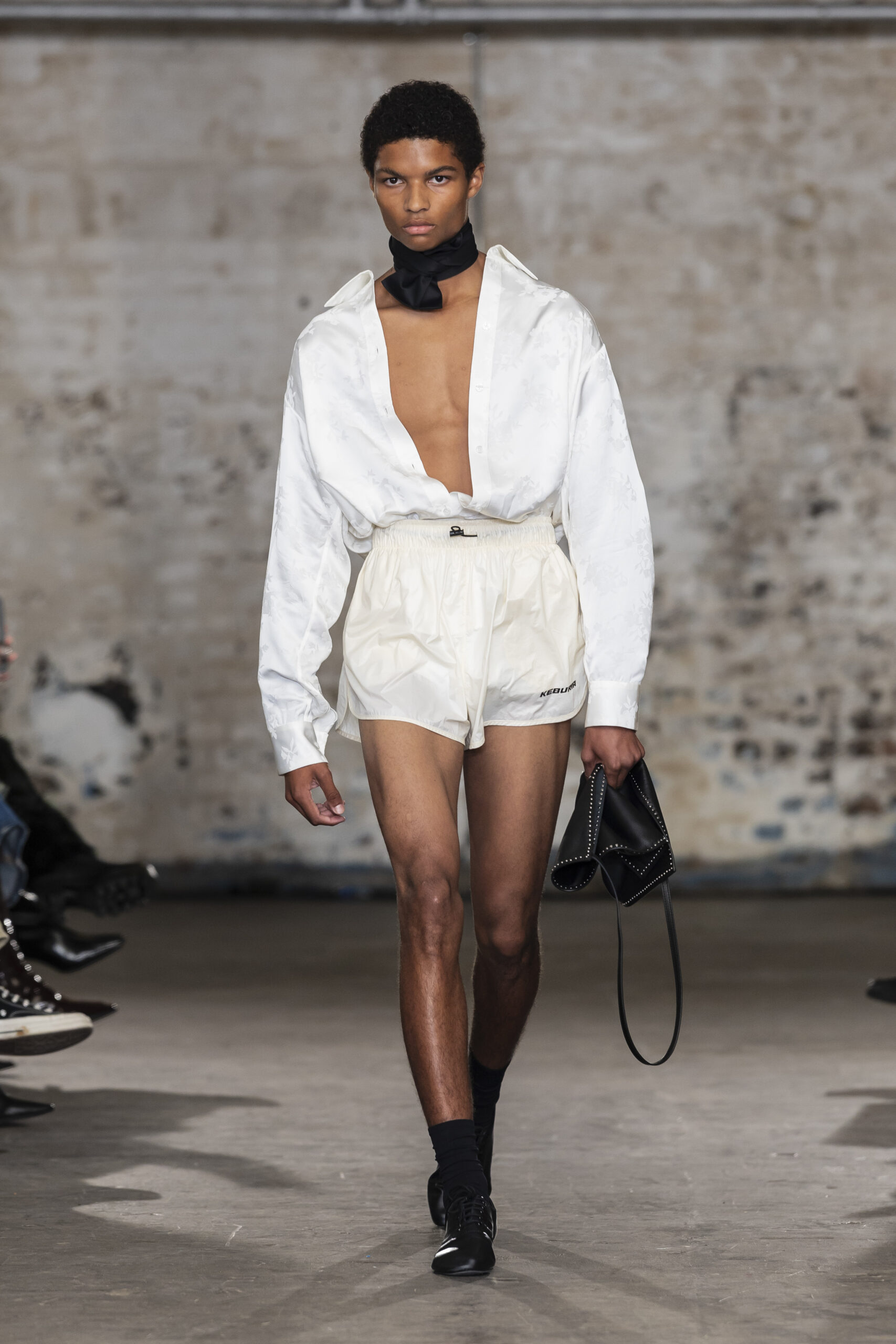
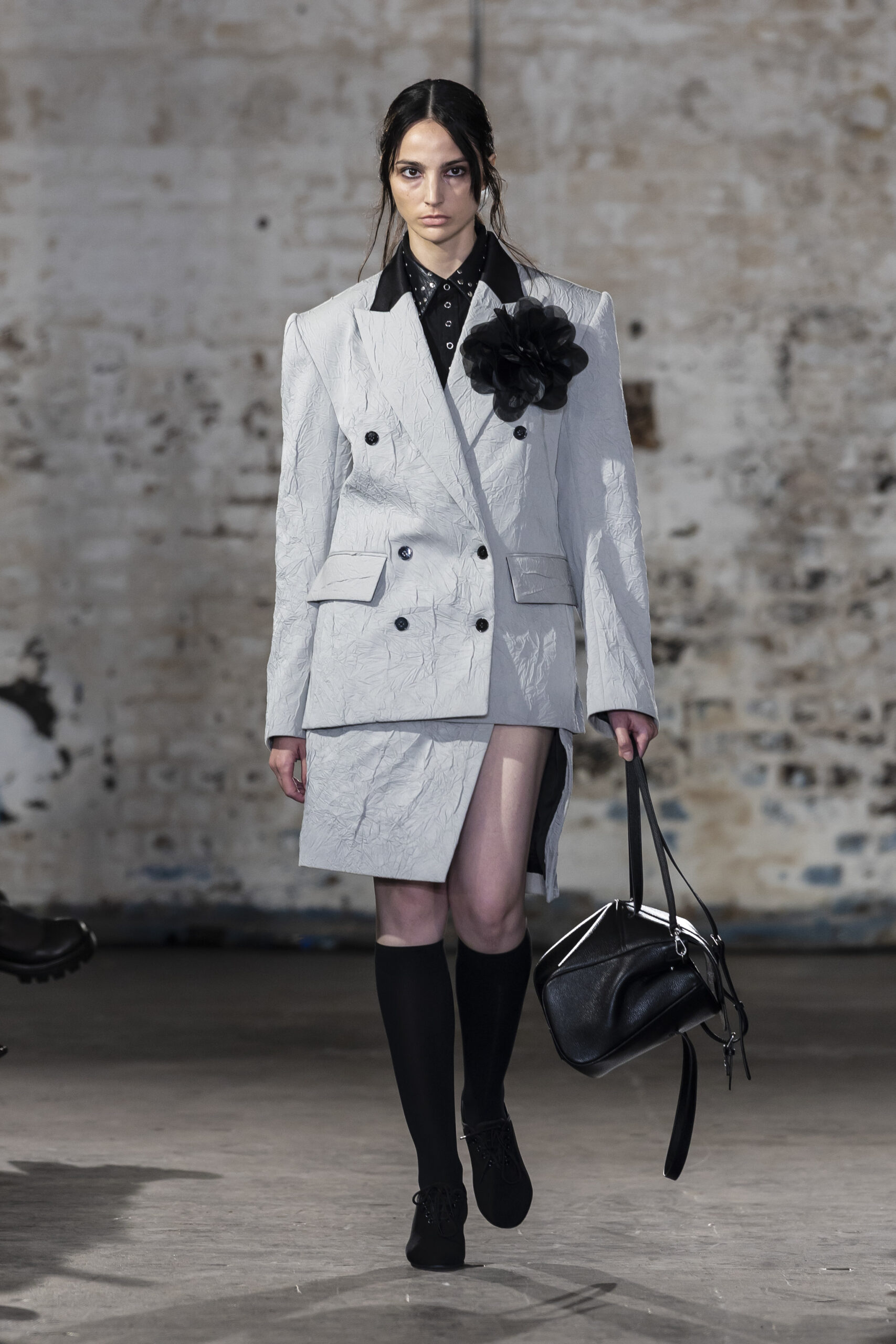
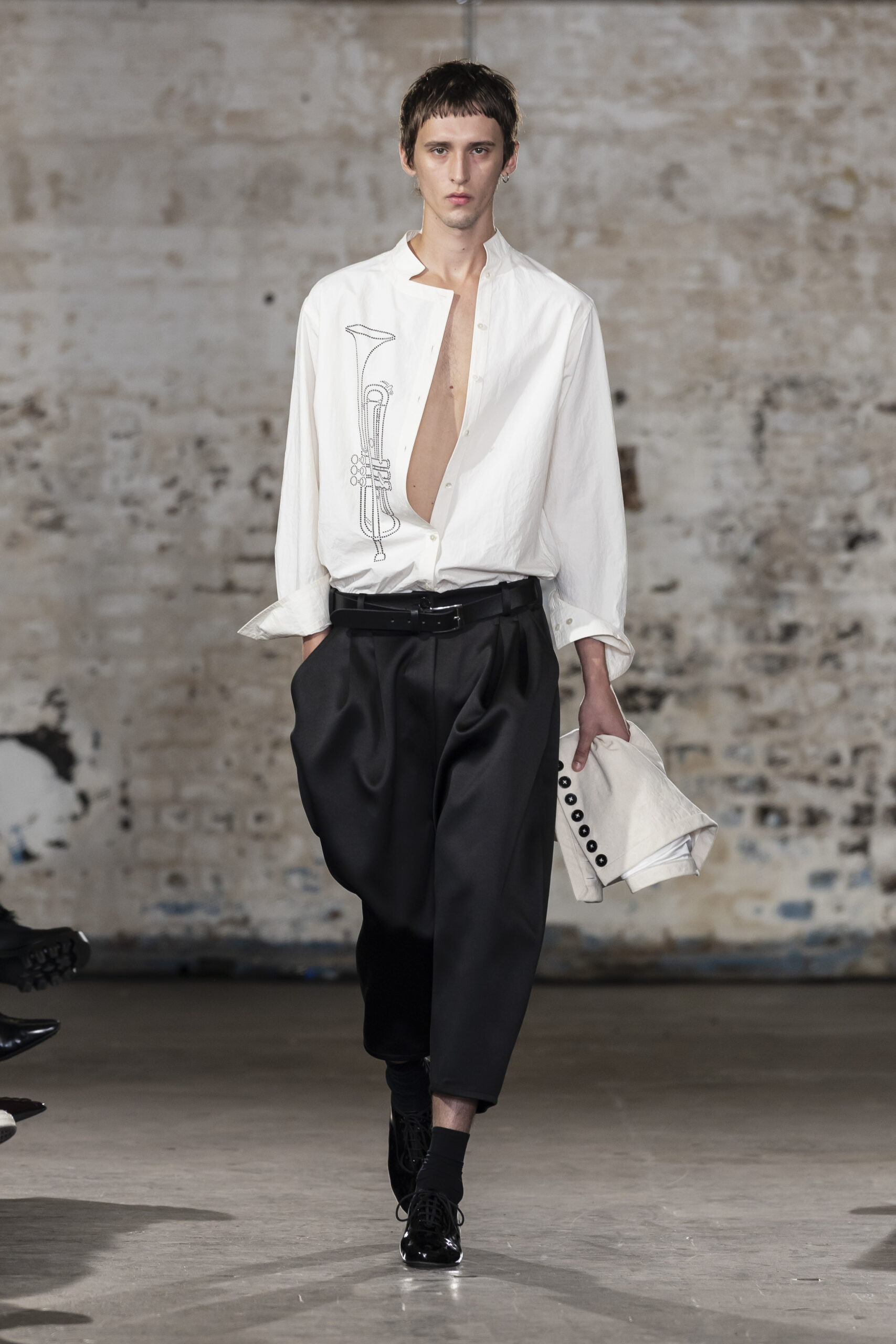
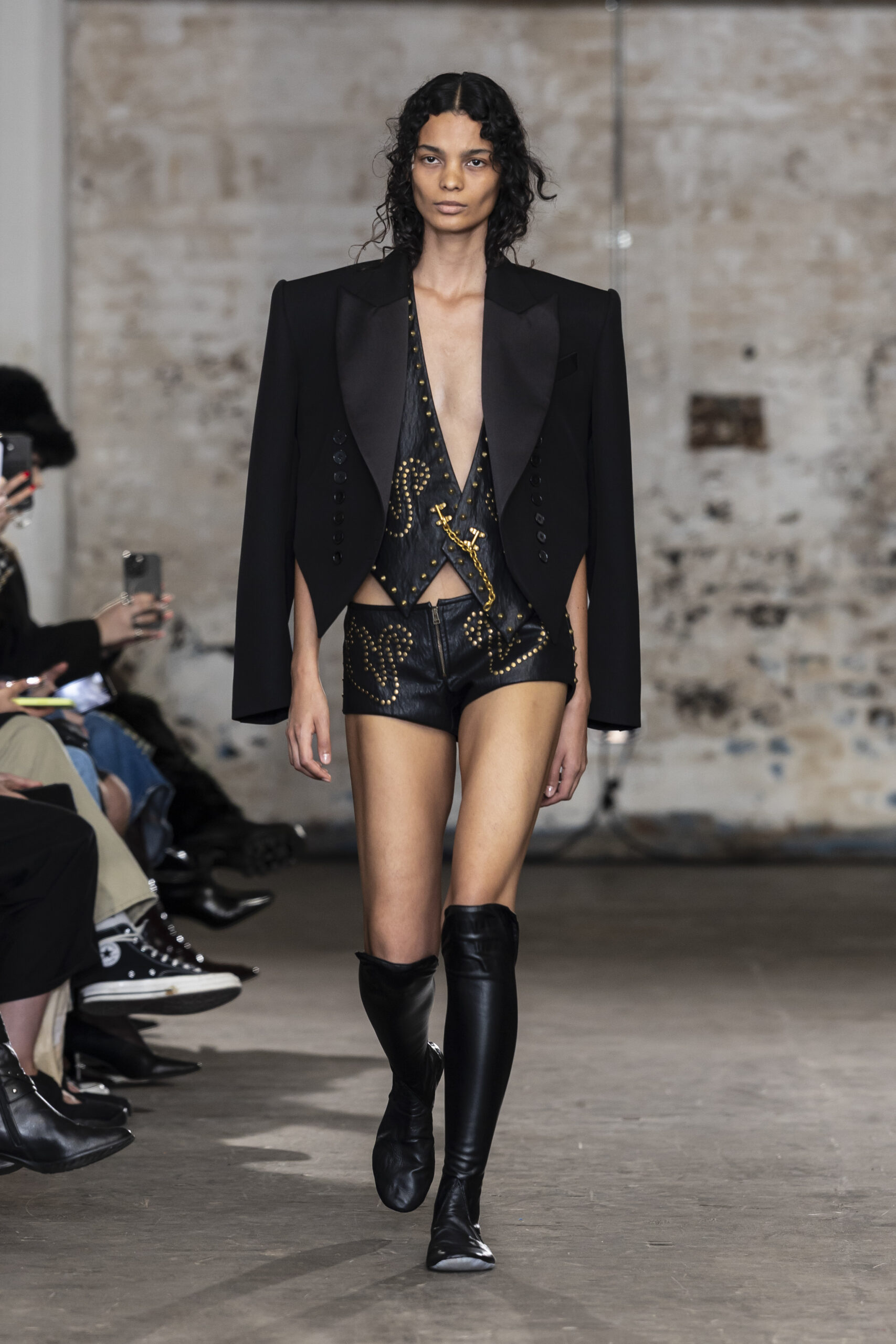
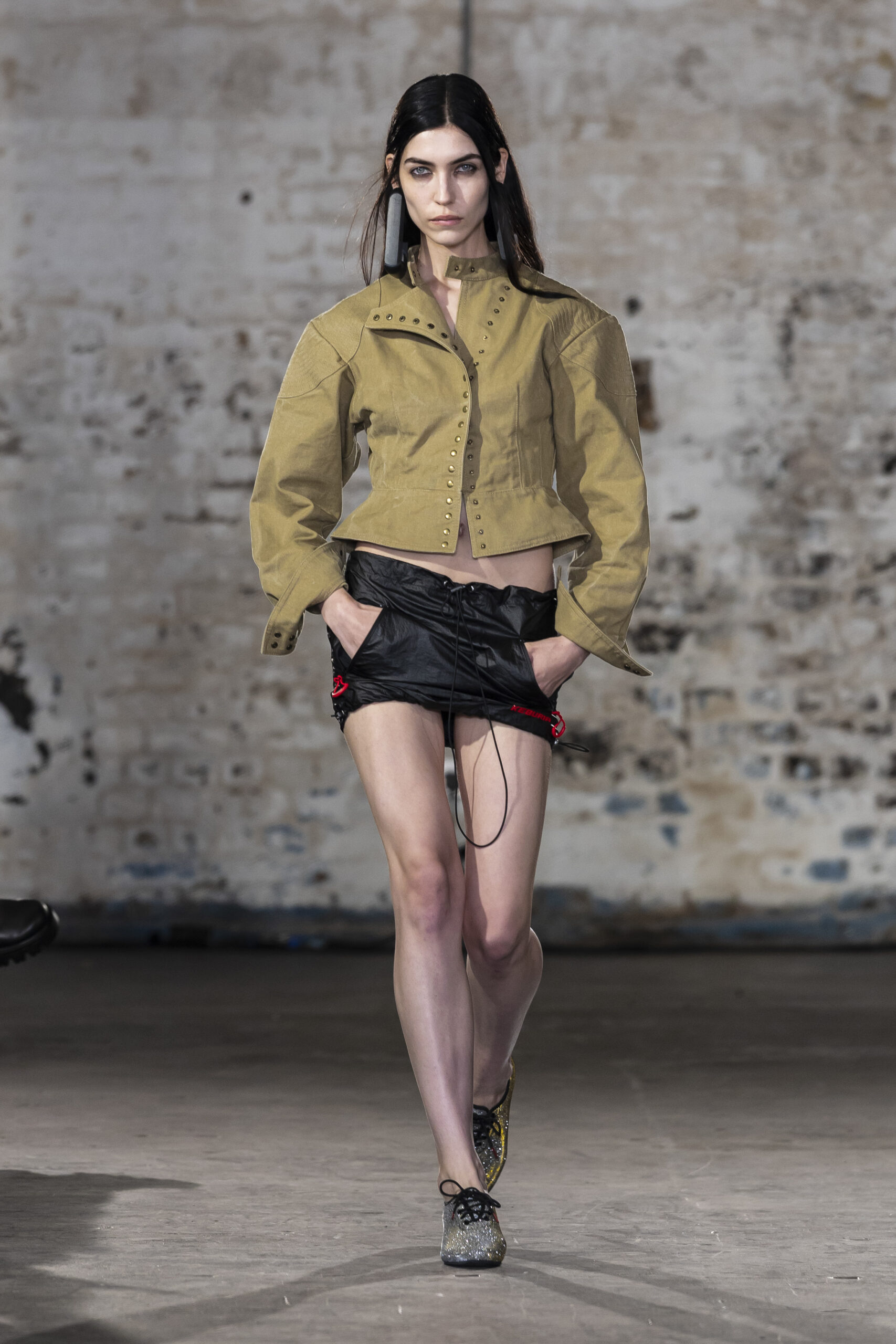
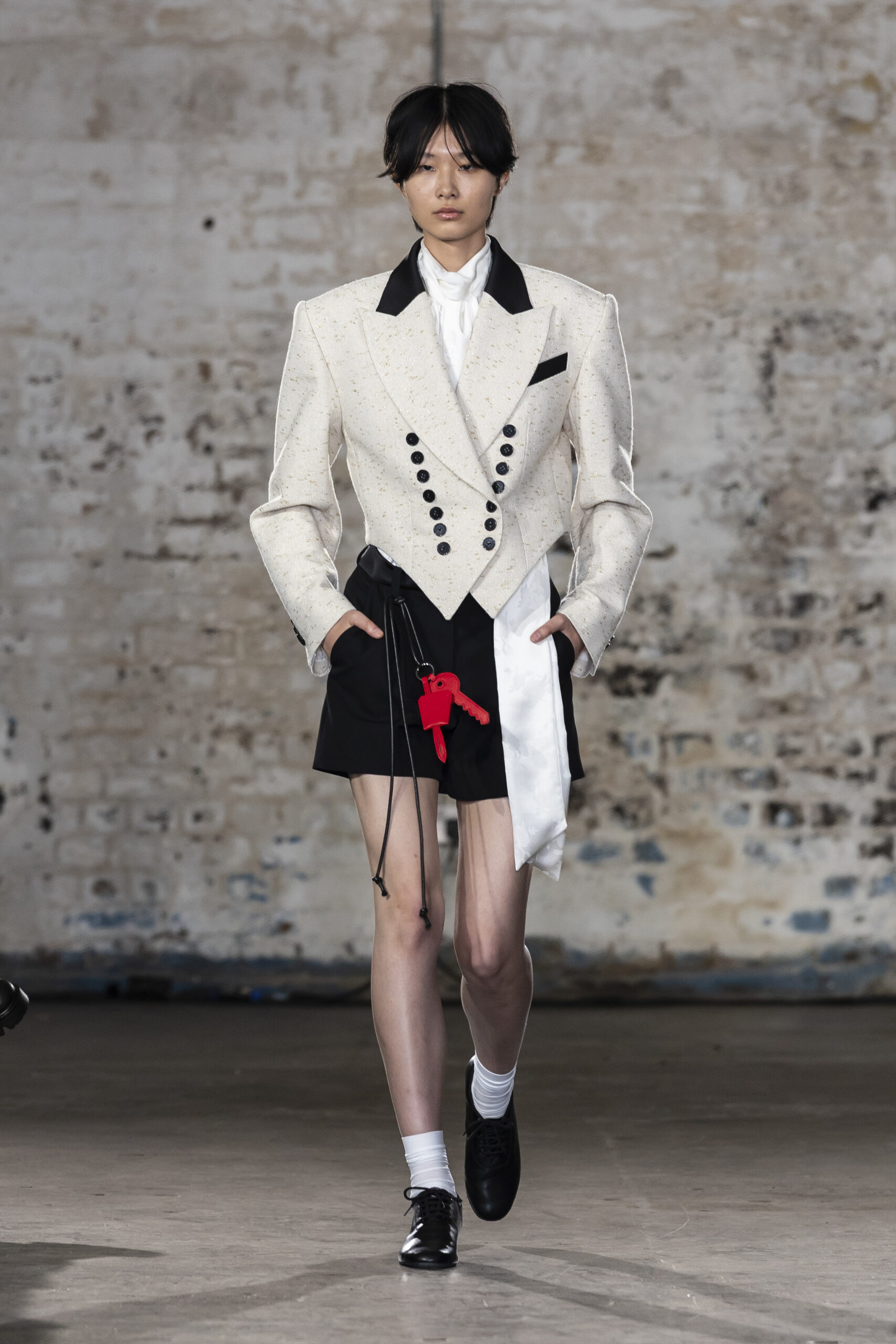
Keburia returned to London Fashion Week for SS27 with a collection that mixed sharp tailoring with equestrian and Western references. Shown in a warehouse space at Truman Brewery, models moved quickly down the catwalk to a loud techno soundtrack, wearing exaggerated shoulders, architectural collars, high-cut shorts and oversized pockets. British countryside imagery featured in custom-developed jacquard, while fitted vests and looser, dancewear-inspired pieces added contrast.
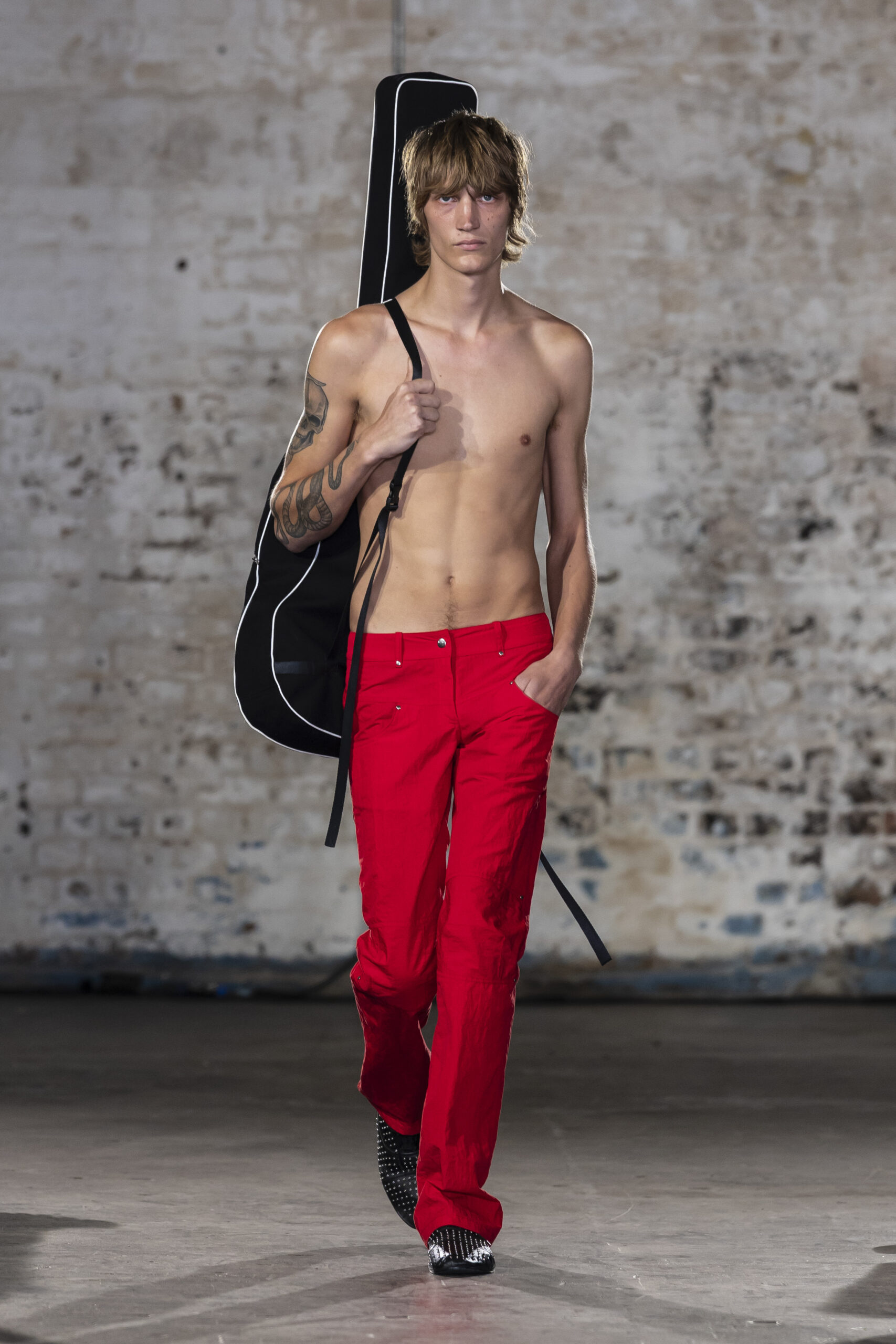
Camouflage, washed canvas and metallic tweed brought a more utilitarian feel to the collection, while oversized fringing appeared across clothing and accessories. Rhinestones formed saxophones and French horns, while a pig insignia appeared on belts, adding humour to the more polished details. Black, cream, khaki and tobacco formed the base of the collection, broken up by flashes of red, turquoise and metallic.
The styling added another layer to the show, with some models wearing glittery eyeshadow while others had a more pared-back beauty look. Footwear ranged from black pumps and white heels to leather boots, with calf-length socks and white sock-like footwear also appearing across the collection. Jewellery was similarly varied, from bare looks to oversized hoops.
The show also marked Keburia’s first time presenting menswear on the runway. Oversized silhouettes were set against more revealing pieces, while utility-inspired clothing was covered in embellishment, bringing together the collection’s structured tailoring with its playful details and sense of movement.
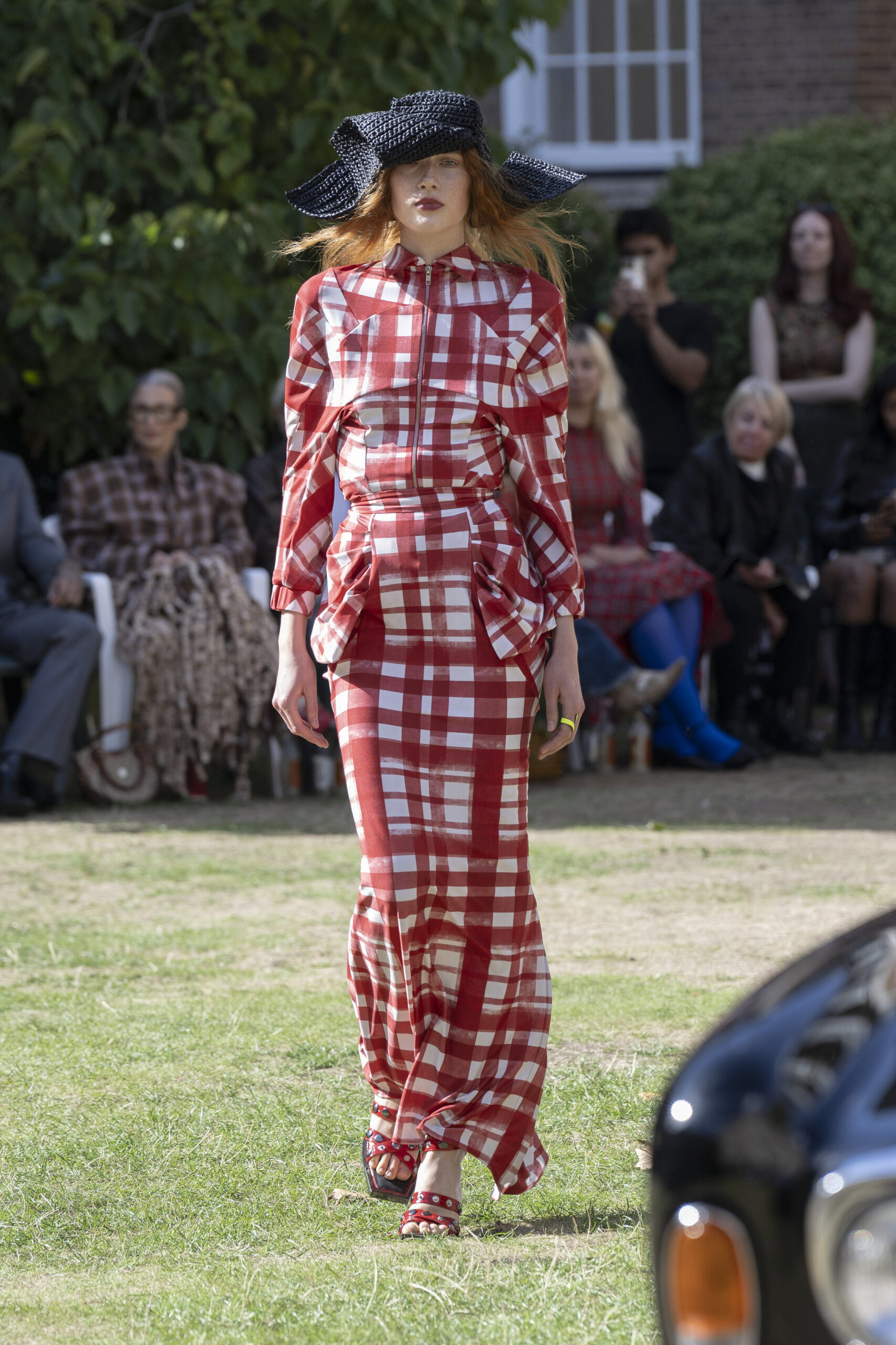
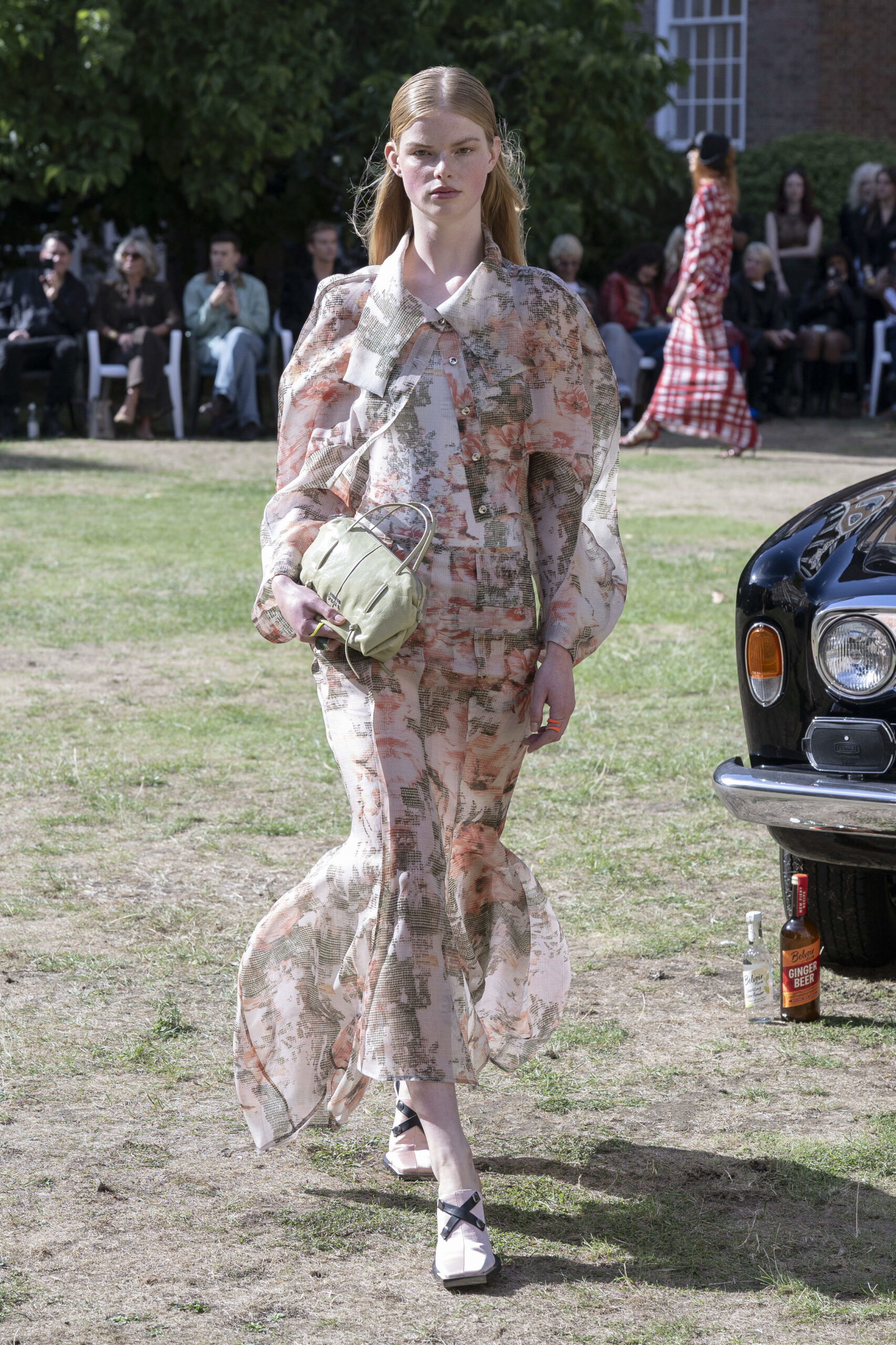
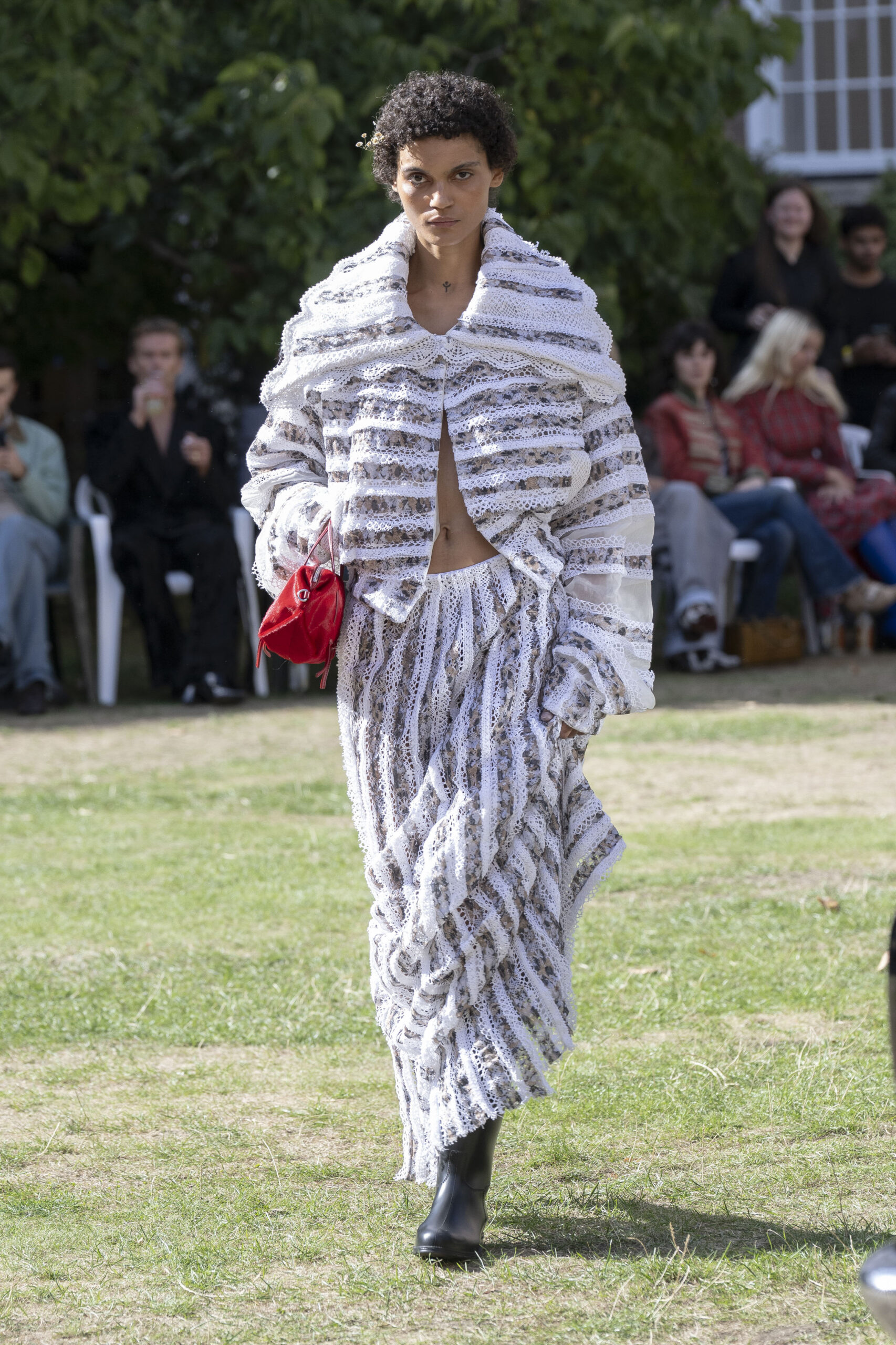
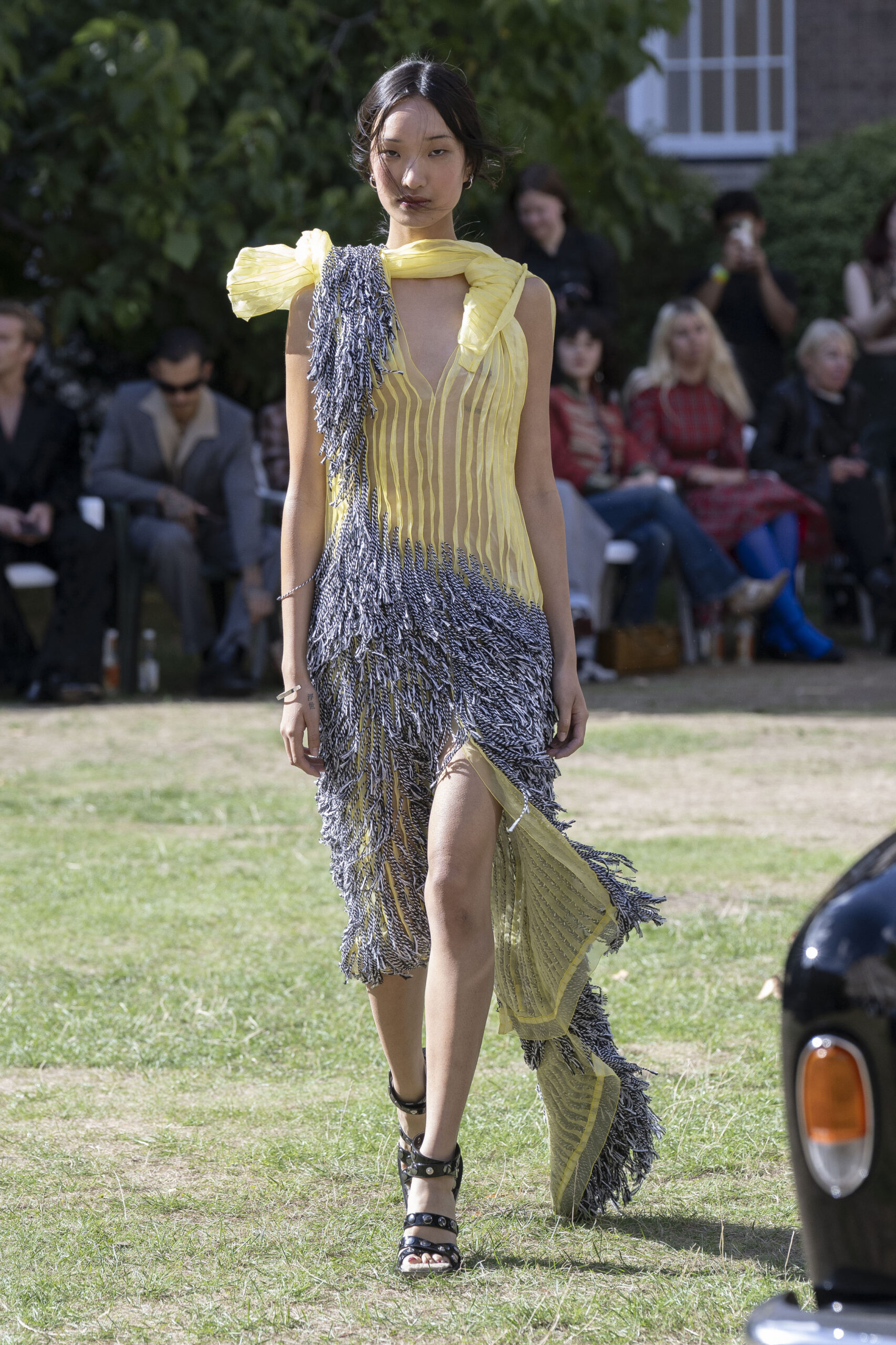
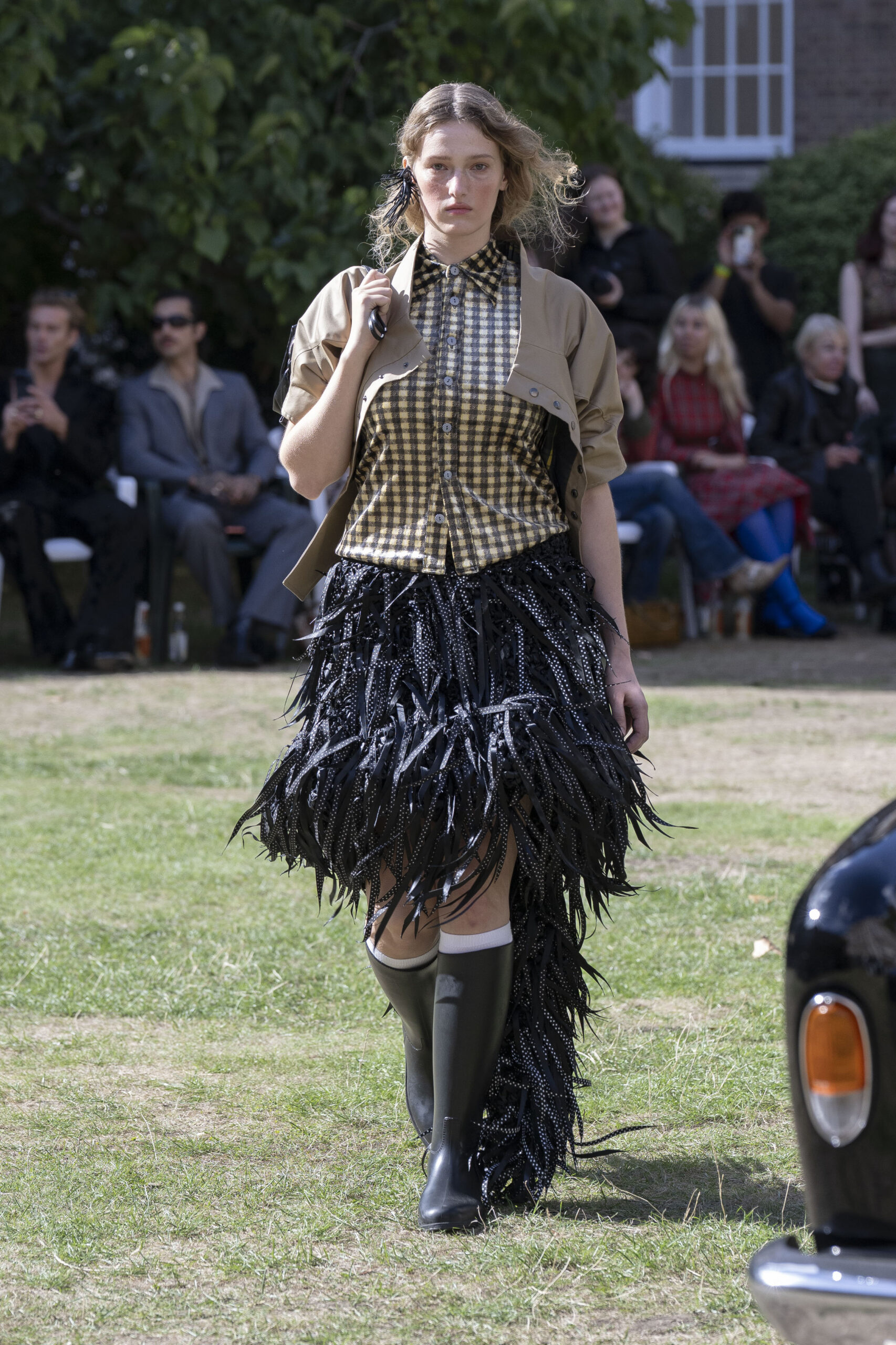
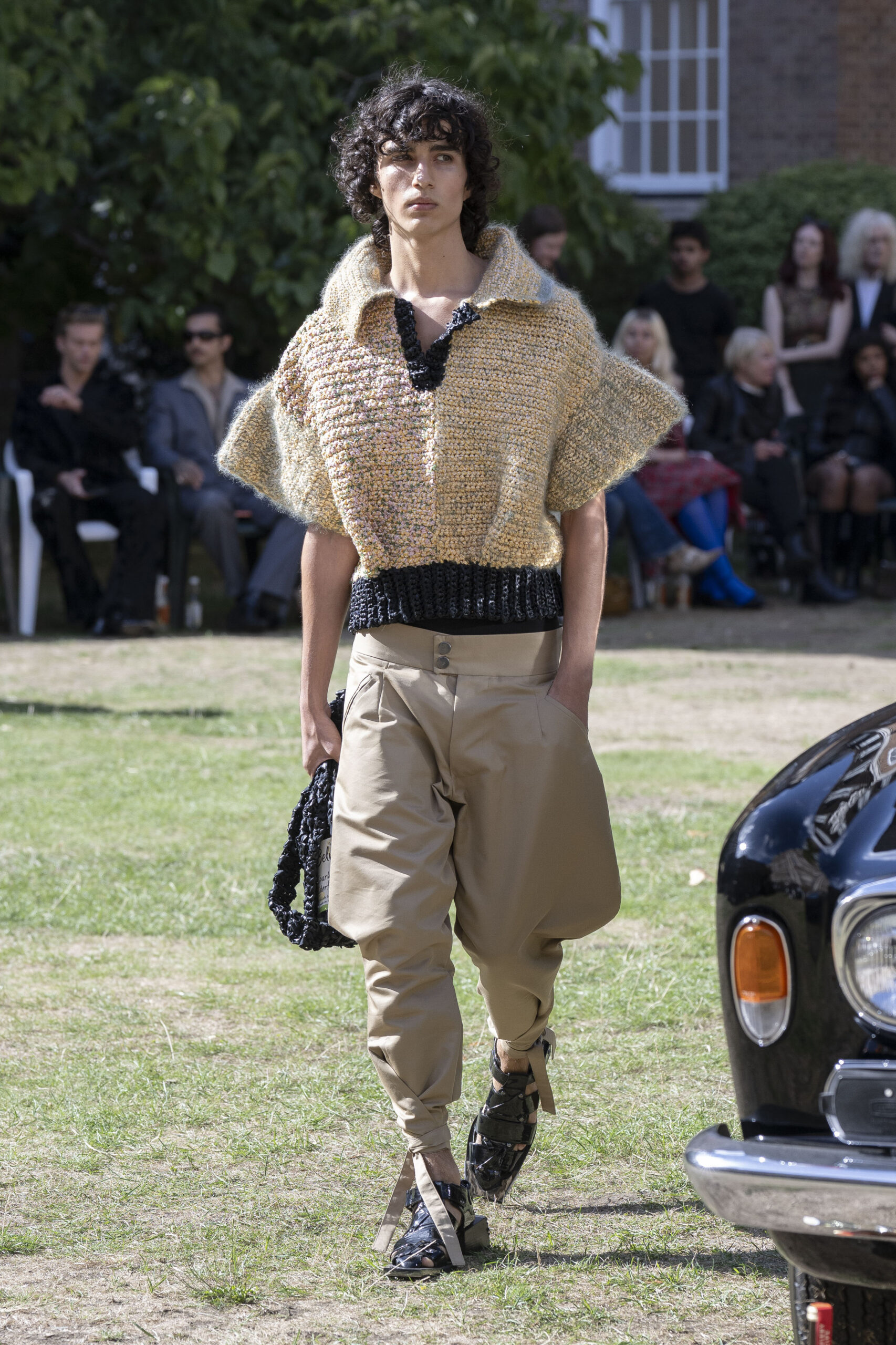
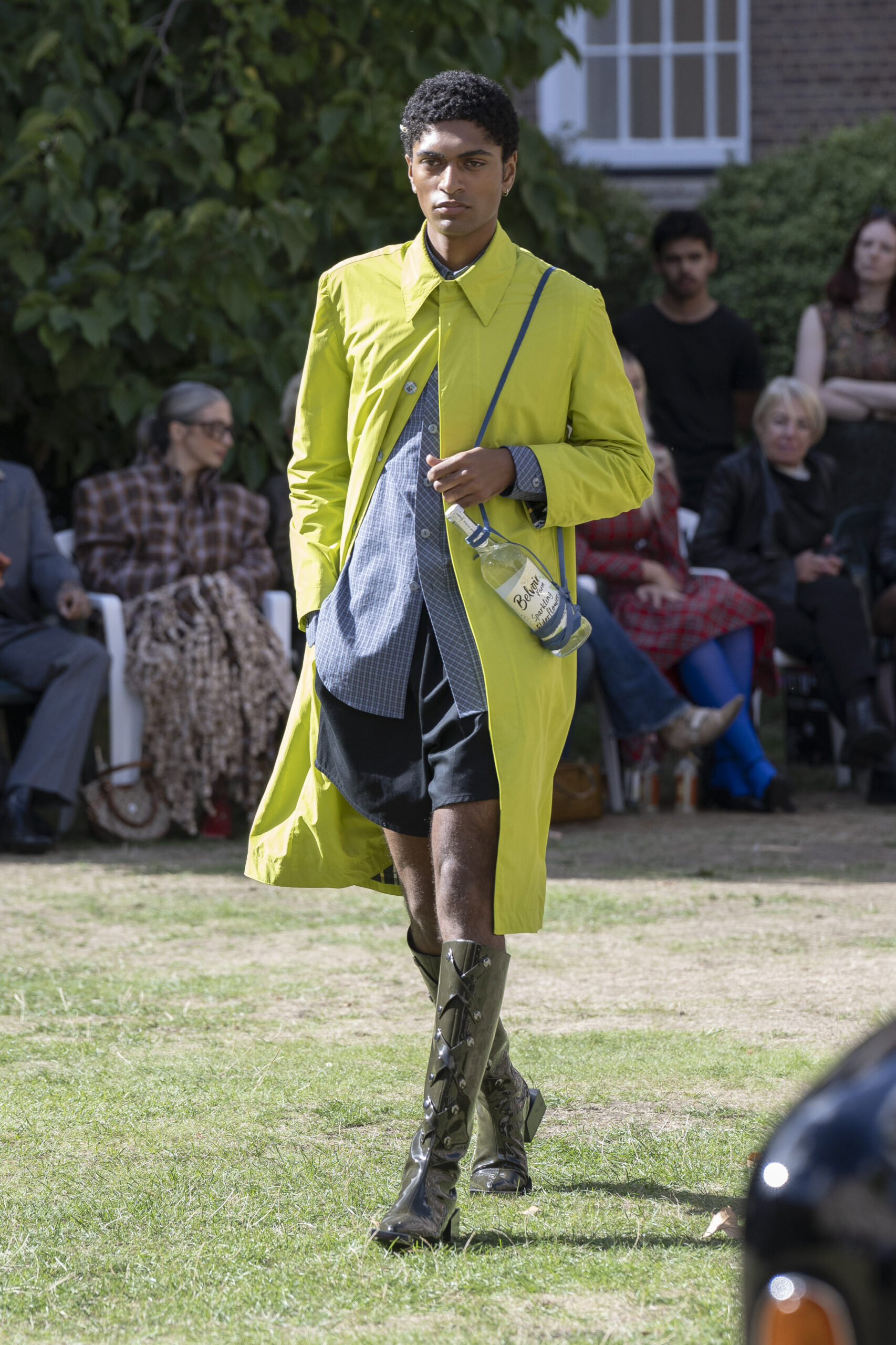
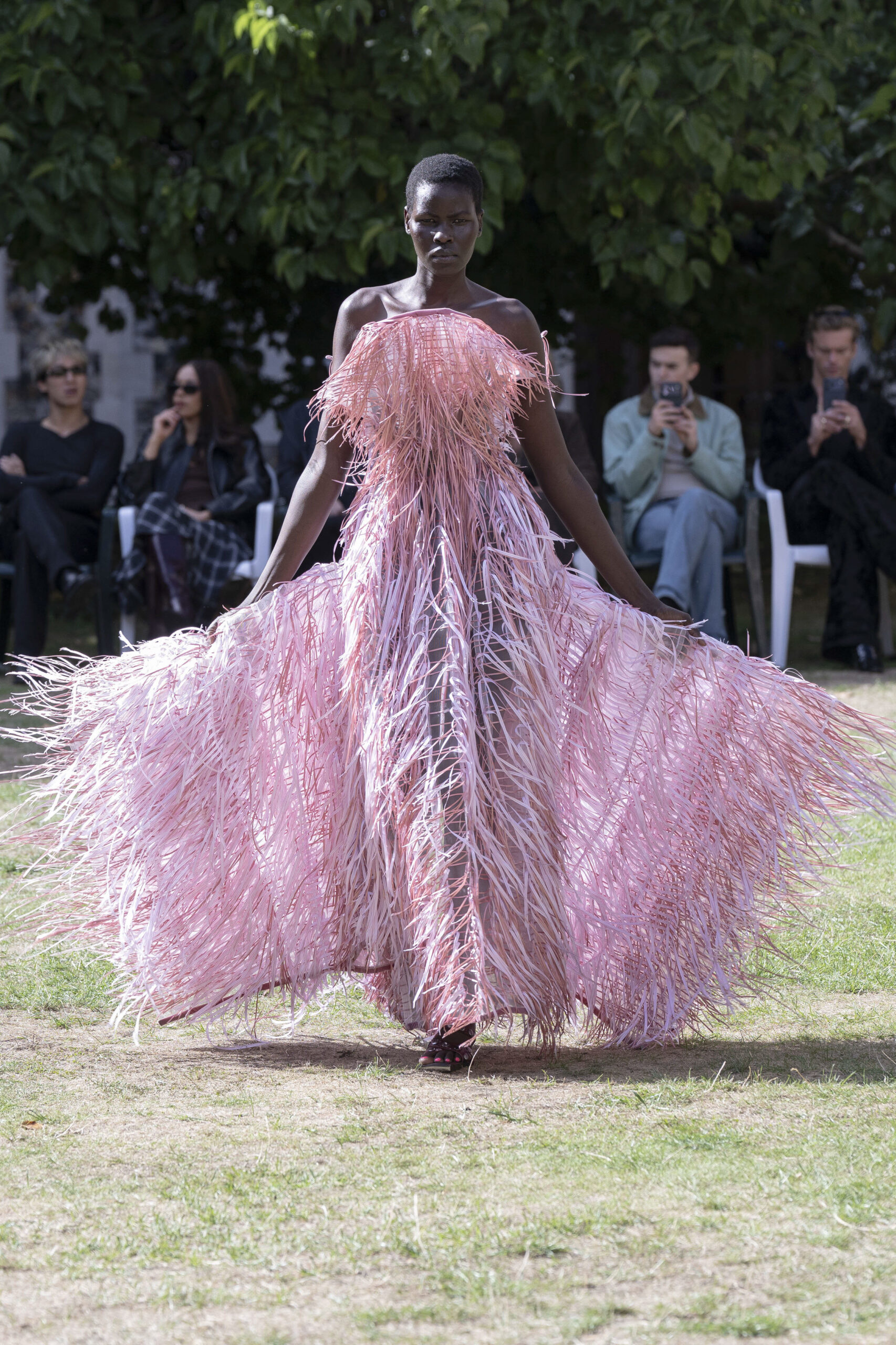
A village green rivalry comes to life in Maximilian Raynor’s SS27 collection
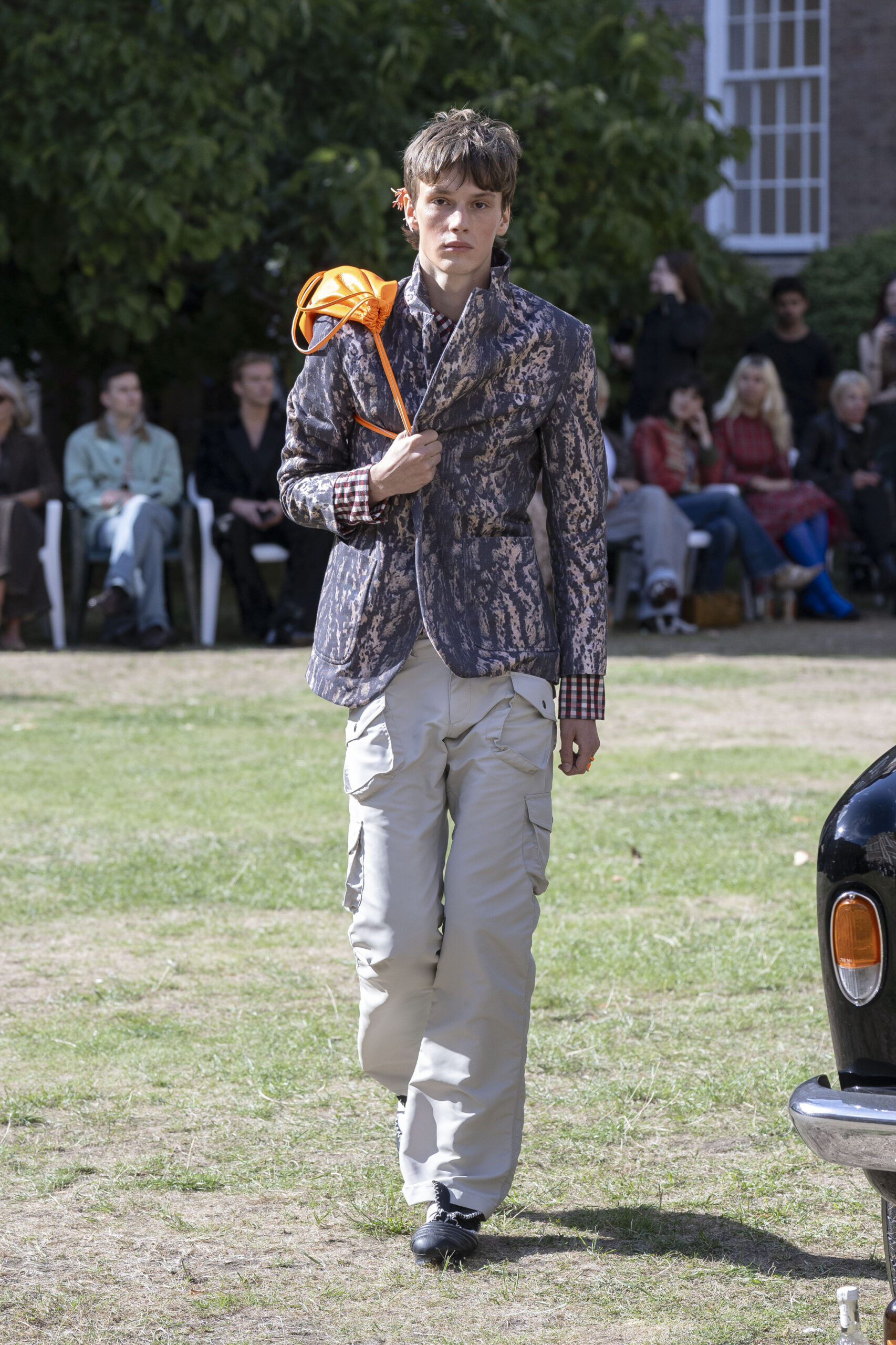
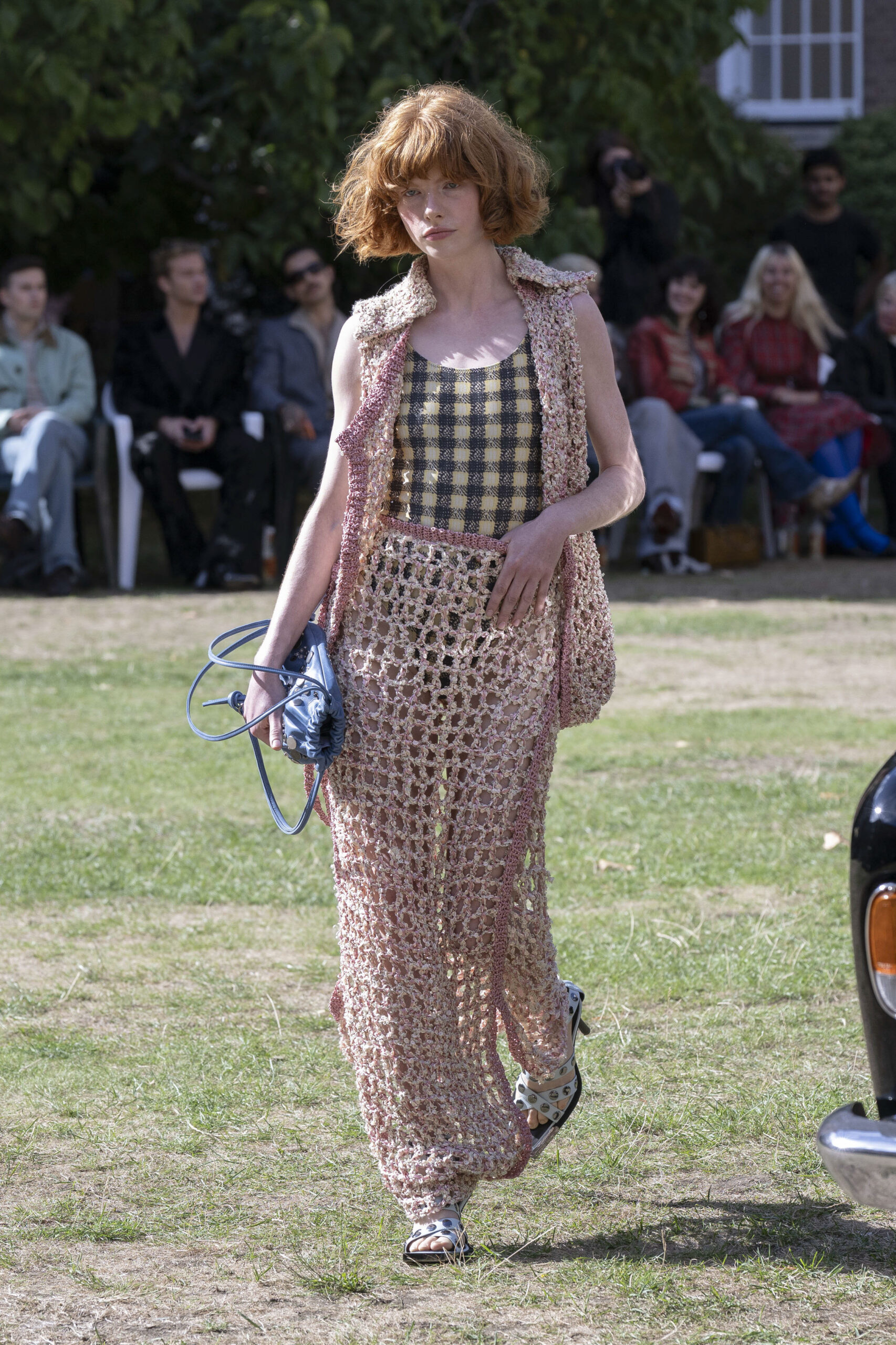
It certainly felt like a jolly summer’s day at Maximilian Raynor’s SS27 show, where guests were welcomed into a garden courtyard to the lively sounds of a brass band, immediately setting the tone for an afternoon of British eccentricity.
Raynor presented his latest collection, The Gingers vs. The Elders, uniting Belvoir Farm and Bentley Motors in a fictional universe best described as Romeo and Juliet meets an eccentric English sporting feud. On one side stand The Gingers – fiery, unruly and fuelled by Belvoir Farm Ginger Beer. Opposing them are The Elders – elegant, silver-haired and armed with Belvoir Farm Sparkling Elderflower. Their battlefield is the classic village green, setting the stage for the definitive grudge match of the season.
Not only was the drinks brand incorporated into the setting, but the outfits were also accessorised with bespoke bottle bags. Other key themes included checked patterns – commonly presented in a red colourway of varying hues. Pink also played a central role alongside knitted garments and fringing, the latter of which closed the show with a striking pink dress.
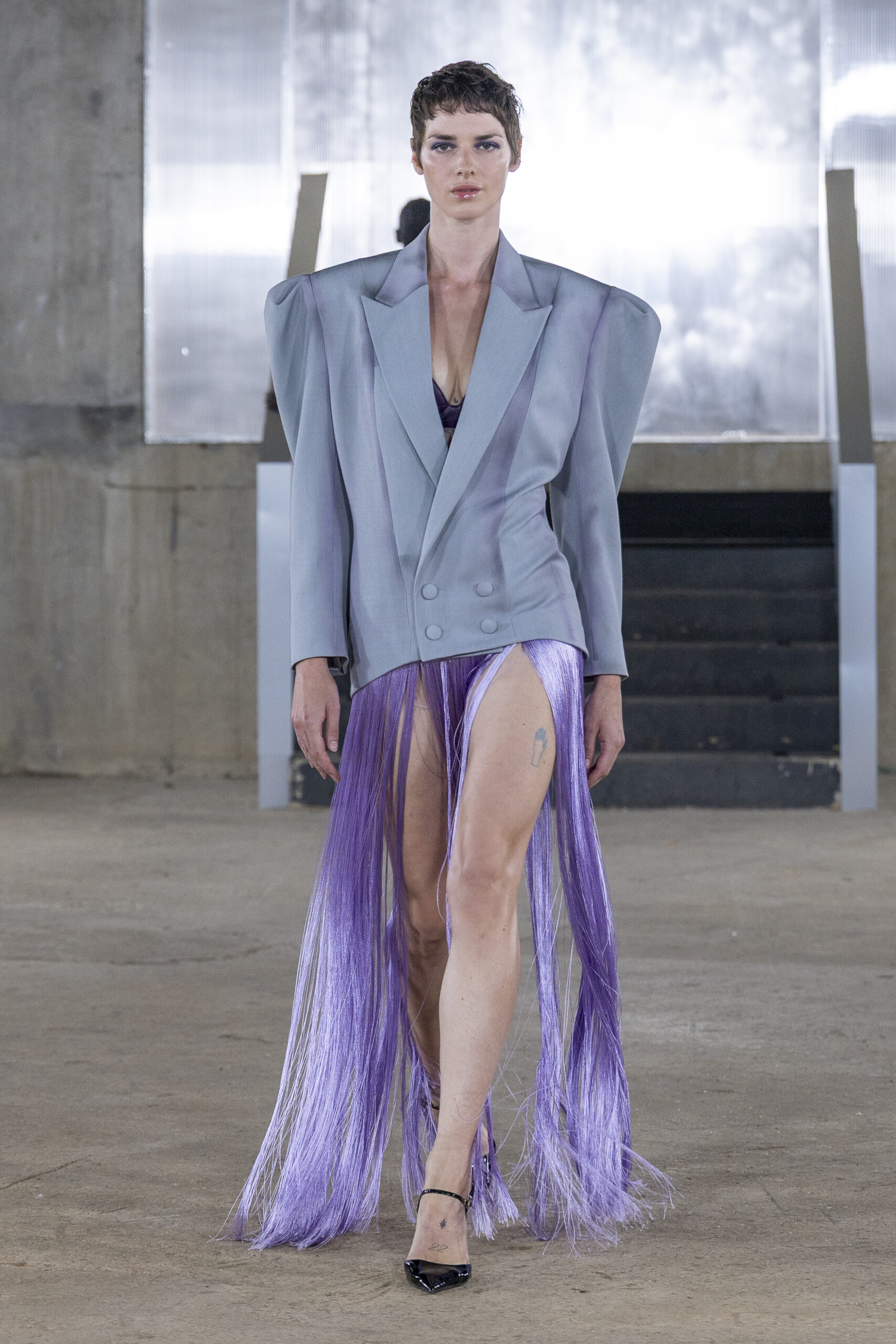
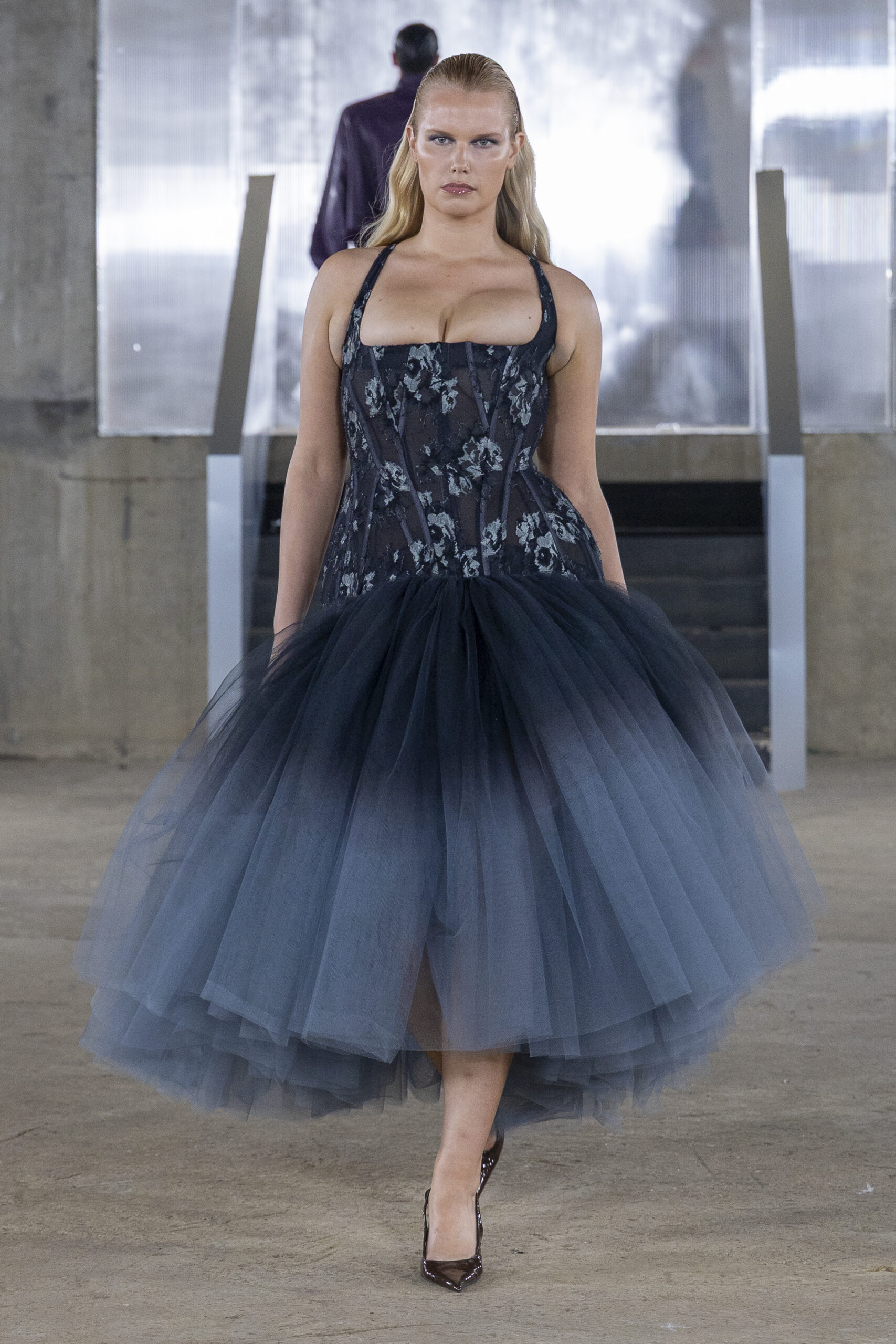
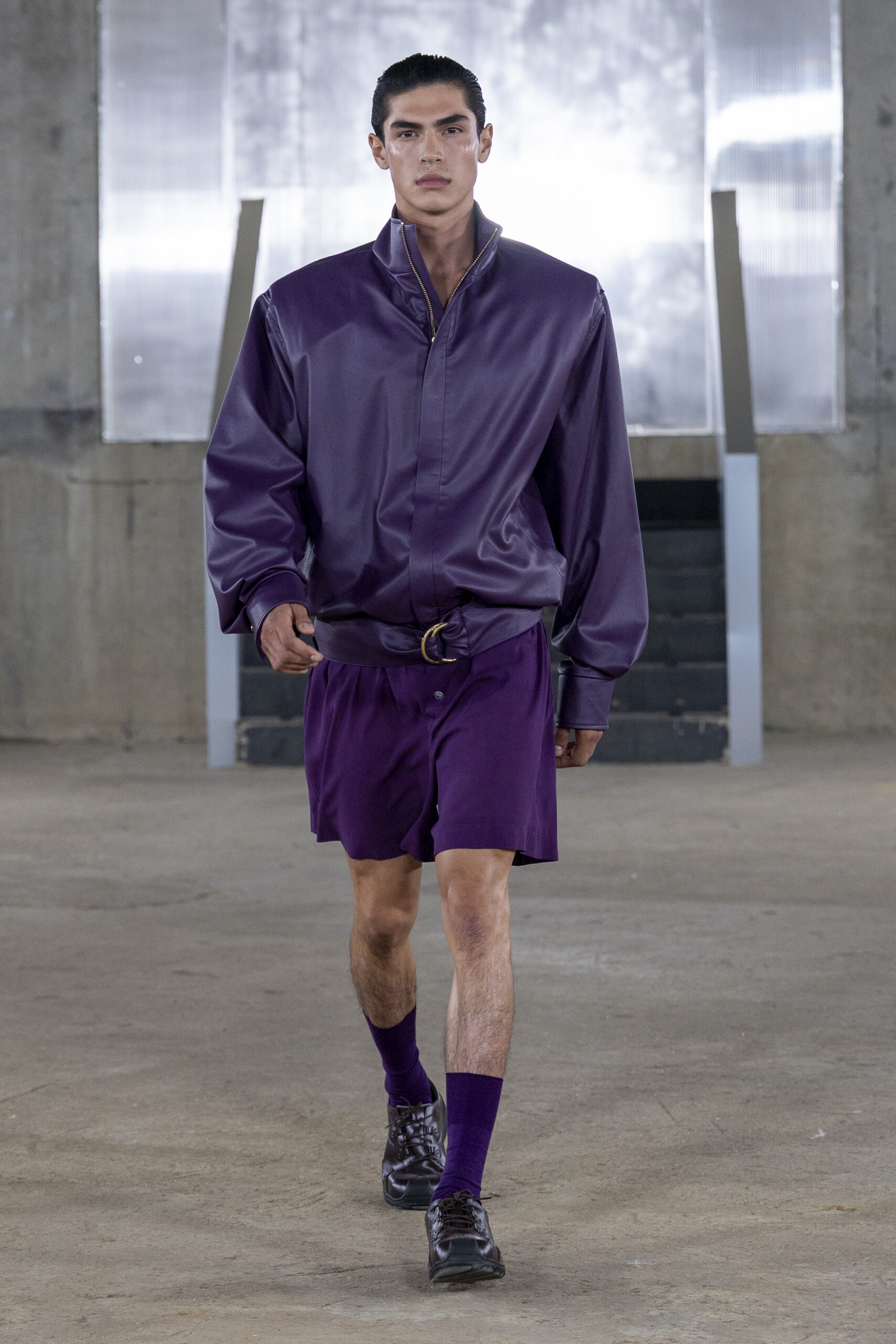
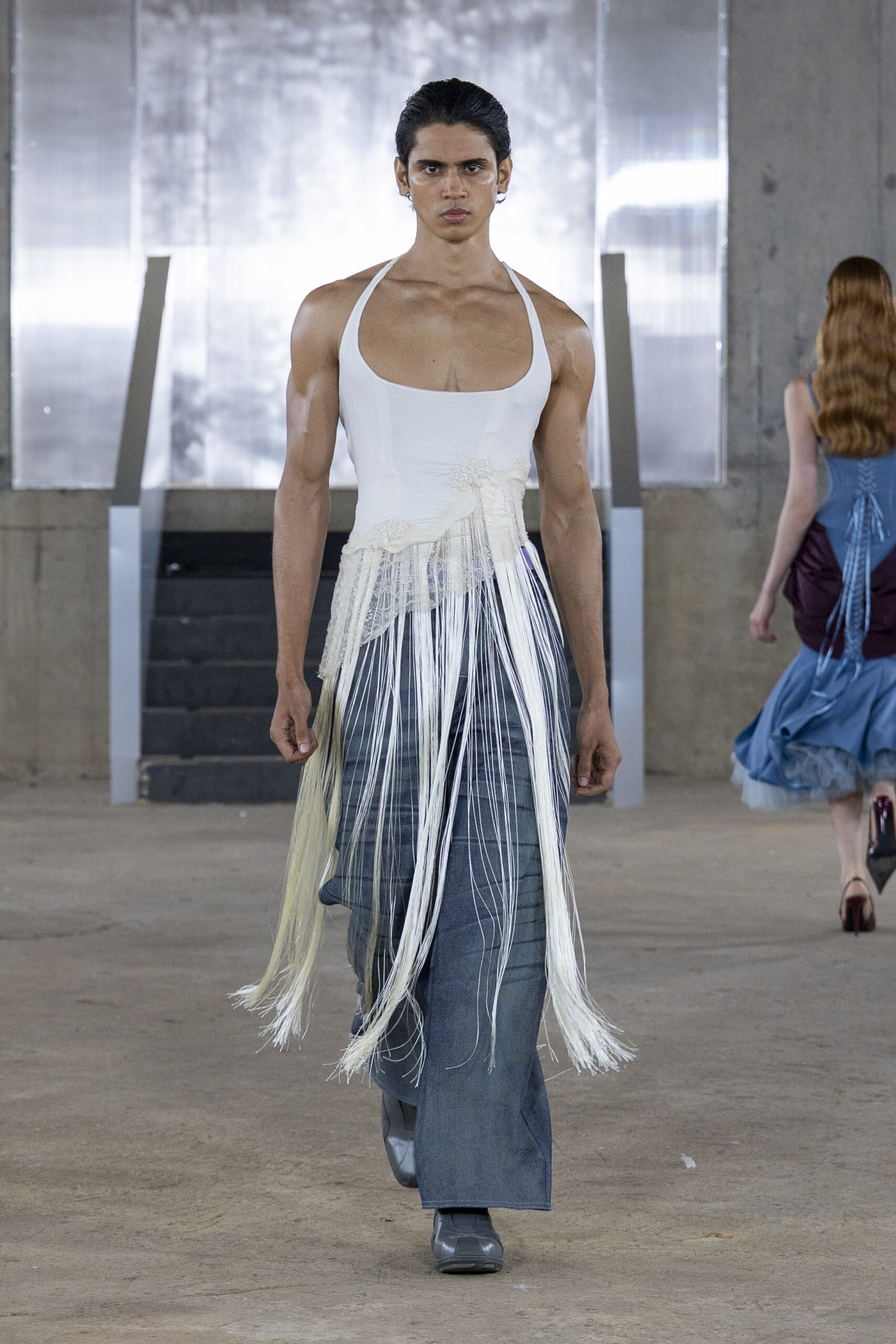
Agro Studio’s ‘Glass Body’ explores the tension between lightness and structure
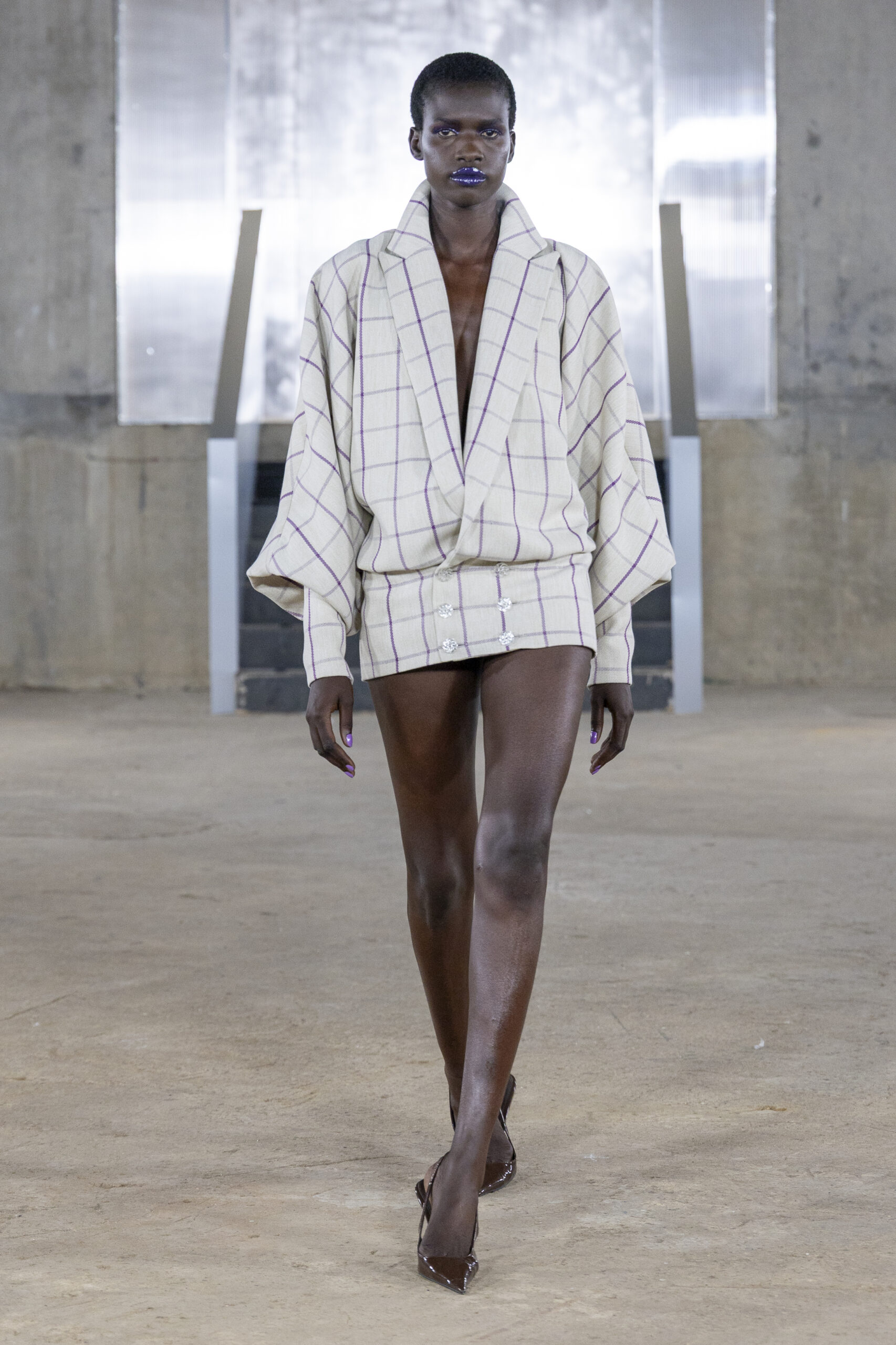
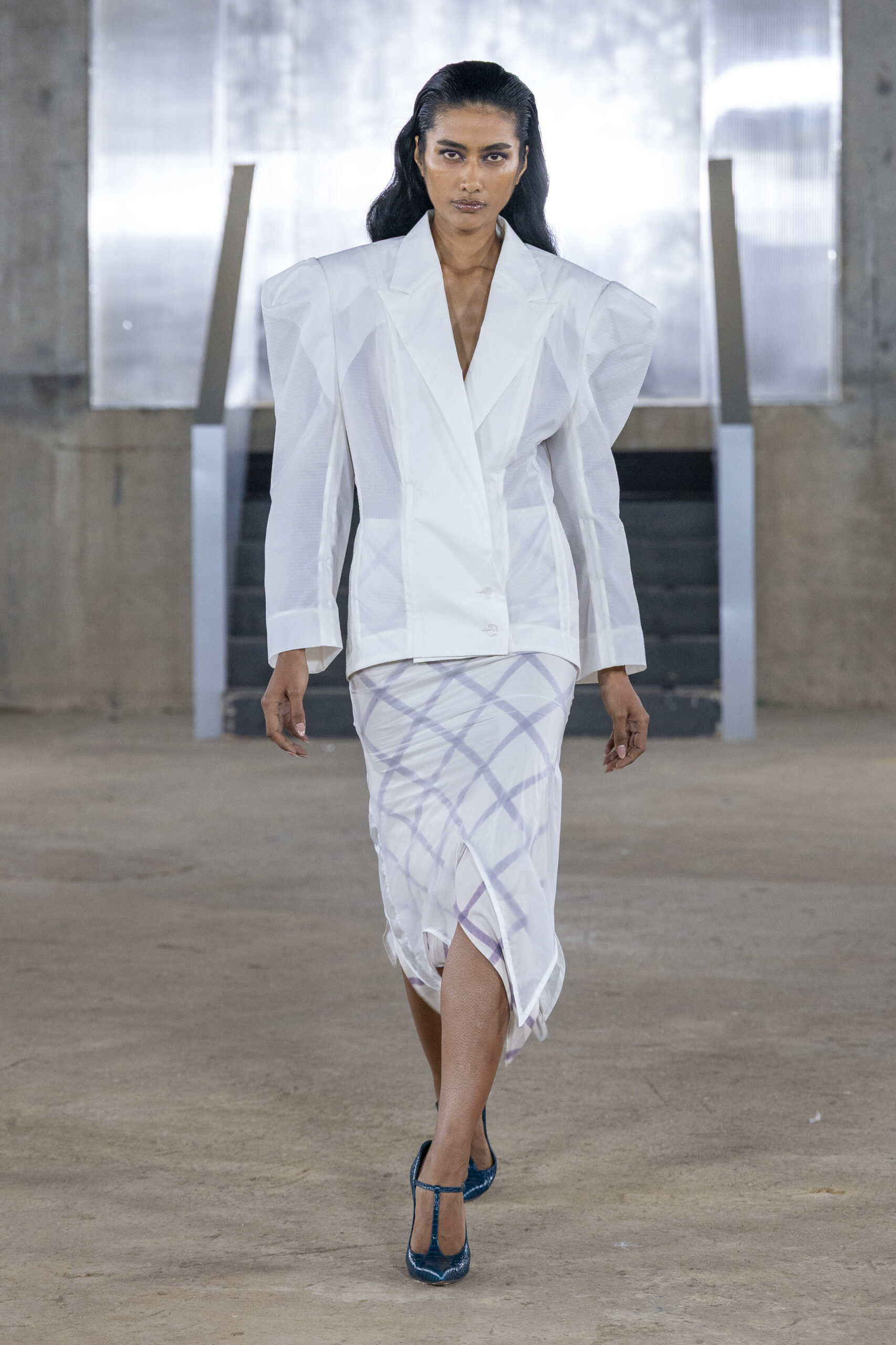
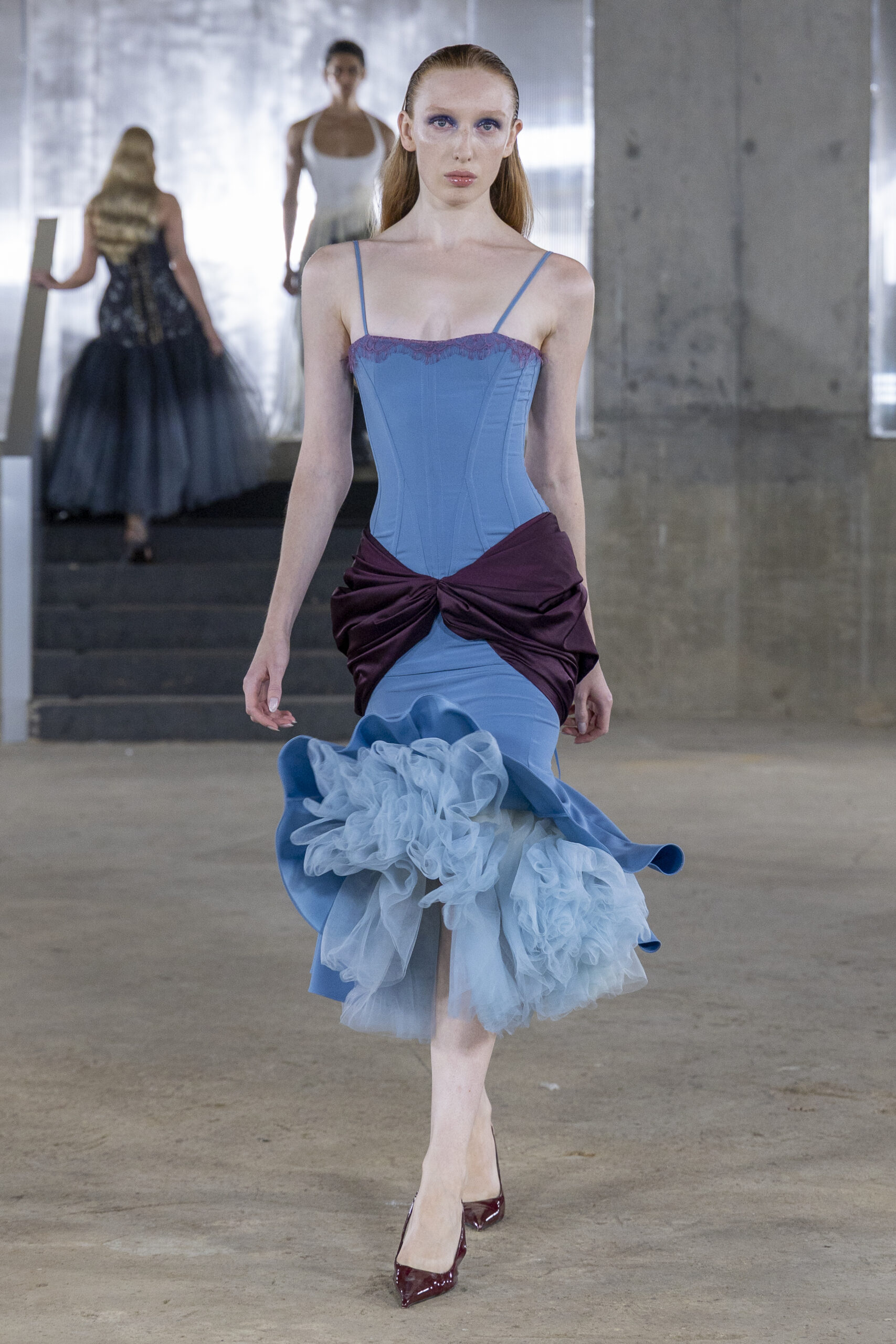
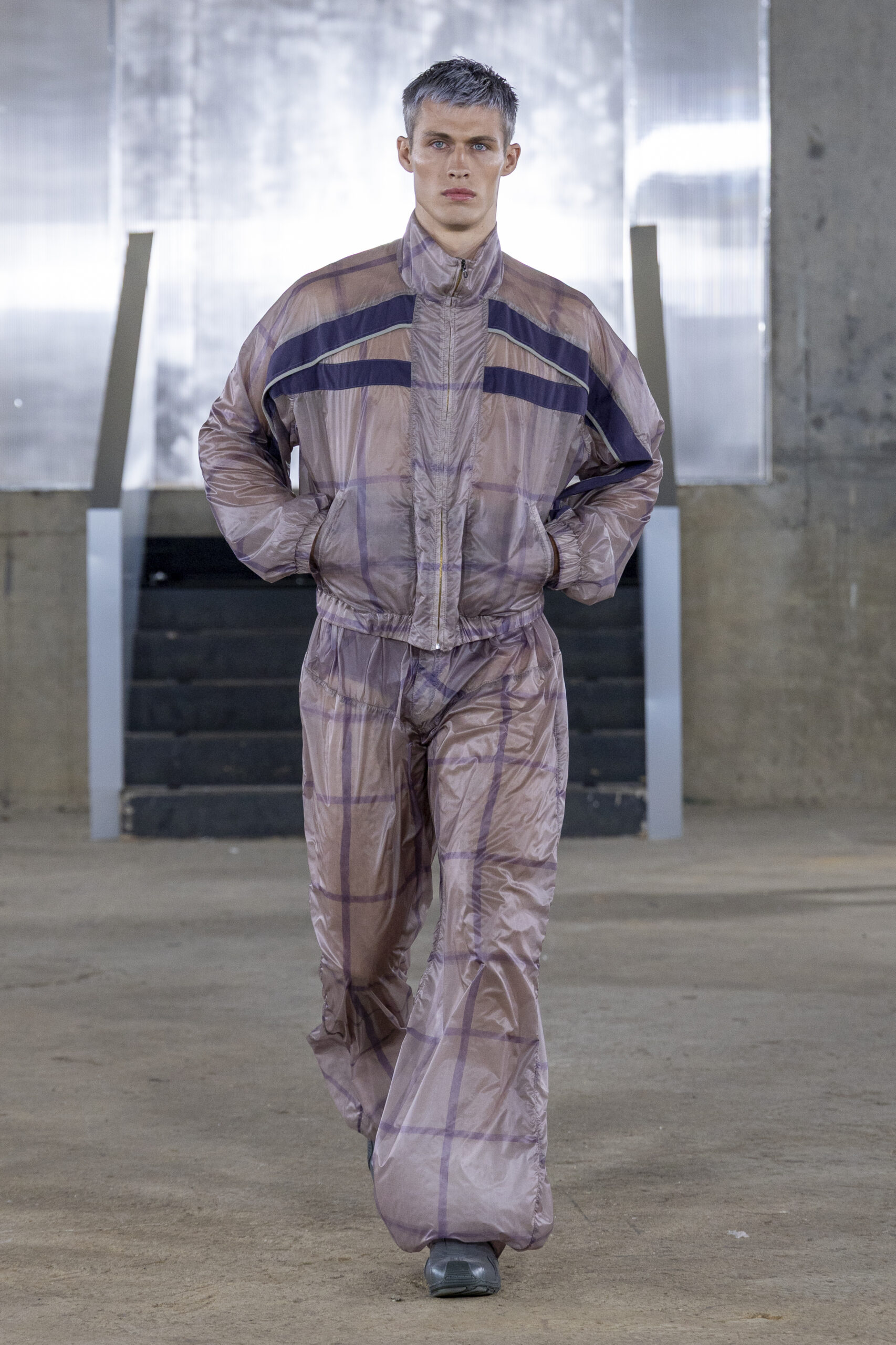
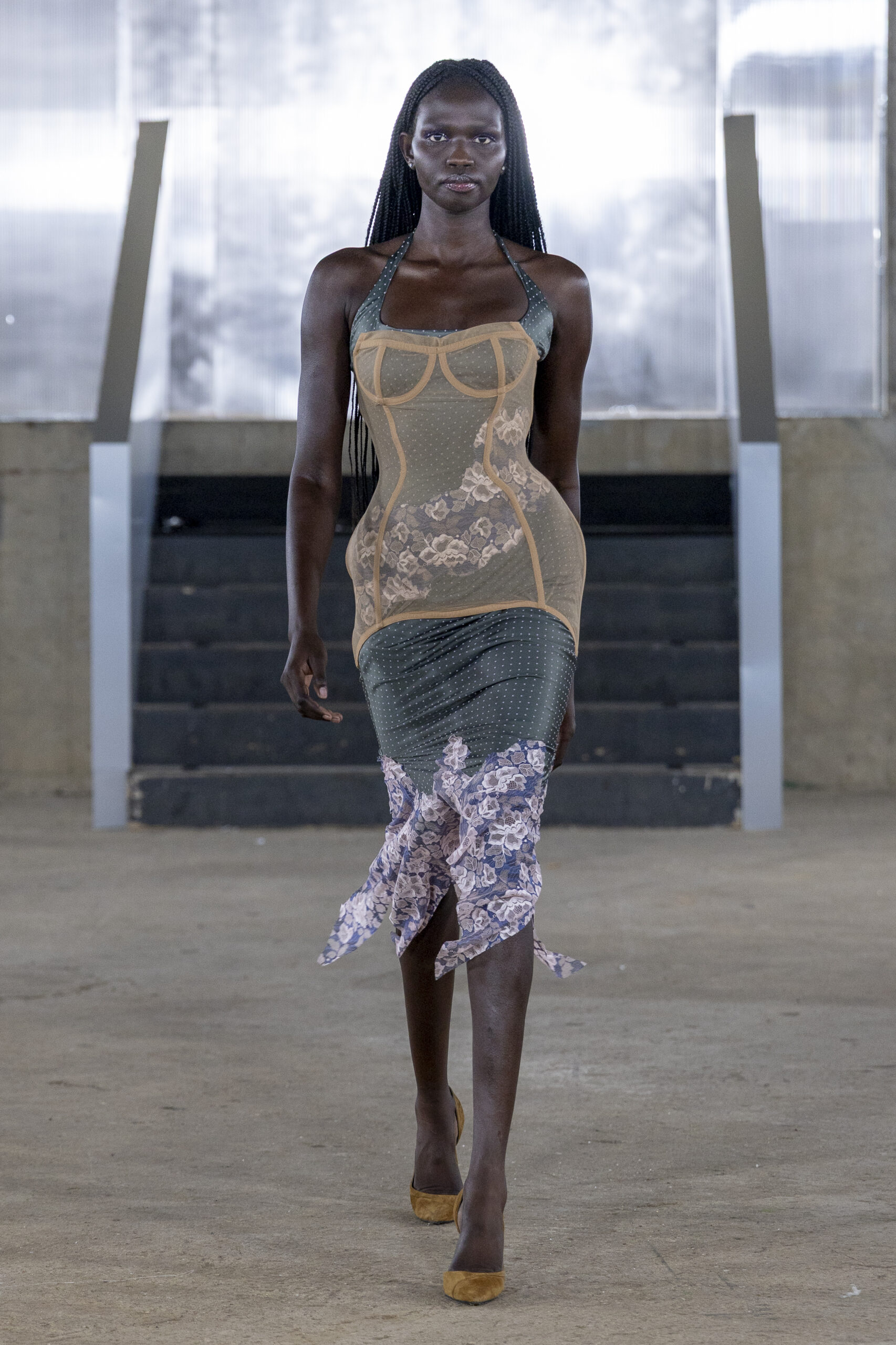
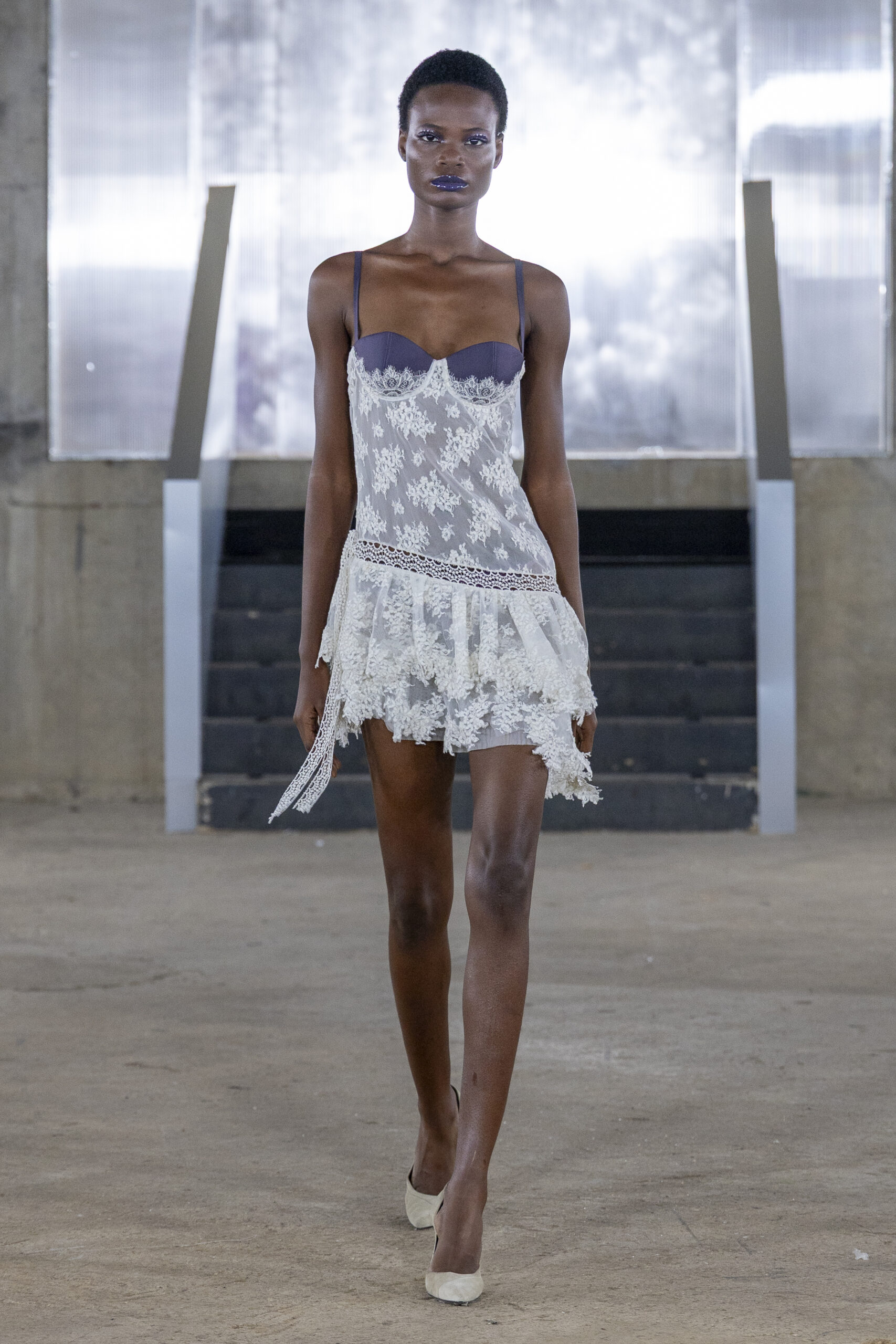
This season, Agro Studio presented Glass Body, a collection exploring transparency and lightness through the manipulation of materials and surface. Fabrics including tulle and lace were layered, distressed and transformed, while thousands of sourced antique and discarded buttons were applied across garments to create an effect of optical distortion.
Material research and storytelling developed in tandem, informing the collection’s silhouettes, construction and overall mood. Delicate, translucent fabrics were set against sculpted corsetry and tailoring, creating what the brand described as “a lightness against more structural forms”. This experimentation extended into proportion, with lowered waists contrasted against sudden volumes through the hips, thighs and hems. The resulting silhouettes played with the tension between delicacy and structure, exaggerating the body while maintaining an ethereal quality.
The collection also drew on references including historical dress, ballet, equestrianism – a theme we also saw at Kebria today – and 1980s sportswear. These contrasting influences were combined to create a dialogue between function and couture. Meanwhile, the colour palette introduced dusty purples, muted blues and cooler tones, reinforcing the collection’s sense of fragility and light while providing a softer counterpoint to its more sculptural forms.
Vin + Omi’s anarchy brings sustainability, celebrity and rebellion to the runway
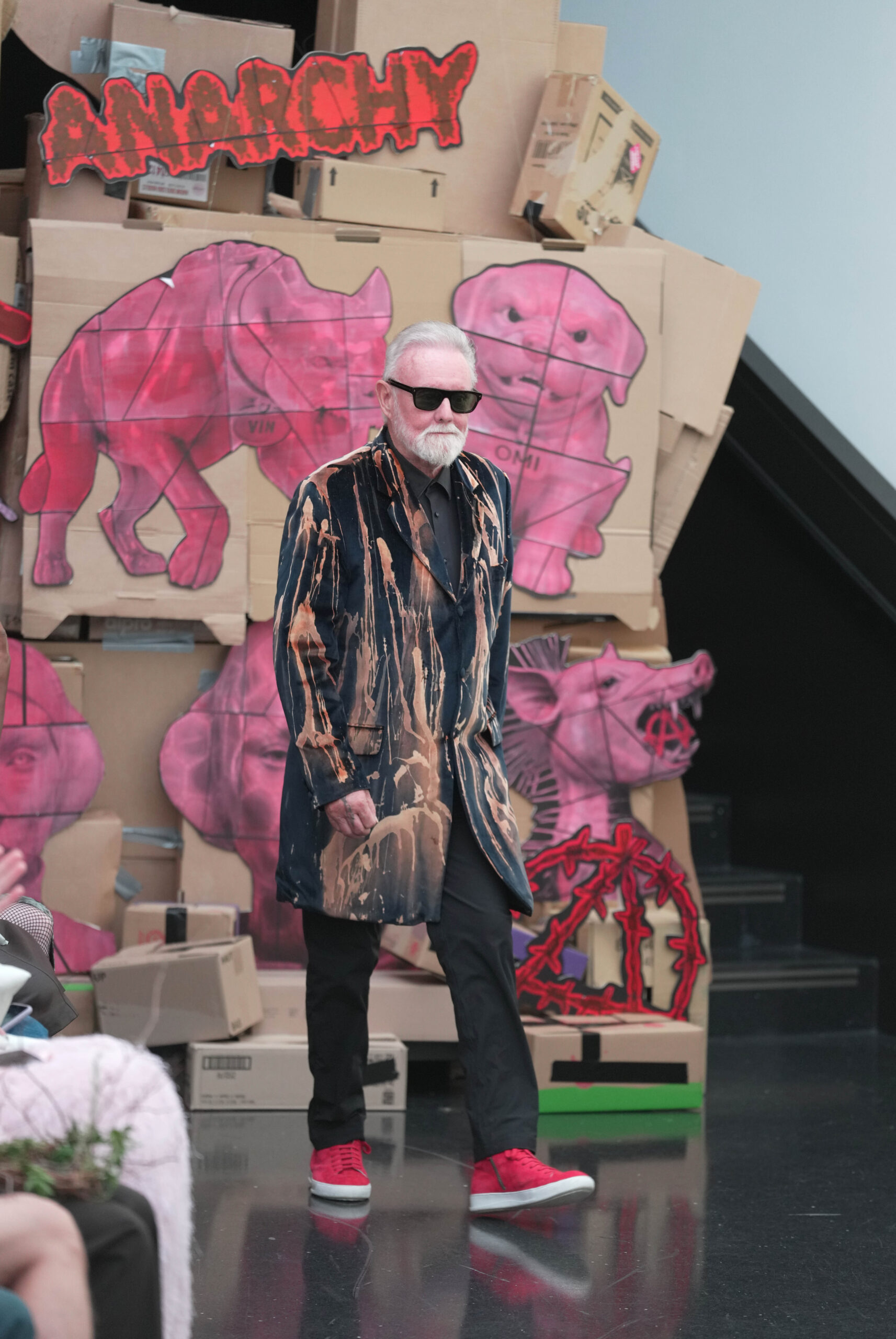
Queen drummer Roger Taylor opened Vin + Omi’s London show, Anarchy, on 13 September. The 77-year-old musician, a longtime friend of the designers, walked in black trousers, red high-top trainers and a bleach-marked velvet jacket, coinciding with the release of his new track Beautiful World XX.
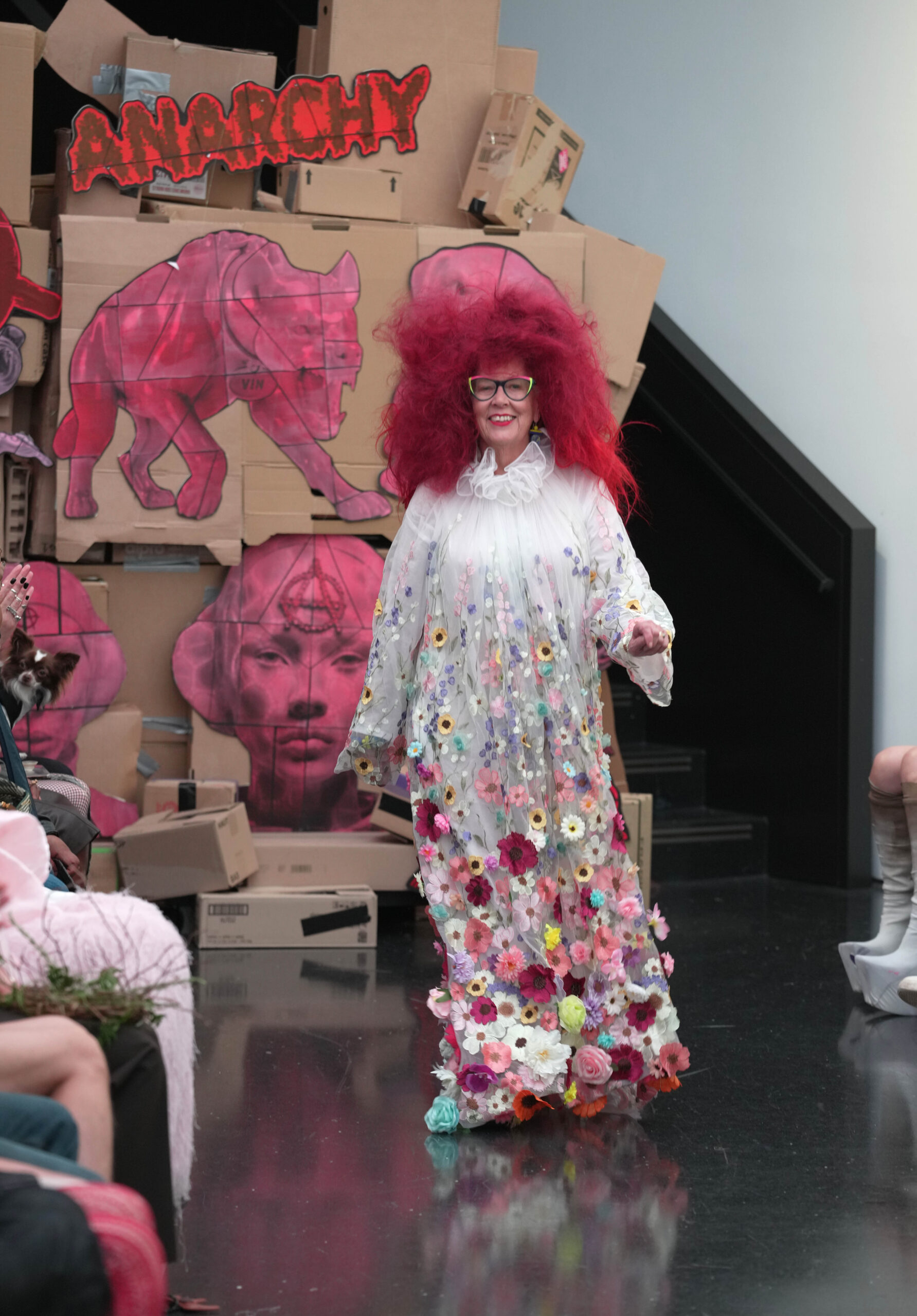
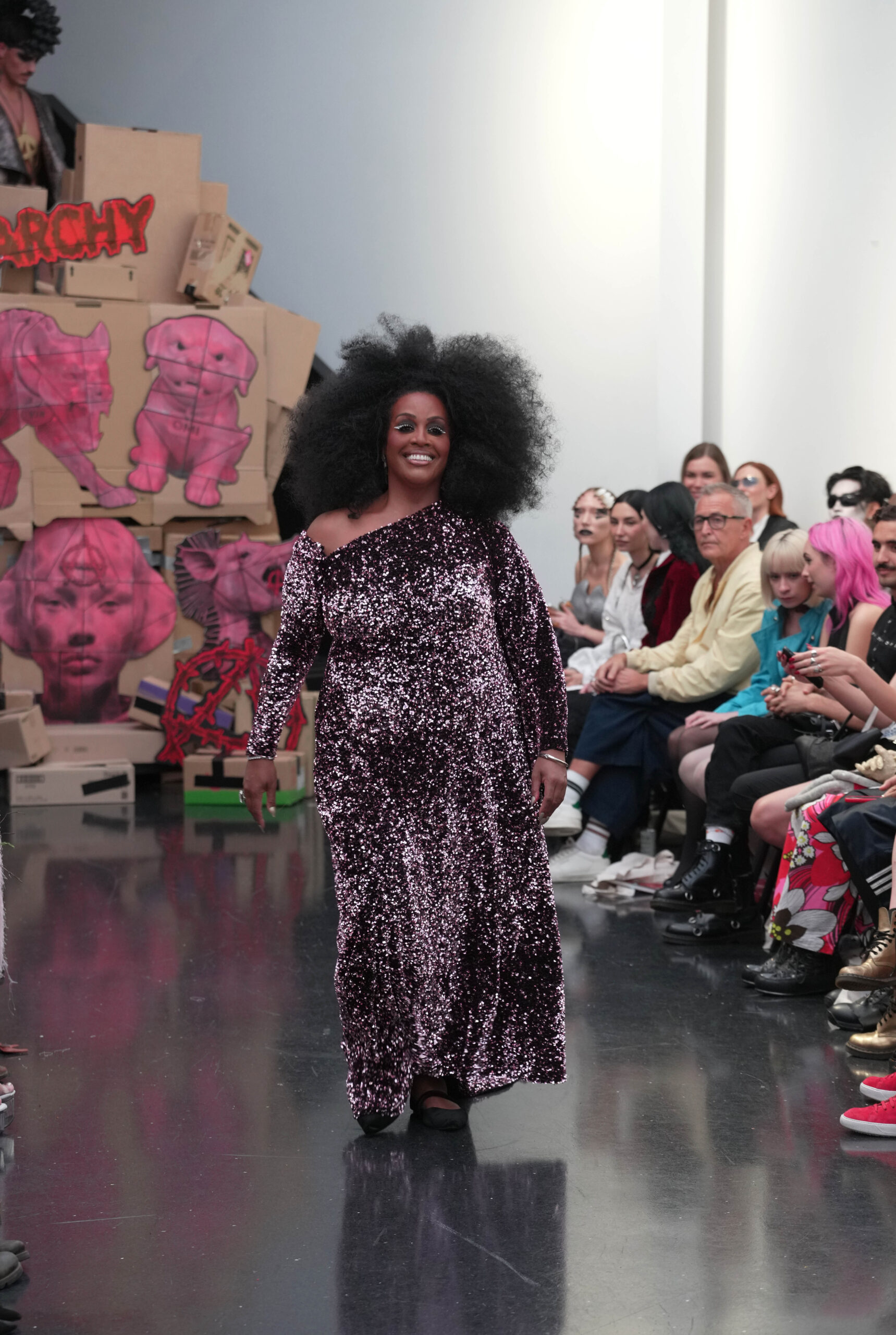
Former Great British Bake Off judge Dame Prue Leith also took to the runway, appearing in a sheer white gown covered in hundreds of colourful three-dimensional flowers made from recycled plastic collected through the designers’ waste clean-up schemes. Alison Hammond followed in a floor-length plum gown covered in shimmering recycled sequins, reinforcing the collection’s message that luxury finishes do not have to depend on newly produced materials.
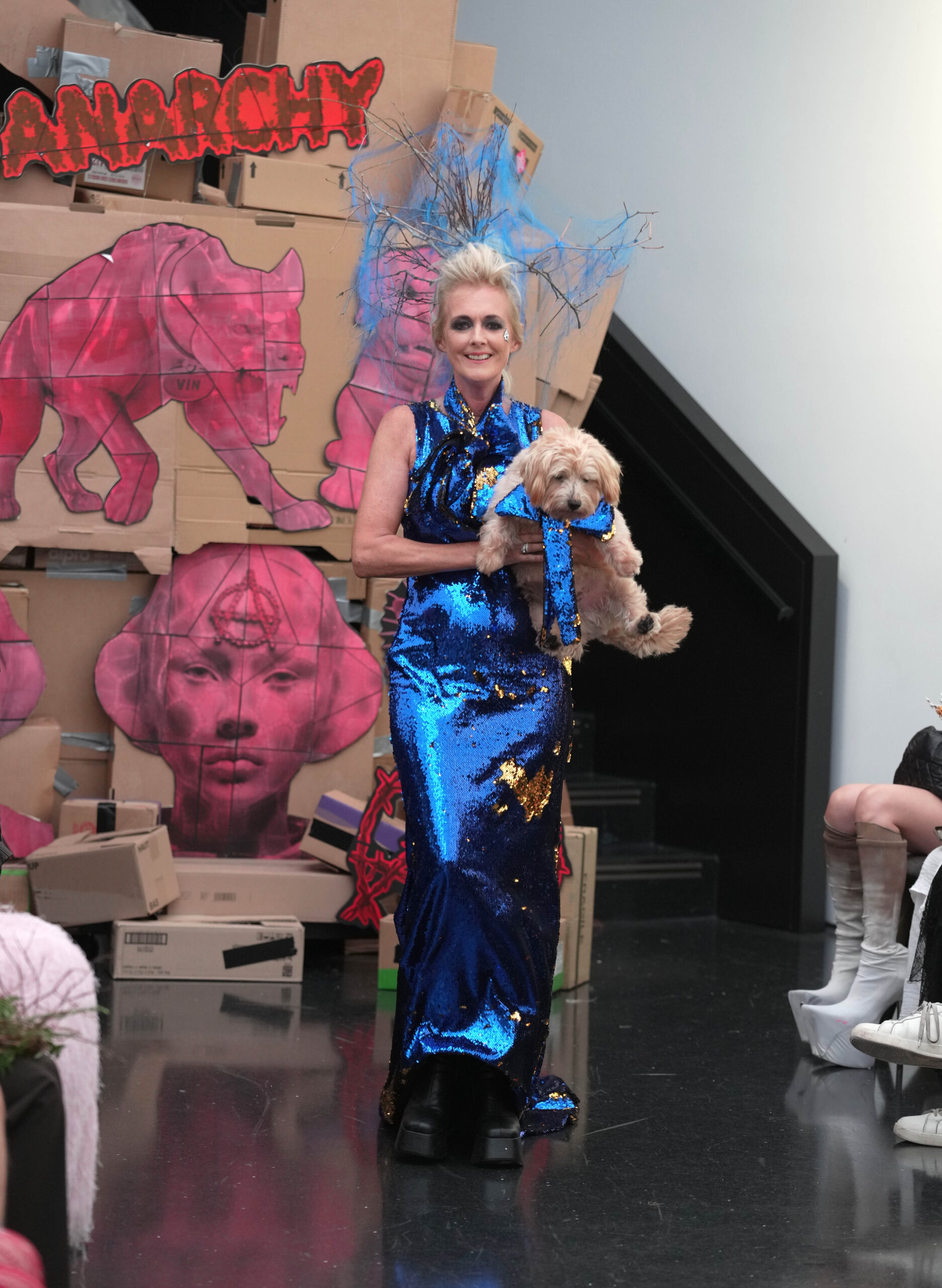
Beyond its celebrity cast, the show delivered a clear environmental message. Against a backdrop of cardboard boxes painted with pink animals and anarchist symbols, the collection transformed waste into fashion, using materials sourced from British Heart Foundation charity shops, military bases and discarded linen from the show venue. The designers also continued their collaboration with the King, turning plant waste from the Sandringham Estate into experimental textiles, including a spongy fabric made from cork-barked oak branches and waste nettles.
The show closed with the cast walking to Dolly Parton’s Jolene, creating an appropriately unconventional finale. From a Queen drummer and a Bake Off reunion to recycled sequins, plant-based textiles and even a sequinned dog, Anarchy demonstrated Vin + Omi’s ability to combine spectacle with a serious message about waste, sustainability and environmental responsibility.