


Nearly four years after TheIndustry.fashion last spoke to Naomi Raybould, Beyond Nine has entered a new chapter.
Since launching the business in 2017, with just two jumpsuits designed to be worn during and after pregnancy, the self-funded womenswear brand has grown into an international business employing almost 30 people.
Last month, Beyond Nine reached a significant milestone with the appointment of its first CEO, former AllSaints Global Ecommerce Director Liam Price.
While Price will oversee the operational side of the business, Raybould will continue to focus on product and brand: the areas closest to Beyond Nine’s identity.
As the business looks to expand internationally, explore physical retail and continue growing without external investment, we caught up with Raybould to discuss the decision to bring in a CEO, the challenges of scaling an independent fashion brand and what’s next for Beyond Nine.

Earlier this month, Beyond Nine appointed its first CEO. Why did now feel like the right time to bring someone into that role?
We’re extremely excited to have Liam on board. I think it’s really important as a founder to recognise when you’ve taken the business as far as you can and when you need to bring in additional expertise. I’ve been running Beyond Nine for nearly nine years as a bootstrapped business and, with three young children, I’m quite exhausted.
The analogy I’ve used is that I’ve built a propeller plane. I’ve spent years fixing the wings and propeller, but now we need to build a jet. It needs to fly more smoothly, be more efficient and have the processes in place to support the next stage of growth.
I’ll continue leading product and brand because those are where I add the most value, while Liam will lead the operational side of the business.
What qualities were you looking for in your first CEO? Why is Liam the right fit?
Cultural fit was incredibly important. He’s an exceptional leader, has fantastic digital expertise and genuinely understands direct-to-consumer businesses. We also have a strong personal connection, which is essential in a founder-CEO relationship.
Beyond Nine has grown significantly since you last spoke with TheIndustry.fashion. Looking back, what have been the biggest milestones for the business?
We’ve grown into a business employing almost 30 people, which is surreal considering I started Beyond Nine at my kitchen table.
Hitting 100,000 orders was a huge milestone, but probably the biggest achievement has been appointing a CEO. It feels like I’ve built the business to a point where I can trust someone else to help lead it.
How has your own role evolved as the business has grown?
There are two areas where I’ll always stay heavily involved: product and brand.
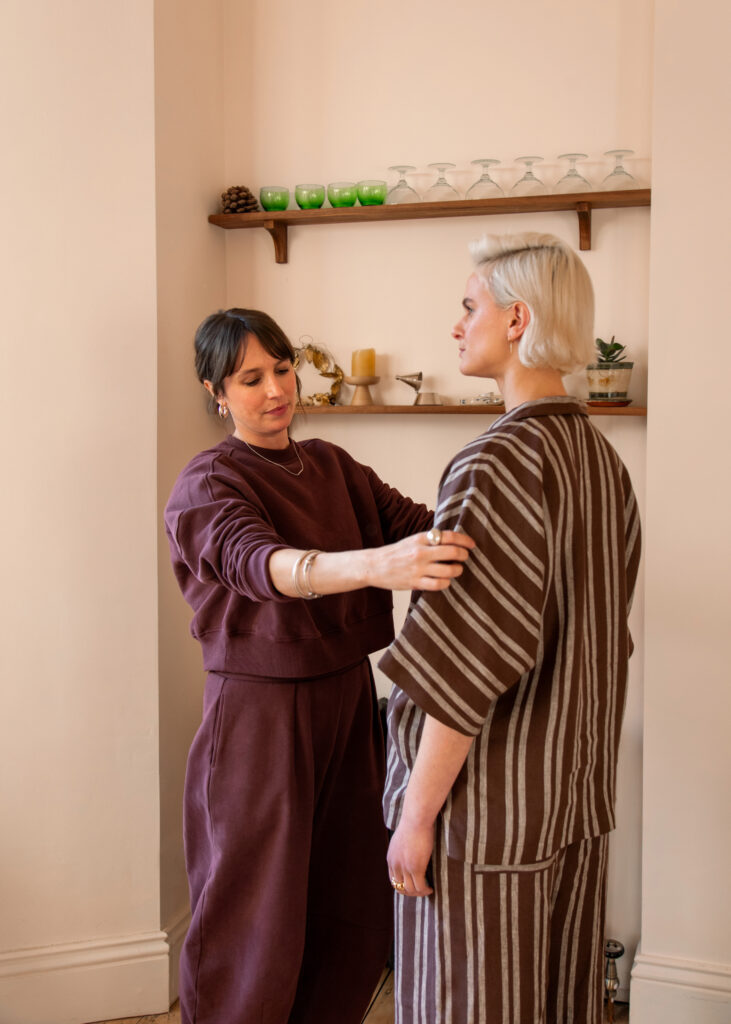
I’m still involved in every fitting, every fabric and every design decision. We’re also investing heavily in building Beyond Nine’s brand world, while Liam takes responsibility for ecommerce, operations, production, merchandising and logistics.
Beyond Nine began as a maternity brand, but your customer base has evolved significantly. How has that changed the way you approach product development?
We started as a true maternity brand, but only around 30% of our customers are now pregnant or breastfeeding. About 75% have children under five, so they’re in that “rush hour of life” where they need clothing that works hard for them. They still want to feel stylish, but they need clothes that fit around the reality of busy lives.
What’s also been interesting is that we’ve organically attracted older customers, particularly women going through perimenopause. There’s a similarity between those life stages because women are experiencing a shift in identity and changes to their bodies. I think the fashion industry has never really acknowledged that women’s bodies change all the time. We’re not static, and clothing needs to adapt with us.
Beyond Nine has remained self-funded despite its growth. Was that always a conscious decision?
Yes, it’s been a conscious decision. I think sometimes when investment comes in, there can be pressure for growth at all costs, and that can compromise the brand. We’ve always been very clear that we want to build a profitable, sustainable business rather than chase growth for growth’s sake.
Being self-funded is challenging because cash flow is always tight, but it also forces discipline. Every decision has to make commercial sense and it’s helped us build a genuinely profitable business. That’s not to say we’d never consider investment in the future.
The retail landscape continues to evolve. What opportunities and challenges do you see for independent fashion brands today?
The UK market is tough and consumer confidence remains uncertain.
However, consumers are becoming more discerning, which gives brands like ours an opportunity to educate people about craftsmanship, quality and why well-made clothing costs more.
AI has a role in improving operational efficiency, but I think authenticity and genuine human stories will become even more valuable. My biggest concern is if AI replaces a lot of entry-level roles, how do we train the next generation to become copywriters, creative directors and strategic thinkers?
Sustainability remains a major challenge for the fashion industry. How does Beyond Nine approach responsible production as the business grows?
I don’t think a fashion brand can ever truly claim to be sustainable because we’re creating new products and there’s already so much clothing sitting in landfill, but we try to minimise our impact.
We focus on producing smaller runs to reduce waste, using natural and biodegradable fabrics where possible, and ensuring our suppliers meet higher standards as we grow. When we do use synthetics, they’re recycled and there’s been careful consideration about why they’re needed in the product.
As the industry moves towards greater transparency, through initiatives such as digital product passports, I think accountability will continue to improve.
What does the next chapter of Beyond Nine look like?
The immediate priority is improving operational efficiency so we can scale in the way that we want.
International expansion is a major focus, particularly the US. We don’t currently do anything internationally, but around 17% of our sales already come from overseas so we know there’s a huge opportunity there.
Longer term, I’d love to explore physical retail through pop-ups and experiential spaces that bring the Beyond Nine brand to life. People are desperate to try our products, so it would be amazing to give them that opportunity and create an experience beyond just the product.
Alongside that, we’re investing more in community events to give something back to our customers. I’d love people to experience Beyond Nine first-hand and understand the warmth and community that sits behind the brand.