



Tia Wallace, VP Business Development Ecommerce & Retail at DHL Supply Chain, works across fashion retailers of all sizes on fulfilment, returns and automation. As we approach the crucial final quarter of 2026, she sees an industry managing fragmented peaks, treating returns as a resale operation, and leaning on AI to avoid big capital commitments.
How has the first half of 2026 been for fashion retailers you work with?
The themes have continued and intensified. We’re in a situation where the volatility and uncertainty of volumes and consumer demand continues to be what fashion retailers, of various sizes, are talking to us about. We see a mix across our customer base, everything from luxury retailers through to cost-conscious retailers experiencing similar trends in terms of uncertainty.
What that’s driving is an ever-increasing need for us to support decisions that are shorter term and less investment-focused. More than ever, decisions are being made very quickly, but they’re in the short term. It’s very difficult for retailers to be making long-term investment decisions about their supply chain. We’re not seeing that decisions can be made for five years ahead, or even three years ahead. So our role continues to be looking at ways we can support access to existing solutions and mobilise quickly with limited investment decisions from retailers.
Peak used to mean Black Friday and Christmas. Has that changed?
Increasingly it’s an all-year conversation, for two main reasons. One is that a number of businesses we work with are moving to more of an ongoing, influencer-led peak focus throughout the seasons. We still see the traditional Black Friday and Christmas peak, but a couple of different factors are smoothing demand across the year.
We’re hearing from a number of retailers that they’re either opting out of Black Friday or smoothing the strategy, partly due to consumer fatigue of discounting and the impact of discounting on the brand. It still represents an important sales period for most retailers, so I wouldn’t say it’s a wholesale move away. But more are looking at softening it or moving away. The larger proportion opting out altogether tend to be brands where the pressures on supply chain and business are significant relative to the short-term sales uplift at a discounted price.
Alongside that, the increase in promotional, seasonal or influencer-led peak periods is a significant factor. More of our retail customers are looking at how they compete alongside marketplace platforms. What we’re seeing firsthand is that brands retailing through influencer-led marketplace platforms [such as TikTok] find those channels becoming increasingly important. Both major retail brands and smaller brands are now listing on those platforms as part of their omnichannel strategy.
What does that marketplace activity mean for fulfilment?
It may lead to more B2B volume from individual retailers. As well as their own online and retail channels, they’ll potentially be fulfilling more through marketplaces, which means a higher level of B2B replenishment into those marketplace supply chains.
Also the influencer-driven content served to certain demographics on social platforms will drive footfall back into retail stores where those consumers typically shop. A lot of retailers we’re talking to see it as a necessary part of their strategy and a way of achieving product placement. The emerging question is understanding the impact of footfall on a social media marketplace platform back into other channels.
For us, that means ongoing merchandising logic within our fulfilment environments is even more important. We’ve long worked with digital-native businesses on placing the fastest-moving inventory at the closest point to fulfilment. That’s still the case, but the demand is now being driven by more channels, so we’re seeing the impact across wholesale and B2B, as well as traditional e-commerce.
How are you helping retailers manage returns and resale?
There’s the existing focus on efficiency of returns processing and the technologies we’re developing around identification and triage. The additional element is the increased focus on refurbishment and resale: processing returns that go back into pristine Grade A stock while completing a higher level of product salvage for resale. That ongoing focus on circular economy and resale is an increasing theme, and incorporating it into fulfilment warehouse processes is something we’re seeing big demand for.
One of our recent new relationships in the outdoor apparel sector is with Cotswold Outdoor Group. A large part of that proposition has been around an increased level of their products going through to resale, including the ability to complete basic repair and refurbishment so products can be made available for resale and support their reduction of product to landfill. Being able to offer that service is now an essential requirement for us as a 3PL.
Where does sustainability sit in retailers’ outsourcing decisions?
The conundrum is what consumers are willing to pay for. Things like being willing to wait longer for delivery or selecting consolidated deliveries are a theme, as is reusable, returnable packaging. But there’s still a split camp. Speed of delivery and availability of product maintain top spot in terms of consumer loyalty.
For us, one important aspect is our property agenda. Our fulfilment centres work to BREEAM Excellent credentials. Operating within environments moving toward carbon-neutral operation is becoming increasingly appealing and a factor in retailers’ outsourcing decisions. With that, retailers also benefit from shared-user environments. We’re now offering fully automated environments based only on the throughput capacity a customer needs. That brings lower capex, a clear fulfilment cost per unit, and avoids the risk of setting up in their own facility. It also means less site traffic and fewer resources, which has an environmental benefit too.
How do you support smaller, fast-scaling brands?
The first way is allowing that business to focus on growth strategy with confidence that the fulfilment element can plug into existing infrastructure, and in some cases that’s a global infrastructure. We have fulfilment infrastructure across the world that we can plug retailers into within six weeks. For founder-led businesses that haven’t built supply chain capability and have no appetite to, that’s important.
Our operating models are tailored to pay-per-use. We only charge customers for the capacity they need, recognising that upfront commitments are effectively impossible for those businesses to make.
What role is AI playing in your operations now?
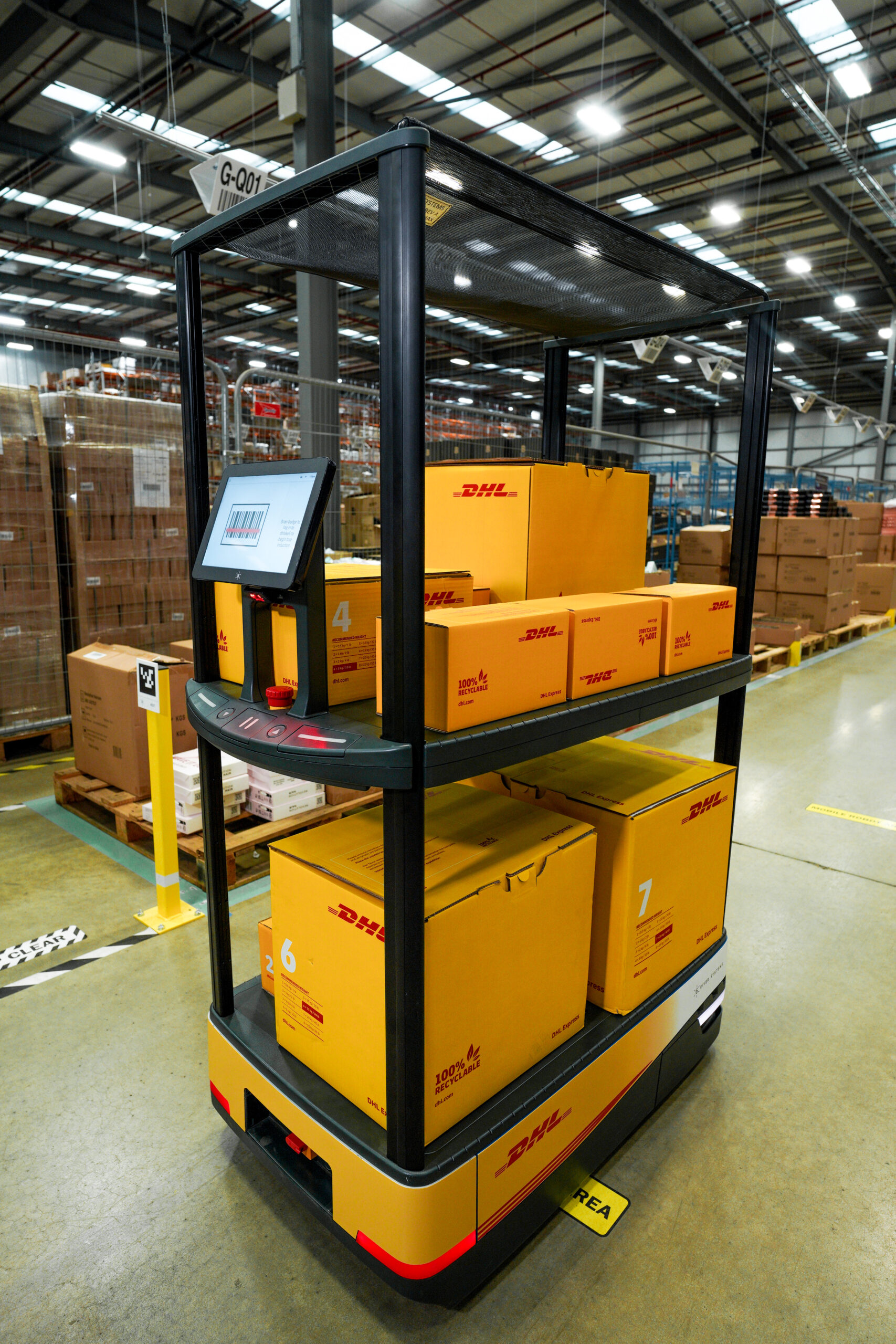
The use of AI is extending work we’ve already done using machine learning to understand volume and characteristic hotspots and lay out the operation more efficiently. One benefit of our robotics solutions is that they’re modular, so you can add and remove robots in much the same way as you’d execute labour planning. With increased AI and machine learning, it’s helping us with forecasting and projection of what we’ll need and when in terms of modular automation. For retailers, that means far less upfront investment and far less requirement on them for decision-making.
It’s also making the supply chain talent agenda more exciting. By automating labour-intensive tasks, we’re creating roles that are much more around data and process engineering. That will make this an increasingly attractive industry for new entrants to the workforce.